


The Expert-Reviewed Guide to Automotive SEO (Updated for 2027)

SEO & Marketing Educator at Ahrefs
- What is automotive SEO, really?
- Why SEO matters in the automotive industry
- Get your local presence locked down
- Build a reputation that sells
- Target the right keywords
- The three page types that drive automotive SEO
- Get your technical foundation right
- Use video to tap into YouTube demand
- Automotive SEO for ChatGPT
- Make SEO and search ads work together
- How to know if it's all working
I became interested in automotive SEO after buying a new car and getting some repairs done on my old one at the same time. I found the dealerships and repair shops that helped me out, as well as the car that I bought, through Google.
If they hadn't shown up when I was looking, I never would have known they existed. That got me thinking about how crucial search visibility really is for auto businesses.
This article isn't just my take on automotive SEO. It's been reviewed, enriched, and inspired by eight experts with hands-on experience in this niche. Their insights helped me keep this guide grounded in real-world experience.
- Michelle Tansey, Founder, Red Queen Marketing
- Edward Bate, SEO Consultant, edwardbate.com
- Despina Gavoyannins, Senior SEO, Ahrefs
- José Luis Rivolta, SEO Director, Refindable
- Daniel Lofaso, CEO and Founder, Digital Elevator
- Harpreet Munjal, founder of LoudGrowthParker Evensen, CEO & Founder, Honest DigitalBen Poulton, Founder, Intellar
The automotive industry covers a lot of ground: dealerships, repair shops, auto parts sellers, manufacturers, and more. While I’ve focused on SEO tactics that apply universally across most automotive businesses, I’ll call out specific strategies where needed. If you’re looking for in-depth guidance tailored to your business type, I’ll point you to more focused resources along the way.
What is automotive SEO, really?
Think of automotive SEO as making sure you show up when people search for cars or auto services online. It's different from regular SEO because car shopping is... well, it's pretty unique.
Here's what makes it special:
- People search locally first. When someone needs a car or repair work, they're usually thinking "near me" from the get-go. They want something close to home.
- Your inventory never stops changing. Unlike a restaurant that keeps the same menu for months, you're constantly getting new cars and selling others, and your website needs to keep up with that.
- You're really running multiple businesses. Sales, service, parts, financing–each department attracts different customers who search in different ways.
- Trust is everything. Nobody impulse-buys a $30,000 car. People need to feel confident about you before they'll even visit your lot.
- Franchising is a double-edged sword. If you're a franchise dealer, the manufacturer likely imposes strict rules on what you can and can't do with your website and marketing. That can limit your ability to optimize freely. But on the flip side, being able to use an automaker’s brand in your business name, domain, and on-page content can give you a significant SEO advantage—especially for branded searches like “used toyota”.
Why SEO matters for the automotive industry?
Every page you optimize adds to your ability to attract customers. The results work for you 24/7, and build on each other over time. But that’s not all:
- You catch people wherever they are in their journey. Some folks are just starting to research cars, while others are ready to buy tomorrow. Good SEO content lets you connect with all of them by providing helpful information that naturally showcases what you know.
- You steal customers from competitors. It's that simple. If you're ranking #1 for "used cars in Dallas" and your competitor is #8, guess who's getting that customer?
- It pays for itself over time. SEO takes work upfront, but unlike paid ads that cost you every month, good content can keep bringing in customers for years. That's huge in the car business, where people research for weeks before buying and need ongoing service.
Get your local presence locked down
Local SEO gets you into Google Maps and those local results that show up before the regular website listings. Even if searchers don’t include location names in their searches, Google might still interpret them as local search intent and prioritize the best results in the nearby area.
Tip
If you’re worried AI is eating local search, the data says it hasn’t yet. Only 7.9% of local searches trigger an AI Overview. Shopping queries have the lowest AI Overview rate of any category at 3.2%, and real estate is next lowest at 5.8%, another high-ticket local purchase.
When someone searches “oil change near me” or “used Toyota dealer,” they still mostly get the map pack and regular results. That’s why local SEO is still where most automotive businesses win or lose.
Give each location its own page and Google Business Profile
Google sees each of your locations as its own separate business, so each one needs to be optimized individually. That means creating a dedicated page for every location, complete with unique content, local reviews, contact details, and photos of that specific spot and team.
Take Christian Brothers Automotive, for example. They have dozens of locations, each with its own optimized landing page and Google Business Profile.
Dealerships get one extra option most businesses don’t. Google lets car dealers create separate profiles for the dealership and for each department, like sales, service, or parts. New-car dealers can also have a profile for each brand of new cars they sell. Used-car dealers can’t do this, because the brands they stock change too often.
Ben Poulton recommends making use of it: a service department with its own profile, hours, and reviews can show up for “brake repair near me” in its own right.
The catch is that profiles add up fast. A single dealership with sales, service, and parts, plus a profile per new-car brand, can easily run five or more, and a dealer group multiplies that by every rooftop. Keeping hours, categories, and phone numbers right across all of them by hand is where mistakes creep in.
That’s the problem Ahrefs’ GBP Monitor is built for. You see all your profiles in one dashboard, spot missing info or inconsistencies between locations, and bulk-edit fields like hours and categories. So when a public holiday comes up, you update special hours for every department in one go instead of profile by profile.
Get listed in directories and listing aggregators
Get listed in automotive directories like Edmunds and Cars.com, as well as general local directories like Yellow Pages and your Chamber of Commerce. Keep your branding and services consistent across these listings.
This has a direct and indirect benefit.
Direct benefit: referral traffic and lead generation. Many of these directories rank highly in search results themselves and are used by shoppers during the research phase. Being featured there can send highly qualified traffic your way.
Indirect benefit: stronger local SEO signals. Google and other search engines rely on data from third-party sites to validate your business’s legitimacy and location (the so-called NAP citations). When your business details are accurate and consistent across multiple reputable sources, it strengthens your local ranking signals, especially in map pack and “near me” searches.
Stay active on your Google Business profile
Regular updates to your Google Business Profile (new photos, responding to reviews, posting announcements) show Google and customers that you're actively managing your business.
When the competition is tough, even small things, like regularly updating your Google Business Profile or responding to reviews, can be what sets you apart and helps customers choose you over others.
Staying active also means watching for changes you didn’t make. Anyone can suggest edits to your profile, and Google sometimes applies changes on its own. A wrong phone number on your service department’s profile or incorrect weekend hours can quietly cost you bookings before anyone notices.
Ahrefs' GBP Monitor sends you an email alert whenever a profile changes, whether the edit came from you, your team, a competitor, or Google. You can reject an unwanted change and restore the previous version with one click, and see a full history of edits across all your profiles. (The tool is currently in beta and available on all paid Ahrefs plans.)
Don’t rely on Google’s free inventory listings
Until recently, dealers could push their inventory into Google for free through the Vehicle Listings program. Google has shut down the organic auto listings feature and stopped processing vehicle feeds, so your inventory pages now have to do that work on their own (more on that below).
If you want your cars shown directly in Google’s results, the paid route is Vehicle Ads, a separate program. I cover how ads and SEO fit together later in this guide. Thanks to Ben Poulton for flagging this change.
Build a reputation that sells
In the automotive world, trust is a dealbreaker. Shoppers want to know they’re dealing with a business that’s honest, responsive, and delivers on its promises. And guess what, Google always looks at online reviews to determine the best local search result (see prominence).
Buyers act on it, too. In Trade Me’s 2025 survey, 64% of New Zealand car buyers said negative dealer reviews or reputation would be a dealbreaker.
So here’s what you can do:
- Ask for reviews actively. Send review links via text, ask in person, or include it on thank-you pages.
- Respond to every single review. This shows you're listening and builds trust.
- Monitor everything. Use tools like Birdeye to track reviews across all major platforms.
- Show off your good reviews. Social proof matters—highlight those stars!
- Go beyond reviews. Mention awards, certifications, sales stats, and success stories.
Target the right keywords
Keyword targeting connects your website with people who are actively searching for what you offer. It's how you show up for a buyer typing in “used Honda Civic near me” instead of disappearing behind a wall of irrelevant traffic.
I'm going to walk you through the types of keywords (with examples) you'll likely need to reach potential customers at every stage of their journey—from early research to purchase and beyond. Each keyword type plays a different role in your overall strategy.
But before we dive in, I want to show you how easily you can find your own keywords.
Start by opening Ahrefs’ Keywords Explorer, and ask the built-in AI to suggest keywords relevant to your business.
Then simply use one of the intent filters in the Matching terms report.
Commercial keywords
Commercial keywords capture people who are comparing options and making decisions. Ranking here helps you position your offerings as the better choice, even if they're not yet ready to buy.
Examples:
How to outrank the competition for 'lease' and 'specials' keywords
Dealerships usually have lower domain ratings than third-party lead providers, so sites like Cars.com dominate specials-related keywords like "2025 Toyota specials." This is a problem because these keywords are crucial for capturing high-intent shoppers.
Parker Evensen recommends using a "hub-and-spoke" approach to combat this challenge. Build a comprehensive specials hub listing your main offers, then create model-specific specials pages that link back to it. This approach builds topical authority while giving you multiple chances to rank for valuable commercial keywords.
For example, a Toyota dealership would create a Toyota Specials Hub, then build dedicated pages for popular models like the Prius—including custom content, lifestyle images, review widgets, and schema markup.
Transactional keywords
Transactional keywords are your conversion drivers. These are the high-intent searches from people ready to take action, whether that’s booking a test drive, scheduling a service, or calling your dealership.
Examples:
Informational keywords
Informational keywords attract early-stage searchers. They might not convert right away, but they build trust, brand awareness, and long-term visibility in your niche.
They’re also a smart way to expand your reach beyond your immediate area or build national awareness, since they usually address broader problems that apply everywhere. And because of that wide relevance, they have the potential to drive significant traffic to your site.
Examples:
Local keywords
Local keywords are essential for showing up in map packs and nearby searches—especially important for dealers, service centers, and repair shops that serve specific geographic areas.
Besides using your keyword research tool, Michelle Tansey also suggested tapping into your team's insights. Ask your staff what customers are often asking about or what tends to work well in your local area. Their firsthand experience can be a goldmine for content ideas.
Examples:
To prioritize which keywords to go after, balance these four factors:
- Search intent: Does the keyword match what you actually offer?
- Traffic potential: Will ranking for this keyword bring enough people to your site?
- Keyword difficulty: Can you realistically rank for it given your site's current authority?
- Business potential: How likely is this keyword to drive real revenue for your business?
The three page types that drive automotive SEO
To win at automotive SEO, your site needs to support what customers are actually looking for, which depends on your business type. That said, most successful automotive sites tend to focus on these three functional areas:
- E-commerce style inventory pages. Show what you offer, whether that’s vehicles for sale, parts, or services.
- Service pages. Make it easy to book, buy, or inquire, depending on your offering.
- Location pages. Prove you're local and legit, so customers know you're nearby and trustworthy.
Each requires its own SEO strategy, and depending on your business model, you’ll emphasize some more than others.
Let’s break it down.
Inventory pages (ecommerce-style for vehicles and car parts)
These are the digital equivalent of your car lot. They power transactional searches like “used Mazda CX-5 under 20k.”
What to focus on:
- Use a clear category structure like “/inventory/suvs/mazda-cx5-2022/”
- Treat vehicle pages like product pages: include make, model, year, mileage, price, VIN, images, and conversion-focused CTAs.
- Use filters carefully (body type, price range, features) and prevent index bloat by canonicalizing non-useful URLs.
- Optimize image SEO by using descriptive filenames and alt text (this guide offers some good image SEO practices).
- Highlight key selling details like clean Carfax reports, full service history, and high-quality images.
Tip
This is the part where I got the most tips from the experts. Here are some of my favorites.

Assess your vehicle data sources before scaling. Messy data (e.g., inconsistent naming, missing details) can wreak havoc when you go live. Test first with high-volume makes like Toyota or Ford. Categorization helps shoppers. Group cars into themes like "family friendly," "first car," "under $5k," "off-road SUVs," or "luxury SUVs." These kinds of curated filters make for strong landing pages and better user experience.

Edward Bate, SEO Consultant, edwardbate.com
If you're using Google Business Profile (GBP), use the "Products and Services" section to feature brands and models you typically stock. Instead of trying to keep it updated daily, treat it like a curated highlight reel. Treat brand and model pages as permanent landing pages—even if you don’t have real-time inventory. Include CTAs like "Call us to check availability" or "These sell fast—get in touch now" to make them useful and evergreen.

Despina Gavoyannis, Senior SEO, Ahrefs
Service pages
These bring in high-margin, high-frequency traffic—brake repair, inspections, tire rotation, etc. Most visitors come with a clear intent to act.
Below is an example of repair shops ranking with optimized location pages.
What to focus on:
- Create a dedicated page per service (e.g., “/services/brake-repair/”) and per location if relevant.
- Optimize for “service + city” queries like “oil change Austin”.
- Add trust signals: certifications, team bios, photos of your actual work, and pricing, if possible.
- Use FAQs, testimonials, and visual content to increase conversions.
Location pages
This is where local SEO and trust-building collide. Done right, these pages help you rank for “Toyota dealer San Diego” and convert cold traffic into walk-ins or leads.
Here’s a great example by Sheen group: a landing page listing all locations and a dedicated landing page for each location.
What to focus on:
- Use localized URLs and H1s: /locations/san-diego/ + “Used Cars in San Diego | Open 7 Days a Week”.
- Include real photos of the dealership, staff, and signage—avoid stock images.
- Add a map, driving directions, reviews, parking info, and hours.
- Link to the inventory and services available at that location.
- Display social proof: embedded reviews, certifications, and local awards.
If you’re a manufacturer: own your specs and pricing
Manufacturers often lose search traffic for their own model names. Queries like “rav4 price,” “rav4 dimensions,” or “rav4 fuel economy” have clear intent and a factual answer. But the answer often comes from review and car sales sites, not the brand, because the brand’s specs sit in PDF brochures or behind a JavaScript configurator.
Ben Poulton showed me what that looks like for Tesla. Search “tesla model y price” in Australia, and the AI Overview takes every number from Chasing Cars and CarsGuide. Tesla’s own site isn’t cited:
This isn’t limited to price searches, either. In Ben’s study of 400 Australian car searches, every one of the 80 model comparisons he tested (like “forester vs rav4”) returned an AI Overview, compared with about half of searches for just a model name. And the answers weren’t always right: he found a UK-only Mazda grade in an Australian answer and a Hyundai Kona answer with the wrong safety rating.
That matters more in markets outside the US, where AI Overviews pull together pricing from third-party sources and you have no control over whether it’s current or correct. So:
- Publish specs and pricing as plain text on a crawlable page for every model and trim: price, dimensions, range or fuel economy, towing capacity, and warranty. Not only in a PDF.
- Don’t hide them behind JavaScript. Many AI crawlers can only read static HTML. When ChatGPT couldn’t find a brand’s prices because they were loaded with JavaScript, it used third-party sites like G2 instead, because “the official page is hard to parse and doesn’t show prices.”
- Be specific. In our fake-brand experiment, when the official source was vague and a third-party one was specific, AI models went with the specific one almost every time.
- Tackle “review” queries indirectly. A brand can’t credibly own them, but you can publish your own buyer’s guides or work with brand ambassadors whose reviews and videos can rank.
Get your technical foundation right
This part of SEO is about making sure your website works the way it should—fast, easy to load, and simple for both people and Google to navigate.
I always give the same advice here: use a tool like Ahrefs’ Site Audit, fix the problems it finds, and keep it running regularly.
Ahrefs gives you an overall Health Score, showing how many pages on your site have serious issues—these are called errors. If you click on the error count, you'll see exactly what the problems are, which pages are affected, and get tips on how to fix them.
You don’t need to be a tech expert to handle most of these. Site audit tools will flag the most common issues that hurt your rankings, like:
- Broken pages. They return errors when people click on them.
- Slow page speed (especially on mobile).
- Missing page titles. Help Google and searchers understand your content.
- Duplicate pages. Google doesn’t like seeing the same content in multiple places.
- Pages that aren’t linked to. If nothing points to a page, Google might never find it.
- Mobile usability problems. If your site is hard to use on a phone, that’s a problem.
Once you fix what’s broken, this becomes a simple maintenance task. Site Audit performs regular checks on autopilot. Bigger sites with ecommerce inventory could benefit from an always-on audit that scans 24/7.
By the way, you’ll also get email alerts after each scan, so you don’t really need to remember to open the tool and check.
Use video to tap into YouTube demand
People head to YouTube when they want to see how something works, what a car looks like, or whether a mechanic knows their stuff. That’s a huge opportunity.
Video builds trust faster than text. A quick walkaround of a car, a before-and-after repair job, or a mechanic explaining a common problem can do more to convince a potential customer than a thousand words ever could.
And it doesn’t have to be fancy. A simple, honest video shot on your phone can work just fine, as long as it’s useful and answers real questions your customers have.
Plus, YouTube is the second biggest search engine in the world. If you’re not showing up there, you’re missing a ton of traffic from people actively researching, comparing, or getting ready to book.
And here’s the kicker: some people find your videos on YouTube, but many find them on Google. Google often pulls YouTube videos directly into its search results (right on the front page). That means a helpful video can give you visibility on two of the biggest search engines at once.
YouTube matters for AI search too, especially Google’s own. In our study of AI Overview citations, YouTube was the most cited domain in AI Overviews, and its citations grew 34% in six months. Among cited pages that didn’t rank in Google’s top 100 for the query, 18.2% were YouTube videos. So a video can earn a spot in the AI answer without ranking your website at all.
Perplexity leans on YouTube as well. In our study of the most-cited domains in AI assistants, YouTube made up 16.1% of Perplexity’s citations.
The pattern holds for car searches specifically. When Ben Poulton analyzed 116 automotive questions in Ahrefs Brand Radar, YouTube was cited in 61% of Google’s AI Mode answers and 29% of AI Overviews.
ChatGPT can embed videos in its answers, too, though YouTube isn’t among the domains it cites most:
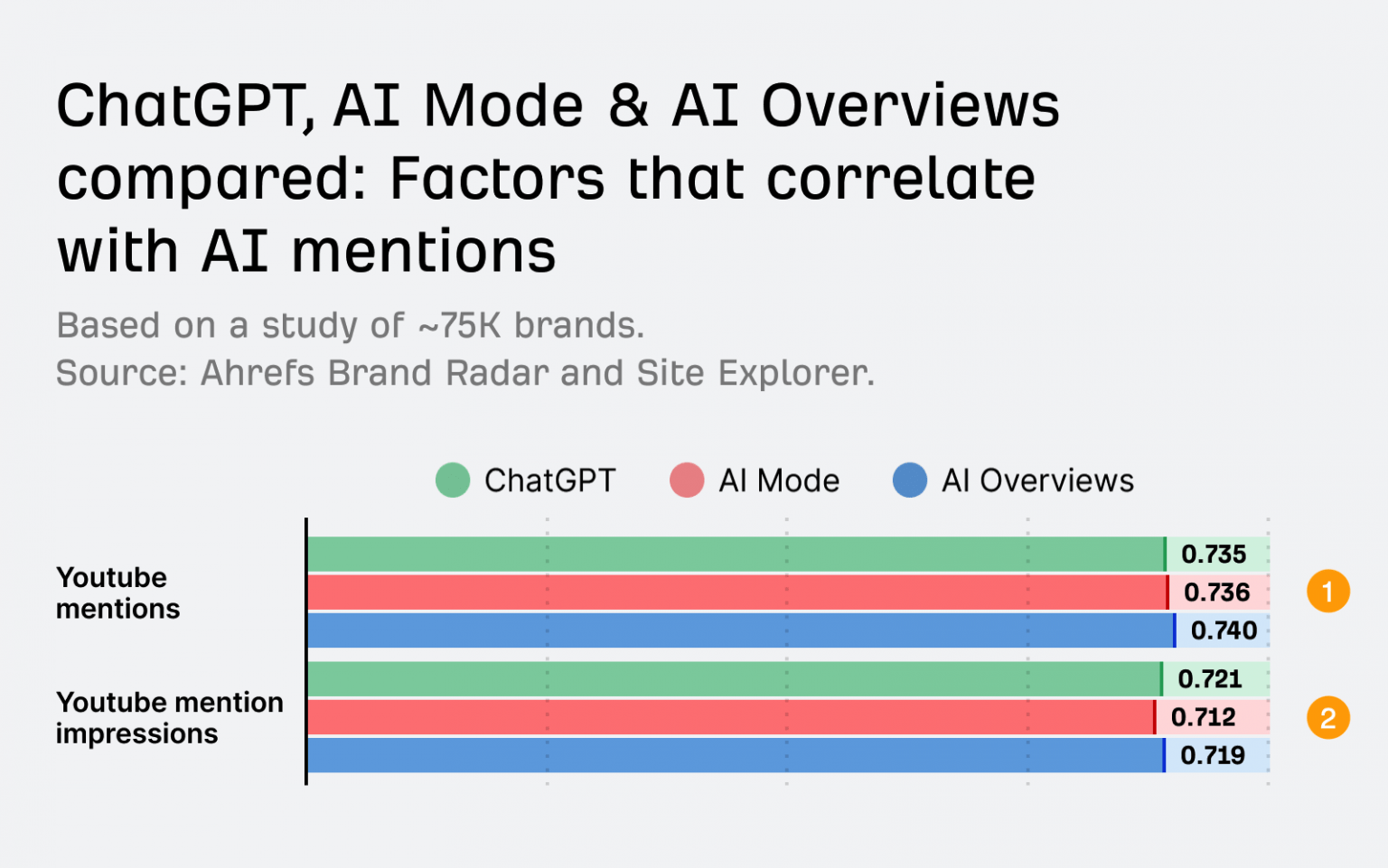
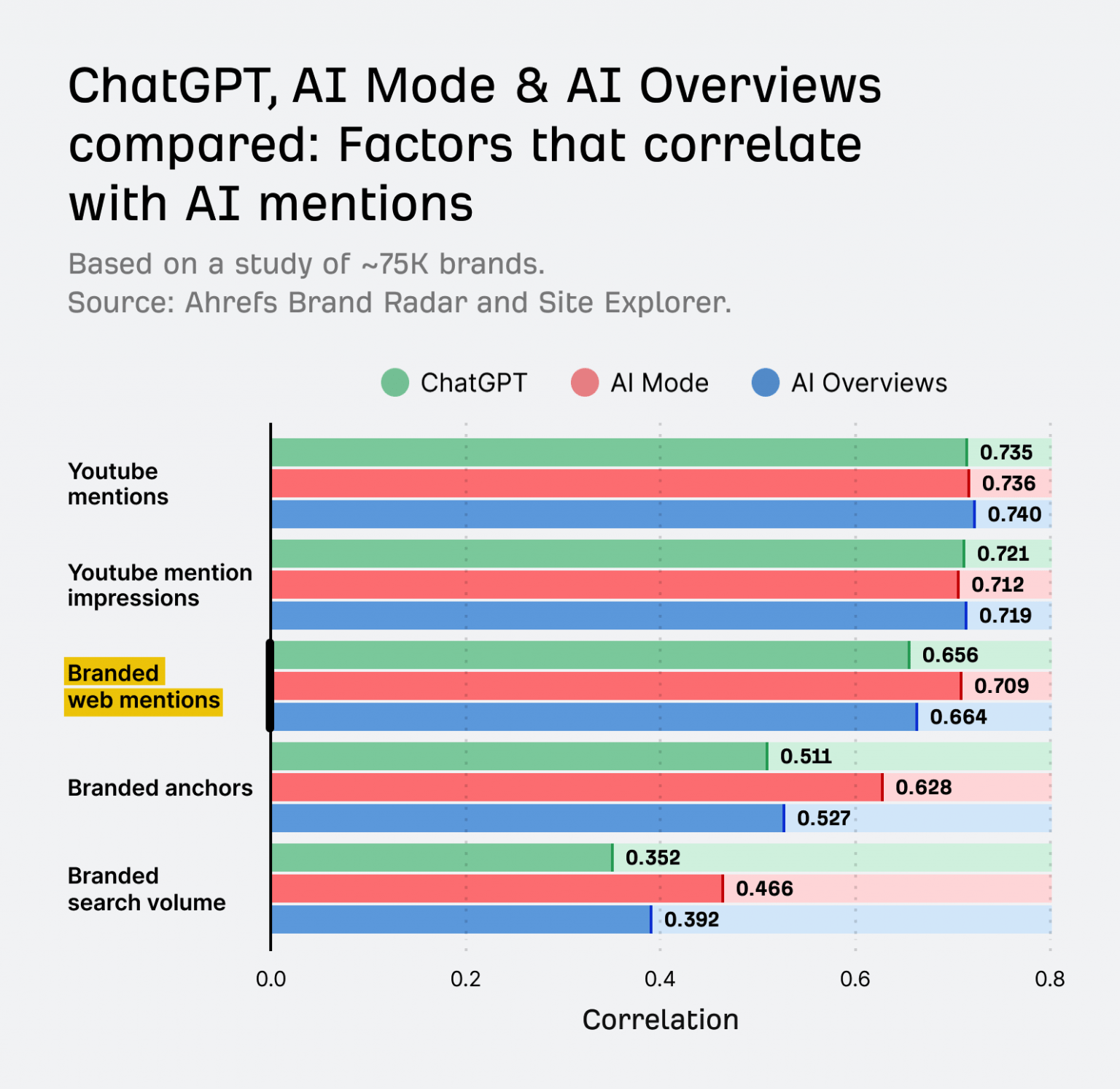
The effect goes beyond individual citations. When we looked at 75,000 brands, YouTube mentions correlated with AI visibility more strongly than any other factor (~0.737 across ChatGPT, AI Mode, and AI Overviews). That count includes videos other people make about you, like reviews and walkarounds. Your own channel isn’t the only thing that counts.
So, here are some ideas for videos you can make:
- Vehicle walkarounds. Give shoppers a closer look.
- Customer testimonials. Build trust authentically.
- Service & maintenance tips: Establish authority.
Review and vs content: Compare models (e.g., Kia Sportage vs Stonic). Share first-person insights on what’s better about a 2026 model vs 2025.
We’ve got an entire YouTube SEO course right here, so don’t miss it:
Before we wrap this section up, I wanted to show you how to find the aforementioned videos showing up on both Google and YouTube.
Head out to Ahrefs’ Keywords Explorer, paste in your seed keywords, and in the Matching terms report, turn on this SERP features filter:
The results will be all keywords where Google shows videos in the SERPs, just like this one:
Finally, here’s a good tip from Michelle: don’t just post to YouTube. Include videos on blog pages or make/model pages to boost engagement and time on page.
Automotive SEO for ChatGPT
Car buyers already use ChatGPT to shop. In a carsales survey of more than 2,000 Australians, 35% said they plan to use, or already use, AI to help find their next car. Of those, more than 70% prefer ChatGPT.
From the evidence I’ve collected, good SEO is a solid foundation for showing up in ChatGPT. ChatGPT runs searches on Bing and Google before answering, and in our study of 1.4 million ChatGPT prompts, 88% of cited URLs came from its general search index. If search engines can’t find and rank your pages, ChatGPT is unlikely to cite them.
But being good at SEO doesn’t guarantee a spot in the answer. Only 12% of the links ChatGPT, Gemini, and Copilot cite appear in Google’s top 10 for the same prompt. A few things seem to make a bigger difference in ChatGPT than in Google.
"Overshare" what you offer and what it costs
ChatGPT rewards specifics. In an experiment where we fed AI tools a fake brand, when the official information was vague, and a made-up source was specific, the AI went with the specific fiction almost every time. And when prices are hidden behind JavaScript, ChatGPT falls back to third-party sites for the numbers.
Buyers expect that detail, and AI assistants go looking for it. In Trade Me’s 2025 survey of New Zealand car buyers, 64% said insufficient vehicle history or condition details was a dealbreaker. And when Ben Poulton ran 40 car-buying conversations in Google’s AI Mode, 24 of the opening answers asked about budget. If price is the first thing the AI asks about, your prices need to be somewhere it can find them.
So publish more than feels necessary, and put it in plain text: stock, trims, prices or price ranges, finance terms, service menu prices, part lead times, warranty details, and opening hours for each department. If you don’t answer those questions, a listing site or a forum thread will.
Answer engine optimization forces a new kind of perspective on content. With SEO, we typically created pages to rank for specific search queries. With AEO, a page can still be valuable even if it never ranks in search, as long as it gives AI systems a reliable source of truth to reference.
Get covered on other people’s sites
What gets a business recommended is mostly what others say about it. Across 75,000 brands, branded web mentions correlated strongly with AI visibility (0.66 to 0.71 depending on the platform), while ChatGPT’s correlation with Domain Rating was weak (0.27).
For a dealership or repair shop, that means local news sites, regional magazines, community blogs, sponsorship pages, and “best mechanics in Austin” roundups. Reddit and Quora are among the top cited domains in AI Overviews, too, and that’s where a lot of honest “is this dealer any good?” conversations happen. Local PR is AI visibility work now.
Treat review sites as a source, not just social proof
ChatGPT pulls local information from review platforms. In July 2026, Yelp agreed to license its reviews, ratings, photos, and business details to OpenAI, so ChatGPT can use them in answers to local queries. Before that deal, BrightLocal already found Yelp was used as a source in 33% of the AI local searches it studied.
So keep your Yelp profile complete, keep your rating healthy, and reply to reviews there as carefully as you do on Google.
Claim your Bing Places listing
Bing Places is Bing’s version of Google Business Profile, and most dealers never touch it. Because ChatGPT relies on Bing’s index, an accurate Bing listing is one more consistent source ChatGPT can check your name, address, hours, and phone number against. It takes an afternoon to set up, and you can import your details from Google Business Profile.
ChatGPT builds your business card on the fly
One thing I noticed while testing: when I asked ChatGPT about local repair shops, it didn’t show a Google or Bing business profile. It put together its own card for each business from whatever sources it found, like the website, reviews, and directories.
So there’s no single profile you can polish and be done. What ChatGPT says about you is only as accurate as the least accurate source it finds, which is why consistent details everywhere matter even more here.
Make SEO and search ads work together
SEO and Google Ads work better together than apart. Instead of seeing them as competing strategies, think of them as complementary approaches that can amplify each other.
Use ads to test keywords before committing to SEO. SEO takes months to show results, but you can test keyword performance with ads in days. If a keyword converts well in paid search, it's probably worth targeting with SEO content too.
Cover all your bases. Use ads for competitive keywords where you're not ranking yet, seasonal promotions, and new inventory that needs immediate visibility.
For this, I’d recommend setting up the following filter in Keywords Explorer: bottom of funnel preset, KD from 50 and the cost per click you feel comfortable with as the maximum.
How to know if it's all working
Track these six key metrics to understand your SEO performance:
- Keyword rankings. Are you moving up for your target keywords?
- Share of voice. What percentage of traffic are you capturing compared to competitors for your tracked keywords?
- Organic traffic. How many visitors are coming from unpaid search results?
- Conversions. Are people actually filling out contact forms or booking service appointments? Track this by channel to see which efforts are paying off.
- Referring domain growth. How many quality websites are linking to you, and is that number growing?
- Technical SEO health. Are you staying on top of broken links, duplicate content, and site speed issues?
Keep an eye on competitors, too by monitoring their keyword rankings, tracking their content output, and setting up alerts for new rankings, backlink changes, and web mentions.
You can track all of the above using Ahrefs, and this guide will show you how to set it all up: SEO Tracking For Beginners: All You Need to Know. That includes form completions, custom events, and even funnels, all in the same tool.
And if you work for an agency, you can set up a report that updates on autopilot for each of your clients using Ahrefs’ Report Builder.
Final thoughts
My colleague Despina made me realize that ranking on Google is still important, but it’s not the only thing that matters anymore. People want real, honest opinions—from Reddit threads to TikTok videos (don’t miss our new TikTok SEO guide), forum discussions, YouTube reviews, and even AI tools like ChatGPT.
I’ve done it myself. It’s not that Google didn’t have answers—it had too many. So, I turned to ChatGPT and Gemini to help compare car sizes, safety ratings, reliability, warranty nitty gritty details and even wait time for spare parts on imported brands before I made the final decision.
The point is: real buying decisions are happening everywhere, not just on search engines. SEO is still the base, but if you want to stand out, your brand needs to show up wherever people are searching, scrolling, and asking for advice. In other words, your next move is “search everywhere optimization”.
Got questions or comments? Let me know on LinkedIn.
Mateusz Makosiewicz is a marketing researcher and educator at Ahrefs. He has been involved in marketing for over 15 years, specializing in growth marketing, content marketing, marketing strategy, and management.
Mateusz studied Advertising and Media Marketing at the University of Gdańsk. He gained his marketing experience in agencies, SaaS companies, and hardware companies where he worked in various roles, from managing advertising projects for clients to leading marketing departments.
On Ahrefs blog he writes about SEO and marketing based on experience drawn from testing probably every piece of marketing advice ever published, trial and error in startup marketing in the Silicon Valley, and tweaking growth engines like his life depended on it.

Keep learning



Your weekly marketing’s must-reads
Join 284K marketers for weekly news, useful reads, industry updates, and the memes you didn’t know you needed.
Explore what’s inside the newsletter →