


What is Answer Engine Optimization (AEO)?

Senior SEO Specialist at Ahrefs

Search is changing. People are no longer just “Googling it.” Increasingly, they’re asking AI systems for answers and getting them instantly without having to click and sift through different websites.
SEO is still essential for brands to show up in these answers, but visibility now depends on more than rankings. What matters is whether your brand and content are trusted and structured enough to be mentioned (your brand discussed in AI answers) or cited (your pages linked to in AI answers).
This is where answer engine optimization, or AEO, comes in.
It builds on SEO fundamentals and adapts them for AI search, helping your brand become the answer wherever people are asking.
Keep learning on YouTube
What is answer engine optimization?
Answer engine optimization (AEO) is the practice of making your content visible and useful to AI systems that deliver direct answers, whether that’s Google’s AI Overviews, voice assistants, or LLMs like ChatGPT and Claude.
Unlike traditional SEO, which focuses on ranking web pages in search results, AEO is about being mentioned and cited directly in the answers generated by AI search platforms.
That requires content to be clear, structured, and trustworthy so that answer engines can easily extract and present it.
AEO vs SEO
AEO doesn’t replace SEO; it complements it.
Both share the goal of making content discoverable, but they differ in how that content reaches people. SEO is still about ranking pages in organic search results. However, AEO is specifically about being cited or mentioned in AI answers, where there may not even be a list of links to click.
AEO | SEO | |
|---|---|---|
| Primary goal | Surface your brand and content inside AI-generated answers. | Rank pages in search results. |
| Content focus | Concise, declarative answers that AI can easily summarize. | Long-form, comprehensive pages that send ranking signals. |
| Query targeting | Question-based and informational queries, often “1 of 1” searches, unique to LLMs. | Broad, high-volume queries, including local and transactional ones. |
| Technical elements | Avoid JavaScript reliance, use speakable and FAQ schema, and provide clean datasets and answers AI can extract directly. | Optimize on-page elements like meta tags, headings, and internal links. |
| Measurement | Track citations and mentions in AI Overviews, LLM responses, and chatbot conversations. | Track webpage rankings, clicks, and impressions. |
| User journey | Often delivers brand exposure without a click (zero-click visibility). | Encourages clicks to your site for deeper engagement. |
AEO is still grounded in SEO fundamentals. You need crawlable, optimized content to be seen in the first place.
But once the basics are covered, the focus shifts from ranking a page to packaging information in a way AI can trust and reuse.
Why is AEO important?
The way people consume information is changing. Instead of clicking through multiple sites, they expect direct answers wherever they search.
This shift has several major implications for brands:
- Zero-click searches are becoming the norm. AI-generated answers often resolve a query on the spot. Even if users never visit your site, appearing in the cited answer can still build authority and brand recognition through search.
- Organic traffic is under pressure. Traditional rankings still matter, but clicks are no longer guaranteed. Visibility inside AI responses is now as critical as visibility in traditional search result pages.
- Business impact goes beyond SEO. When fewer visitors reach your website, the effects ripple through sales, product, and customer success teams. Therefore, protecting brand presence in AI answers ensures customers continue to encounter your expertise, even off-site.
- AI is shaping new user habits. Voice-ready answers and conversational interactions are still early, but they’re growing quickly. As AI assistants become part of everyday work and personal life, people will rely on them as default gateways to information.
In short, search experiences are moving from links to answers.
Brands that adapt with AEO can maintain visibility, authority, and customer trust in a landscape where traffic alone is no longer the only measure of success.
How to get started with AEO
Getting started with AEO means shifting your mindset from ranking pages to being mentioned and cited.
That requires targeting the right questions, structuring content in a way answer engines can easily access, and strengthening the authority signals that make your brand a trustworthy source.
The steps below outline a practical AEO process you can follow to build consistent visibility in AI-powered search results. We’ll cover each of these in more detail in subsequent chapters.
Step 1: Start tracking your AI visibility
If you have an existing brand, start by discovering what answer engines like ChatGPT are already saying about it, using an AI visibility tool like Ahrefs’ Brand Radar.
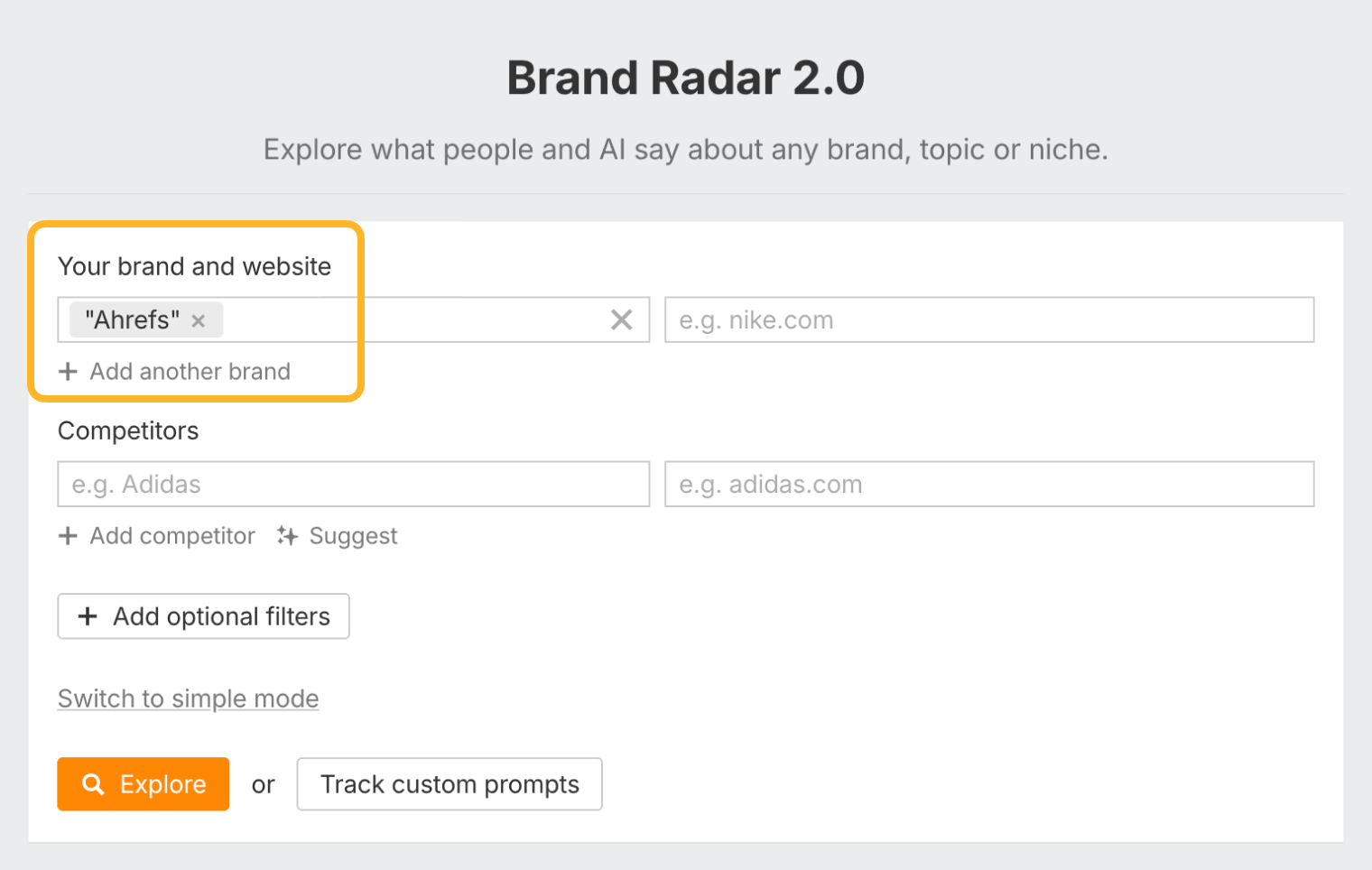
You can check this manually at a small scale, but it’s an expensive process: every answer engine, from ChatGPT to AI Mode to Claude, will say something different about your brand.
In the AI responses tab of Brand Radar, you can quickly see what different AI search platforms say about your brand:
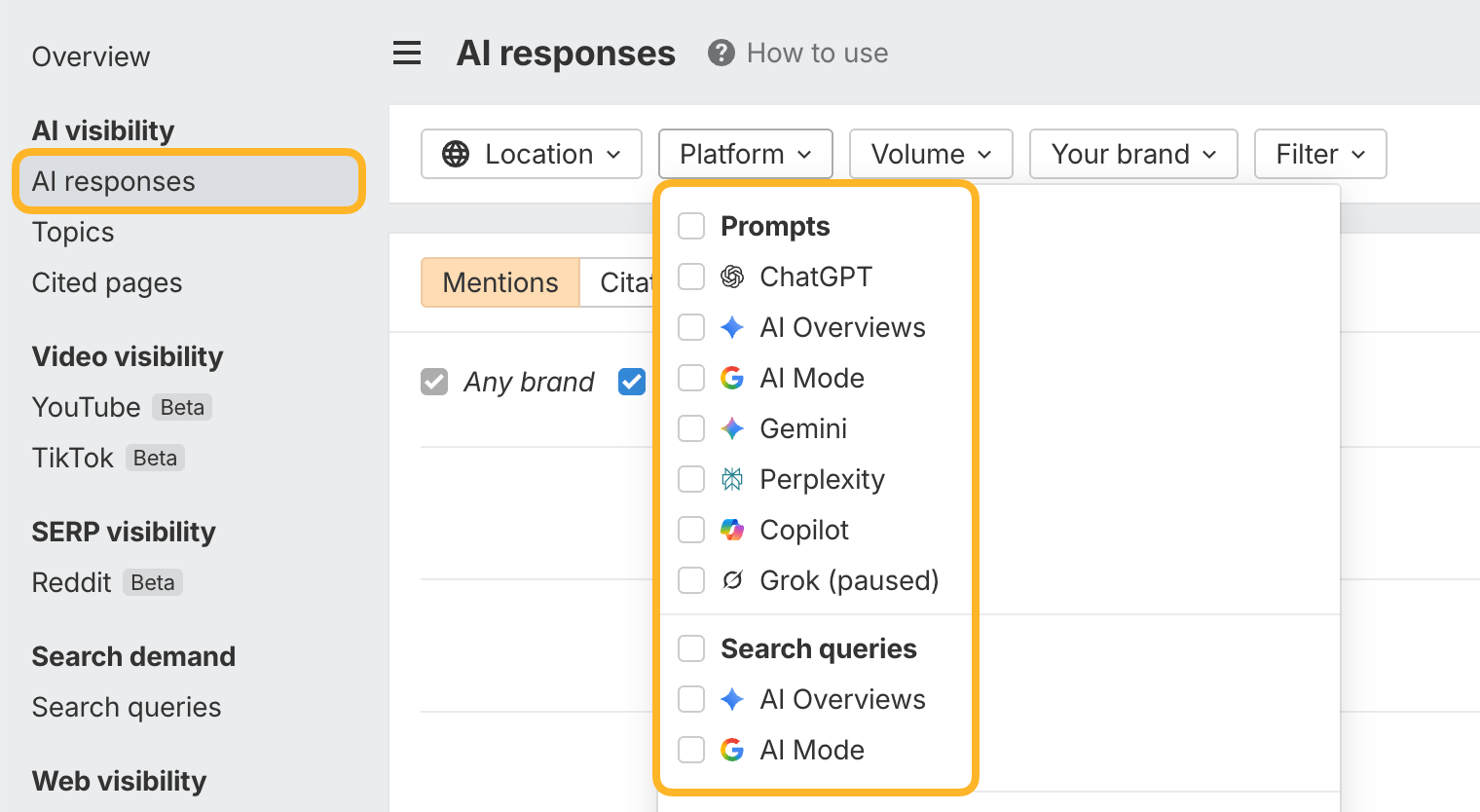
You can also compare it to what they say about competitors and how much coverage you have in your market or niche.
Check out the AI answers provided for common queries. They’ll look like this:
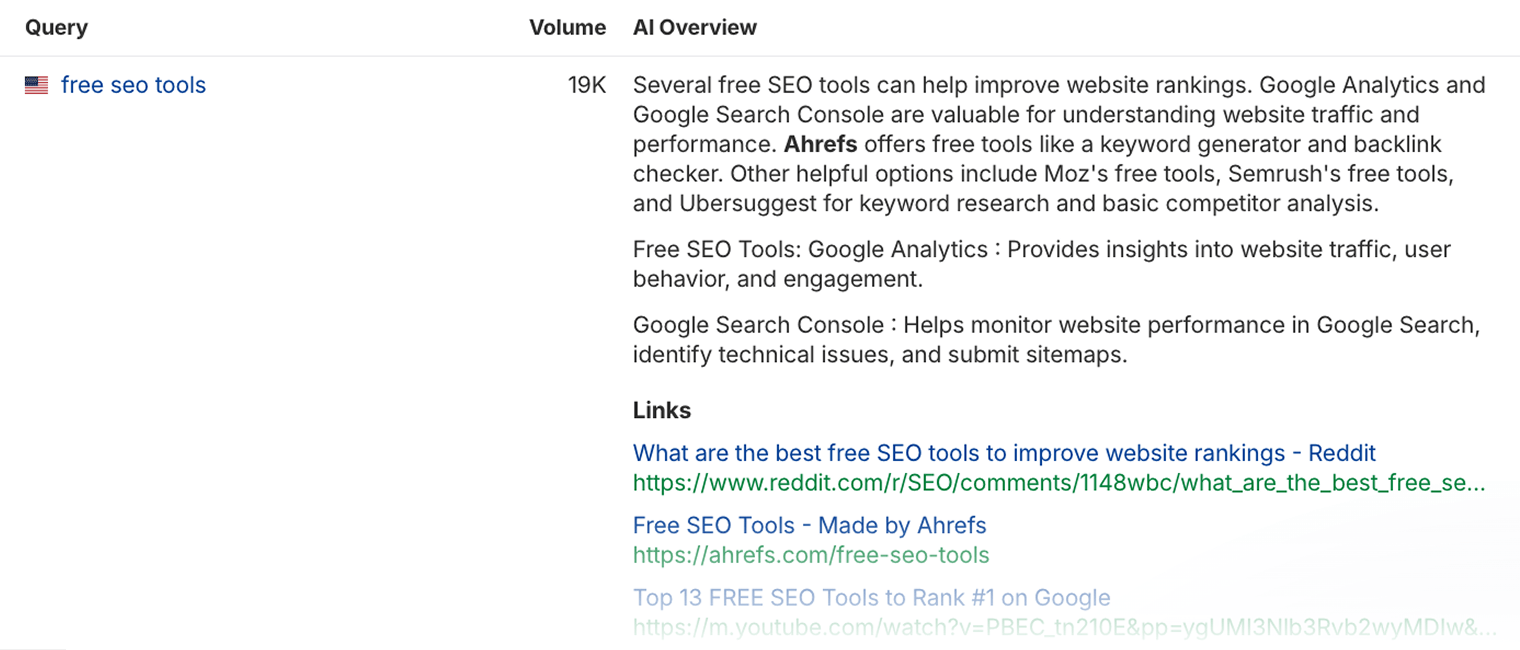
Look for patterns in what AI answers say about you, especially when they get things wrong or when your branding is inconsistent. It helps to list these queries and the sources cited so you can work on overcoming the misinformation and brand inconsistencies.
Step 2: Choose the right prompts to track
Every business has a handful of business-critical topics for which they want excellent visibility. As part of your answer engine optimization process, you can identify these topics, create prompts based on them, and monitor if and how your brand appears in the responses to these prompts.
This is known as prompt tracking. Here’s what it looks like in Brand Radar:
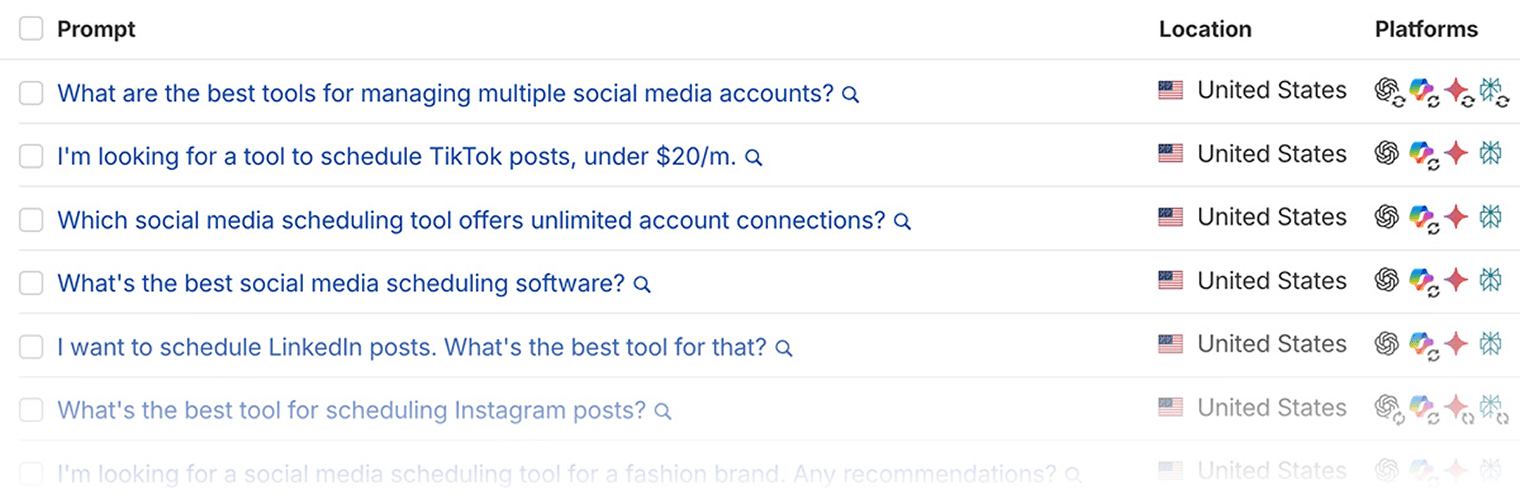
If you’re wondering which prompts you should track, we recommend a few different types:
- Non-branded discovery prompts: The “best X for Y” questions your buyers ask before they know you exist. Sourced from People Also Ask, question keywords, and forum threads, these show whether you’re in the consideration set at all. Example: What’s the best SEO tool for a small in-house marketing team?
- Brand accuracy prompts: Questions specifically about you, covering pricing, features, complaints, and competitive positioning. The point is checking whether what AI says matches reality, since inaccuracies here directly cost deals. Example: Does Ahrefs let you track custom AI prompts?
- Conversational versions of your money keywords: Take the terms driving traffic to your highest-converting pages and rewrite them as natural language. This anchors your tracking to topics with proven commercial value. Example: “free keyword generator” becomes Where can I generate keyword ideas without paying for a subscription?
- Competitor gap prompts: Queries where rivals get mentioned and you don’t. These double as a content audit, since absence usually means you have no relevant page. Example: Which tools show you which sites link to my competitors but not to me?
- Topics you already appear in: The themes AI currently associates with your brand. Worth tracking because these are the easiest positions to lose and the cheapest to defend. Example: How do I check a website’s domain rating?
If you’re unsure, start by prioritizing queries around high-value topics. You can always expand your prompt tracking later.
Step 3: Fix incorrect information about your brand in AI answers
If AI answers include incorrect details about your brand, it usually comes down to:
Too little information on your website
Inconsistent assets like logos, taglines, or messaging
Misrepresentation by third-party content
AI pulling from unreliable sources
Start by reviewing the queries where errors appear. Note what’s wrong and which sources were cited.
For brand-specific details (like your name, tagline, or mission statement), check your site and social profiles for consistency first. You can follow our brand SEO process to do this.
You may need to close content gaps on your website to correct more general misinformation about your brand.
For example, the query “what does Ahrefs stand for” produces a passable answer in Google’s AI Overviews, but it’s not a direct answer to the question.
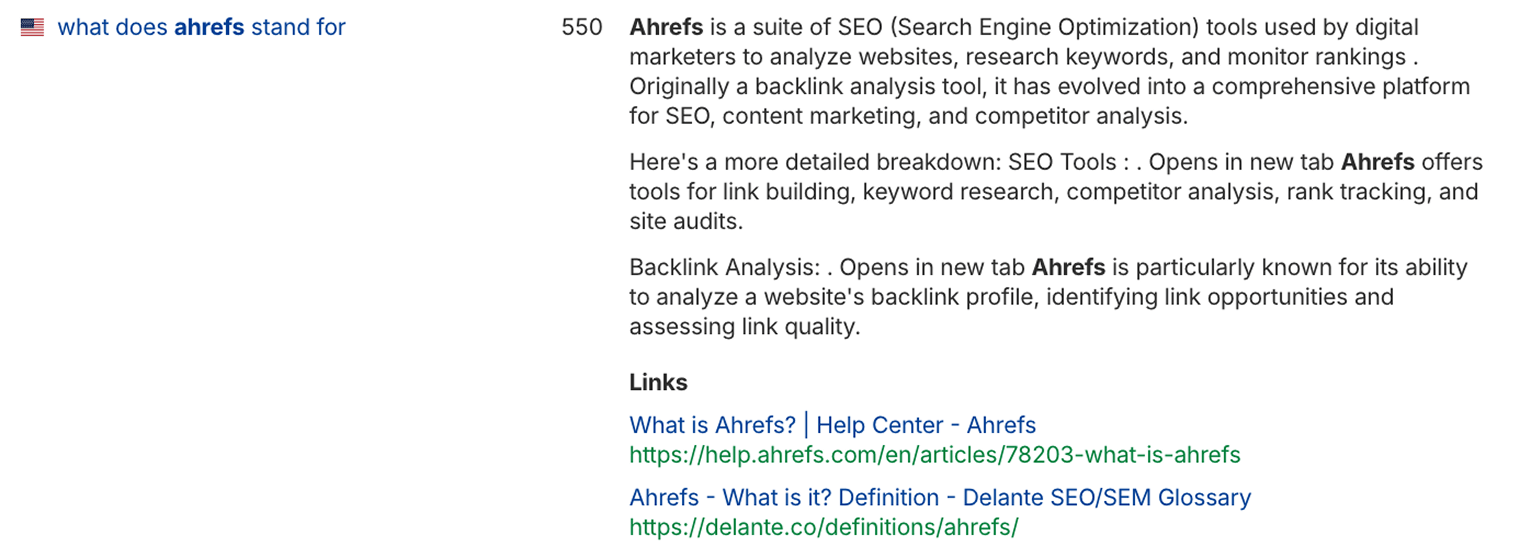
It’s likely because there is no content on the website answering this exact question. So, if we wanted to make the answer more accurate, we could add a short FAQ to the page that’s cited in the AI response already. Something like:
What does Ahrefs stand for?
If your site has no information on a query, publish a new page or section to fill the gap. Here’s a helpful workflow for this:
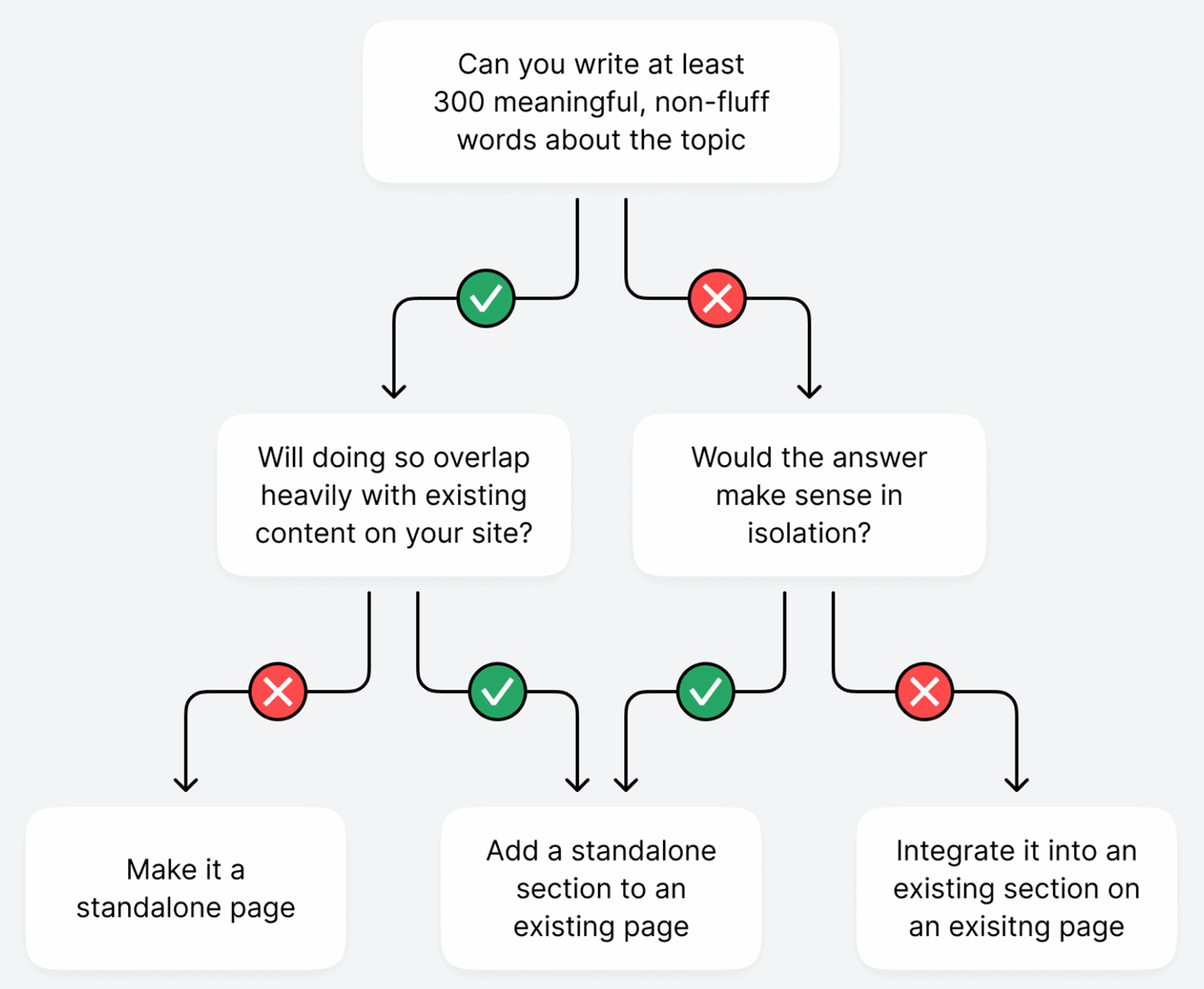
If content exists but AI still incorrectly cites other sources, consider updating your content on third-party sites like G2, YouTube, Google Business, and more.
You can also try outreach. Contact the cited authors and offer updated, accurate information to ensure your brand is represented correctly. It’s slower, but worthwhile if misinformation risks confusing or losing clients.
Step 4: Create and optimize content to rank in AI search
Once you know which topics you’re already visible for, the next step is finding the ones you’re missing.
Brand Radar’s Overview tab compares your AI visibility against your competitors across mentions, impressions, and AI Share of Voice, broken down by platform. Click into any platform and you can read the actual AI responses behind those numbers, filtered three ways: Only brand (responses mentioning just you), With others (responses mentioning you alongside competitors), and Others only.
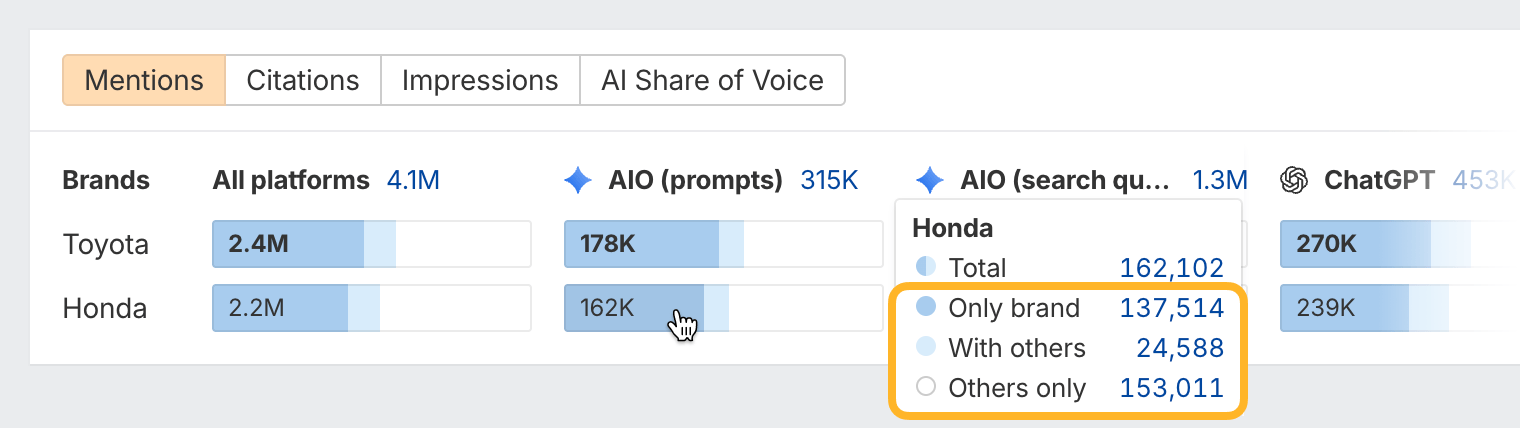
That last report is the one that matters here. It surfaces every query where AI answers the question, recommends your competitors, and leaves you out entirely.
Each of those queries is a topic gap. You already know AI answers questions on the subject and that your competitors are earning the mentions, so the path to closing the gap is straightforward: work down the list, decide which conversations you want to be part of, and create content on the topics worth winning.
Once you’ve identified the right queries, the next step is structuring your content so answer engines can easily lift and reuse it.
- Rank in traditional search first: 88% of ChatGPT’s cited URLs come from its general search index, so a page that can’t be found conventionally never enters the running.
- Build clusters, not single pages: Prompts get broken into shorter fan-out queries during retrieval, and those queries are probabilistic, so you can’t target one reliably. Look at many in aggregate and cover the recurring themes.
- Write the formats AI commonly cites: Blog lists dominate ChatGPT’s sources at 43.83%, but comparison pages, original research, definitions, and free tools all answer a question completely and can be verified.
- Refresh pages that already earn citations: AI-cited URLs are 25.7% fresher than organic results on average, and pages with a proven citation record are the highest-leverage ones to update. Only refresh when something has meaningfully changed.
- Structure passages so they can be mentioned and cited: 44.2% of citations come from the first 30% of a page, so lead with the answer, write declarative and specific sentences a model can quote verbatim, and repeat your core takeaway across the intro, body, and conclusion.
- Prioritize information gain. Go beyond surface-level definitions. Provide unique insights, context, or data that make your content more valuable and more likely to be chosen for AI answers over generic alternatives.
If you’ve already been structuring your content following SEO best practices, there won’t be much you need to change in your workflow here.
If your content is written clearly, structured logically, and provides genuine information gain, you stand the best possible chance of being retrieved by answer engines.
Step 5: Build brand mentions
Answer engines don’t just look at what’s on your website. They also weigh how the wider web perceives your brand.
If you want AI systems to mention your brand or cite your content, you need to demonstrate authority within and beyond your own website. You can strengthen these signals by focusing on:
- Backlinks and citations: Earn links from reputable domains in your niche, and analyze which sites are most frequently mentioned and cited so you can target them directly.
- Co-mentions with trusted entities: Aim to have your brand mentioned alongside well-known names or organizations. LLMs can interpret these associations as signals of credibility.
- Third-party platforms: Keep your information consistent across directories, review sites, and industry publications. These external data points often feed into AI training sets.
Taken together, these signals expand your authority footprint beyond your own website. The stronger your presence across the wider web, the more likely answer engines are to recognize and cite your brand.
An easy way to earn more relevant links and mentions is to find pages that are frequently cited in AI answers.
If you want to build more links and mentions in resources that are frequently cited in AI responses, check out the Cited domains and Cited pages reports in Brand Radar:
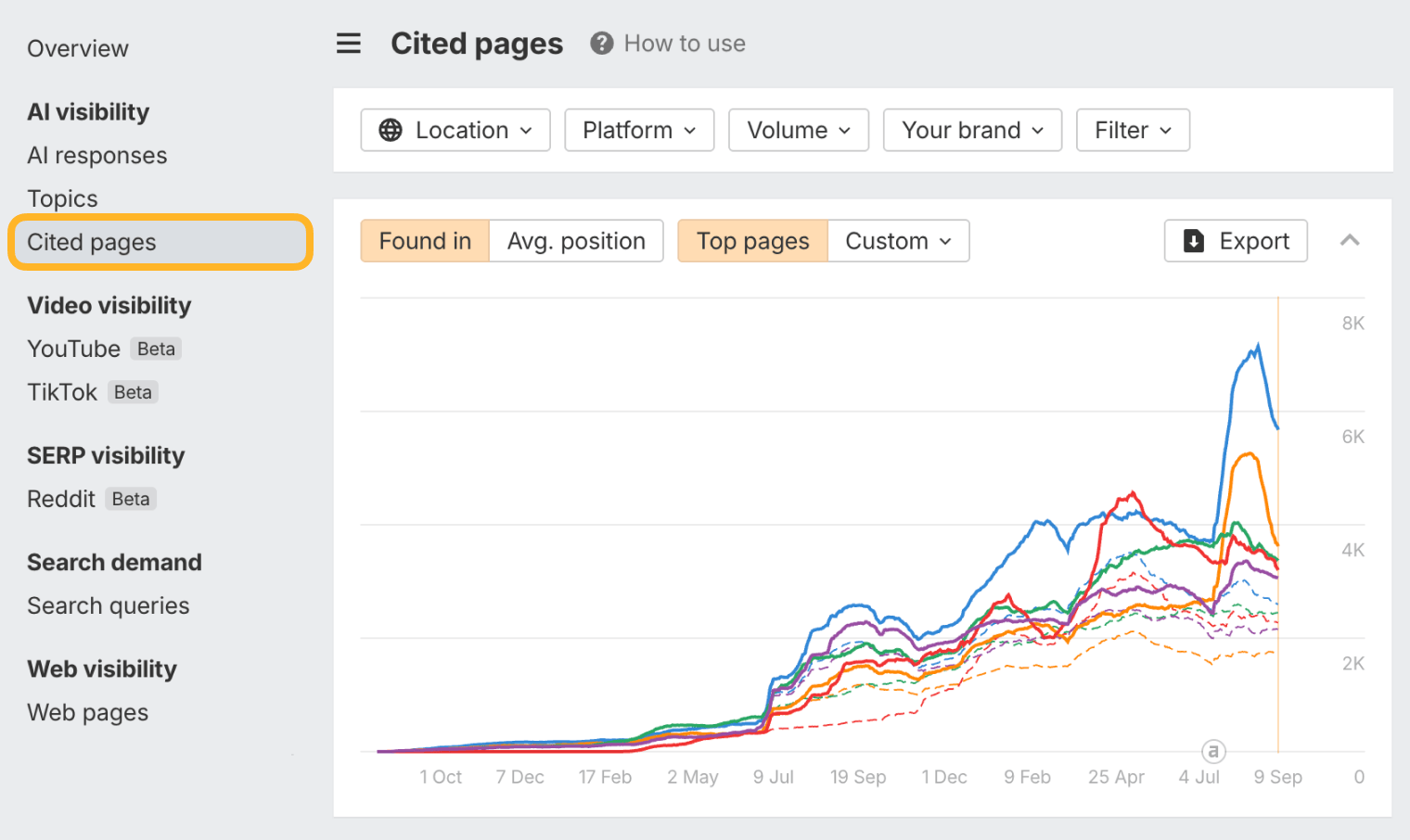
You can check these out for competitors to find publications that mention them and are likely to also mention you. You can also try it out for websites that frequently write about your core topic.
You’ll get a list of websites or pages frequently appearing in AI answers.
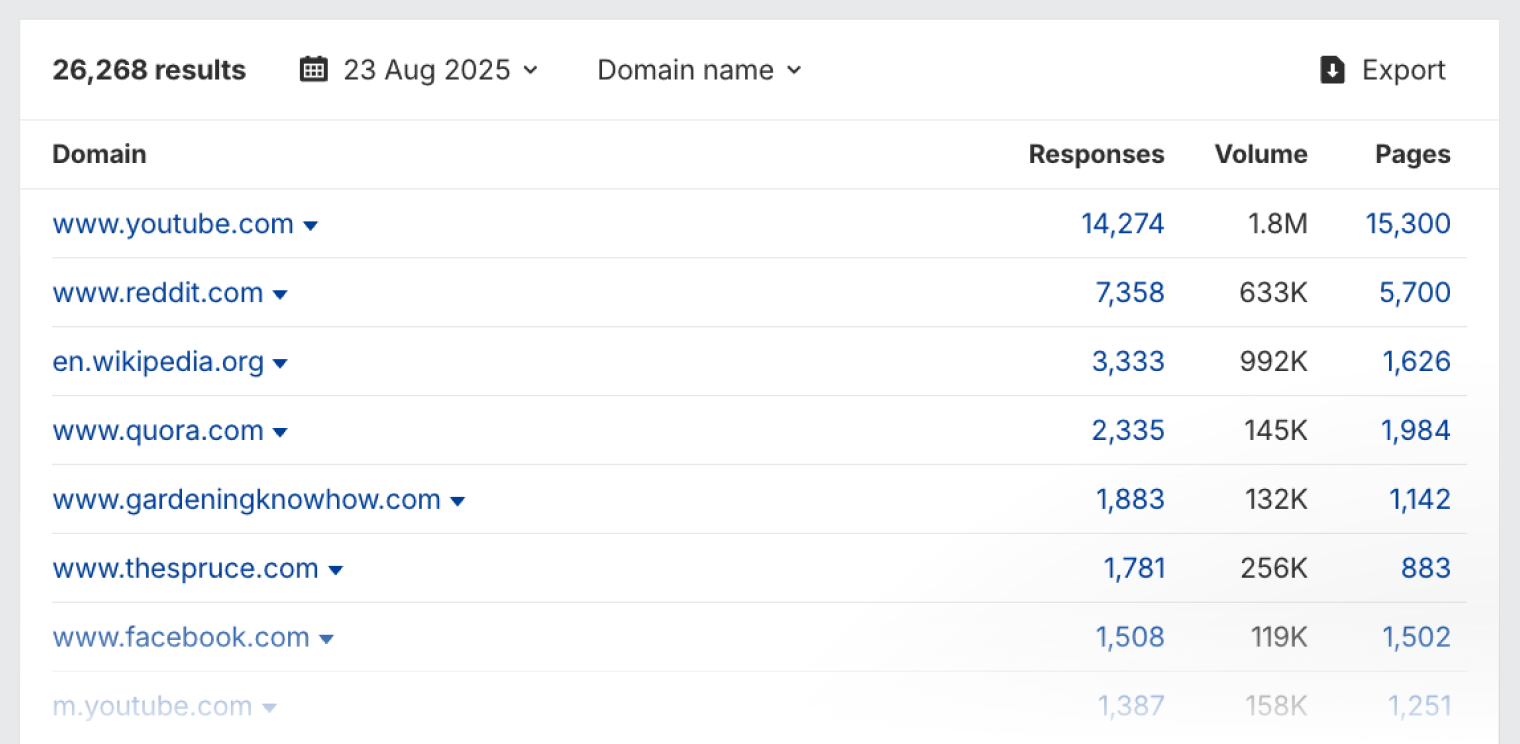
AI search platforms often visit these pages and summarize their content.
Showing up here will reasonably quickly expose your brand to more AI search platforms and earn you more mentions in the answers they generate.
Step 6: Implement technical AEO strategies
Technical foundations still matter for AEO. Answer engines rely on structured, crawlable data to understand your content and decide whether to cite it.
While many of these overlap with traditional SEO, the emphasis shifts toward clarity and machine readability.
- Make sure AI bots can access your website: GPTBot is now the most blocked AI crawler at 5.89% of sites, and CDNs like Cloudflare block AI platforms by default, so this often happens without anyone deciding it. Each platform runs several bots with different jobs.
- Serve crucial content in raw HTML: Most AI crawlers don’t render JavaScript the way a browser does, so anything that only appears client-side is invisible to them.
- Fix slow pages: ChatGPT appears to abandon pages that take longer than about two seconds to respond, so speed decides whether you enter the context window at all.
- Skip llms.txt: 97% of valid llms.txt files received zero requests in a month, and no major LLM provider has committed to reading one. Google’s own documentation calls it unnecessary.
- Redirect the URLs AI invents: AI assistants send visitors to 404s 2.87x more often than Google, with ChatGPT at 1.01% of clicked URLs. Hunt hallucinated, outdated, and misspelled variants in your 404 report, filtered to AI referrers.
- Establish yourself as a recognizable entity: Schema markup can help answer engines tell your brand apart from everything else, alongside consistent facts across your site, profiles, and third-party listings, plus mentions from authoritative publications.
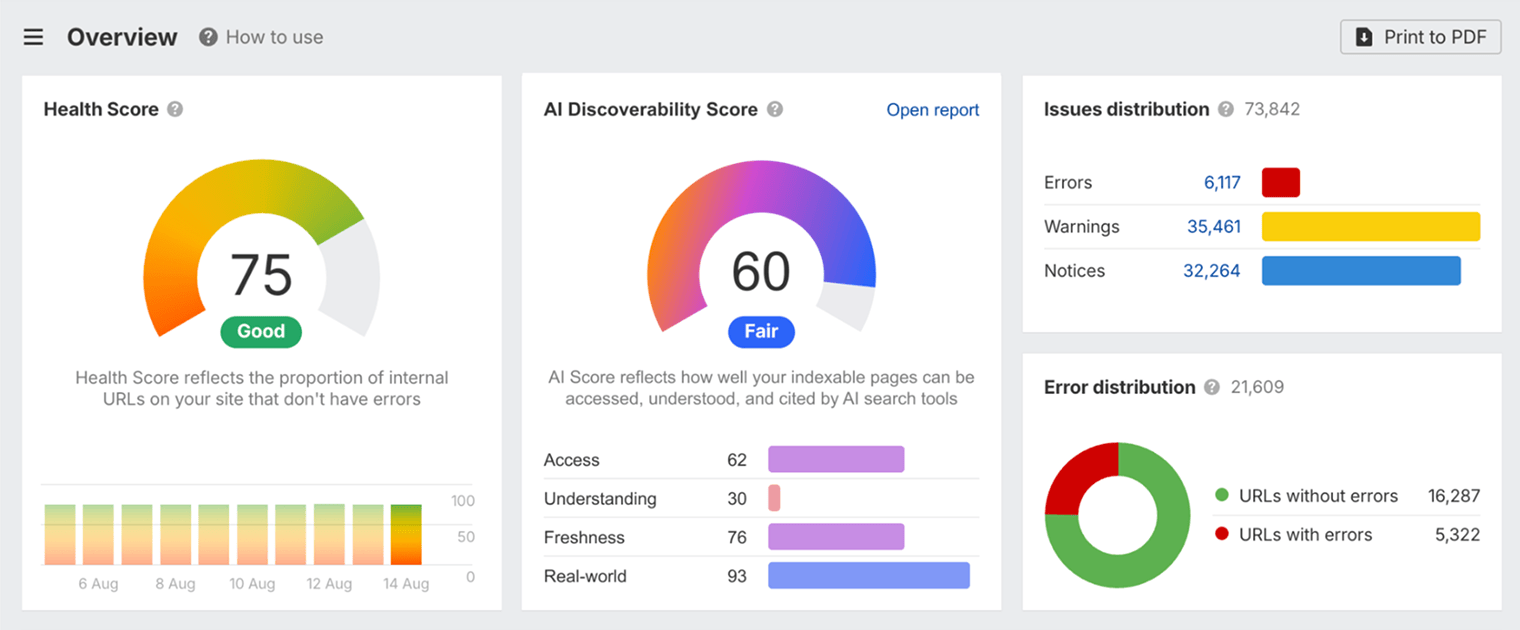
Quickly check for common technical AEO problems with the new AI Discoverability report in Ahrefs Site Audit:
Step 7: Report on AEO performance
Answer engine optimization isn’t a one-and-done project. AI platforms change quickly, and the only way to stay visible is to track your performance and adapt continually.
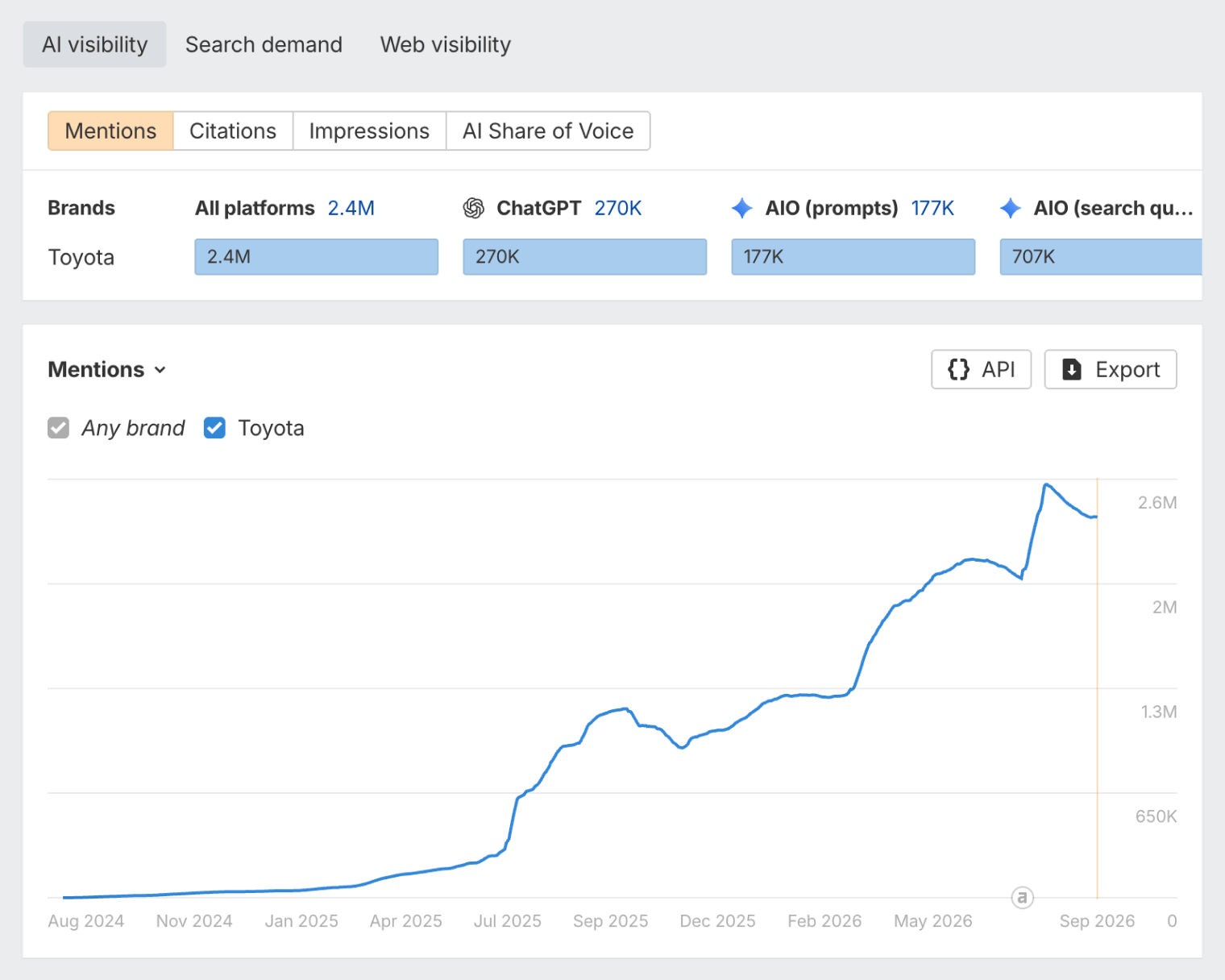
Start by reporting on where your brand is cited. Tools like Brand Radar or other AI overview trackers can show you how your visibility improves or declines over time:
It also helps to track:
Changes in which queries surface your brand or content
Changes in which competitors are mentioned
Changes in responses for queries with incorrect information about your brand
Pair this with tools like Ahrefs’ Web Analytics to measure visitors to your website that come from organic and AI search results.
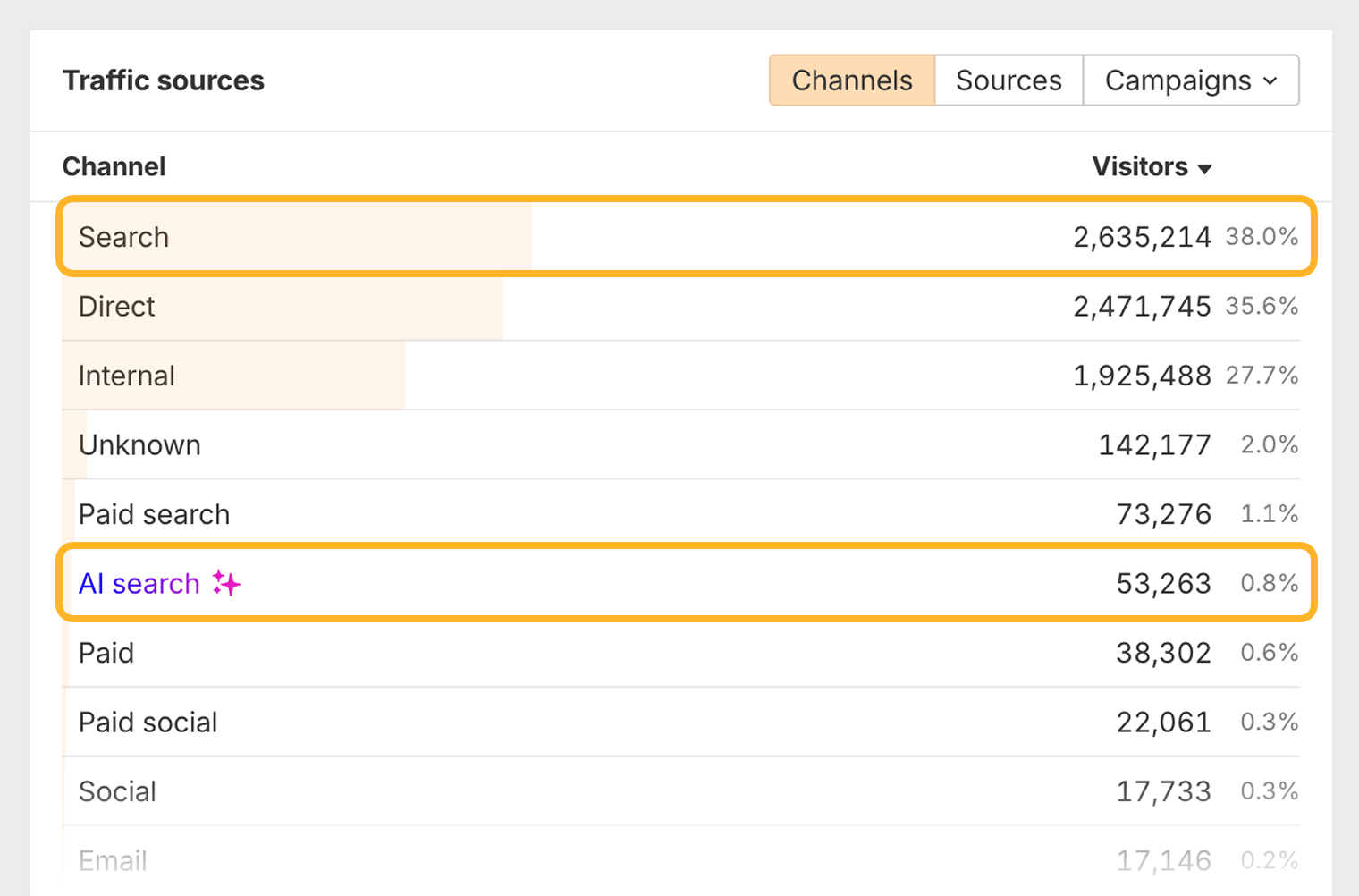
Connecting this data back to your broader SEO and marketing metrics ensures AEO efforts contribute to business impact.
How long does answer engine optimization take?
From what I’ve seen, AEO typically takes weeks to months for established brands and 12–18 months for new brands with little online authority.
Established sites with strong SEO foundations can quickly see early wins by fixing brand inconsistencies, closing topic gaps, and improving third-party brand mentions. These adjustments help AI search platforms trust and cite your content sooner.
New or lesser-known brands face a longer timeline because they often need to build a solid SEO foundation before they can generate reliable mentions in AI responses.
Building credibility requires steady publication of high-quality content, consistent authority signals, and off-site mentions. Without that groundwork, it’s difficult to earn visibility in AI answers.
Future trends in AEO
Answer engines are still evolving, and the way they surface information will continue to shift. A few key trends are already taking shape:
- Deeper integration of generative AI in search. Features like Google’s AI Mode are still in early stages. Expect broader rollouts and richer formats that pull in more structured content.
- Personalization of answers. As context windows expand and models gain more memory, AI systems will tailor responses more closely to individual users, making brand trust and accuracy even more critical.
- Rising importance of structured data. All major AI companies are hungry for reliable data sets. Brands that publish well-structured, high-quality information might have an edge in being cited.
- Monetization and bias. Platforms may increasingly favor their own products or paid partners in AI results. This will pressure brands to identify the queries and opportunities still available for organic visibility.
In short, AEO will become less about gaming search systems and more about supplying clear, trusted information that AI search platforms can rely on. Brands that prepare now will be best positioned as these trends accelerate.
Final thoughts
As search shifts toward AI-generated answers, visibility depends on more than rankings. Brands need to be recognized as trusted sources that answer engines can cite directly.
AEO builds on a solid SEO foundation, making it a specialized subset of SEO rather than a replacement.
Start small, track results, and refine over time. Early adopters gain an edge, but lasting visibility belongs to brands that treat AEO as an ongoing process.
To simplify this process, check out Ahrefs’ Brand Radar, the AEO platform for researching, analyzing, and monitoring your visibility in AI search responses.
Despina Gavoyannis is a Senior SEO Specialist at Ahrefs, a leading marketing platform for search, AI, and beyond.
She has worked in SEO for over 10 years, specializing in revenue-driven strategies and collaborating closely with cross-functional teams, including UX designers, developers, and marketers.
Before joining Ahrefs, Despina worked as an SEO consultant, providing strategic guidance and education to in-house and agency teams. Her work has helped generate more than $125 million in additional annual organic revenue for the brands she’s partnered with.
Despina is the author of one book, two SEO courses, and has been featured in publications such as Search Engine Journal, Wix, Crazy Egg, and Learning SEO.
Explore all AEO guides
What Is Answer Engine Optimization (AEO)?
Start here. What AEO is, how it differs from SEO, and the seven steps to getting started.
How Answer Engines Work
What actually happens between a prompt and an answer — and where your brand can enter the process.
How to Track AI Visibility
You can’t optimize what you can’t see. Seven ways to measure where your brand shows up in AI answers.
How to Choose the Best Prompts to Track
Track clusters of prompts, not one-off responses. Eleven places to find the queries worth monitoring.
How to Optimize Content for Answer Engines
Ranking gets you considered. This is how you get cited — the topics, formats, and on-page changes that work.
How to Monitor and Win Brand Mentions in AI Answers
AI recommends the brands it has seen discussed elsewhere. Here’s how to monitor those mentions and earn more of them.
How to Optimize Your Website for Answer Engines
The technical fixes that decide whether AI can reach your pages, read them, and work out who you are.