
How to Optimize Content for Answer Engines

By Ryan Law
Director of Content Marketing at Ahrefs

The pages AI assistants pull from are, overwhelmingly, pages that already rank in traditional search engines.
Our study of 1.4 million ChatGPT prompts found that 88% of cited URLs come from ChatGPT’s general search index. If you aren’t in that pool, nothing else on this page will help you.
But ranking only gets you considered. ChatGPT retrieves around 16 URLs per prompt and cites about half of them. Two pages can rank side by side, get retrieved together, and only one actually earns the citation.
This chapter covers what to write about, how to maximize your chances of actually getting cited by AI, and which content formats work best.
Keep learning on YouTube
Create content clusters for topics you care about
For some time, we thought if we ranked for the same query the AI is answering, we’d improve our AI visibility.
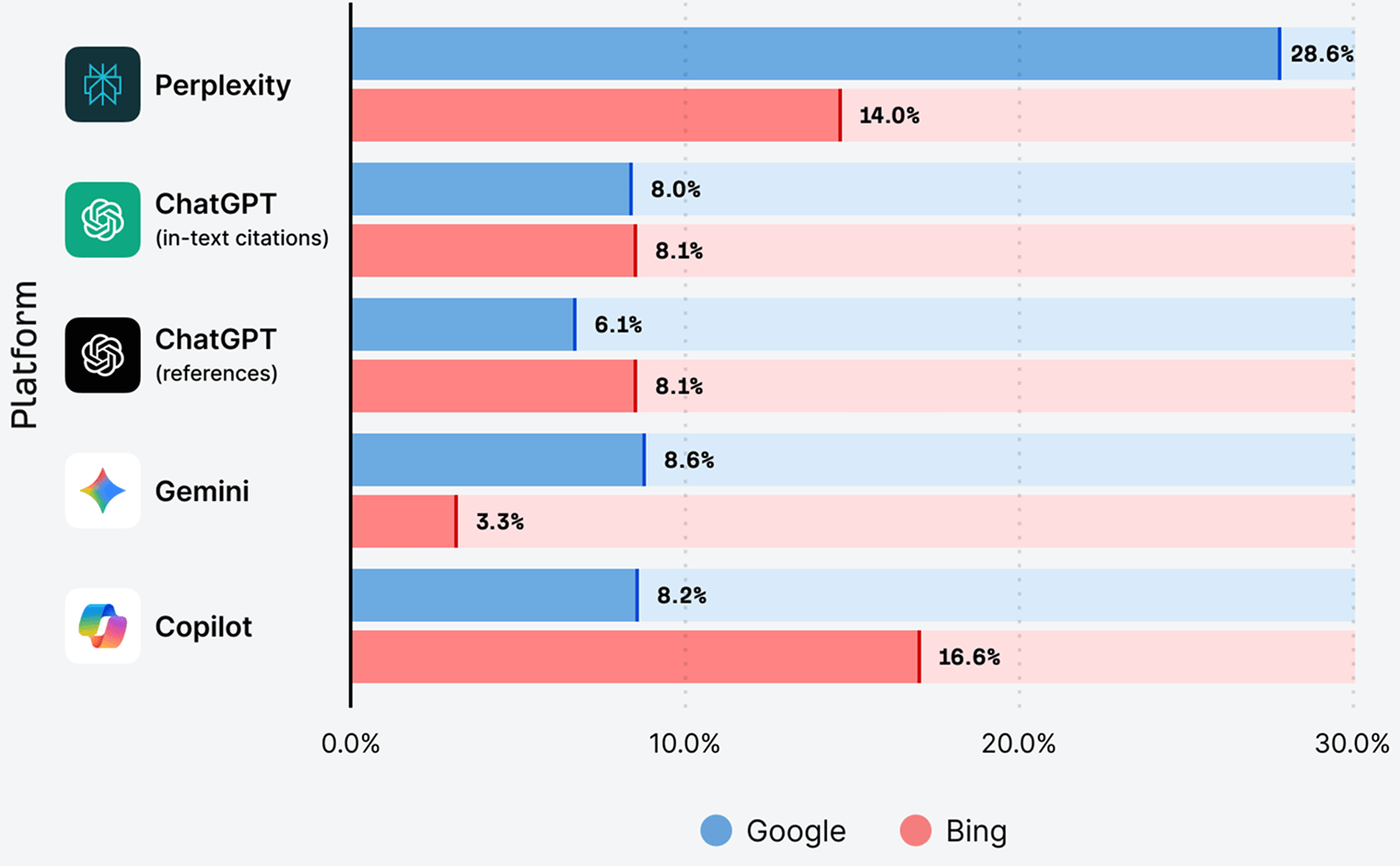
But that’s not quite the case. Our research shows only 12% of links cited by ChatGPT, Gemini, and Copilot actually appear in Google’s top 10 results for the same prompt.
Citations overlap between AI assistants and the top 10 search results
Ahrefs study of 15,000 prompts.
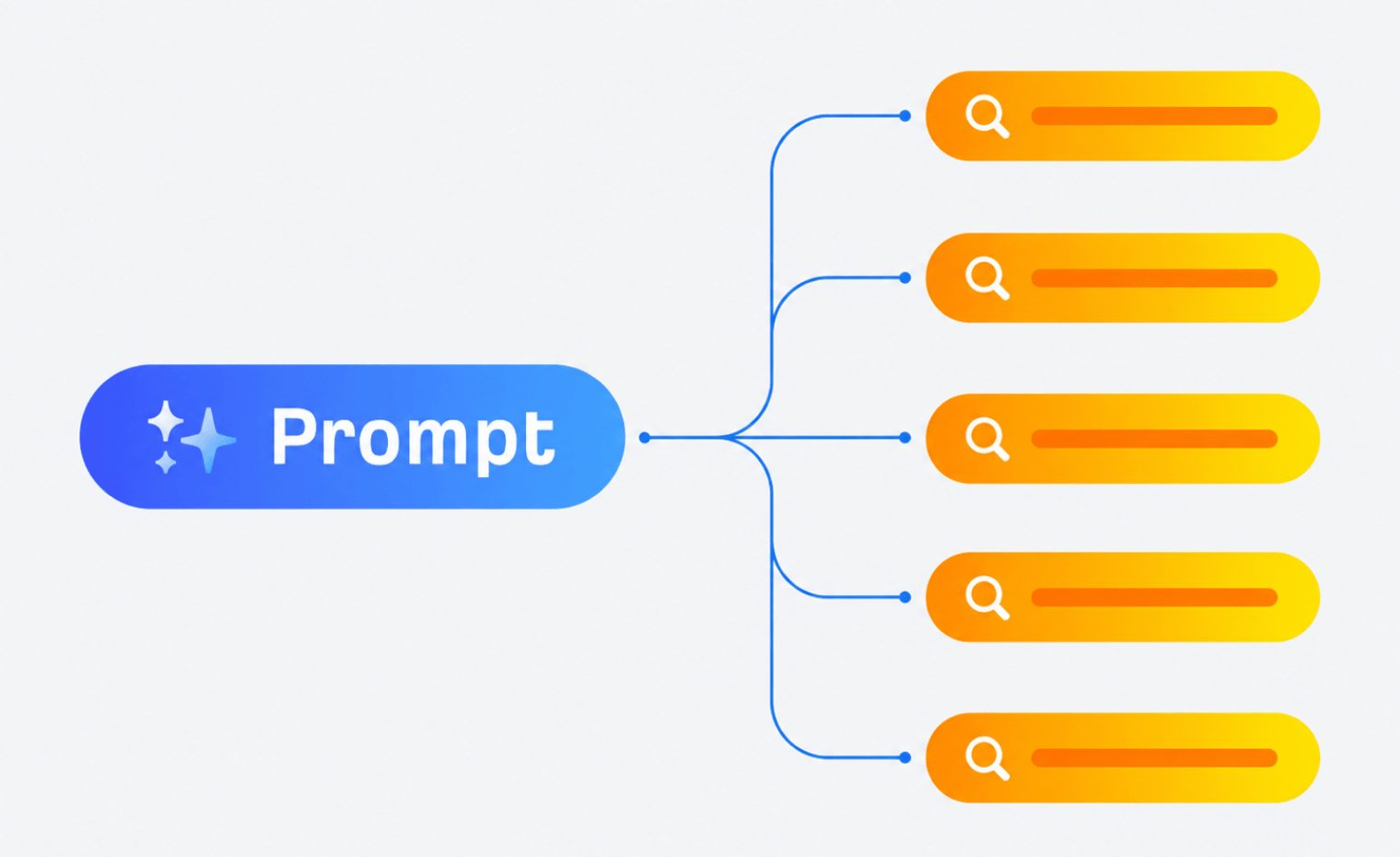
AI assistants may never actually search for the direct user prompt.
That’s because those long, unique prompts get translated into multiple shorter search queries called “fan-out queries” during the process of retrieval-augmented generation (RAG).
Further reading
The prompt is a catalyst, and the fan-out queries are what actually hit the search index.
You can see these queries inside Brand Radar.
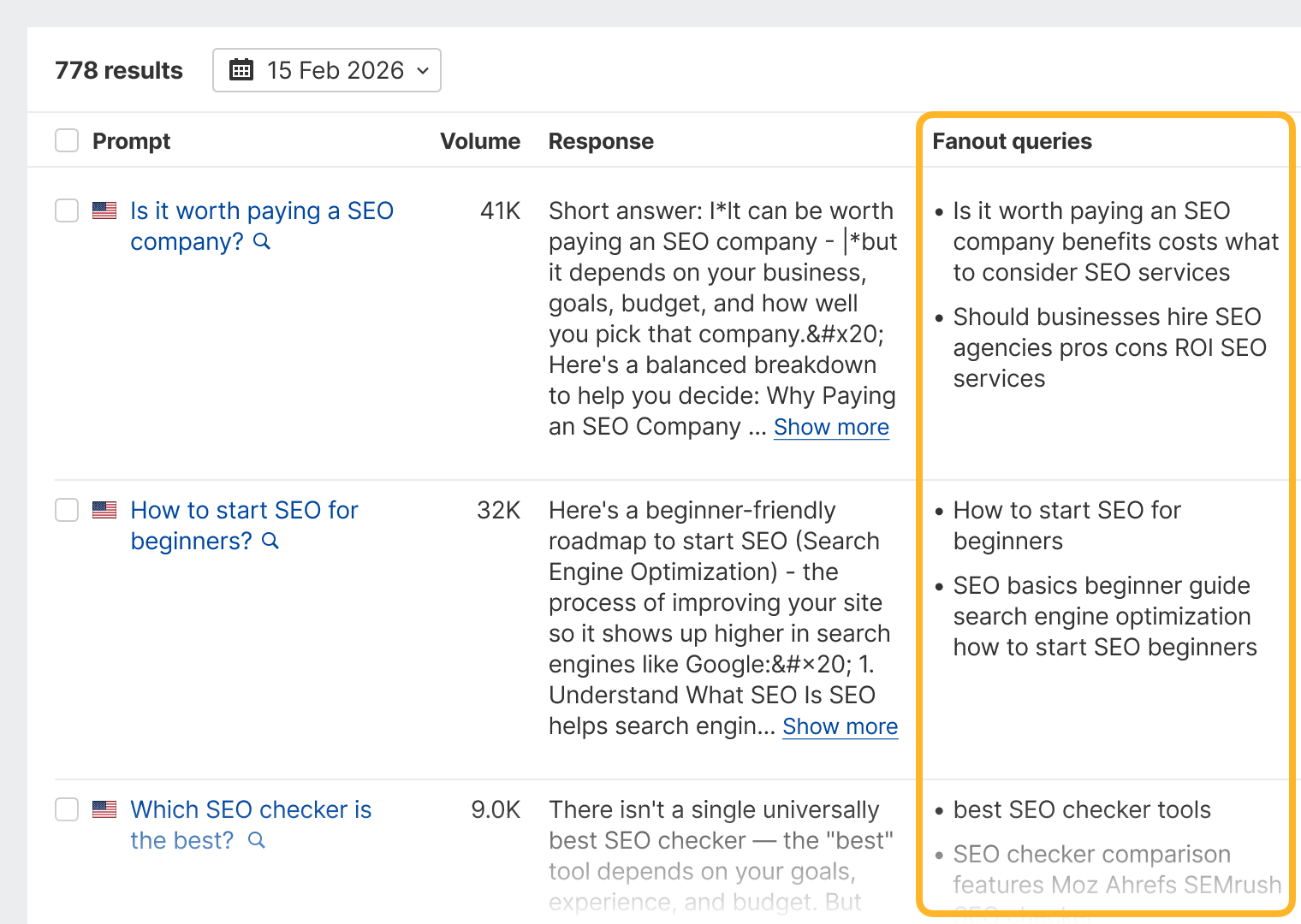
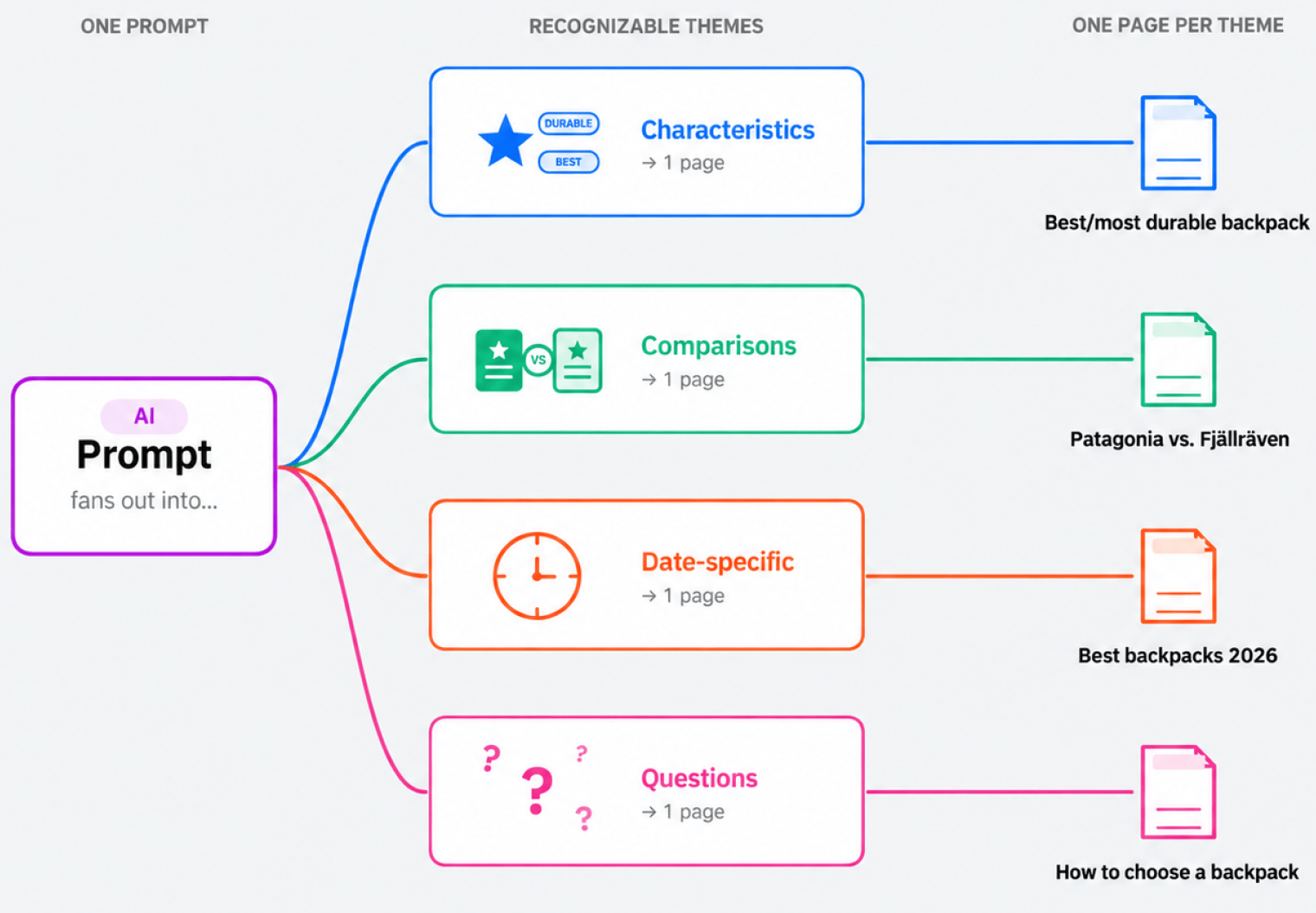
Fan-out queries often sort into recognizable types:
- Characteristics (“most durable backpack”, “best SEO tool for backlink analysis”)
- Comparisons (“patagonia vs. fjallraven”, “Ahrefs vs Semrush”)
- Date-specific (“new in 2026”, “best SEO tools 2026”)
- Common questions (“what / why / how / when”)
You can’t reliably target one specific fan-out query with optimized content, because the fan-out is probabilistic, meaning the same prompt can spin off different sub-queries on different days.
Instead, look at many fan-out queries in aggregate, find the recurring themes and formats, and build topic clusters that cover them.
Map content to fan-out query themes
Every AI prompt fans out into different core themes. Build a page for each.
Write the formats AI actually cites
Some content types get pulled into answers far more often than others, and it isn’t a close race.
When we analyzed ChatGPT responses across 750 top-of-funnel prompts, blog lists (like “The 10 Best Web Design Agencies”) were the most prominent page type in ChatGPT’s sources at 43.83% on average, more than three times the next format. Ordinary blog posts came second at 14.34%, and landing pages third at 10.56%.
Most prominent page types across ChatGPT responses
Results from checking 750 top-of-the-funnel queries.
| Page Type | Software | Agency | Products | Average |
|---|---|---|---|---|
Blog list | 51.39% | 40.64% | 39.47% | 43.83% |
Blog post | 6.72% | 4.94% | 31.36% | 14.34% |
Landing page | 14.60% | 16.99% | 0.09% | 10.56% |
Product page | 0.84% | - | 19.14% | 9.99% |
Non-blog list | 11.66% | 16.29% | 0.11% | 9.35% |
Homepage | 4.51% | 9.34% | 1.38% | 5.08% |
Social media | 3.70% | 1.42% | 3.55% | 2.89% |
Category page | 0.15% | 2.52% | 1.6% | 1.42% |
Individual review / Profile page | 1.83% | 1.64% | 1.12% | 1.53% |
Award | 0.58% | 1.82% | 0.11% | 0.84% |
Other (Glossary, press release, etc.) | 4.02% | 4.4% | 2.07% |
That finding launched a thousand self-published listicles, so it’s worth knowing when they actually work.
We tested it: we published 34 self-promotional pages across 5 domains, and checked against 9,886 AI answers.
For a brand nobody had heard of, it worked. Our new conference, Ahrefs Evolve, started getting mentioned by AI assistants that previously didn’t know it existed, and 82% of those mentions came from answers citing our own pages.
But for Ahrefs, a brand AI already knew, it barely moved the needle. Only 6% of new mentions for Ahrefs Brand Radar came from our pages.
There’s a catch either way: getting cited isn’t the same as getting recommended. When AI cited our page about the conference, it recommended a competing event 43% of the time.
Put your brand on a list when AI doesn’t know where you fit. Don’t expect the list to convince it you’re the best option.
Further reading
Beyond lists, the formats that reliably earn citations are the ones that answer a question completely and can be verified:
- Comparison and alternatives pages. Fan-out queries are full of “X vs Y”. Somebody is going to own that answer. Example: “Ahrefs vs Semrush” or “best Semrush alternatives”.
- Original research and data. A number nobody else has is the most liftable thing you can publish, and it’s the asset most likely to earn the third-party coverage we cover in the next chapter. Example: our study of 1.4 million ChatGPT prompts, which produced the 88% figure at the top of this page.
- Definitions and explainers. These map directly onto the declarative sentences models prefer to quote. Example: “What is query fan-out?” answered in one clean sentence before anything else.
- Free tools and calculators. They earn links and mentions on their own, which feeds the off-site signals in the next chapter. Example: a free keyword generator or backlink checker.
Find the topics your competitors own
Here’s the fastest route for improving the visibility of your content in answer engines: find the topics where AI mentions your competitors and not you.
Each one is a proven AEO visibility gap: you already know your competitors are winning these mentions, while your brand is nowhere to be found.
This usually happens for one simple reason: you haven’t created a relevant page on the topic, so answer engines don’t know to associate you with it. Content creation is the solution.
Here’s how to find these opportunities in Brand Radar:
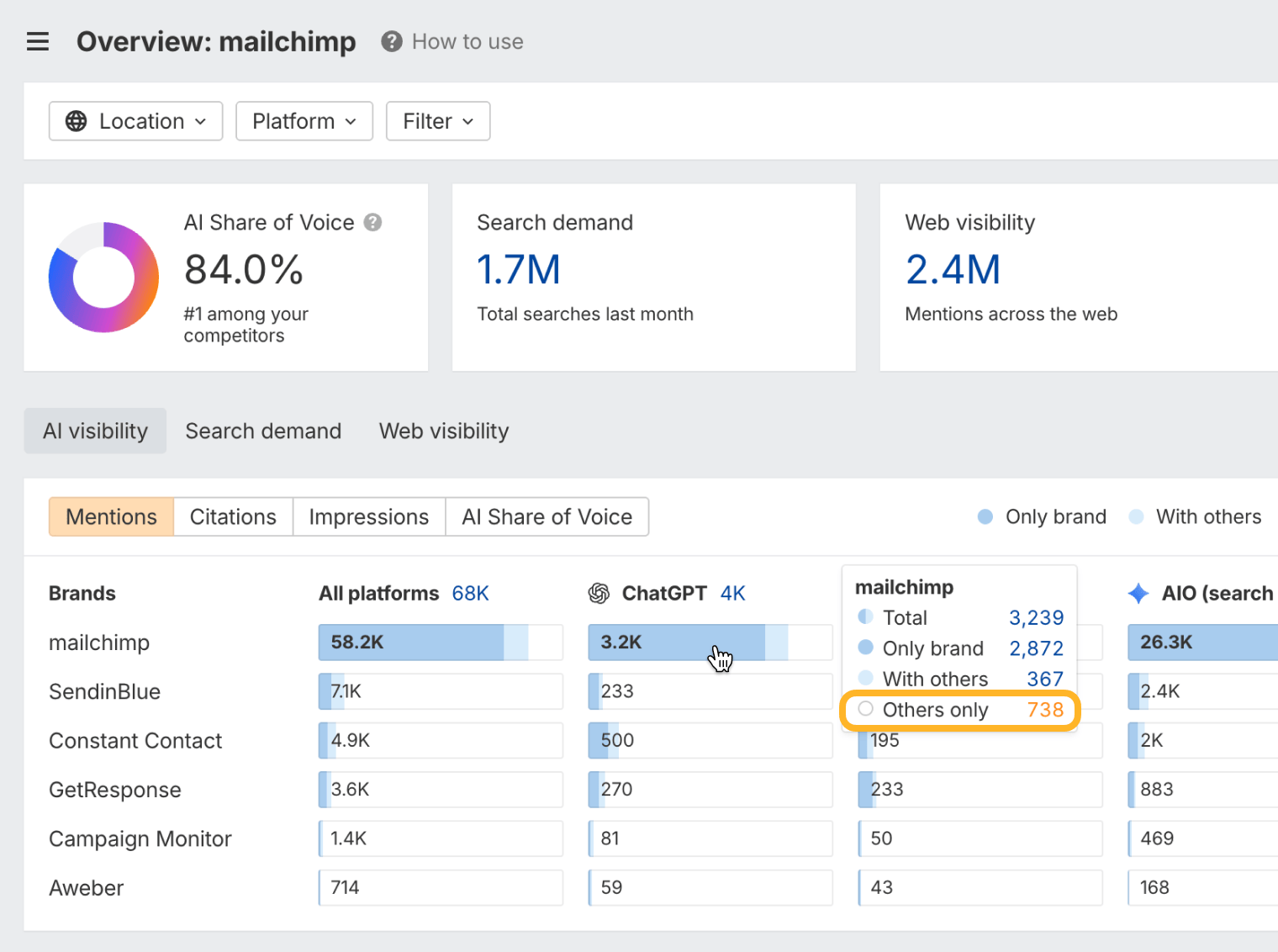
That filters the data down to responses where your competitors get mentioned and you don’t. Open the AI responses report and you’ll see the actual queries, along with the search volume behind each one.
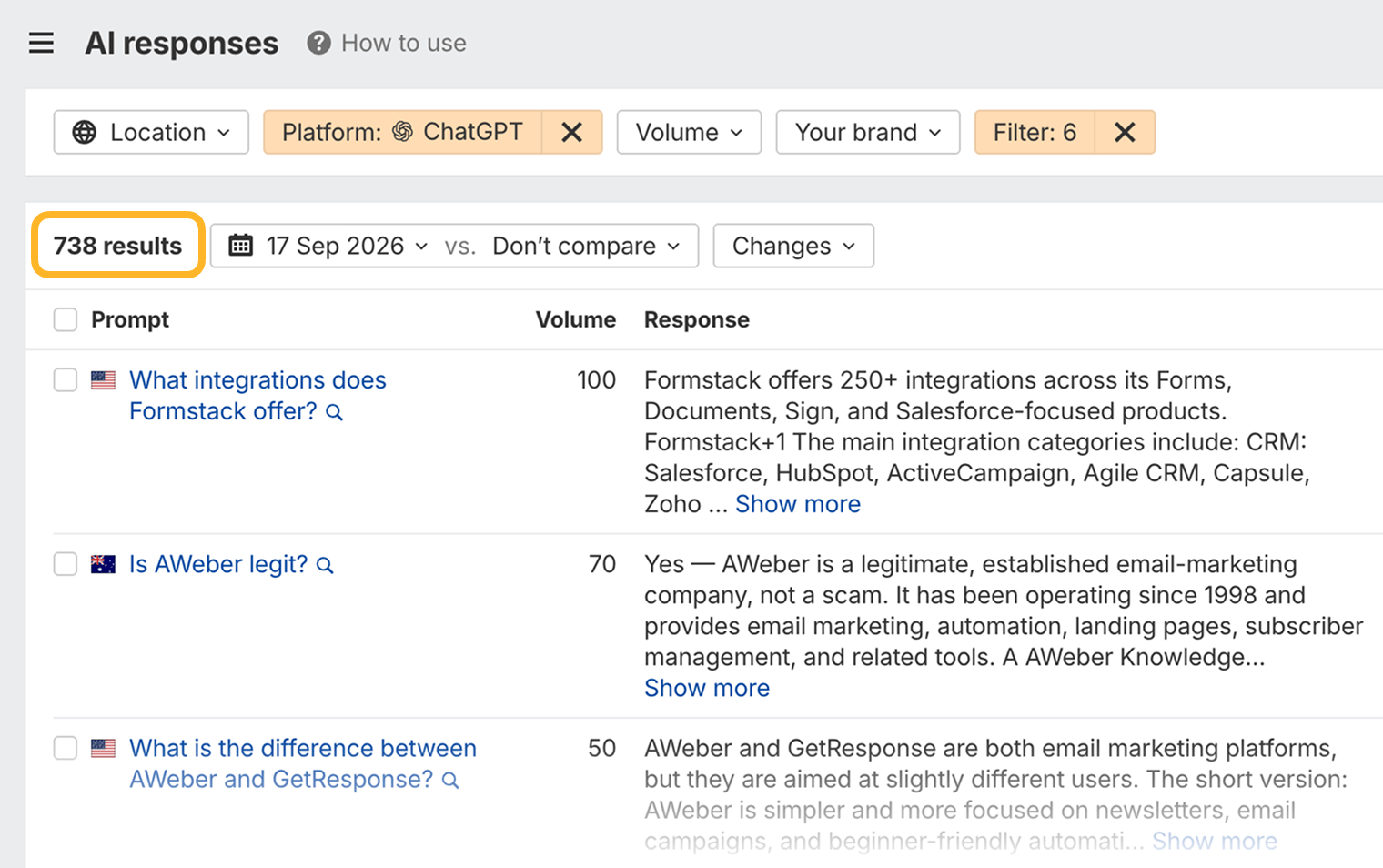
Now work down the list and decide, topic by topic, whether it’s a conversation you want to be part of. Some won’t be worth it. The ones that are become your next content cluster, and the search volume column tells you which to build first.
It’s worth running this for each AI platform separately. Visibility is rarely the same across ChatGPT, Gemini, and AI Overviews, so a topic you own on one may be a gap on another.
Refresh your content
AI assistants prefer fresher content than traditional search engines do.
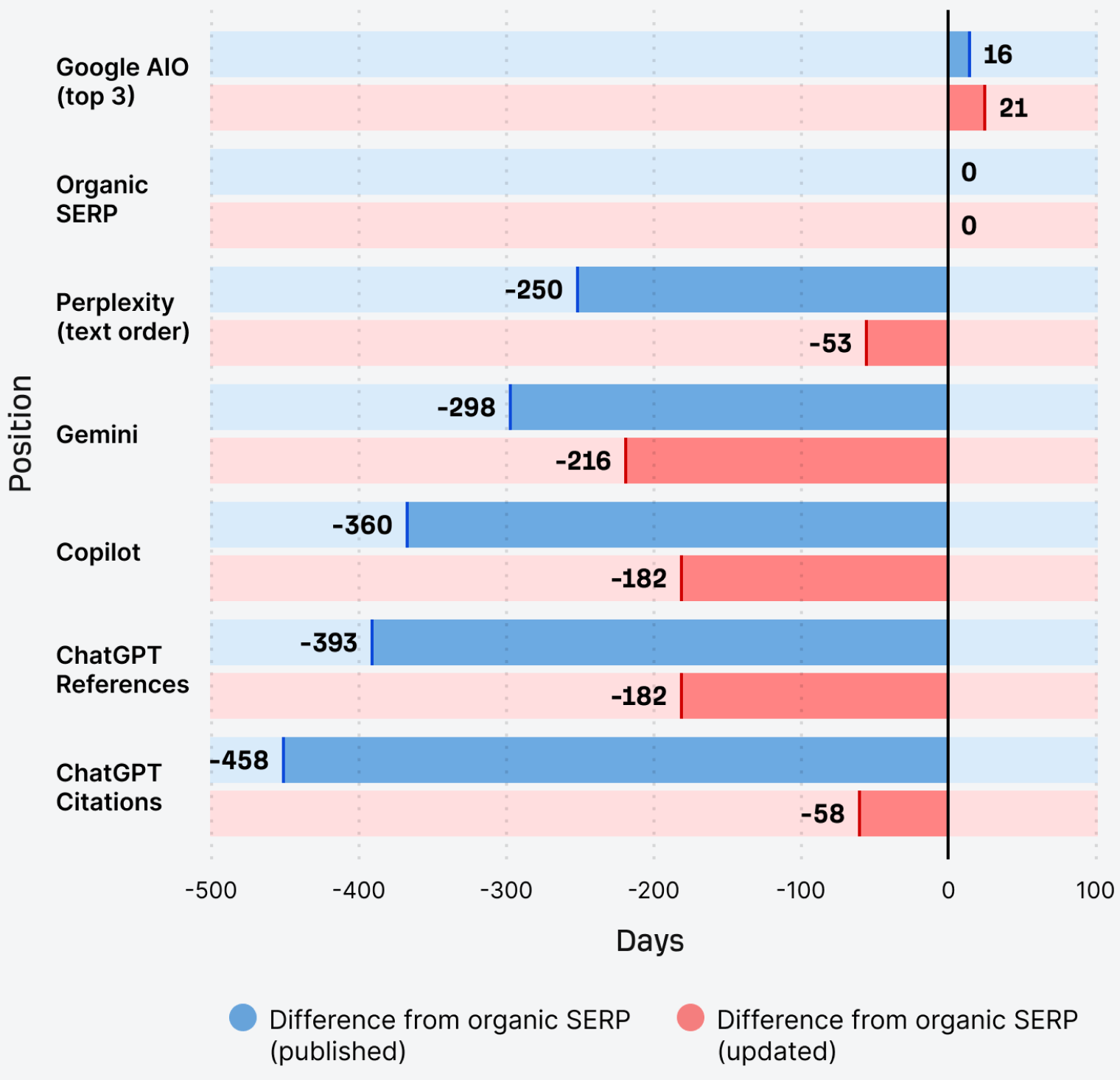
In our study of 17 million citations, the average age of a URL cited by AI assistants was 1,064 days, versus 1,432 days in traditional organic results.
That’s 25.7% fresher.
Of all AI platforms, ChatGPT pulled hardest toward recency, citing URLs an average of 458 days younger than organic search.
Average age of cited pages compared to traditional SERP results
17,000,000 citations analyzed.
Retrieval-augmented generation (RAG) is triggered for queries the model can’t answer from frozen training data: new topics, fast-changing topics, anything past the cutoff.
Pulling in fresh content is how the model gets around its own staleness.
For instance, Chris Long found that ChatGPT fan-out queries often include the current year in the query, and Metehan Yeşilyurt discovered that ChatGPT actually has a URL_freshness_score.
There are three important caveats here though:
- Freshness amplifies good content, but it doesn’t rescue bad content. Updating low-quality, off-topic pages every day won’t magically get them cited.
- Only refresh content if it’s changed meaningfully. Google’s John Mueller has warned against changing publish dates with no real change to the page. Cosmetic date-bumps fool no one and can backfire.
- Old content still wins in plenty of SERPs. The average cited page is still 2.9 years old. Like traditional search, AI leans toward content that has earned its longevity.
The highest-leverage move is to refresh your pages that are already being cited.
They’ve proven they can earn citations, and a refresh keeps them eligible.
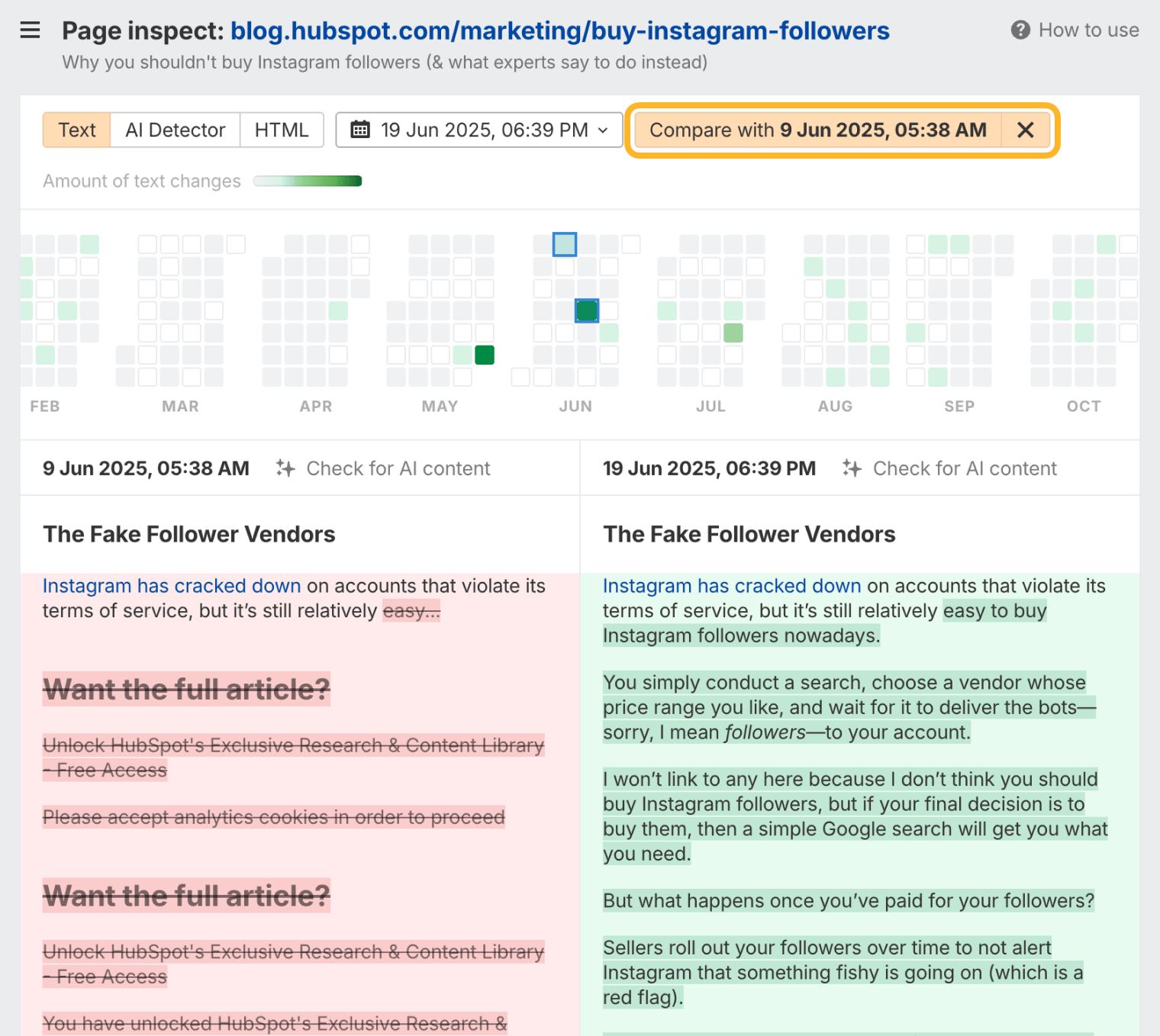
Use Brand Radar to find out which of your pages AI cites most, then view the page’s Content Changes to see when it was last updated, and if it needs a refresh.
Adapt your on-page SEO for AI
What really matters to AI is how easily an answer can be extracted.
Kevin Indig’s analysis of 1.2 million ChatGPT responses backs this up: 44.2% of citations came from the first 30% of the page, with content buried deeper roughly 2.5x less likely to be pulled.
Here are some content principles you can follow to optimize your content for AI:
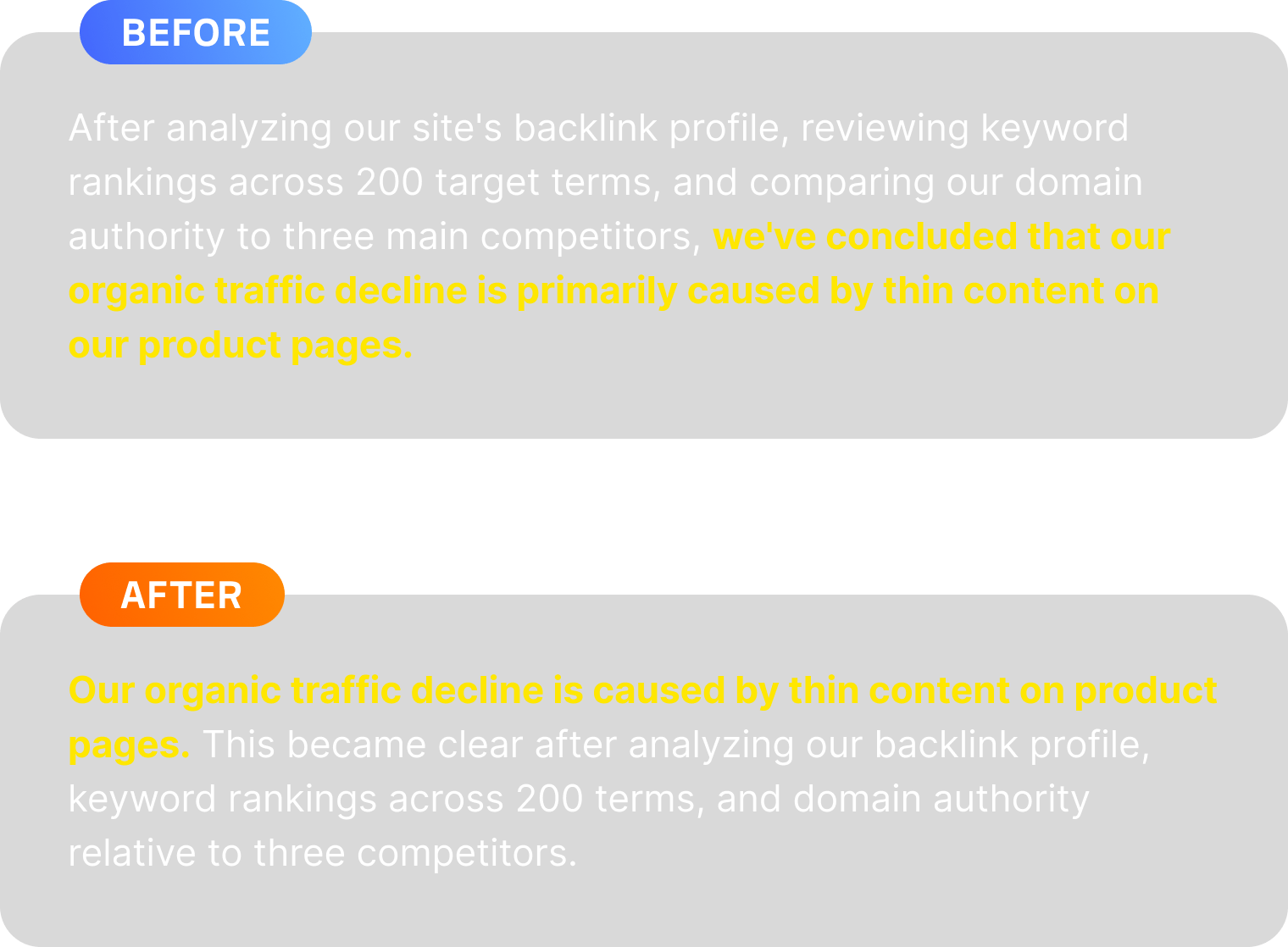
Lead with the answer (Bottom line up front: BLUF)
Put the conclusion in the first sentence or two, then support it.
AI systems pull passages, and a clear, self-contained answer near the top is easy to lift, while one buried under preamble isn’t.
Be declarative
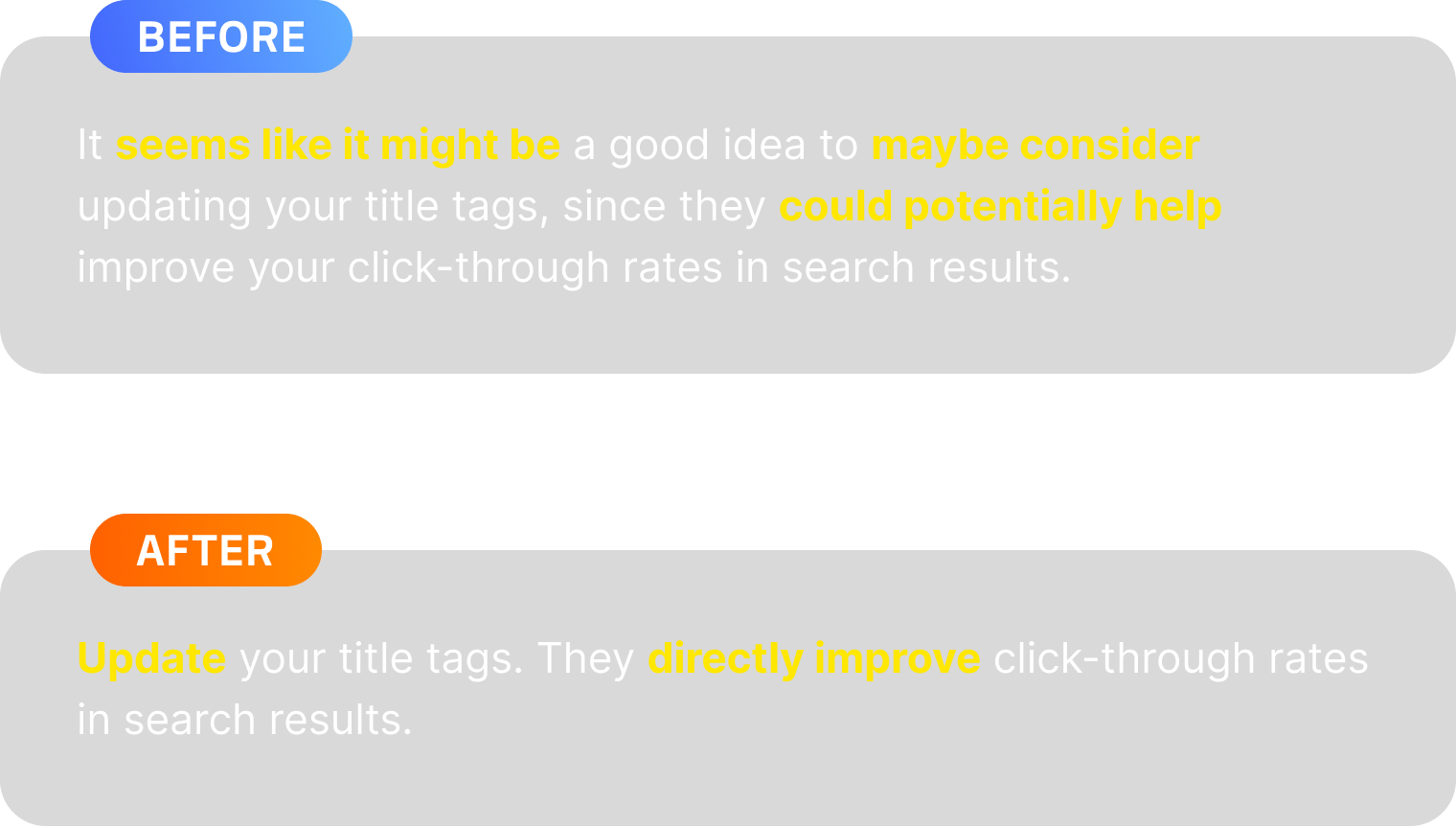
State plain facts the model can lift verbatim.
“X reduces onboarding time by half” reads as a citable claim, whereas “X may help streamline onboarding” hedges itself out of the answer.
Write in confident, present-tense statements rather than tentative or conditional ones, and avoid wrapping the point in qualifiers (“arguably,” “in many cases,” “tends to”) that make a passage harder to quote cleanly.
Be specific
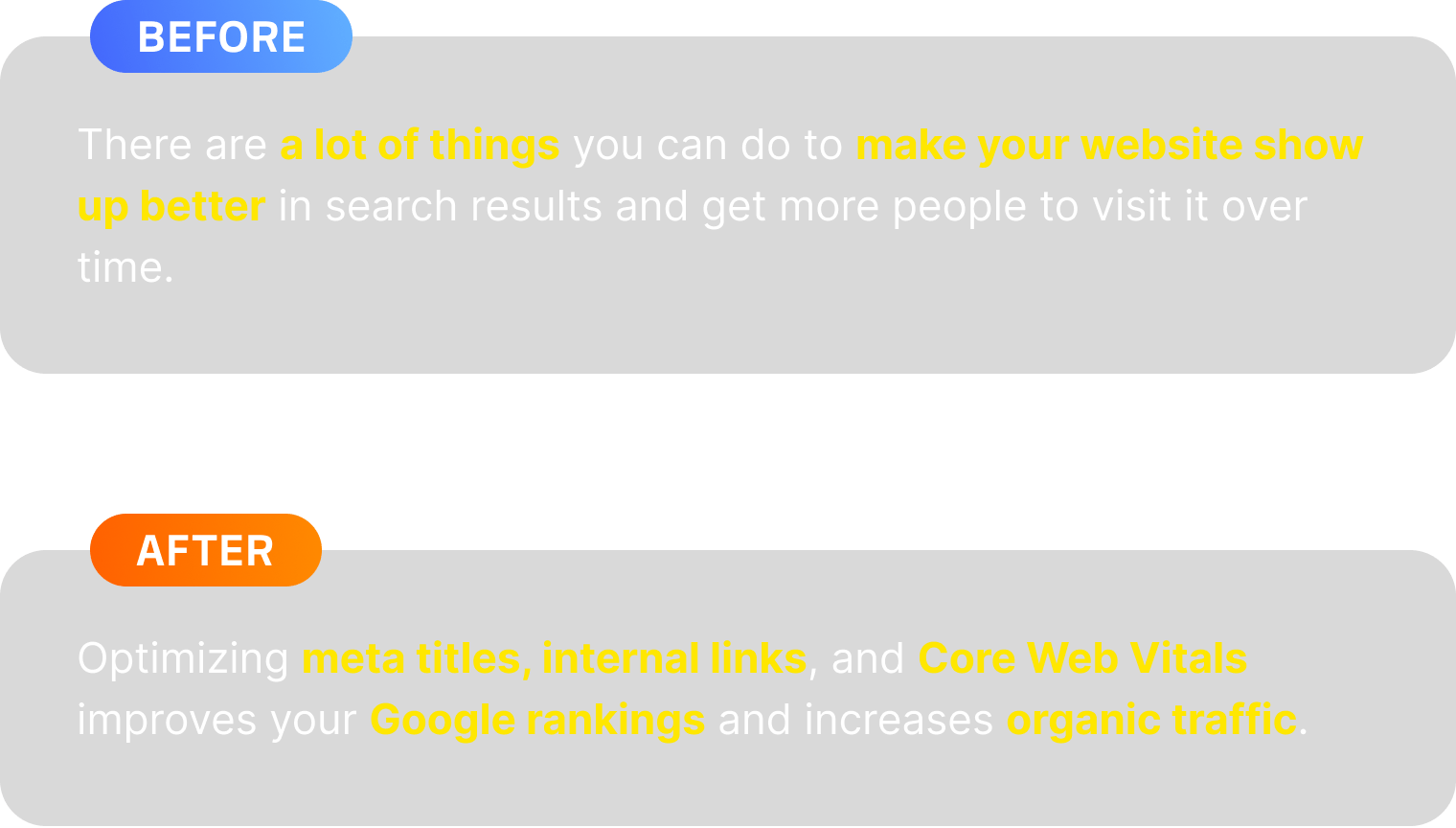
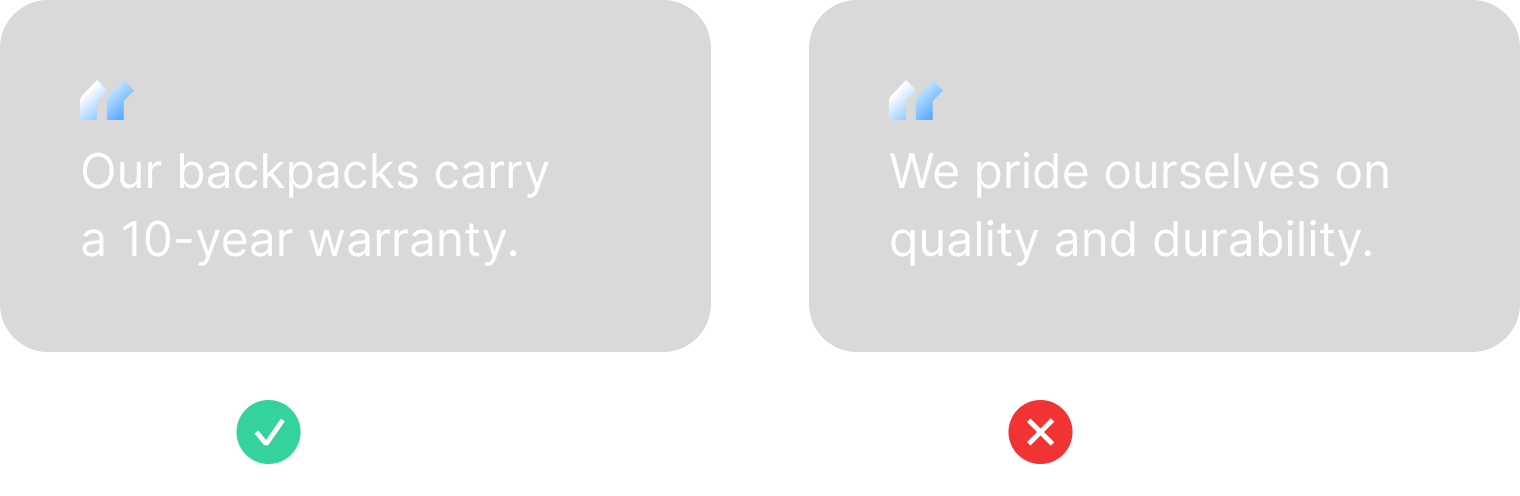
Numbers, names, concrete claims—in other words, entities—give the model something quotable, and a definitive statement is much easier to cite than a vague one.
“Our backpacks carry a 10-year warranty” is liftable.
“We pride ourselves on quality and durability” isn’t.
Repeat your core takeaway
Don’t rely on stating your main point once.
Models pull from different parts of a page, and Kevin Indig’s research shows citations cluster at the top and tail of an article with a dip in the middle, so reinforcing the same takeaway in the intro, body, and conclusion gives the model multiple chances to lift it.
Final thoughts
These tactics can improve your chances of being cited by AI.
But the catch is they only work when your content is strong, specific, and actually useful to begin with.
As enterprise SEO consultant Jan-Willem Bobbink notes, these aren’t “settled rules” and no amount of clever tactics will rescue thin content.
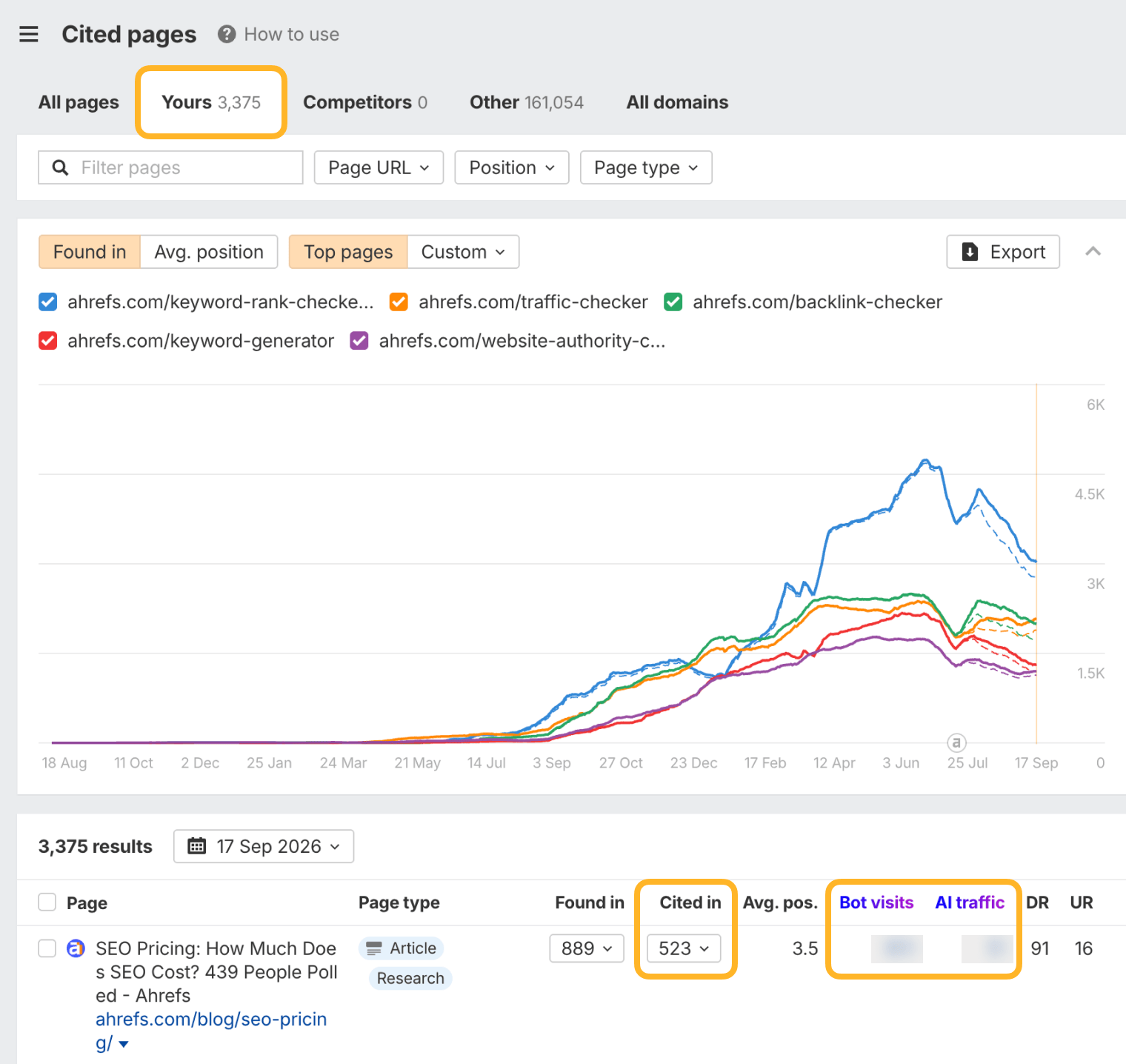
You can check the Cited Pages report in Brand Radar to see pages AI already lifts from, and get more ideas on how to optimize your content.
For instance, our SEO Pricing article drives a healthy number of AI citations—but also bot visits, and actual AI traffic.
Ryan Law is the Director of Content Marketing at Ahrefs. Ryan has 13 years experience as a writer, content strategist, team lead, marketing director, VP, CMO, and agency founder. He’s helped dozens of companies improve their content marketing and SEO, including Google, Zapier, GoDaddy, Clearbit, and Algolia. He’s also a novelist and the creator of two content marketing courses.
Explore all AEO guides
What Is Answer Engine Optimization (AEO)?
Start here. What AEO is, how it differs from SEO, and the seven steps to getting started.
How Answer Engines Work
What actually happens between a prompt and an answer — and where your brand can enter the process.
How to Track AI Visibility
You can’t optimize what you can’t see. Seven ways to measure where your brand shows up in AI answers.
How to Choose the Best Prompts to Track
Track clusters of prompts, not one-off responses. Eleven places to find the queries worth monitoring.
How to Optimize Content for Answer Engines
Ranking gets you considered. This is how you get cited — the topics, formats, and on-page changes that work.
How to Monitor and Win Brand Mentions in AI Answers
AI recommends the brands it has seen discussed elsewhere. Here’s how to monitor those mentions and earn more of them.
How to Optimize Your Website for Answer Engines
The technical fixes that decide whether AI can reach your pages, read them, and work out who you are.