
What Is AI Visibility? The 3 Types Every Marketer Needs to Know
AI visibility gets thrown around like it means one simple thing: getting a link in an AI response.
But that's only part of the picture, and it might not even be the most valuable part for your business.
The three types of AI visibility
As you go through these, think about which one applies to your business.
1. Cited and linked: This is the one everyone thinks about. AI includes a link to your page in its sources, and the user can click through and land on your site. This is the best case for direct traffic, and it's the easiest to measure.
2. Mentioned, but not linked: AI says your brand in its response, but doesn't give the user a link to click. You don't necessarily get direct traffic, but the user now knows your name, and if they're interested, they'll go search for you. This is basically word-of-mouth recommendation at scale.
3. Not visible at all: AI doesn't mention you and doesn't link to you. You're simply not in the conversation. This matters to know because you can't fix what you don't know is broken.
How often mentions actually include a link
Most people assume that when AI mentions a brand, it's probably including a link. That's not the case.
On average, only about 28% of AI mentions include a link, meaning 7 out of 10 times your brand comes up in an AI response, there's no link attached.
This varies a lot by platform:
Perplexity: about 51.6% of mentions get a link
AI mode: around 36.8%
ChatGPT: about 26.9%
AI overviews: only 10.7% (9 our 10 times there's no link)
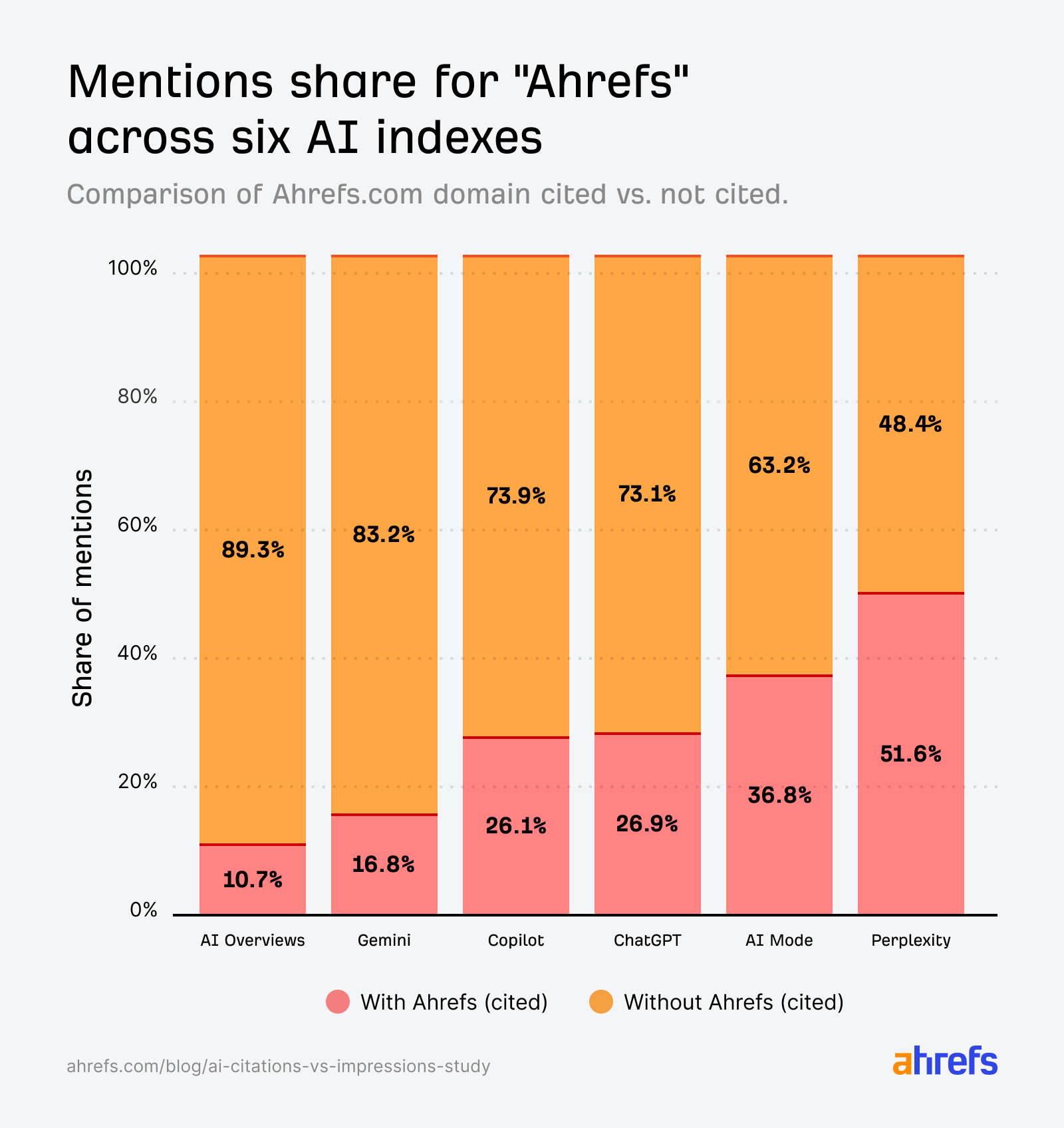
Linked mentions skew toward higher-traffic queries
You might assume this means most AI visibility is low value since there's no click.
But when mentions are weighted by search volume (similarly to how people ask similar questions), the mentions that do include a link tend to appear on much higher traffic queries.
For example:
On Perplexity, links show up in about 78% of total impressions, even though they're only in 51% of individual mentions.
On Gemini, it's even more dramatic: links appear in 71% of impressions, despite being in only 16.8% of mentions.
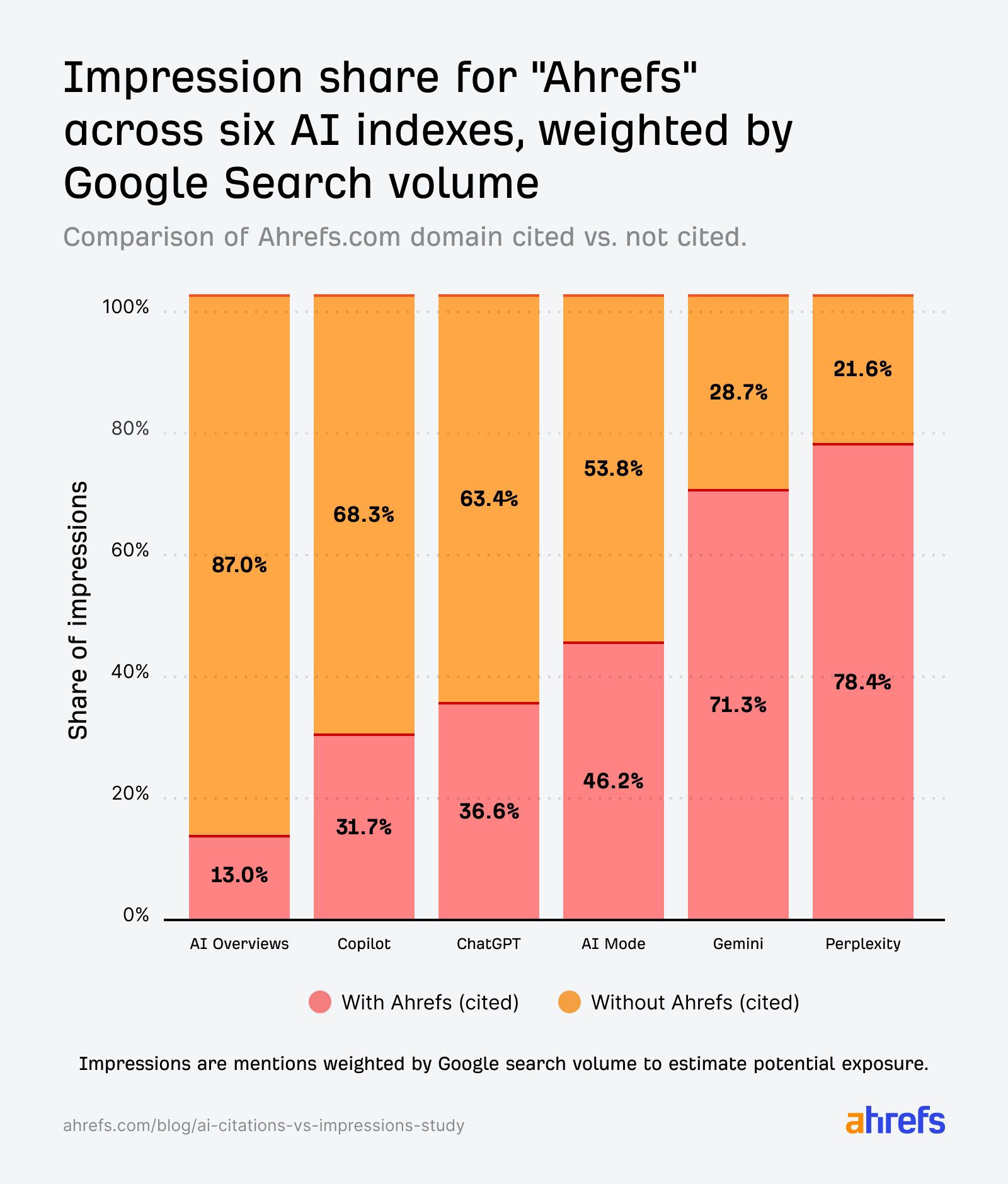
The takeaway: citations are relatively rare, but when they happen, they tend to happen on the queries with the most eyeballs.
Why unlinked mentions still matter
That doesn't mean unlinked mentions are worthless. Far from it.
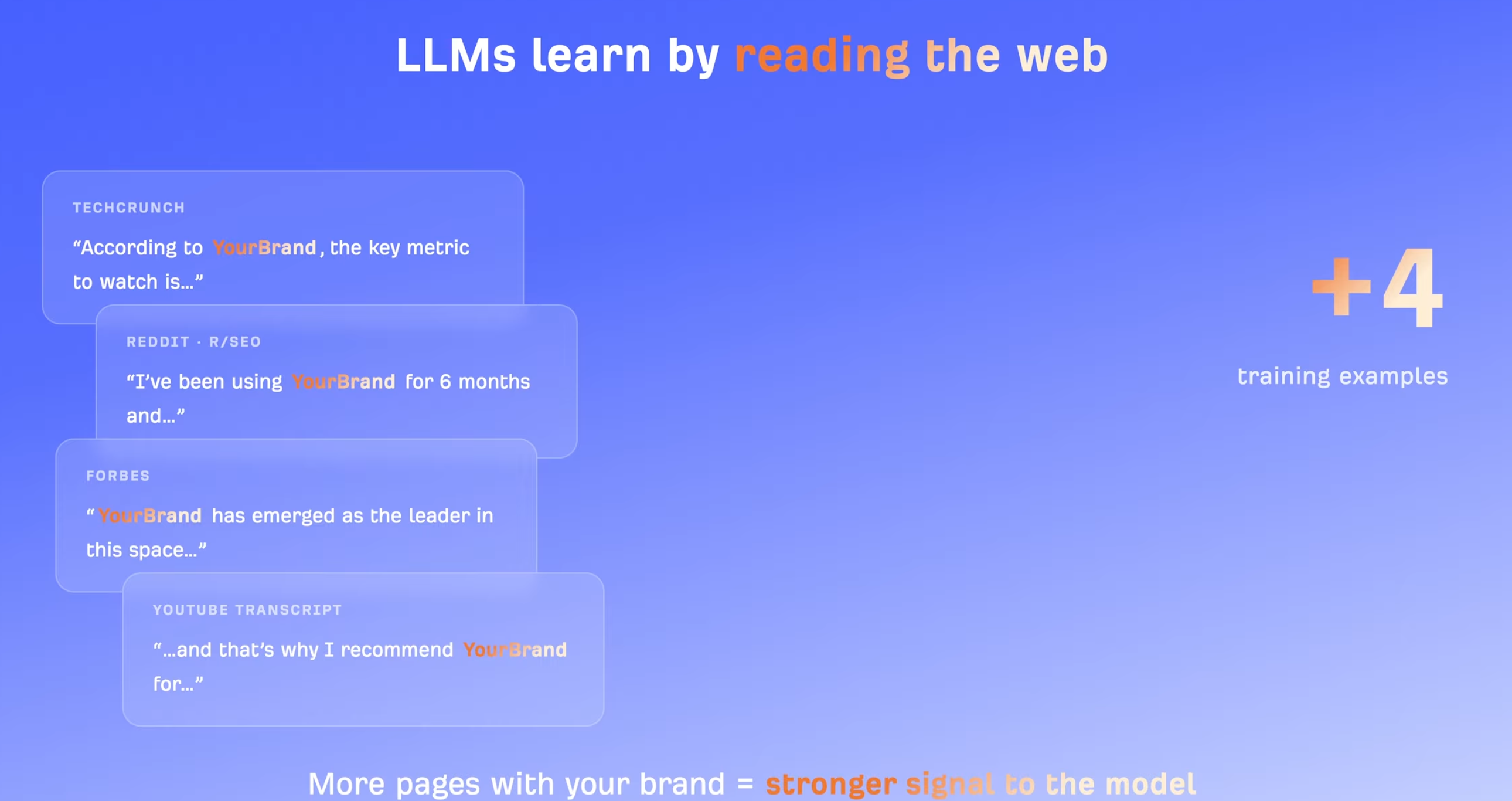
Think about how LLMs actually work: they learn by reading the web. Every time your brand name appears on a credible site connected to a specific topic, that becomes another training example.
There's real data behind this. In an Ahrefs study of 75,000 brands, branded web mentions had the strongest correlation with AI visibility: a 0.664 correlation with showing up in AI overviews. That's stronger than backlinks, domain rating, referring domains, or any other traditional SEO metric.
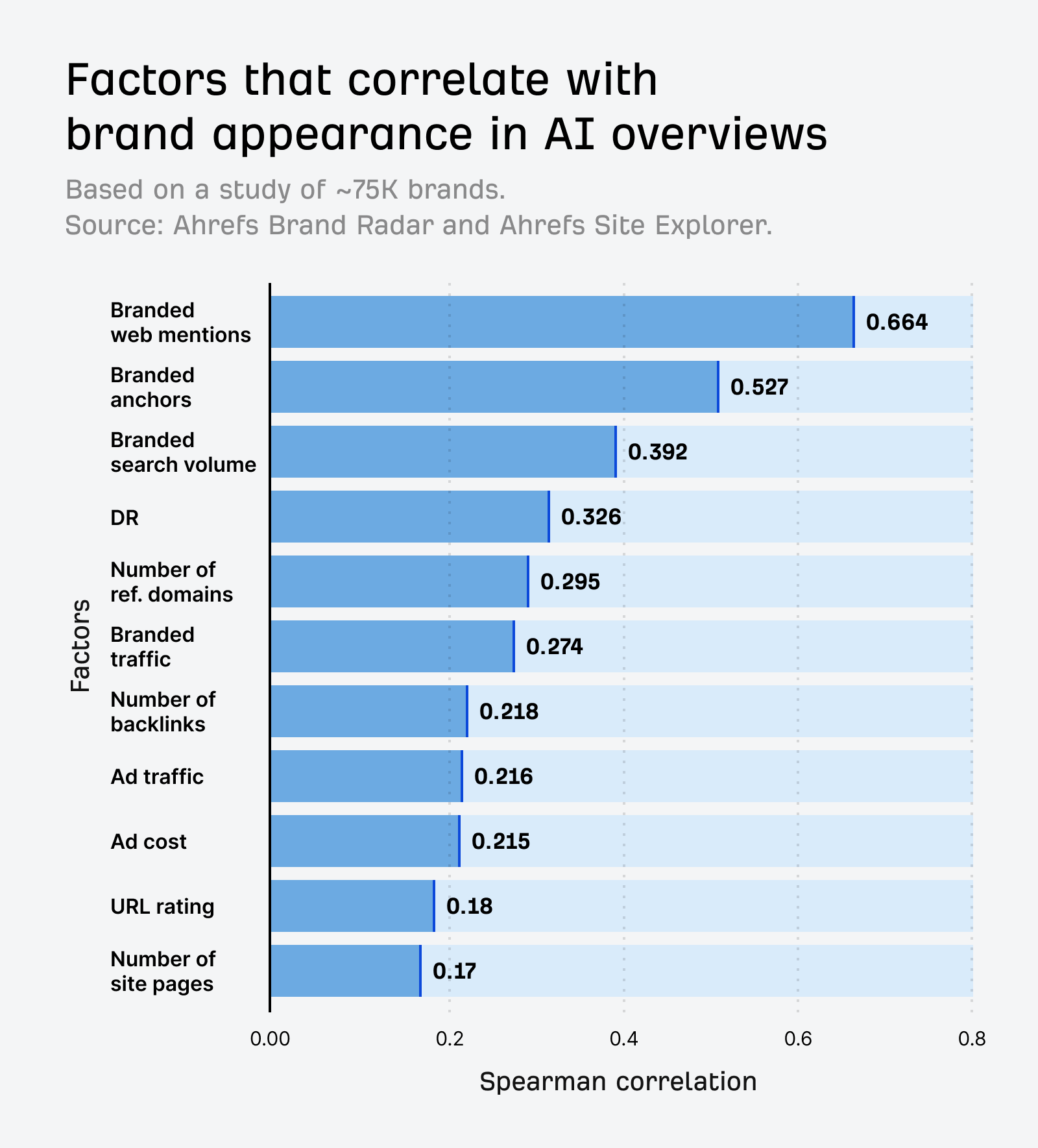
So even when AI doesn't give you a link, just being mentioned builds your brand's presence in the model. It's the long game, and it compounds over time.
Not all AI responses look the same
There's another layer to this: the type of response AI gives matters for your business.
Step-by-step guides, for queries like "how to fix a leaky faucet" or "how to set up Google Analytics." If you're a service-based business or create how-to content, these are opportunities if you can get AI to recommend you as an expert.
Direct answers, for queries like "what's the capital of France?". If you're a publisher or informational brand, being the source AI cites for factual answers can build massive authority, though you probably won't get a click since AI gives the answer directly.
Video citations, covered in the previous lesson. YouTube is one of the most cited domains across AI platforms. If you're a creator, your videos can show up directly in AI responses, and some people prefer watching video over reading text.
AI visibility is a spectrum, not a switch
You're not just visible or invisible. AI visibility is a spectrum, and the type that matters most depends entirely on your business.
If you sell a product, you want your brand showing up when people ask about your category. A query like "best golf balls" surfaces tons of different brands and models, and someone can click through from the AI response, land on a shopping result or the manufacturer's site, and buy something right away.
If you're a publisher or content creator, training data visibility is your long game. Every article AI cites, every video it surfaces, reinforces your authority in the model.
If you're not yet visible at all, that's the gap this course is meant to help you close.
Checking your own AI visibility
To see where you stand in AI search, go to Ahrefs Brand Radar and search for your website. You'll immediately see how you stack up against competitors across different AI platforms.
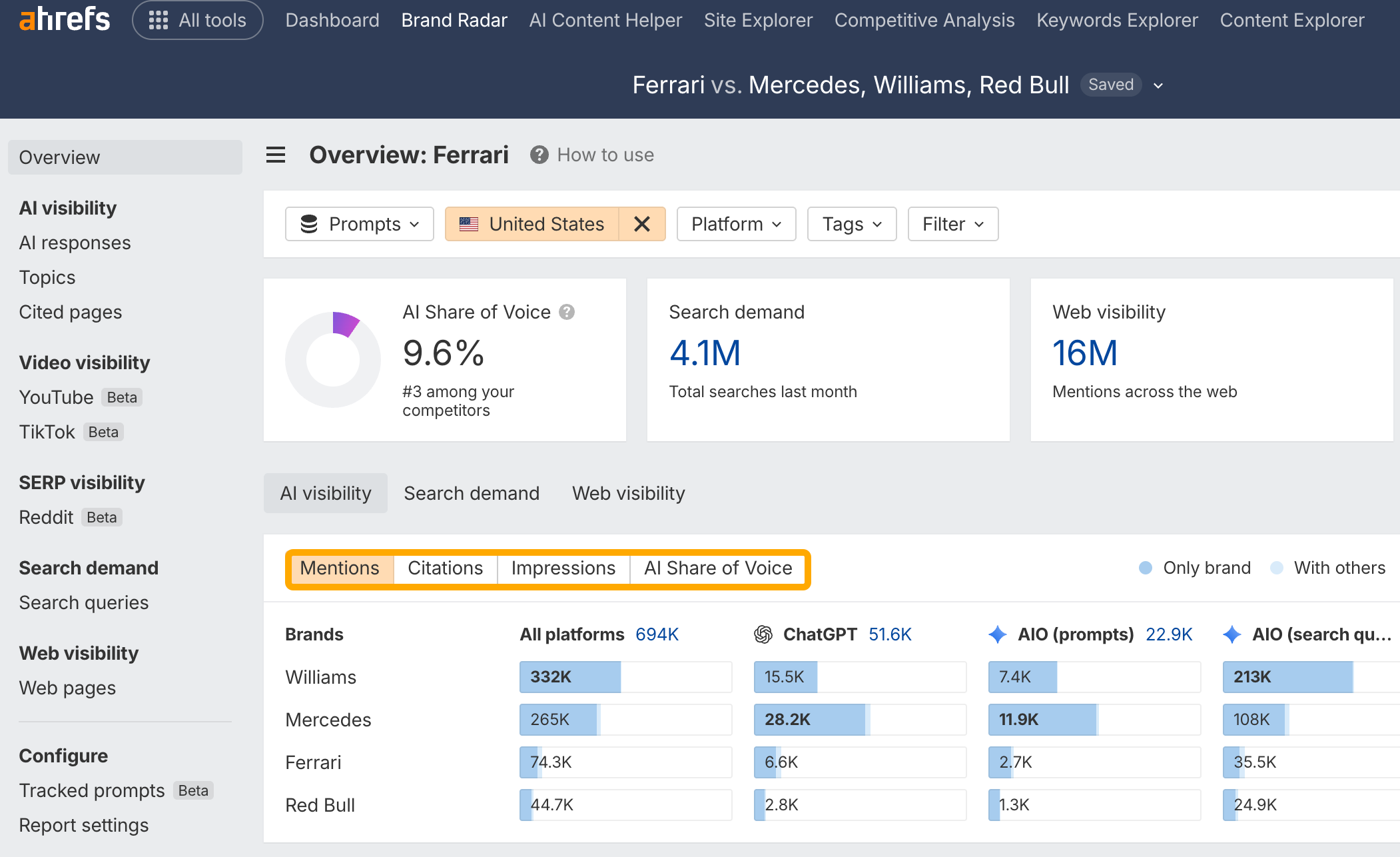
You can filter by:
Mentions: when your brand is named but not linked
Citations: when AI actually links to your site
Impressions: how many people could potentially see your brand in AI
AI Share of Voice: how often your brand is mentioned compared to your competitors
The gap between your impressions and your mentions is your opportunity. If AI is responding to queries about your topic but not naming you, that's exactly where you need to focus, which is what module two covers: AEO strategy, research, targeting, and gaps.
Check out some of the articles on the Ahrefs blog to learn about AEO:
Answer Engine Optimization (AEO) Course
What you'll learn
The fundamentals of how AI search works and why AEO matters
How different AI platforms decide what to cite
How to find gaps between your brand and competitors in AI search
How to do keyword and prompt research for AEO
How to create content that AI wants to cite
How to earn brand mentions across the web
How to optimize YouTube videos for AI visibility
Technical AEO best practices
How to track AI traffic and measure your progress
