
How to Run a Brand Gap Analysis
This lesson covers how to run a brand gap analysis.
A brand gap analysis measures the difference between where your brand should be showing up and where it actually is, in Google search, AI results, and across the web generally.
It examines everything shaping your discoverability and reputation, from how AI describes you to which competitors are cited instead of you.
Step 1: Map out your branded entities
Your brand gets referred to differently by different people, so you want to map out:
Your main brand name
Any sub-brands
Product names
Proprietary features
Proprietary metrics
Personal brands associated with your company
For example, at Ahrefs, this would mean mapping out the main brand Ahrefs, product brands like Site Explorer, Brand Radar, and AI Content Helper, proprietary metrics like Domain Rating and Traffic Potential, and personal brands like Tim Soulo, Patrick Stox, Ryan Law, and Glenn Allsopp.
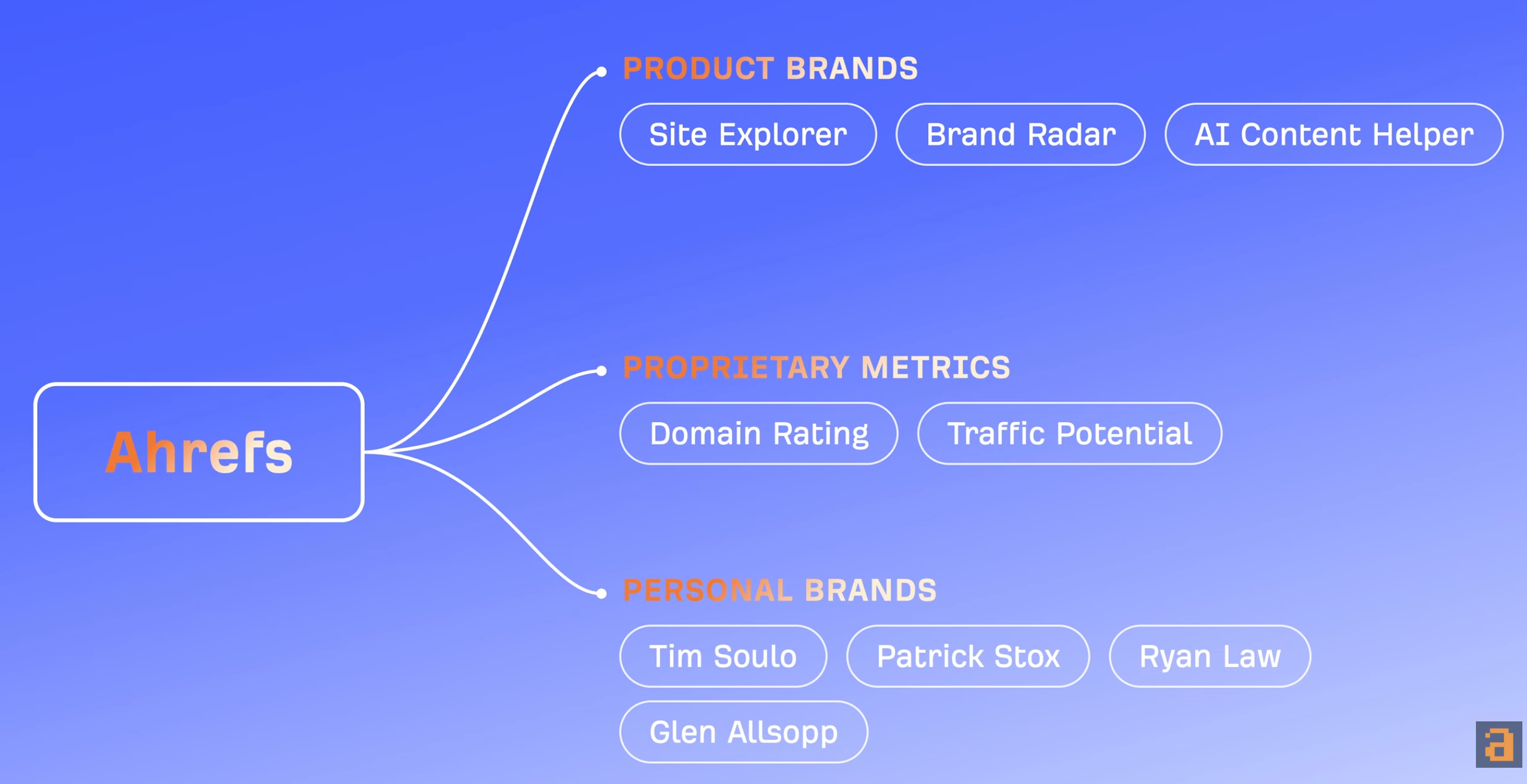
Each of these has its own visibility profile in search and AI results, and the analysis in this lesson can be repeated for each one.
Connect Entities to Topics and Attributes
Once you have your list, connect each entity to the topics and attributes people should associate with it.
Search engines and LLMs don't understand brand names on their own. They infer meaning from how your brand is described and discussed, so you need to clarify what problems you solve, what qualities you're known for, and what context you belong in.
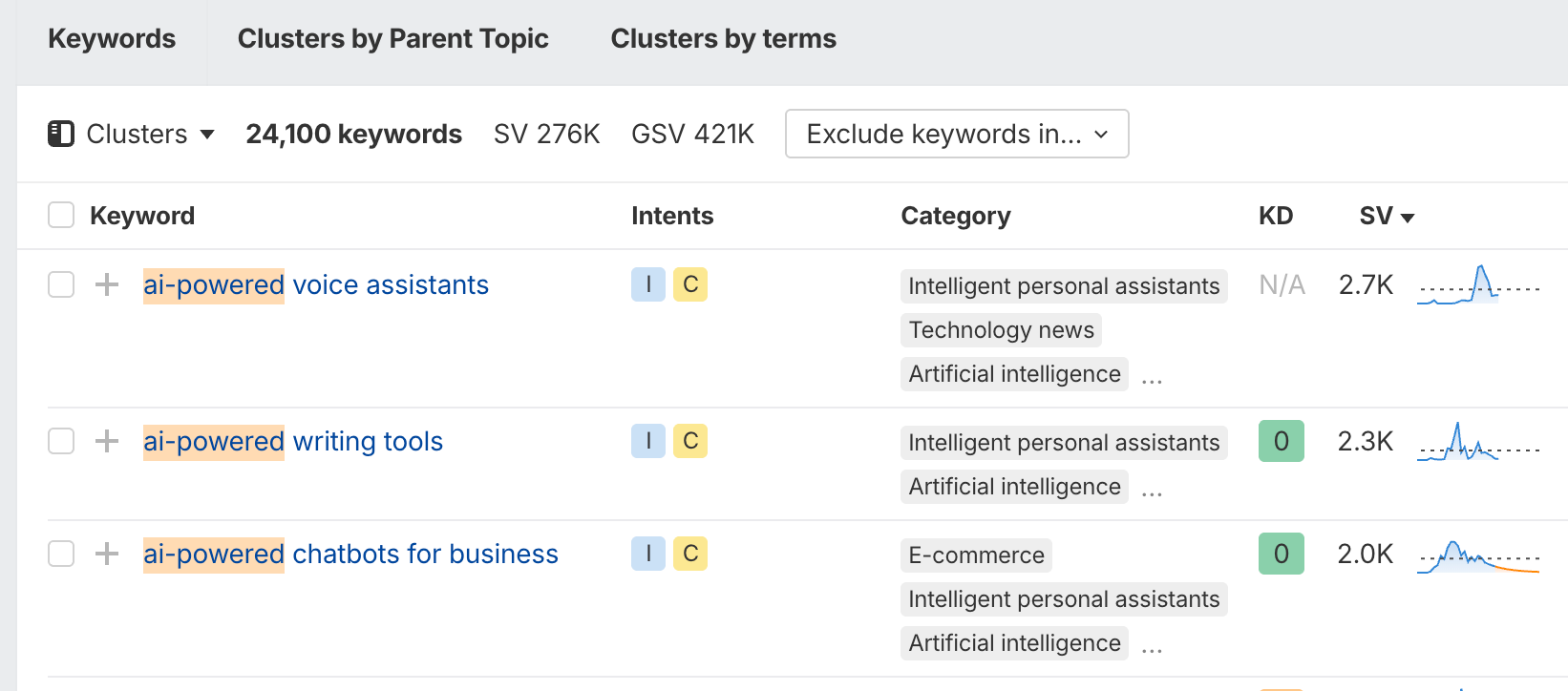
A quick way to do this is keyword research: look for recurring adjectives, modifiers, and descriptive phrases people use alongside your brand or category, things like "affordable," "AI-powered," or "enterprise grade," whatever applies to your space. This gives you your benchmark for what your brand should be known and found for.
Step 2: Run your audit in Ahrefs
Start by entering your brand's website into Site Explorer. You'll get a dashboard of baseline metrics: domain rating, referring domains, organic keywords, organic traffic, and traffic volume. This gives you your traditional SEO snapshot.
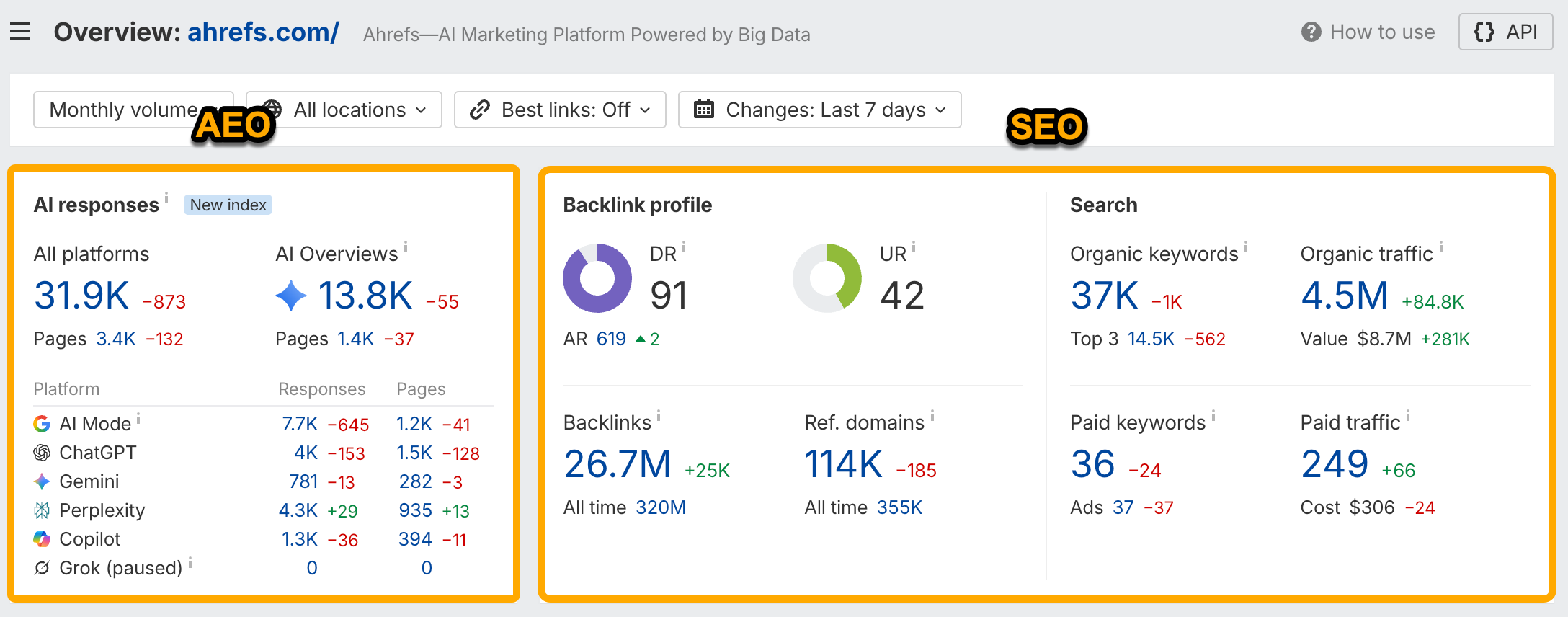
What matters most for AEO, though, are the AI citation metrics, which give you a snapshot of your brand's visibility in AI search across different platforms.
Clicking into any of those takes you to the Brand Radar report for that platform, which is where the real audit happens.
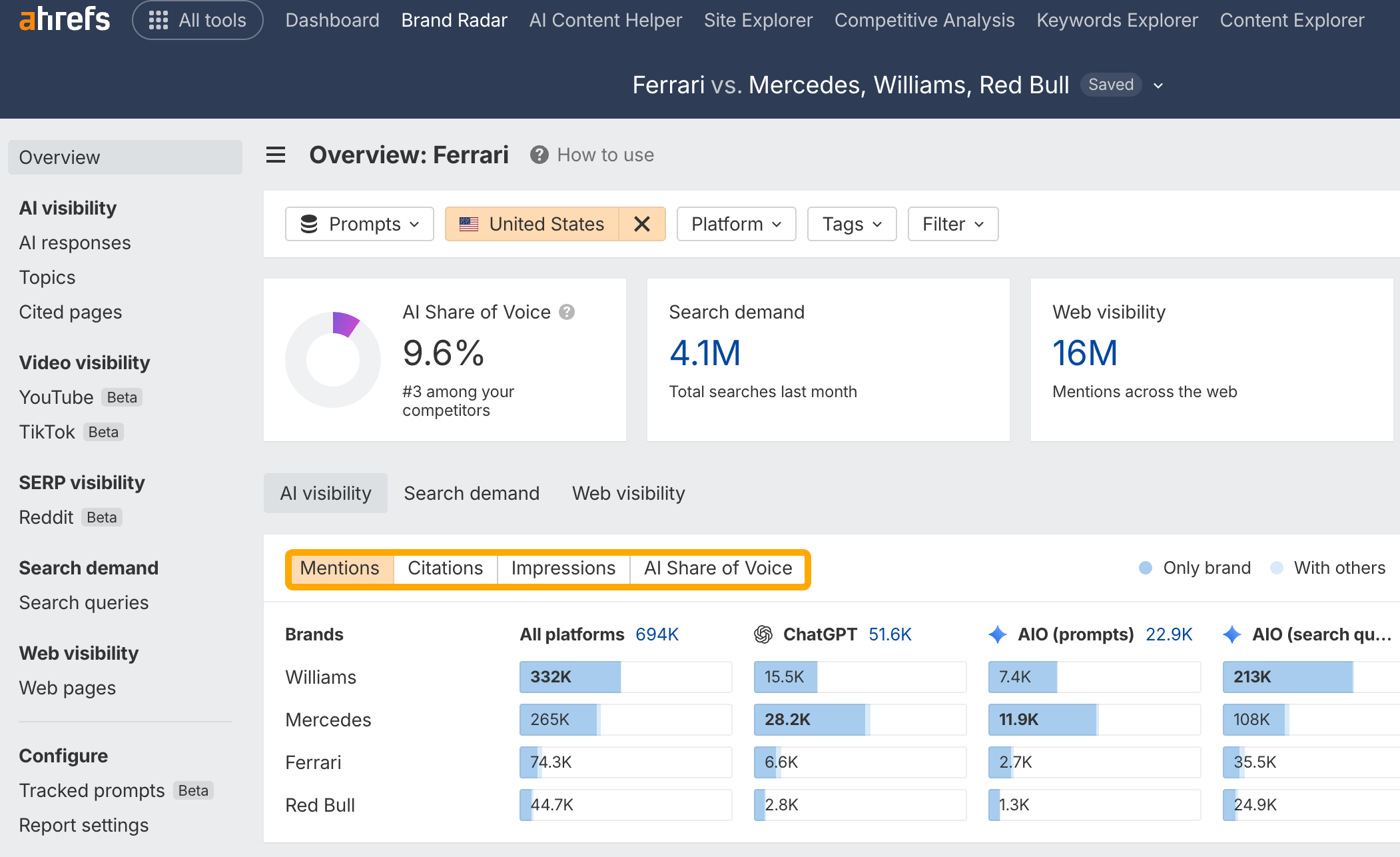
There are four key things to pay attention to in Brand Radar:
Mentions: the number of times your brand is mentioned in AI responses
Citations: the number of times your website is actually cited as a source
Impressions: an estimation of exposure based on how often responses containing your brand are shown
AI share of voice: how often your brand is mentioned compared to your competitors
Use Brand Radar's filters
The real power of Brand Radar is in its filters, which let you isolate the exact scenarios that matter:
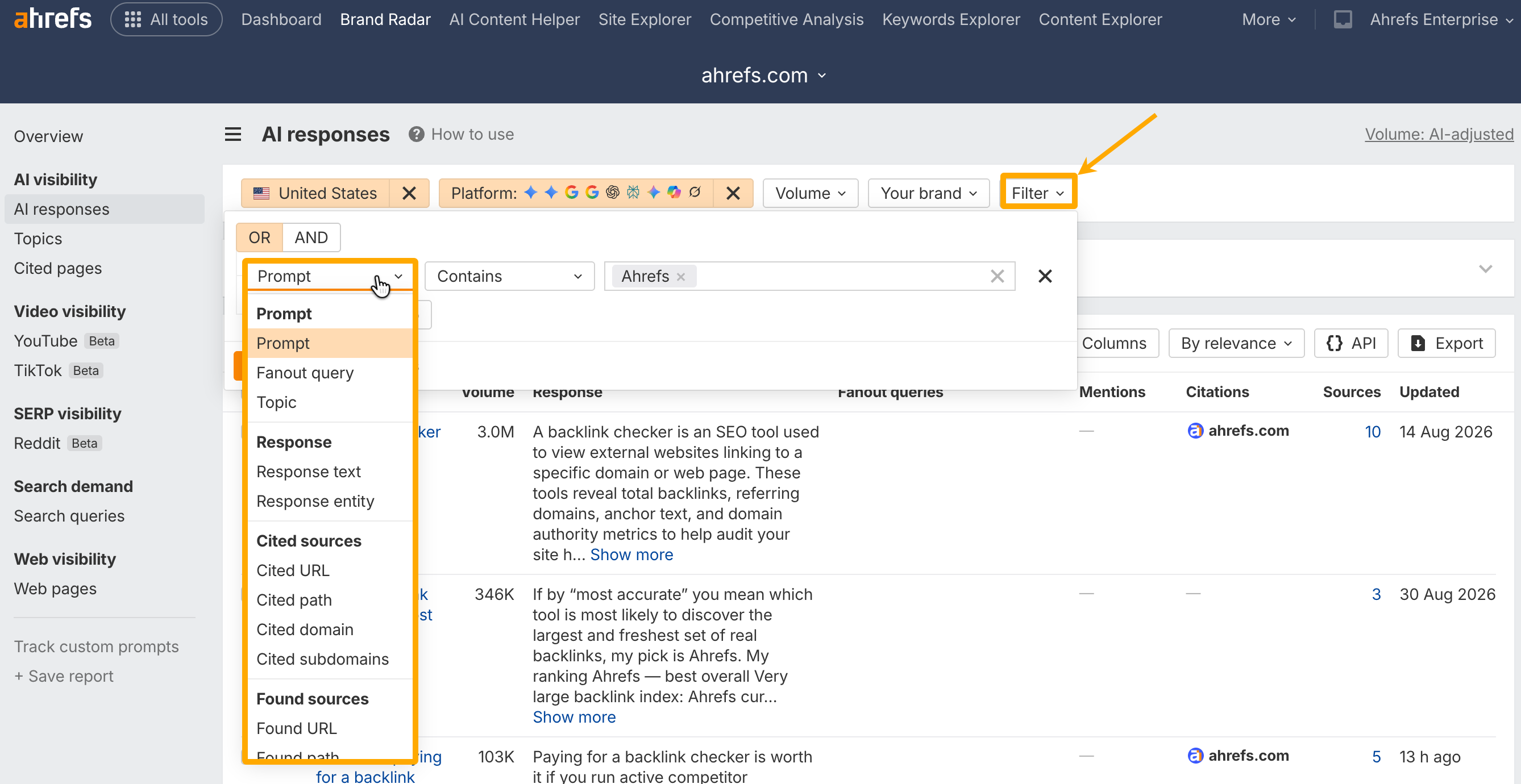
Filter for prompts that mention your brand name in the AI platform of choice
Filter for responses that mention your brand but don't cite your website (missed citation opportunities)
Add a competitor and filter for queries where they're mentioned but you're not
Look at specific topics to see whether AI associates them with your brand or someone else's
Step 3: Identify your gaps
When looking at this data, it helps to think about your gaps across six dimensions. This is a framework that Despina from Ahrefs laid out in her brand gap analysis guide.
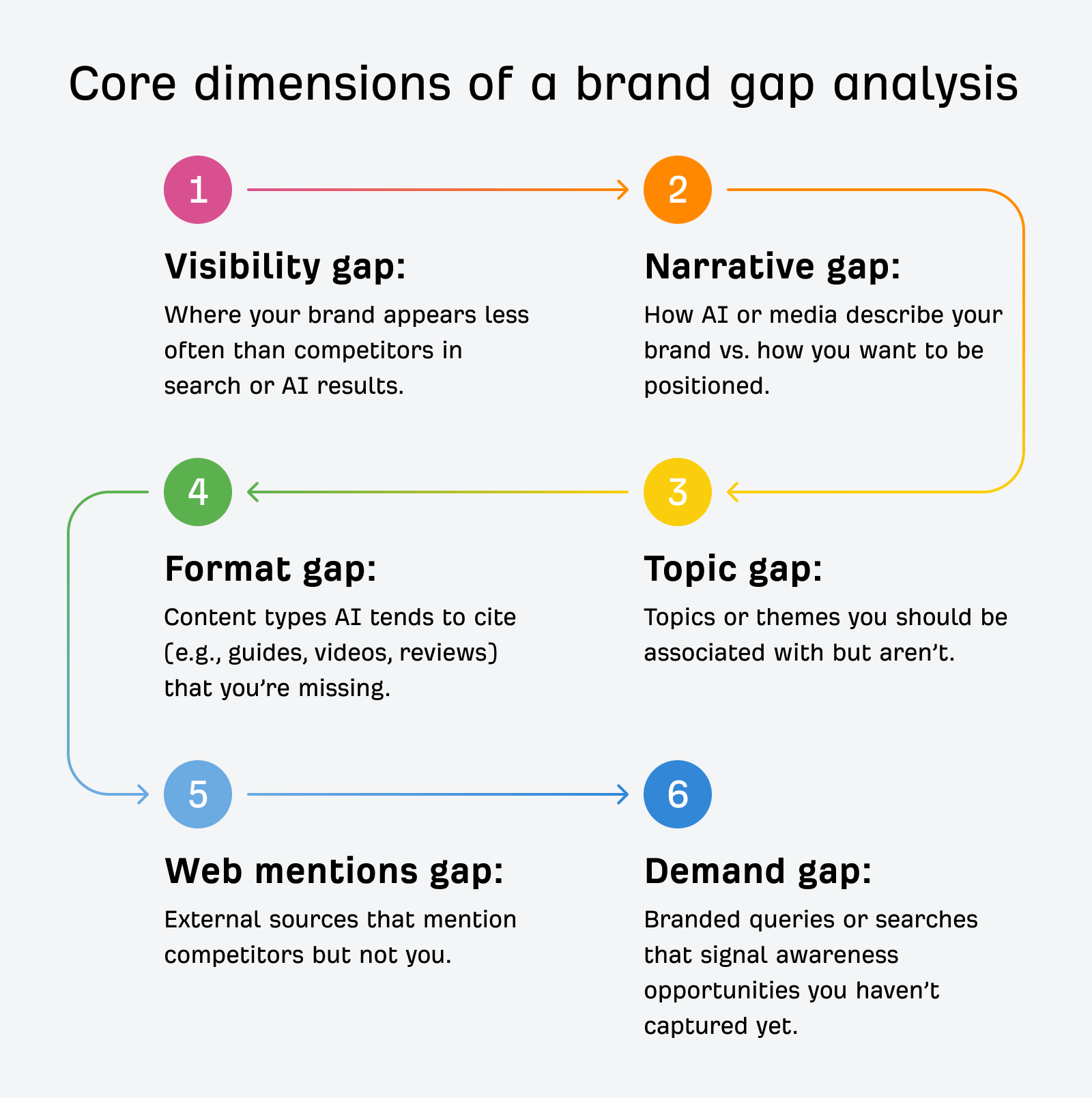
1. Visibility gap: your brand appears less often than competitors in search or AI results.
2. Narrative gap: how AI or media describes your brand versus how you actually want to be positioned. For example, maybe you're a premium tool, but AI keeps calling you a budget alternative, or your key differentiator just isn't coming through.
3. Topic gap: topics you should be associated with but aren't. For example, if you're a project management tool but AI never mentions you when people ask about remote team collaboration, that's a topic gap.
4. Format gap: AI tends to cite certain types of content such as guides, videos, reviews, and comparison pages. If you're not producing them, that's a gap. As covered in module one, YouTube is one of the most cited domains, so if competitors have YouTube content getting cited and you don't, that's a content format gap.
5. Web mentions gap: external sources such as listicles, review sites, forums, and publications that mention competitors but not you. As covered in module one, these third-party mentions are one of the strongest signals for AI visibility.
6. Demand gap: branded queries or searches that signal awareness opportunities you haven't captured. People are searching for things in your space, but your brand name never comes up alongside those searches.
When you look at all six together, you get a complete picture of your brand's visibility in AI. Nt just how often you show up, but whether you're showing up for the right things in the right way, in the right places.
Step 4: Prioritize
You're going to find a lot of gaps, and you can't fix everything at once, so you need to prioritize your efforts. You'll generally do one of three things:
Fix: improve or optimize something that already exists
Build: create new content or pages for opportunities you're not covering at all
Influence: strengthen your offsite visibility through outreach and brand mentions
Start with the quick wins. If you have a page that's already ranking but just needs a content update to close a topic gap, that's low effort and potentially high impact.
If you're missing from a major listicle that all your competitors are on, that's a web mentions gap you can close with outreach.
As you go through this process, you'll probably find that most of your gaps fall into one or two of the six buckets.
Audit your competitors
You can run this exact same audit for your competitors to get a wealth of insights on new topics and gaps that will be relevant to your business. Look at their branded queries to see what users and AI connect to them more strongly than they do to you.
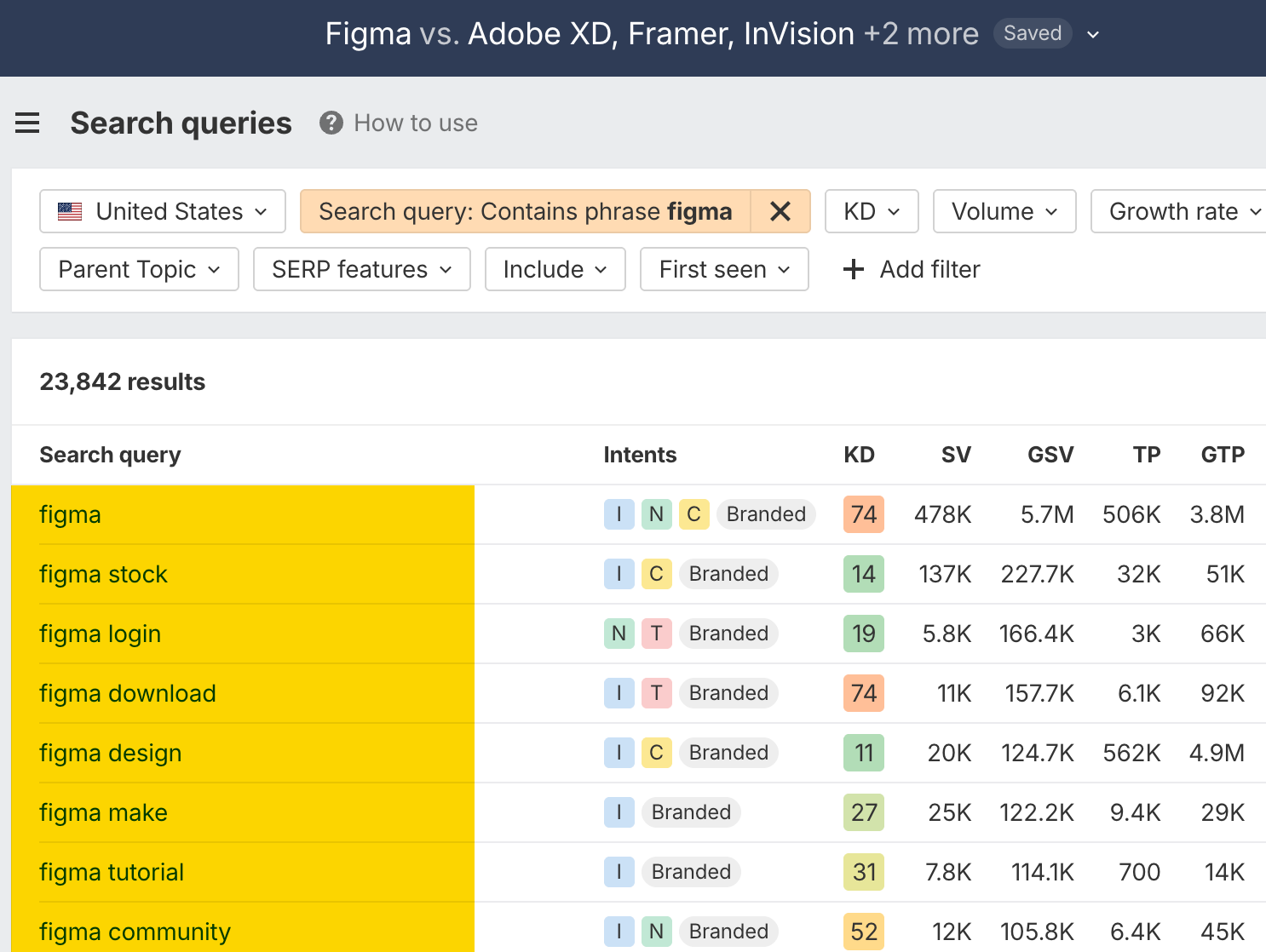
Sometimes those are quick wins: you might already have the features, you just haven't created the content that connects them to your brand, or you don't have enough pages talking about that feature.
A template is available to help organize all of this and share it with stakeholders. Download template
Answer Engine Optimization (AEO) Course
What you'll learn
The fundamentals of how AI search works and why AEO matters
How different AI platforms decide what to cite
How to find gaps between your brand and competitors in AI search
How to do keyword and prompt research for AEO
How to create content that AI wants to cite
How to earn brand mentions across the web
How to optimize YouTube videos for AI visibility
Technical AEO best practices
How to track AI traffic and measure your progress
