


Answer Engine Optimization (AEO) Course by Ahrefs: What is AEO?
Before learning how to optimize your brand's visibility for AI search, it's important to learn why AEO matters and how it's different than SEO.
Why AEO matters right now?
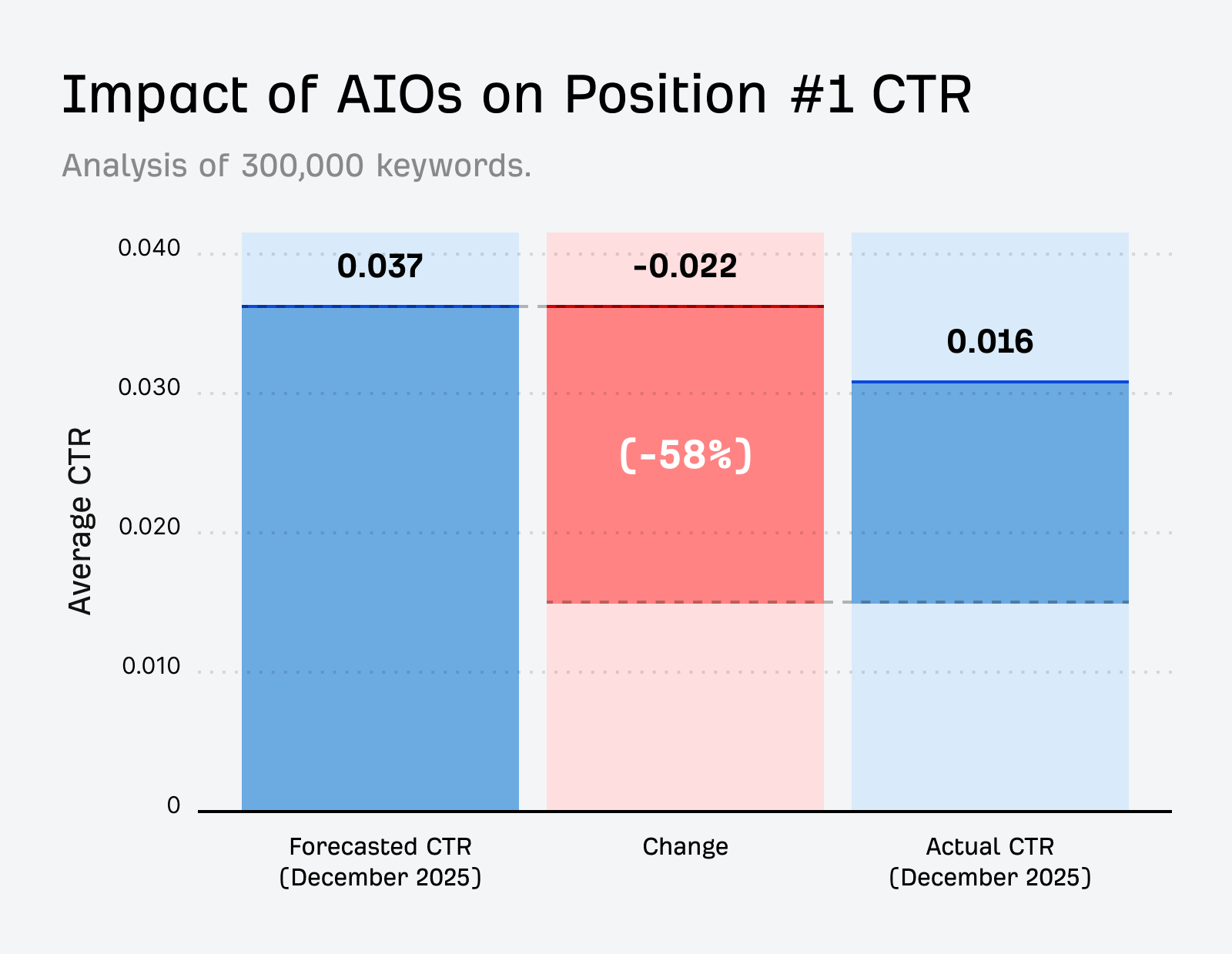
As of December 2025, the presence of an AI Overview on Google reduces the click-through rate (CTR) for the number one ranking page by 58%. That means for every 100 clicks a page used to get, Google now keeps 58 of them.
Some other numbers to consider:
ChatGPT alone has 900 million weekly users
It handles roughly 12% of Google search volume
AI traffic to websites has grown 9.7 times in the past year
You can either ignore this shift and watch your traffic shrink, or learn how it works and capitalize on it.
Here's what most people miss: in June 2025, AI search accounted for just 0.5% of Ahrefs' traffic, but it drove 12.1% of sign-ups. That's a 23 times higher conversion rate than organic search. Meaning AI search traffic does convert better.
How AEO differs from traditional SEO
In traditional SEO, you optimize web pages to rank higher in a list of search results. You're competing for positions. The user sees your blue link, clicks it, and lands on your site.
In AEO, there is no list. The AI reads from dozens of sources, synthesizes an answer, and decides who to mention or cite. You're not competing for a position, you're competing for a mention.
The key thing to understand is this: AEO doesn't replace SEO, it builds on top of it. Think of SEO as your foundation and AEO as future-proofing your online presence.
Is AI going to kill SEO?
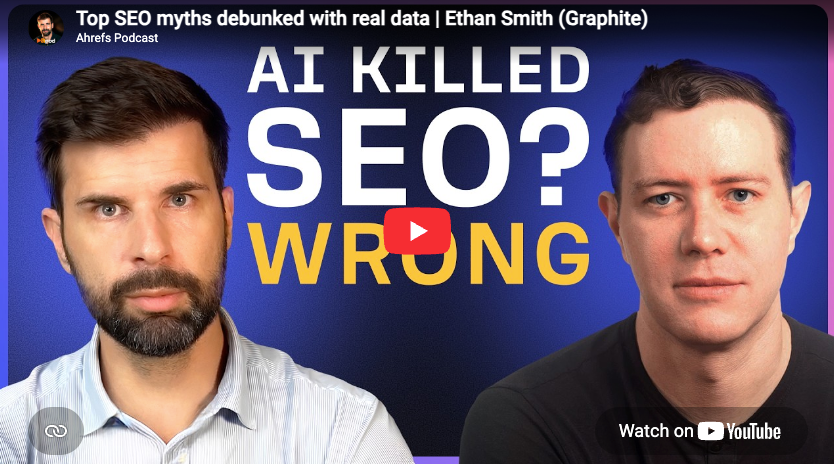
This is not the end of SEO. Ethan Smith from Graphite talked on Ahrefs podscast about the zero-sum bias, a cognitive bias based on the assumption that if something new goes up, something old must go down.
The same thing happened in 2010 when the App Store blew up. Everyone said the web was going away, that mobile apps were taking over, that only old people used websites. Mobile apps did blow up, that promise was real, but the web didn't die. It grew alongside these apps.
AI search is likely going to follow the same story. It is growing fast, and the numbers shown earlier are real, but Google still processes billions of searches per day and traditional organic traffic still drives massive business value.
The smart move isn't to panic, it's to play both games.
Most businesses haven't started yet
Ahrefs looked at its own data and found that its content and product pages have been mentioned 7,470 times across 2,309 pages in AI search, without any effort to optimize for it. That's happening organically because Ahrefs has been doing solid SEO and creating content that people find useful.
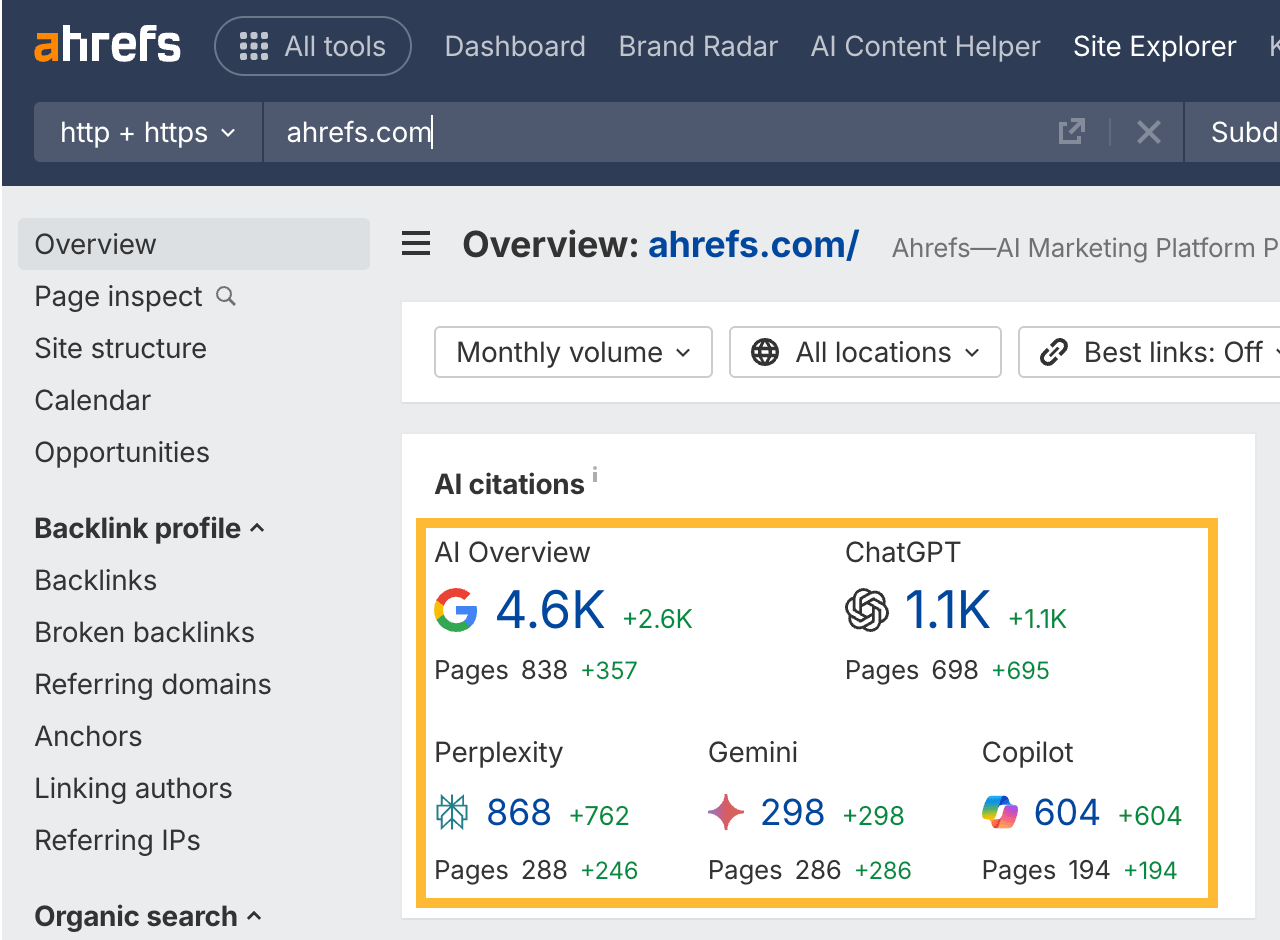
Now imagine what happens when a business starts intentionally optimizing for this: knowing which platforms cite what, understanding how AI decides who to recommend, and actively building the signals that make AI want to mention a brand.
That's exactly what this course teaches.
Course structure
The course is broken down into four modules plus this introduction.
1. Module #1: How AI search actually works. Covers the mechanics of how AI finds content, how it decides what to cite, how different platforms like ChatGPT, Google AI Overviews, and Perplexity differ from each other, and what AI visibility looks like for different types of businesses. This is the foundation that makes everything else make sense.
2. Module #2: Strategy. Covers the data behind why brand mentions are the single strongest lever for AI visibility, stronger than backlinks, domain rating, or anything else. Also covers keyword research for AEO, prompt research, and how to figure out where a brand stands versus competitors.
3. Module #3: Execution. This is where the actual work happens: how to create content that gets cited, how to earn mentions and citations from other sites, YouTube optimization for AI visibility, and the technical work needed to make sure AI can actually find and crawl content.
4. Module #4: Measurement. Covers how to set up analytics for AI traffic, how to run competitive audits to find brand gaps, and how to evaluate whether AEO is actually worth the investment for a given business.
Check out some of the articles on the Ahrefs blog to learn about AEO:
Answer Engine Optimization (AEO) Course
What you'll learn
The fundamentals of how AI search works and why AEO matters
How different AI platforms decide what to cite
How to find gaps between your brand and competitors in AI search
How to do keyword and prompt research for AEO
How to create content that AI wants to cite
How to earn brand mentions across the web
How to optimize YouTube videos for AI visibility
Technical AEO best practices
How to track AI traffic and measure your progress
