
How AI Search Engines Work
What happens between the moment someone types a prompt into an AI search engine and the moment that engine cites (or ignores) your brand?
Understanding this process matters because every answer engine optimization tactic only makes sense once you understand the mechanics behind AI search.
Where AI gets its information
AI search engines pull from two very different sources of information:
Training data (static) is the massive collection of text an AI model was originally trained on: books, websites, PDFs, social media, YouTube transcripts. It's essentially a snapshot of the internet at a point in time.The problem with training data is that it's static. It gets updated only every six months or so.
Real-time retrieval (live web searches) powered by RAG (retrieval-augmented generation). When ChatGPT or Google's AI Mode needs fresh information, or when a question is too specific for training data alone, the system searches the web using APIs, pulls back a set of pages, reads through them, and generates a response based on what it found.
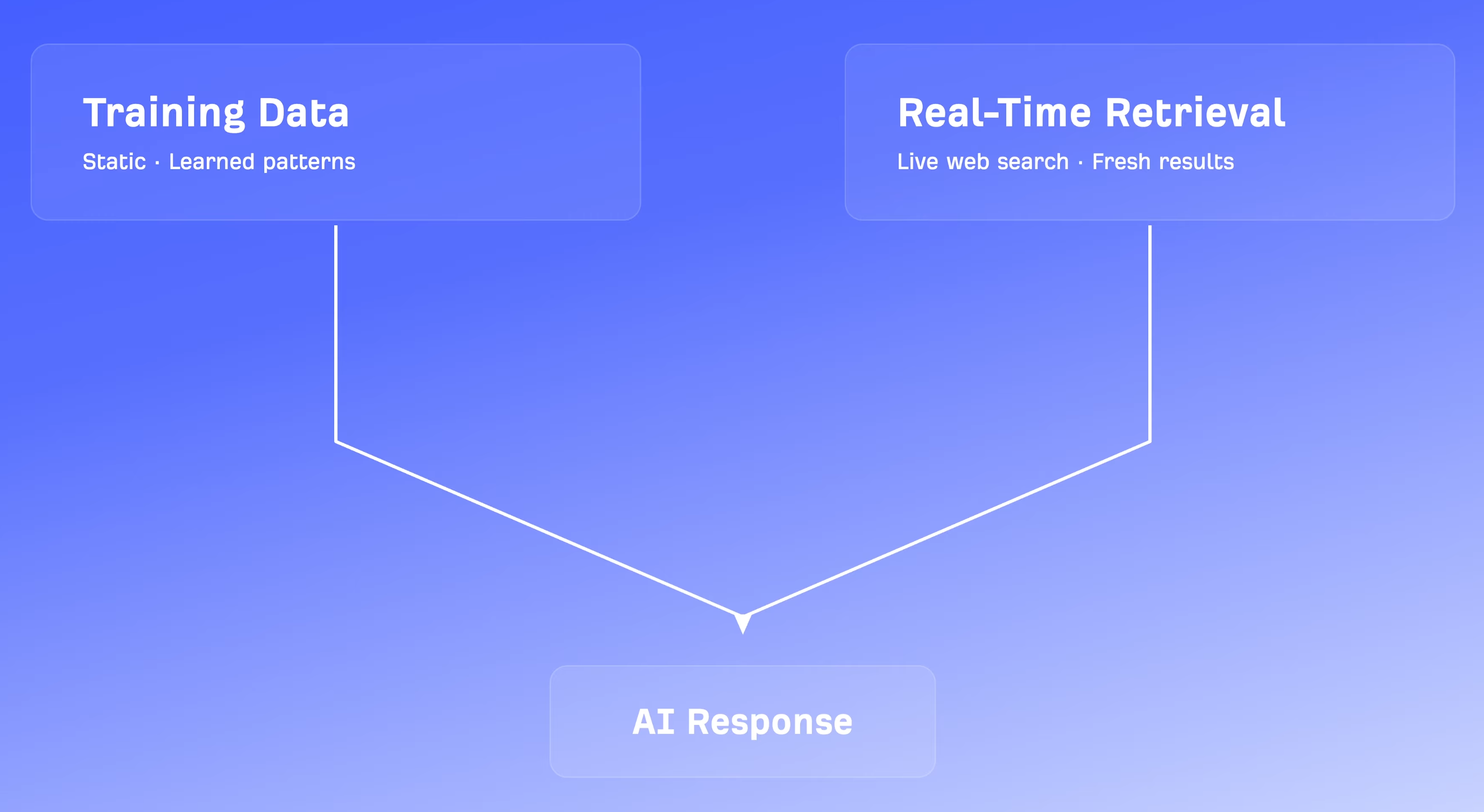
This matters because it means there are two distinct ways to influence what AI says about your brand:
Be mentioned so widely across the web that you become baked into the training data itself
Make sure your content shows up when the AI searches the web in real time
That second path is SEO. Ranking in Google, earning backlinks, and creating quality content directly influence whether AI picks up your pages during real-time retrieval.
Query fanout: one search becomes many
AI doesn't just search for the exact phrase you typed in.
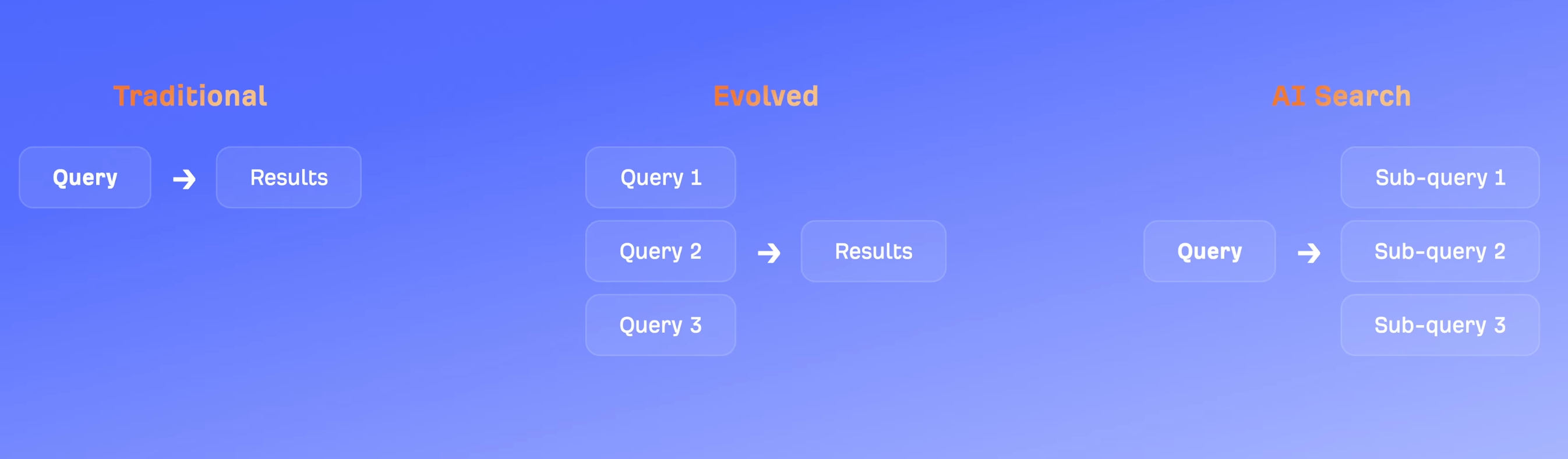
Search engines have evolved through a few stages:
One-to-one: one query, one set of results
Many-to-one: different queries, like "Sydney plumber" and "plumbing service in Sydney," return the same results.
One-to-many: AI search's current model, where a single query is expanded into many; this is called query fanout
For example, a prompt like "plan me a 5-day trip to Japan in November" gets fanned out into dozens of smaller, long-tail subqueries running simultaneously behind the scenes, such as: "best neighborhoods to stay in Tokyo", "November weather in Kyoto", "Japan Rail Pass worth it".
The AI pulls information from multiple sources across the web for each of these subqueries and combines everything into one complete answer.
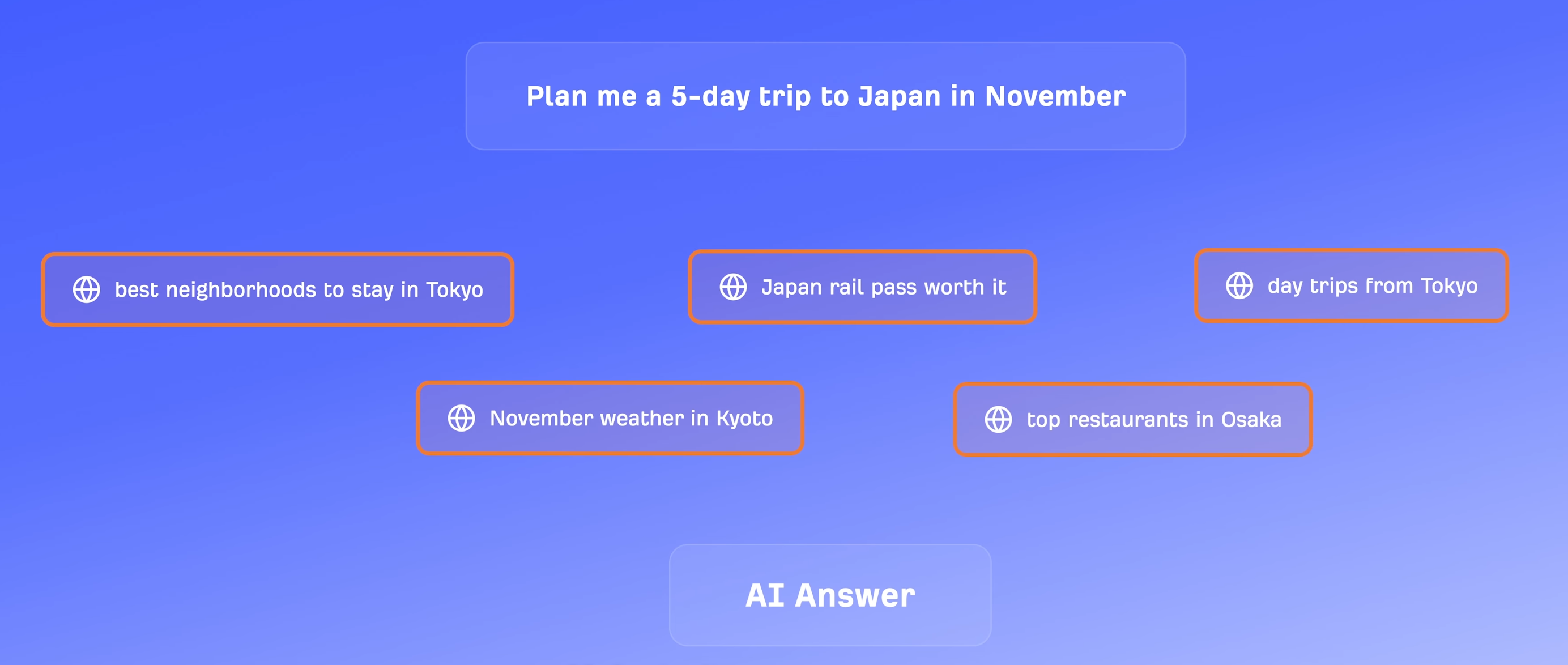
If your content ranks for those niche, specific queries, your brand has a much better chance of being included in the AI's final response.
This is a major shift from traditional SEO, where you could optimize one page for one target keyword and call it a day. In AI search, you need to be relevant across an entire topic, arguably across an entire niche.
Seeing fanout queries yourself
You can actually see these fanout queries under the AI responses report inAhrefs' Brand Radar for ChatGPT and Perplexity prompts.
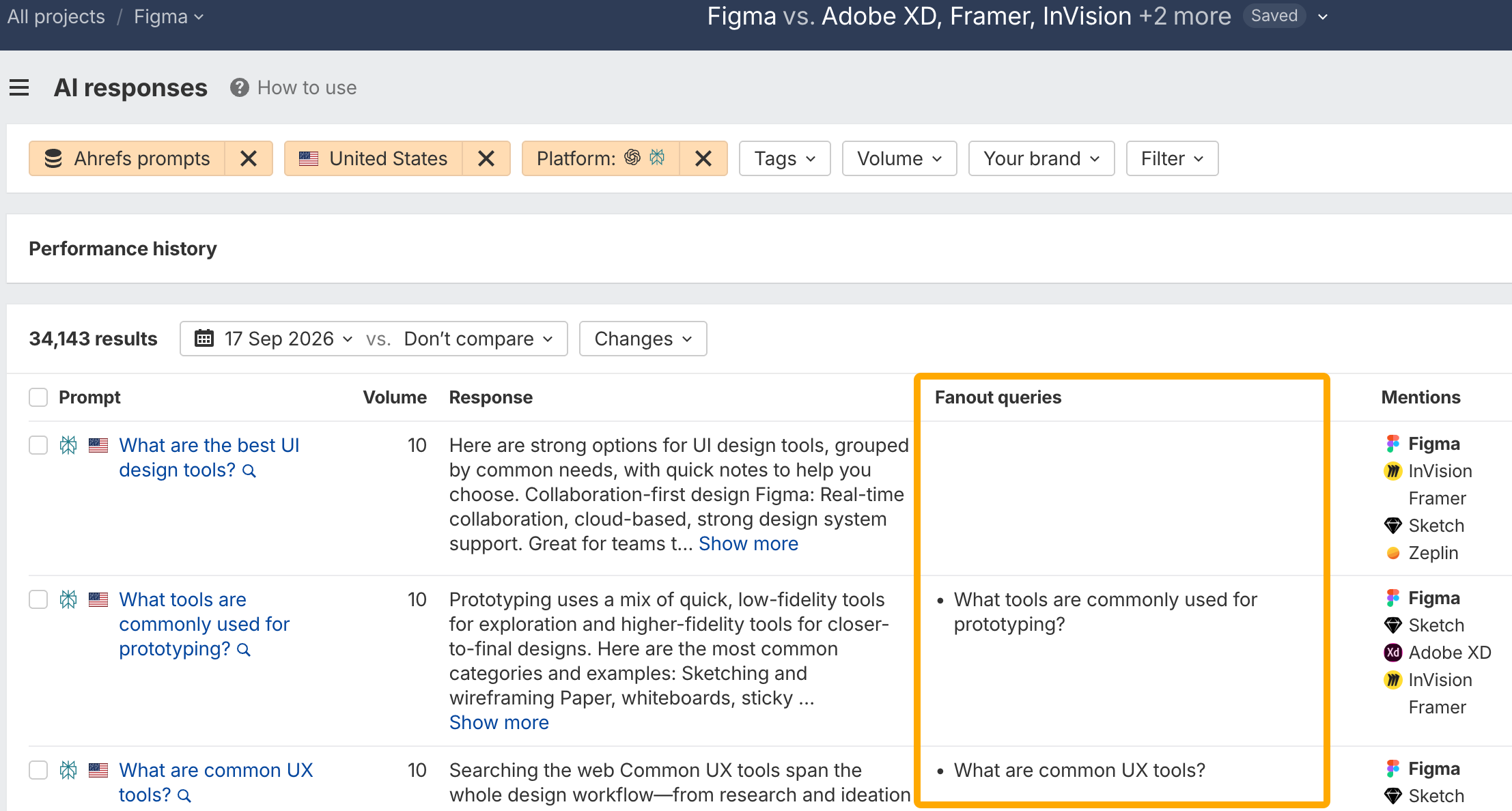
Fanout queries are not like traditional long-tail keywords. They're synthetic, generated by the AI in the moment, and inconsistent, meaning the same prompt can trigger different fanouts every time. Over 95% of them have zero search volume because real humans would never type them.
So don't treat fanout queries as a new keyword list to optimize for, but as a window into what topics the AI considers.
How AI decides who to cite
In traditional search, rankings are relatively stable. If you're number three for a keyword today, you're probably going to be around there tomorrow. AI citations don't work that way, they're probabilistic.
Patrick Stox explained it well in Ahrefs Podcast: AI outputs are built on probabilities on top of probabilities on top of probabilities.
In practice, this means if you ask the same question five times, you might get cited three out of five times. There's no fixed position to rank for. This is why the industry talks about AI visibility rather than AI rankings. It's more like a probability distribution than a leaderboard.
That said, patterns do emerge in what gets cited more often, based on data Ahrefs has studied:
Consensus matters: if multiple sources on the web say the same thing about your brand, AI is more likely to repeat it. The more places your brand is mentioned consistently, the higher the probability AI picks it up.
Freshness matters: AI-cited content tends to be about 25% fresher than what typically shows up in a traditional SERP. The AI actively looks for recent information, especially for topics that change.
Authority still matters: pages that rank well in traditional search have a major head start. 38% of AI Overview citations come from pages already in the top 10 of Google.
Check out some of the articles on the Ahrefs blog to learn about AEO:
Answer Engine Optimization (AEO) Course
What you'll learn
The fundamentals of how AI search works and why AEO matters
How different AI platforms decide what to cite
How to find gaps between your brand and competitors in AI search
How to do keyword and prompt research for AEO
How to create content that AI wants to cite
How to earn brand mentions across the web
How to optimize YouTube videos for AI visibility
Technical AEO best practices
How to track AI traffic and measure your progress
