
How Ranking in Google AI Overviews, ChatGPT, and Perplexity are Different
AI search platforms don't find, rank, or cite content the same way. Treating "AI search" as a single target and optimizing the same way across the board means leaving visibility on the table.
How different are these platforms, really?
An Ahrefs study found a 14% overlap for the top 50 most cited domains across Google AI Overviews, ChatGPT, and Perplexity. Out of those 50 domains, only seven appeared on all three platforms.
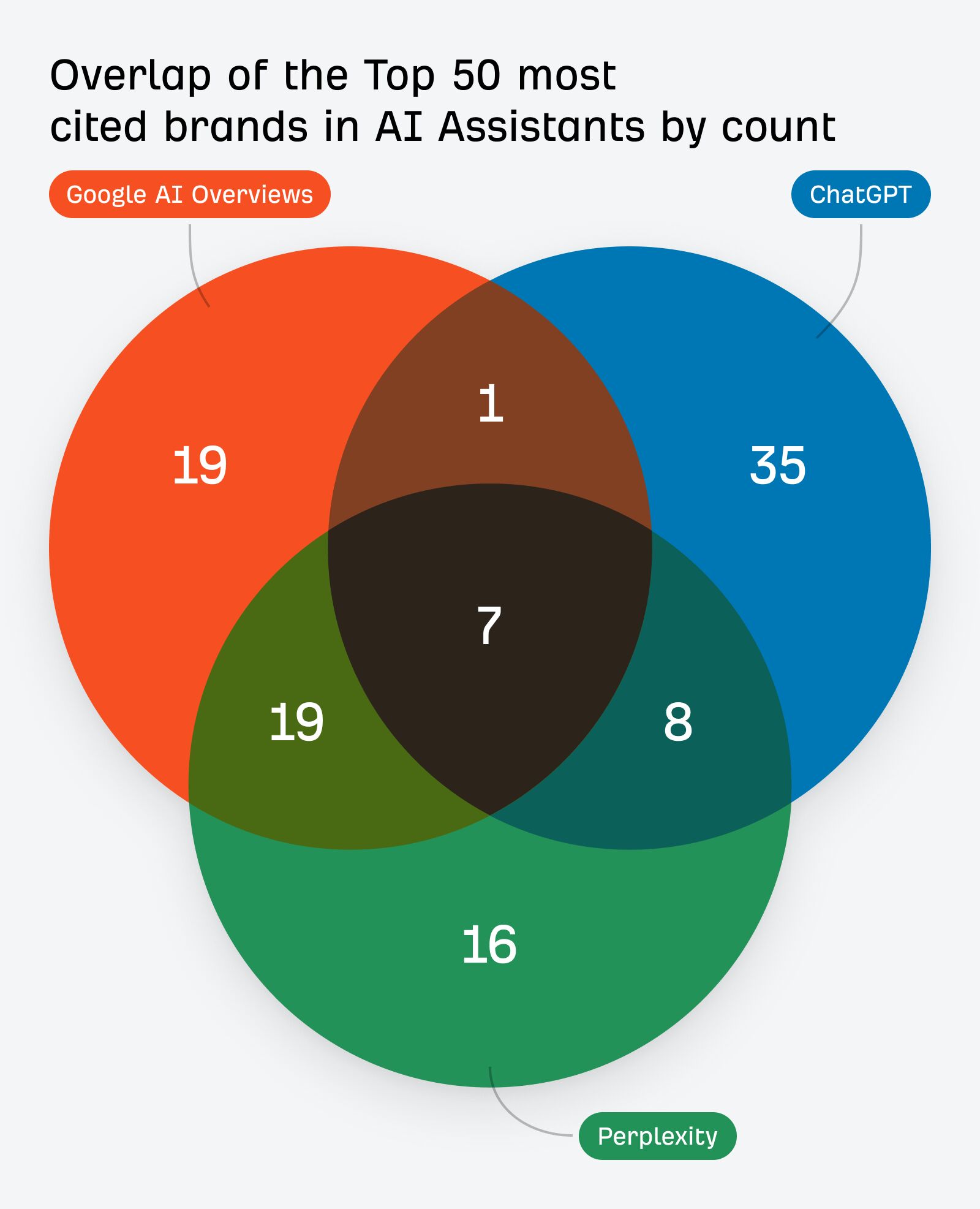
If you're only optimizing for one platform, you could be effectively invisible on the others.
Google AI Overviews
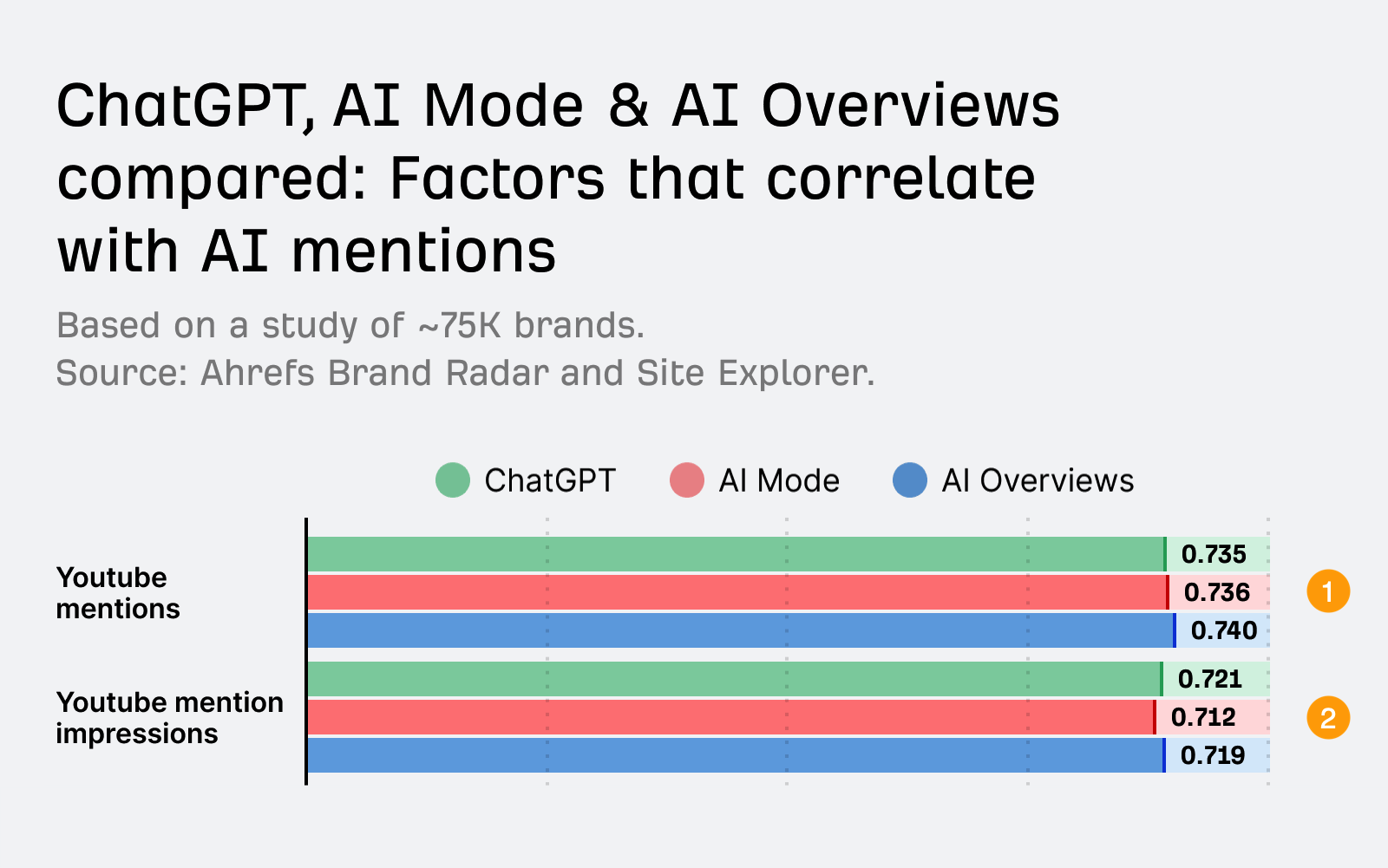
Google AI Overviews favor authoritative, established sites (think health, finance, and encyclopedic content), plus Google-owned properties like YouTube.
YouTube accounts for about 5.6% of all AI Overview citations
Reddit is also heavily featured
ChatGPT
ChatGPT leans heavily toward publishers and media. Some of the most cited domains include: Reddit, Wikipedia, Amazon, Forbes, Business Insider, and Wired.
The median domain rating of ChatGPT's top cited pages is 90, meaning it pulls overwhelmingly from high-authority publishers. This is partly due to licensing deals OpenAI has with certain outlets.
Perplexity
Perplexity is the most aligned with traditional Google search results.
About 28.6% of Perplexity citations come from pages that rank in Google's top 10. Compare that to ChatGPT, which overlaps with Google's top 10 only about 8 to 10% of the time.
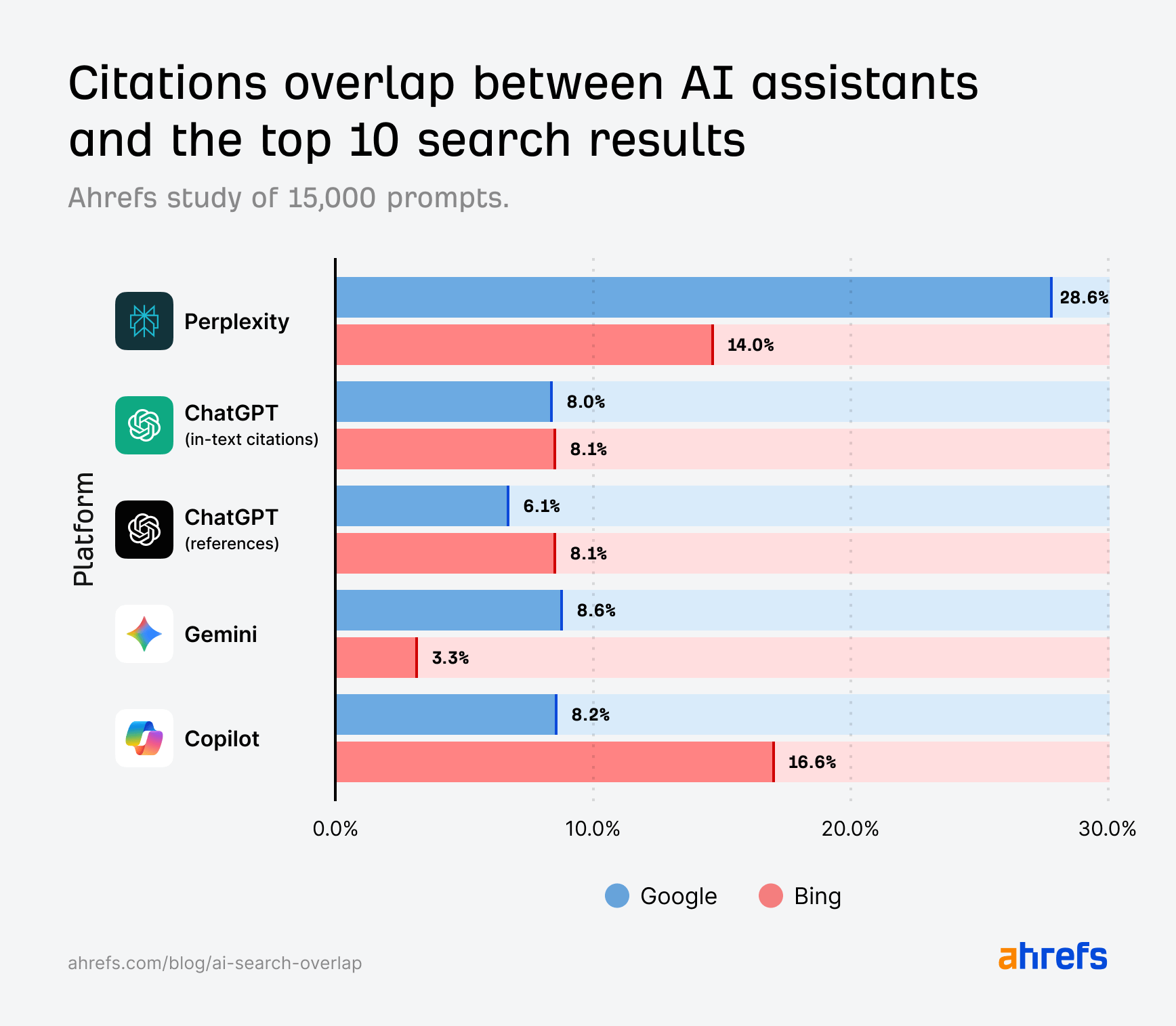
If you're already ranking well in Google, Perplexity is likely where you'll see the most immediate AI visibility.
Google AI Mode
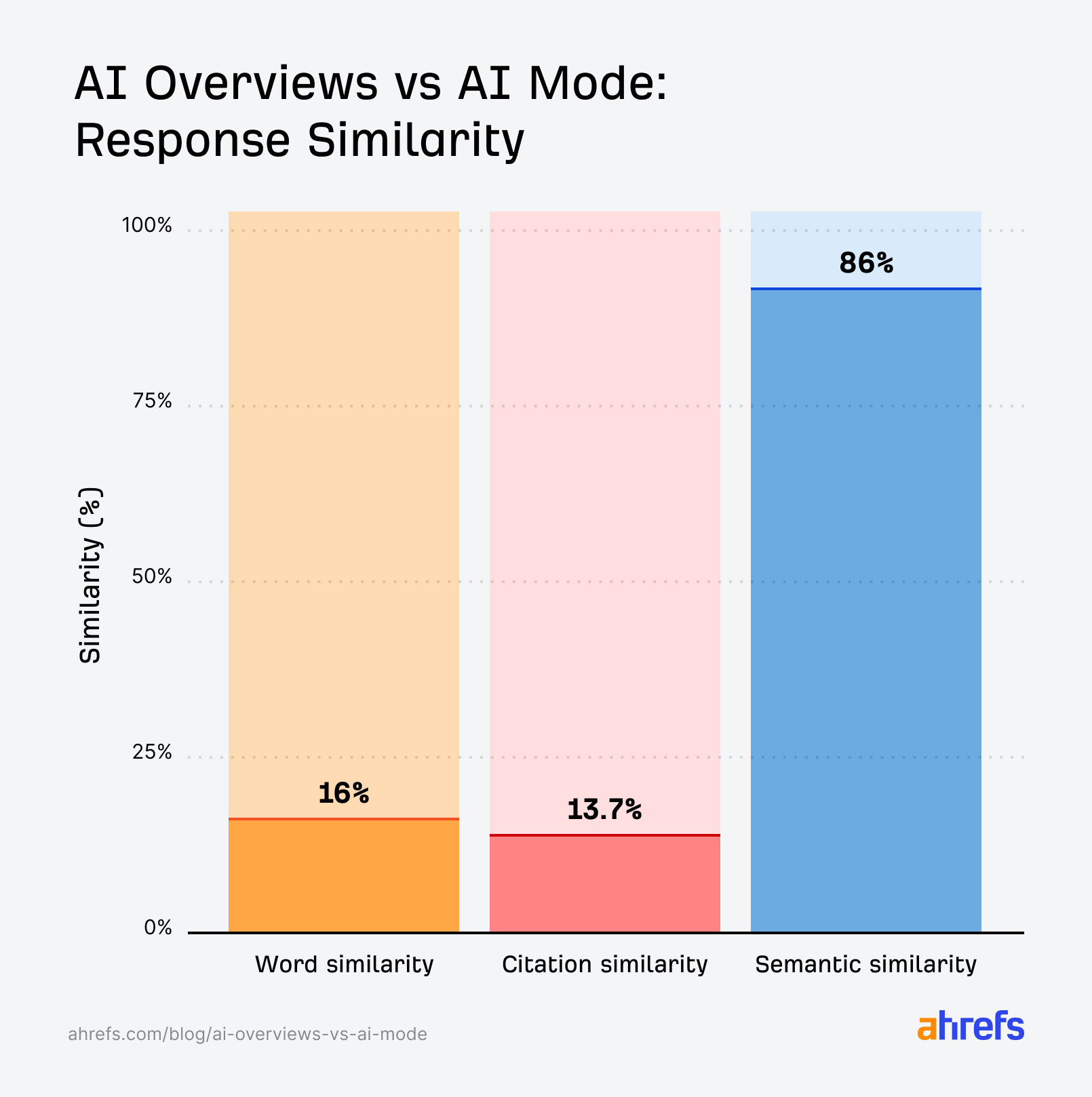
AI Mode and AI Overviews are both Google products, but they cite different sources:
The citation overlap between AI Overviews and AI Mode is only 13.7%, despite their answers being 86% semantically similar. Translation: they say similar things, but pull from completely different sources.
AI Mode's top cited domain is YouTube by a wide margin, followed by Google and Wikipedia.
AI Mode cites Quora 3.5 times more than AI Overviews does, and it pulls much more heavily from social platforms like Facebook and Instagram.
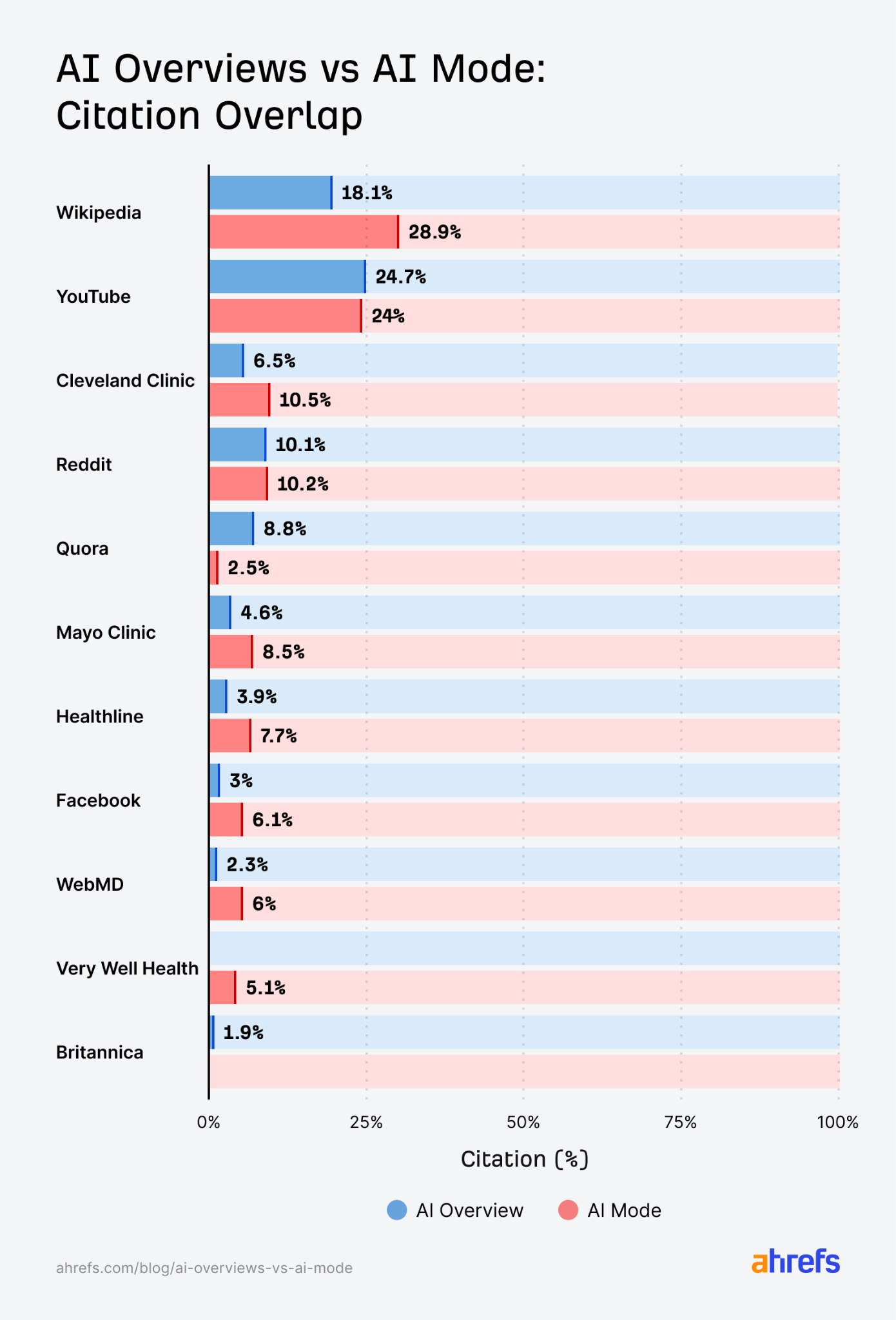
The takeaway: AI search is not one thing. Each platform has its own index, its own biases, and its own preferences for the kinds of sources it cites.
Which platform should you focus on?
Rather than trying to optimize for everything at once, it helps to be strategic. Two things to consider:
1. Market share
Google's AI features and ChatGPT currently account for the vast majority of AI search traffic. Perplexity is growing but still represents a fraction of the volume.
If you have to prioritize: focus on Google and ChatGPT (at least at the time of recording this course).
2. Overlap with your existing SEO
Consider how much overlap exists between what you're already doing in SEO and what each platform rewards:
If you're already ranking well in Google, you have a natural head start with AI Overviews and Perplexity.
AI Overviews are increasingly pulling from pages outside the top 10, including YouTube and Reddit, meaning the connection between Google rankings and AI citations is weakening.
ChatGPT is much more interested in publisher authority and editorial content. If your brand gets mentioned on Forbes, in a Reddit thread, or on a niche review site, that may matter more for ChatGPT visibility than your own page's Google ranking.
Many of the top cited domains in AI search get no traditional search traffic at all. AI visibility is its own game.
Checking which domains are cited for your brand
You can see the top domains for a specific platform using Brand Radar:
Run a blank search in Brand Radar.
Go to the Cited Pages report > All domains.
Filter using your desired AI platform.
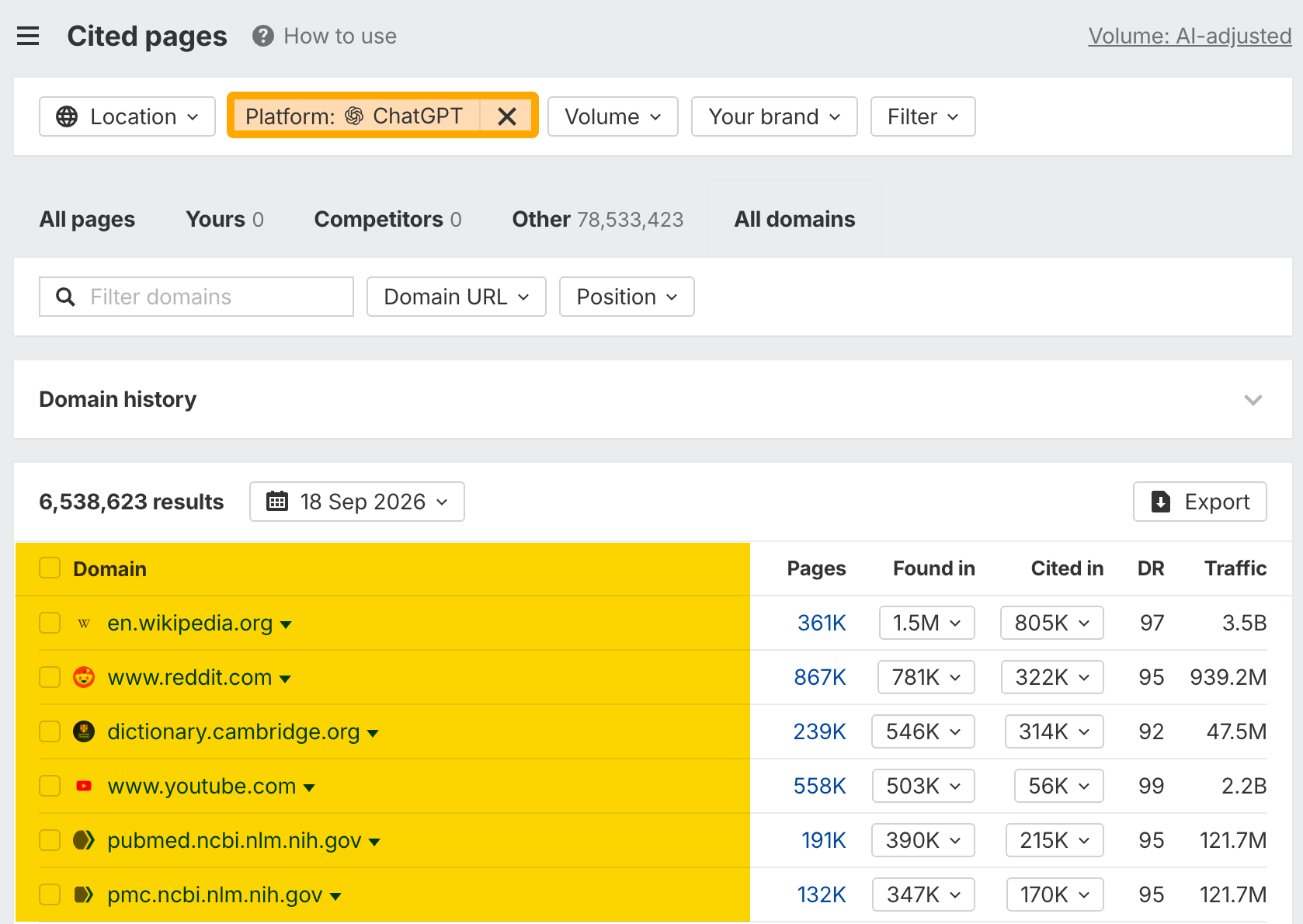
Typically, the websites citing your brand differ across each platform. A domain that shows up heavily in AI Overviews might barely appear in ChatGPT, and vice versa. This is why a one-size-fits-all approach to AEO doesn't work.
Putting this into practice
You don't need completely separate strategies for each platform. Fundamentals like creating quality content, earning mentions, and building topical authority help across the board.
But knowing where each platform pulls from helps you prioritize your efforts. For example:
If ChatGPT is a big traffic driver for your niche, focus on getting mentioned on high DR editorial sites and publishers.
If AI Overviews matter more, YouTube and Reddit should be on your radar.
Specific strategies for these platforms are covered in modules two and three. For now, the key point is that each platform is its own ecosystem with its own rules.
Check out some of the articles on the Ahrefs blog to learn about AEO:
Answer Engine Optimization (AEO) Course
What you'll learn
The fundamentals of how AI search works and why AEO matters
How different AI platforms decide what to cite
How to find gaps between your brand and competitors in AI search
How to do keyword and prompt research for AEO
How to create content that AI wants to cite
How to earn brand mentions across the web
How to optimize YouTube videos for AI visibility
Technical AEO best practices
How to track AI traffic and measure your progress
