
How to Monitor and Win Brand Mentions in AI Answers

SEO & Marketing Educator at Ahrefs

Brand mentions happen when people talk about your company online without necessarily linking to your website.
They’ve always happened on social media, forums, news sites, and blogs. But now they’re happening in AI responses—and these mentions influence how millions of people discover and perceive your brand.
Welcome to the new era of brand mention monitoring.
Keep learning on YouTube
Why it matters when AI mentions your brand
Right now, traffic from AI assistants makes up only a very small share of overall website visits—ChatGPT, the most popular one, accounts for just 0.21%. Still, there are at least three good reasons why this small number matters.
AI recommendations reach millions
People turn to AI to solve problems and to decide what to buy. If that AI recommends a competitor, you risk losing customers.
In July 2025, ChatGPT had more than 700 million weekly users around the world. If we focus just on users looking for how-to advice or products to buy, as stated by their usage report, that means brand recommendations could show up in conversations with at least 74.2 million people every week.
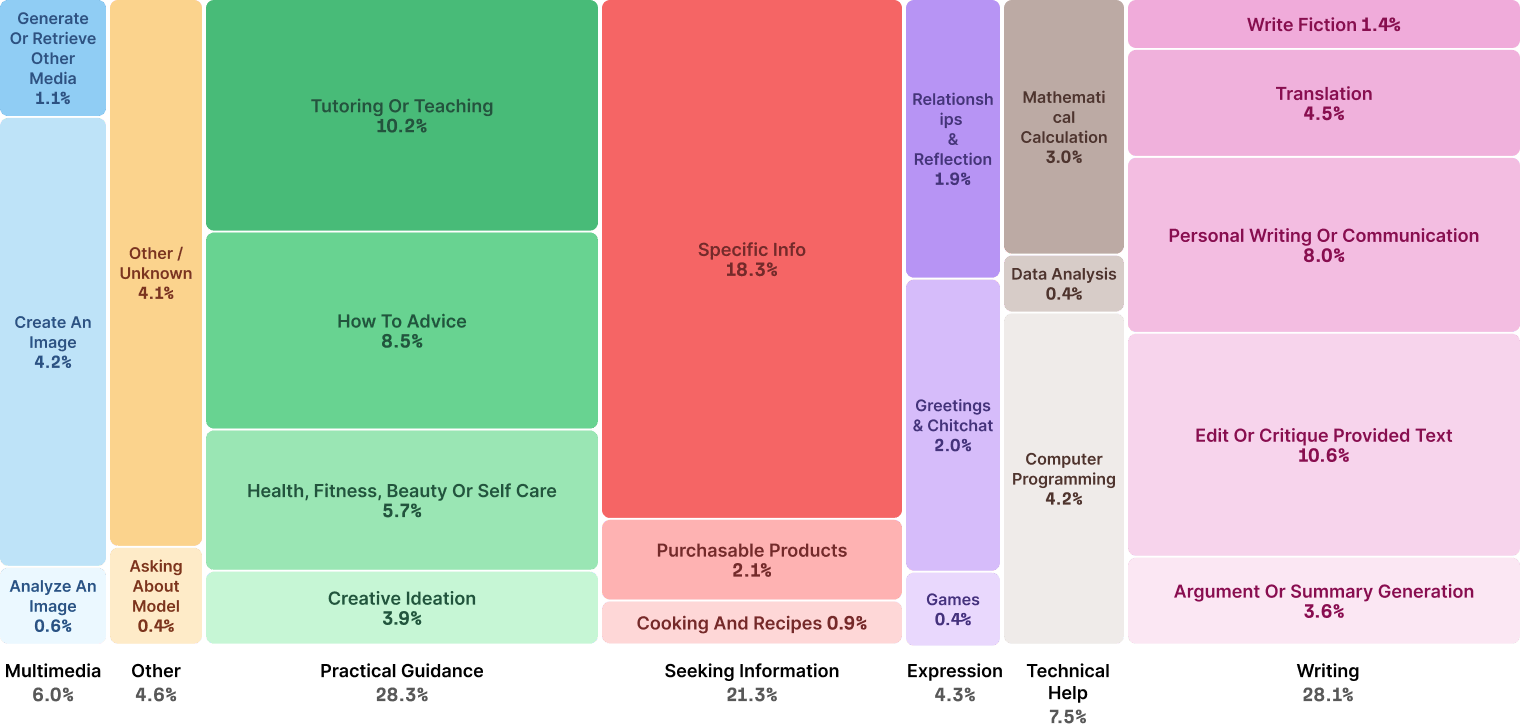
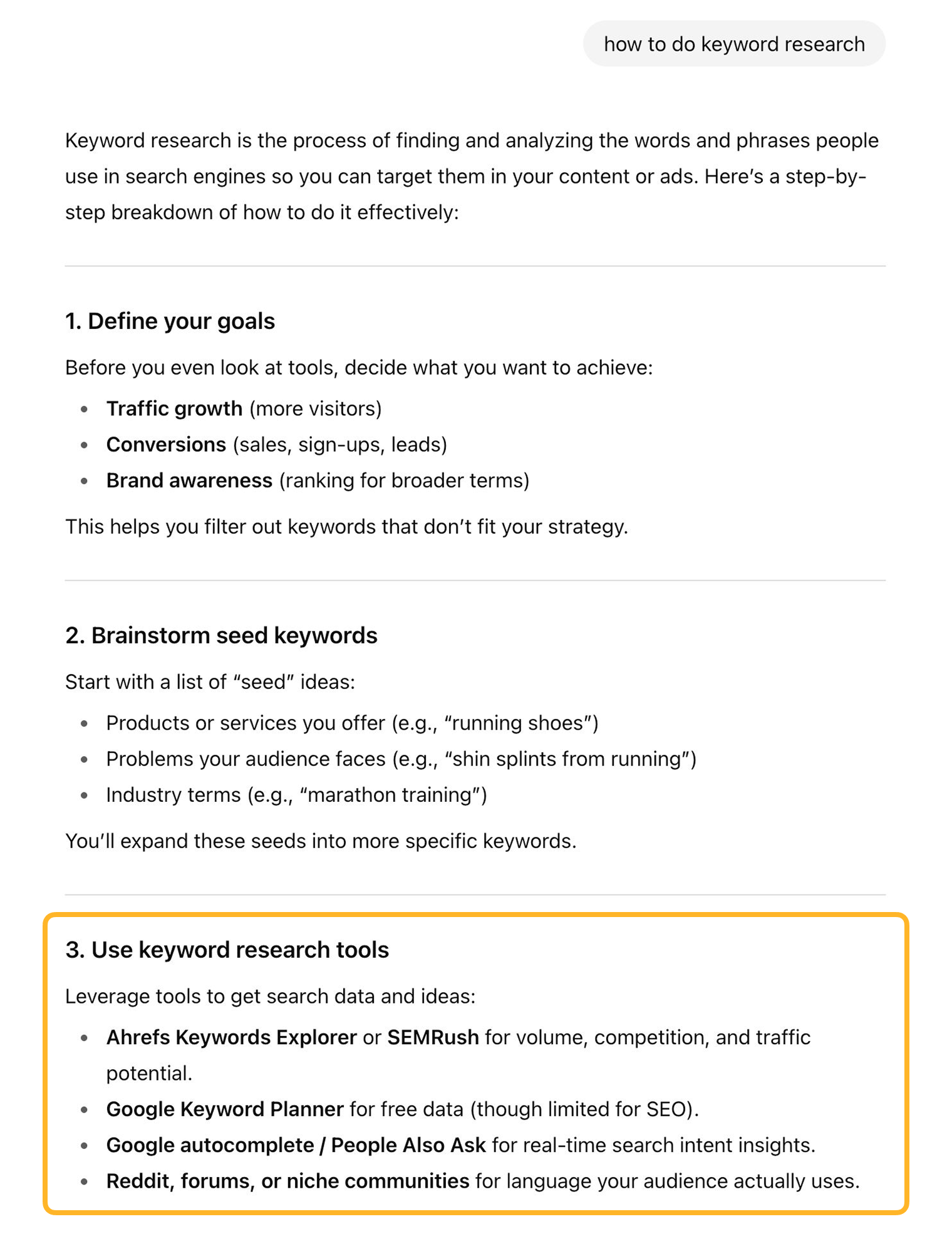
A brand mention doesn’t always mean someone asked directly for a specific brand or product recommendation. Brands can come up naturally, even when people are just asking for how-to advice.
Nearly half of people trust AI recommendations
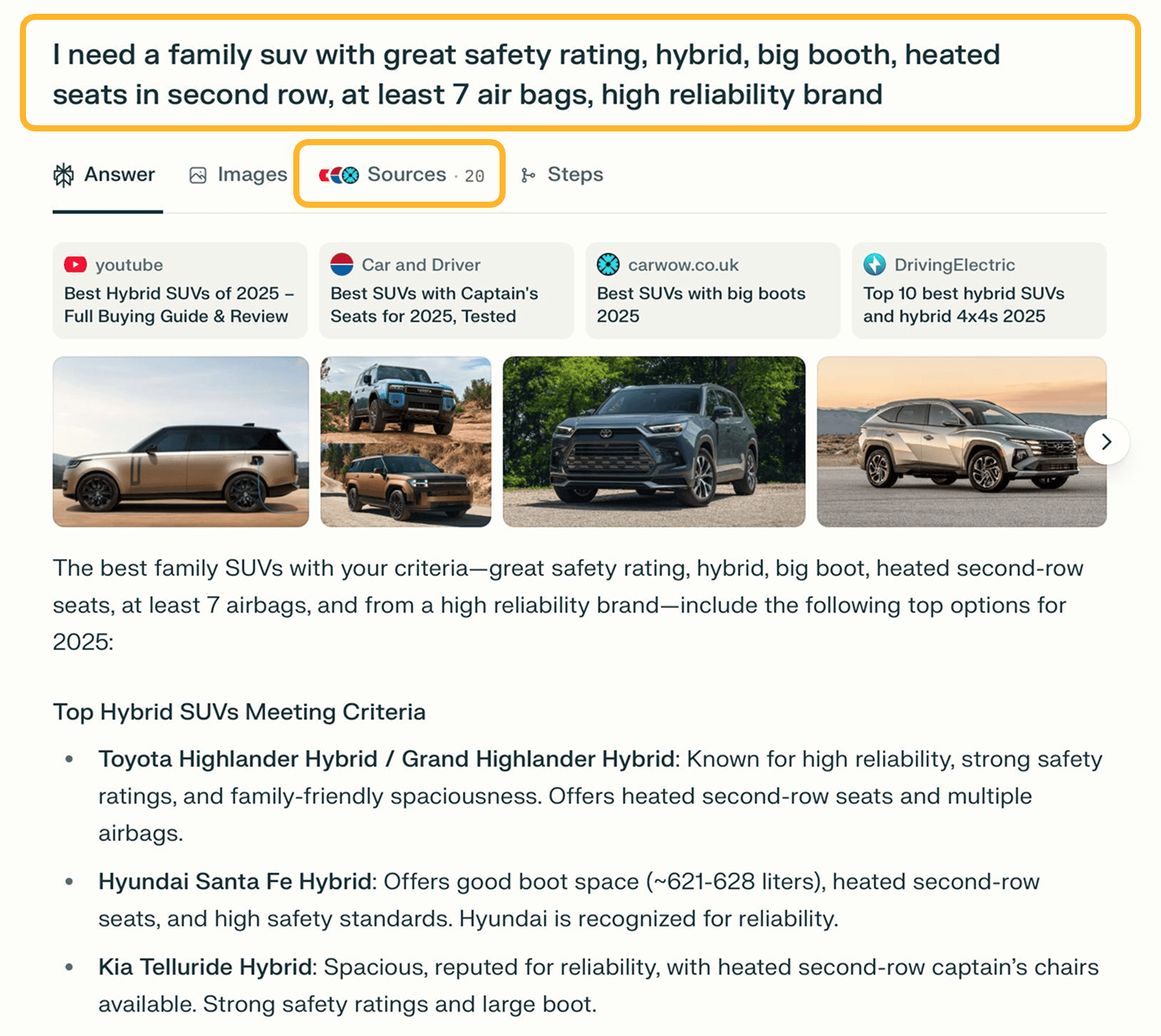
A study by the University of Melbourne has shown that nearly half of people trust AI. That half may be convinced by how the expert and tailored AI recommendations feel. Just share your requirements in a prompt, and the AI can scan dozens of sites to find the best option.
AI mentions stick around
Unlike social posts that fade quickly from feeds, brand mentions on the open web can have long-lasting effects. Your old content can stay indexed and searchable for years.
What’s different with AI is that these mentions don’t just live quietly online—they can shape how AI tools talk about your brand. That’s because models pull from both historical training data and fresh web searches. So a single mention today could keep resurfacing in answers months or even years from now.
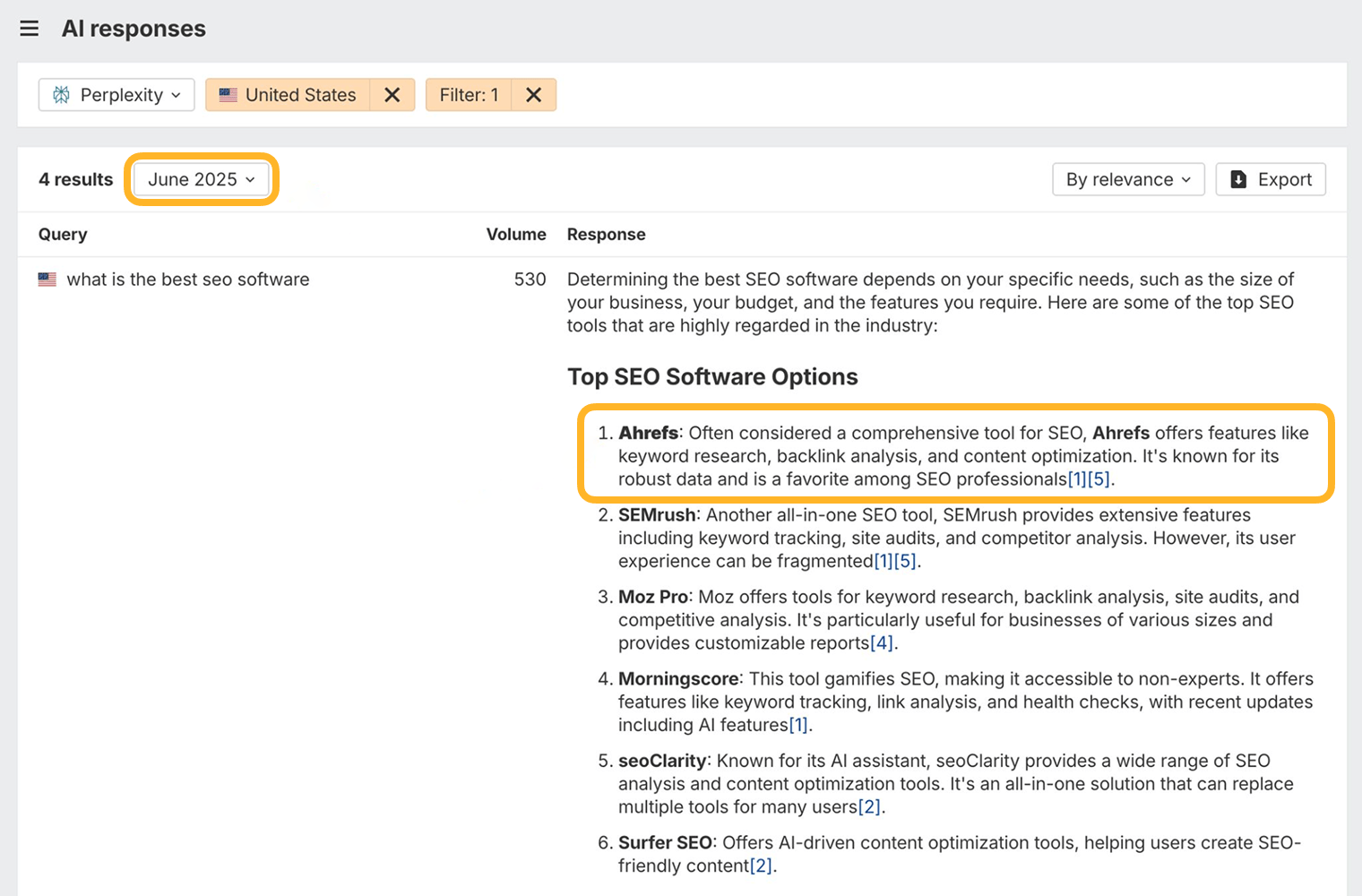
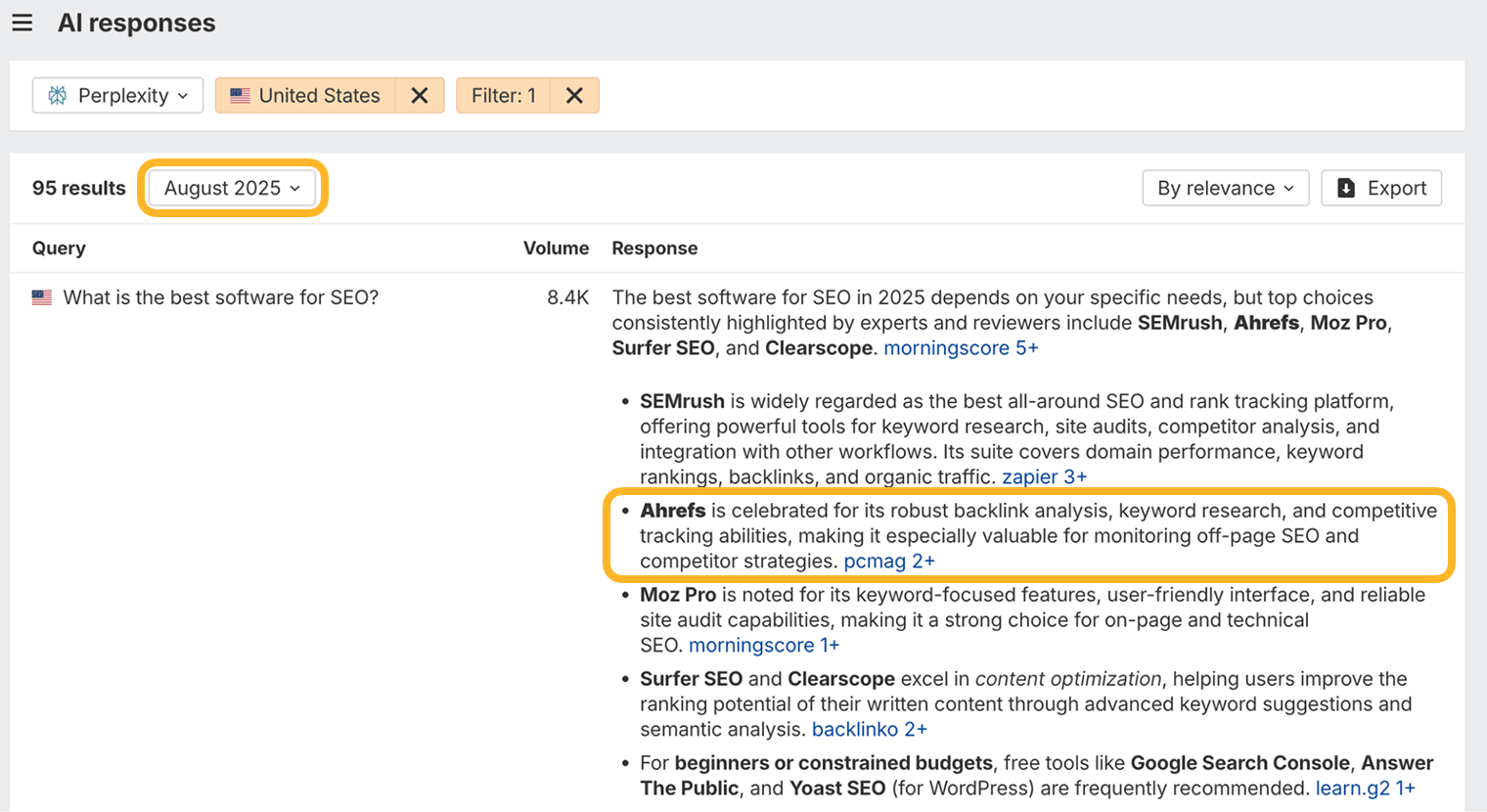
For example, Perplexity has consistently highlighted Ahrefs as the top SEO software for more than two months straight, showing how repeated mentions can reinforce a brand’s position inside AI-generated responses.
Monitoring brand mentions in AI is different
If you’re thinking, “great, another thing for our social media manager to track,” stop right there. AI brand mention monitoring is fundamentally different from the social media monitoring you already know, and it may even belong on someone else’s plate.
Social media mentions are fleeting and unpredictable—they can spike overnight and then fade just as quickly. By contrast, AI mentions are more stable. If ChatGPT highlights a competitor instead of you, it’s not about a passing trend; it reflects the deeper, long-term signals AI has learned from authoritative content over time.
And unlike social media, this is not something you can reply to directly.
That’s why monitoring AI is more about strategy than “firefighting”. You’re tracking visibility trends, spotting positioning gaps, and deciding what content to create next.
And since AI systems update on their own schedules—in the case of AI assistants in Ahrefs’ Brand Radar, on a monthly basis—your monitoring should follow those cycles, making AI mention tracking more like competitive research than customer service.
To sum up:
| Aspect | Traditional brand monitoring (social media/forums) | AI brand mention monitoring |
|---|---|---|
Owner | Social media managers, community managers | Content marketing, brand marketing, or SEO teams |
Frequency | 24/7 monitoring with real-time alerts | Weekly visibility checks, monthly strategic reviews |
Purpose | Crisis prevention, customer service, engagement | Market positioning, content strategy, competitive intelligence |
Response | Direct replies, immediate damage control | Strategic content creation, PR, influencer marketing |
Mindset | Reactive firefighting | Proactive market research |
How to monitor and understand AI brand mentions
Since AI mentions are invisible to most typical monitoring tools, you need specialized tracking. Look for tools like Ahrefs’ Brand Radar with a large index of prompts and answers from different AI indexes, giving you broad visibility into how AI assistants understand and discuss your brand.
In the case of Brand Radar, that’s over 150M prompts in six AI indexes: AI Overviews, AI Mode, ChatGPT, Perplexity, Copilot, and Gemini. Here’s how you can navigate that data.
Track the growth of brand mentions
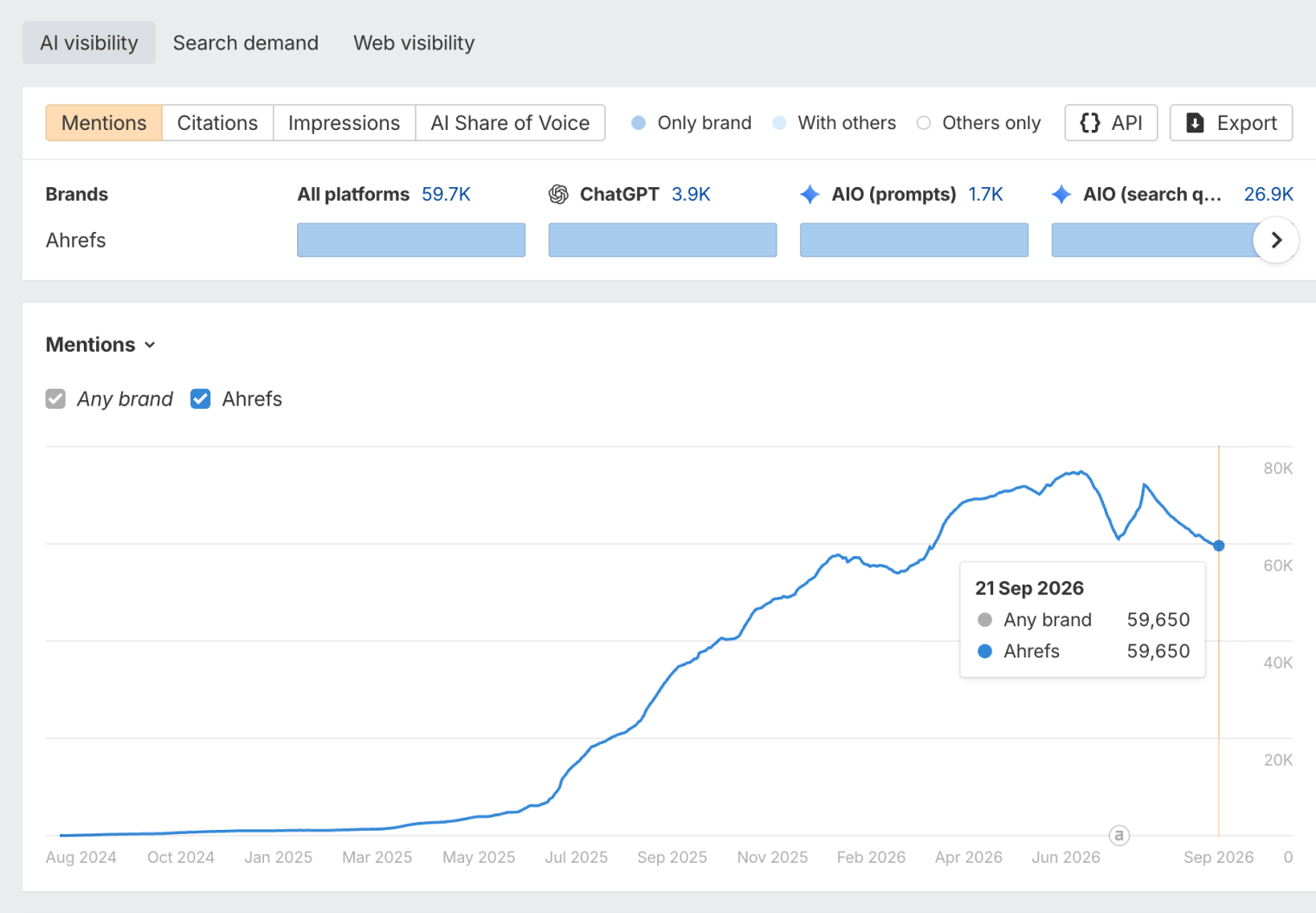
You can track how your brand’s presence in AI changes over time, which makes it easier to see whether your marketing efforts are paying off.
It’s like measuring brand awareness, but within the AI space. You’ll notice spikes after a big campaign or product launch, and you’ll also be able to catch sudden drops that could point to an issue that needs attention.
In Brand Radar, simply enter your brand name along with any common variations, and you’ll know the number of mentions and their change in time right away.
See what topics AI tools associate with your brand
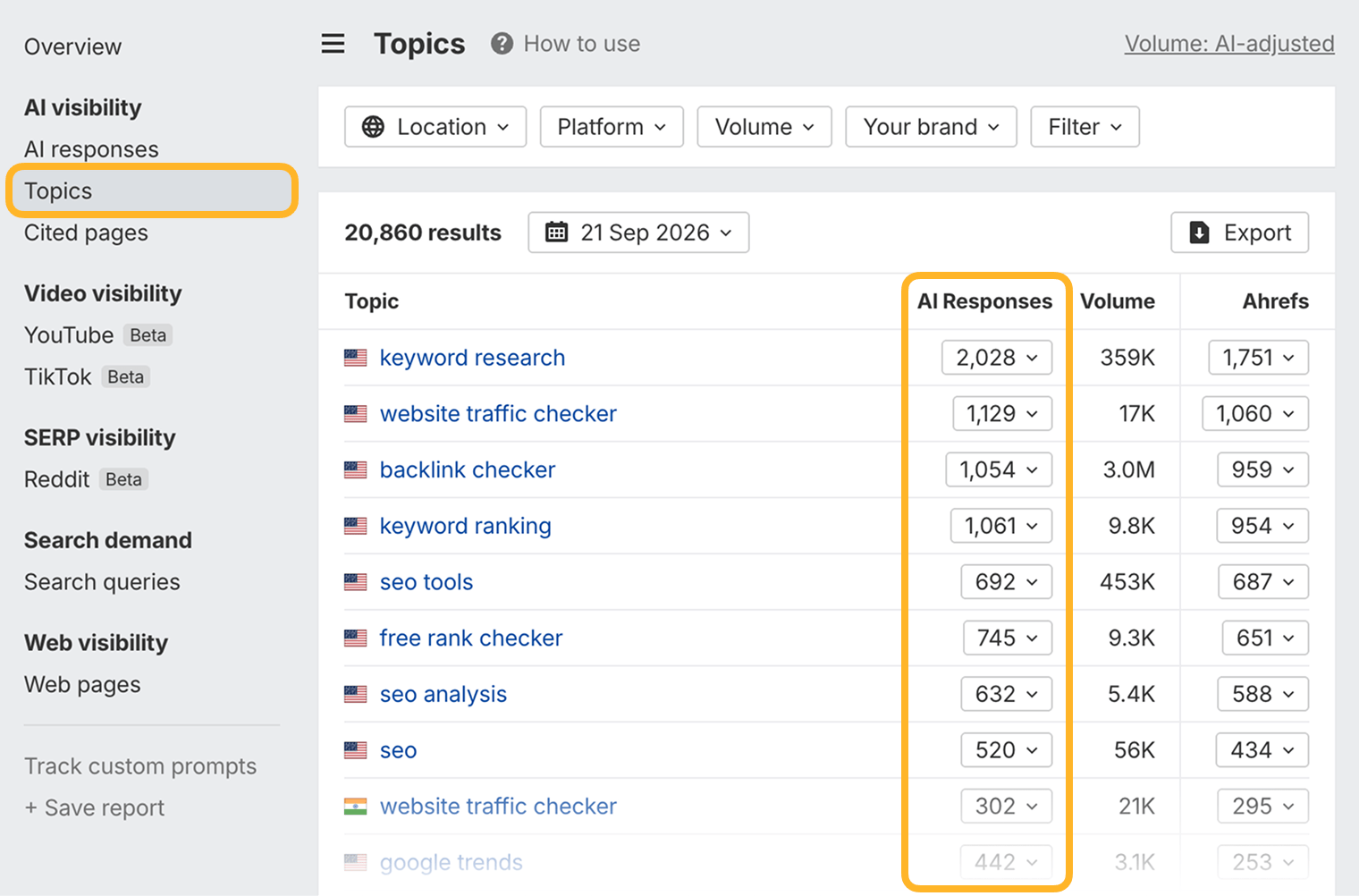
You can see which problems or topics naturally prompt AI systems to mention your brand. For example, your company might come up often in conversations about “sustainable packaging,” but be missing from discussions about “budget-friendly alternatives” where you’d want to appear. Insights like these show you where to focus your content strategy.
To get this data, open the Topics report in the left sidebar.
See how closely AI connects your brand to a topic or product category
If your brand spans multiple product categories, it’s important to track how often AI mentions you in each one.
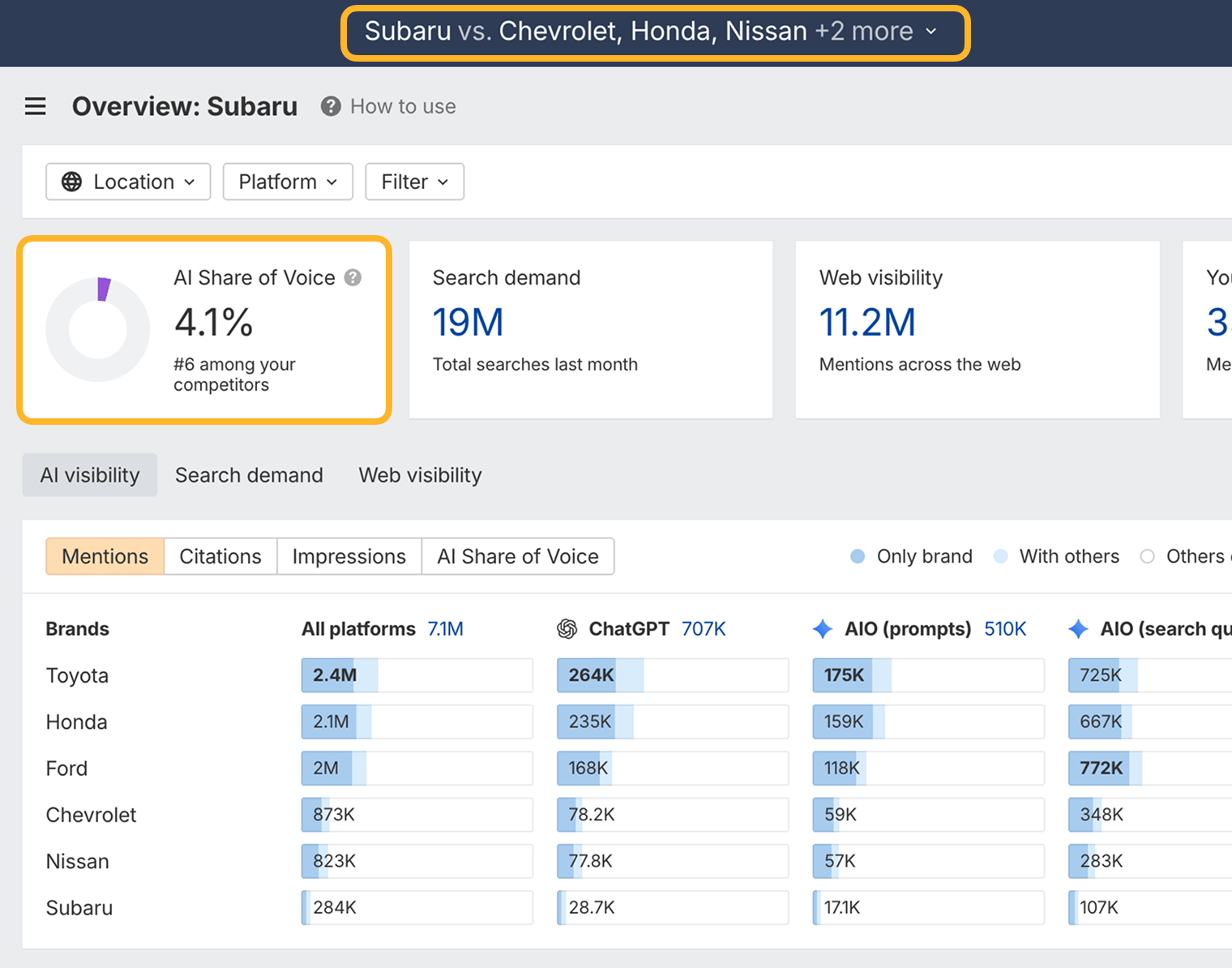
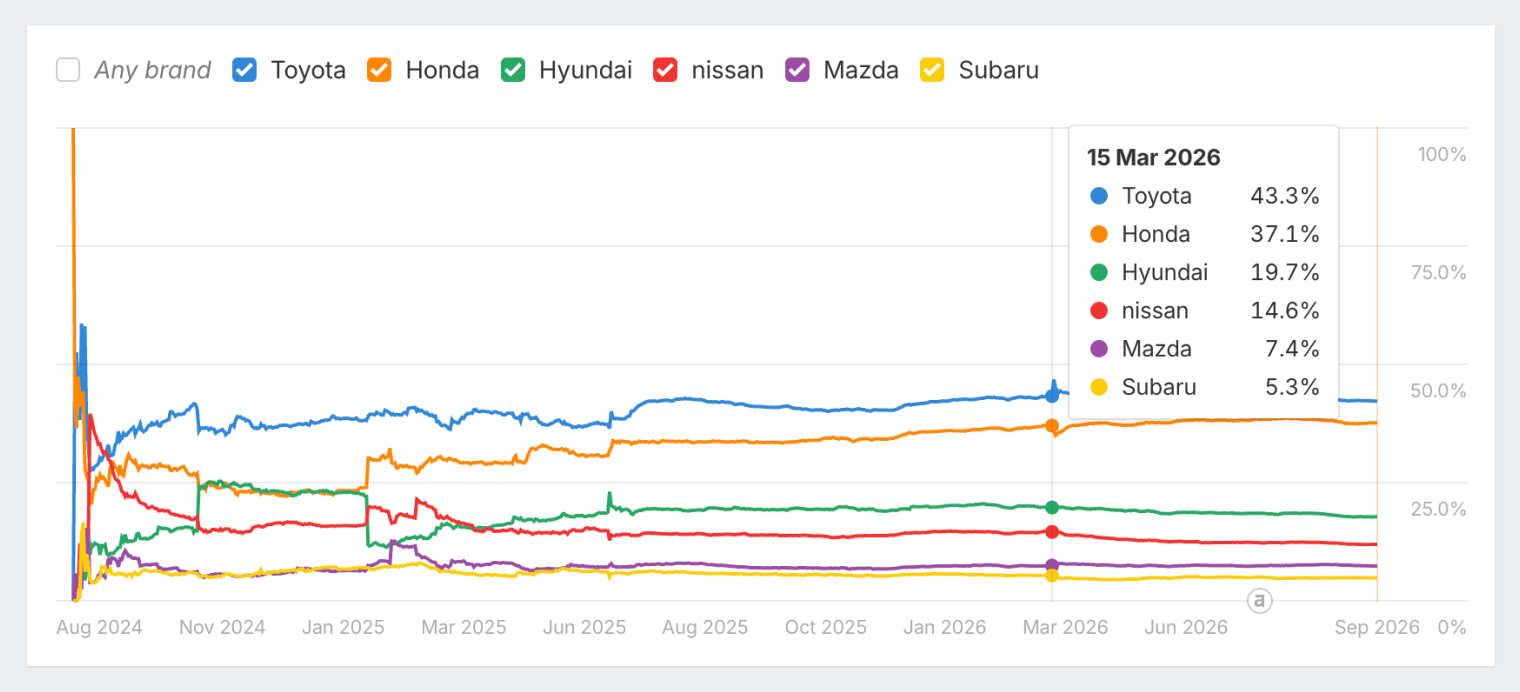
For example, the Subaru car brand wants to be top-of-mind when it comes to SUVs and crossovers. If we put these categories next to their brand name in Brand Radar and add some competitors, we’ll see that they are slightly more often mentioned as the crossover brand.
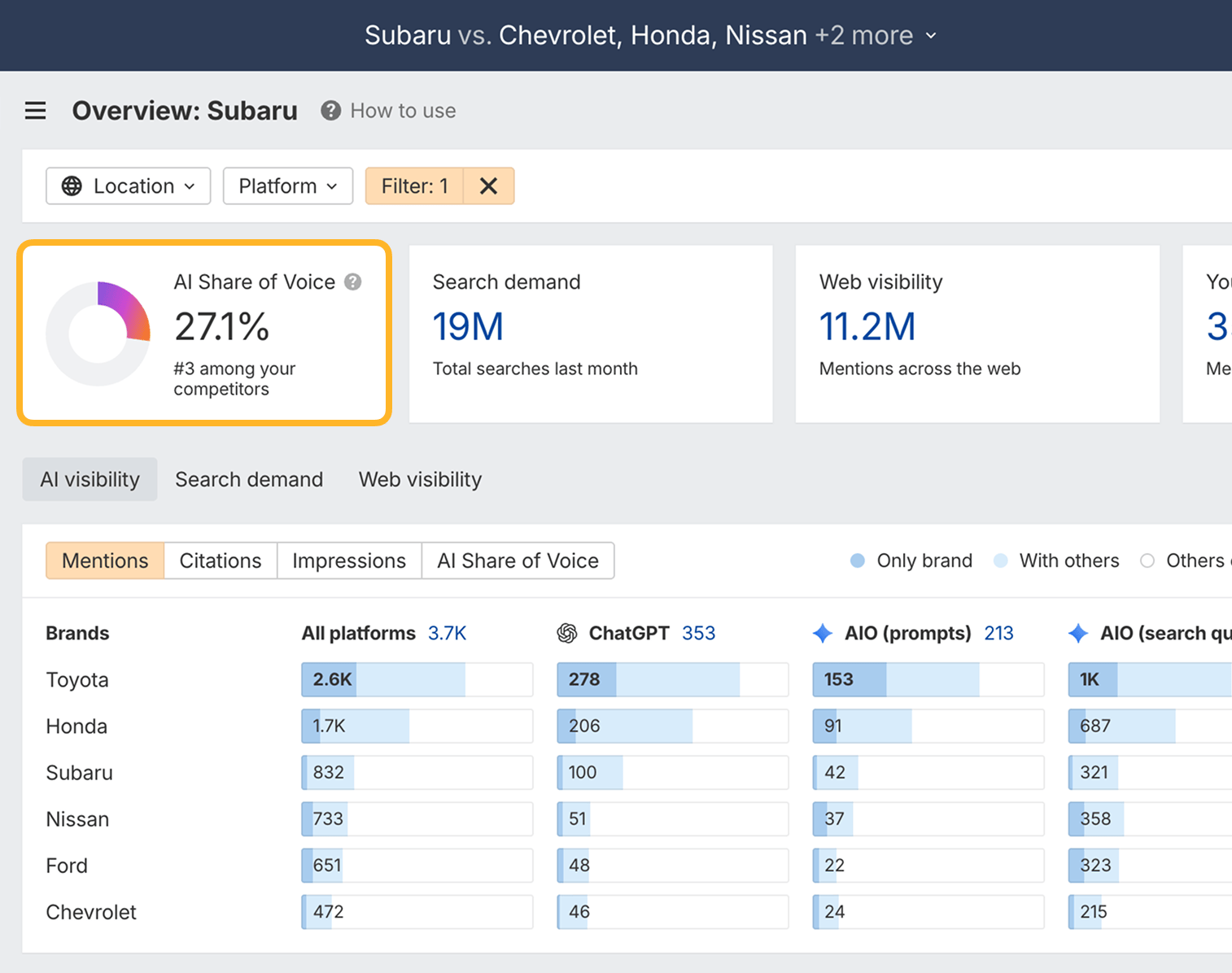
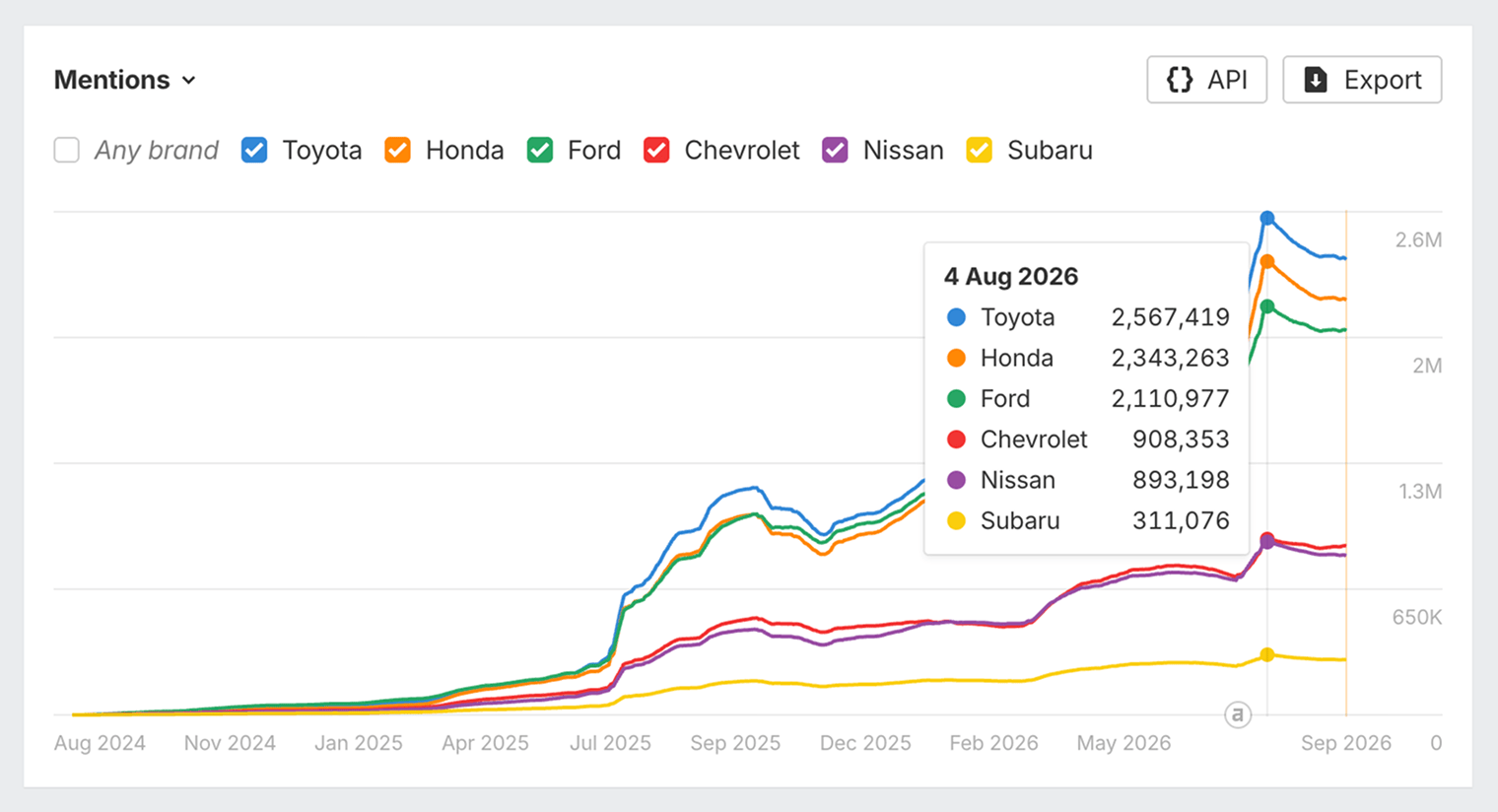
And right below the bar charts, we can see a graph showing how their AI visibility changed in time compared to competitors:
Find out what AI says about your brand (and step in when needed)
You can fact-check how AI describes your brand and catch mistakes before they spread.
Sometimes AI gets simple details wrong, like your founding date, main products, or even your prices, while still citing your pricing page. Here’s a fresh example of AI citing the wrong prices.
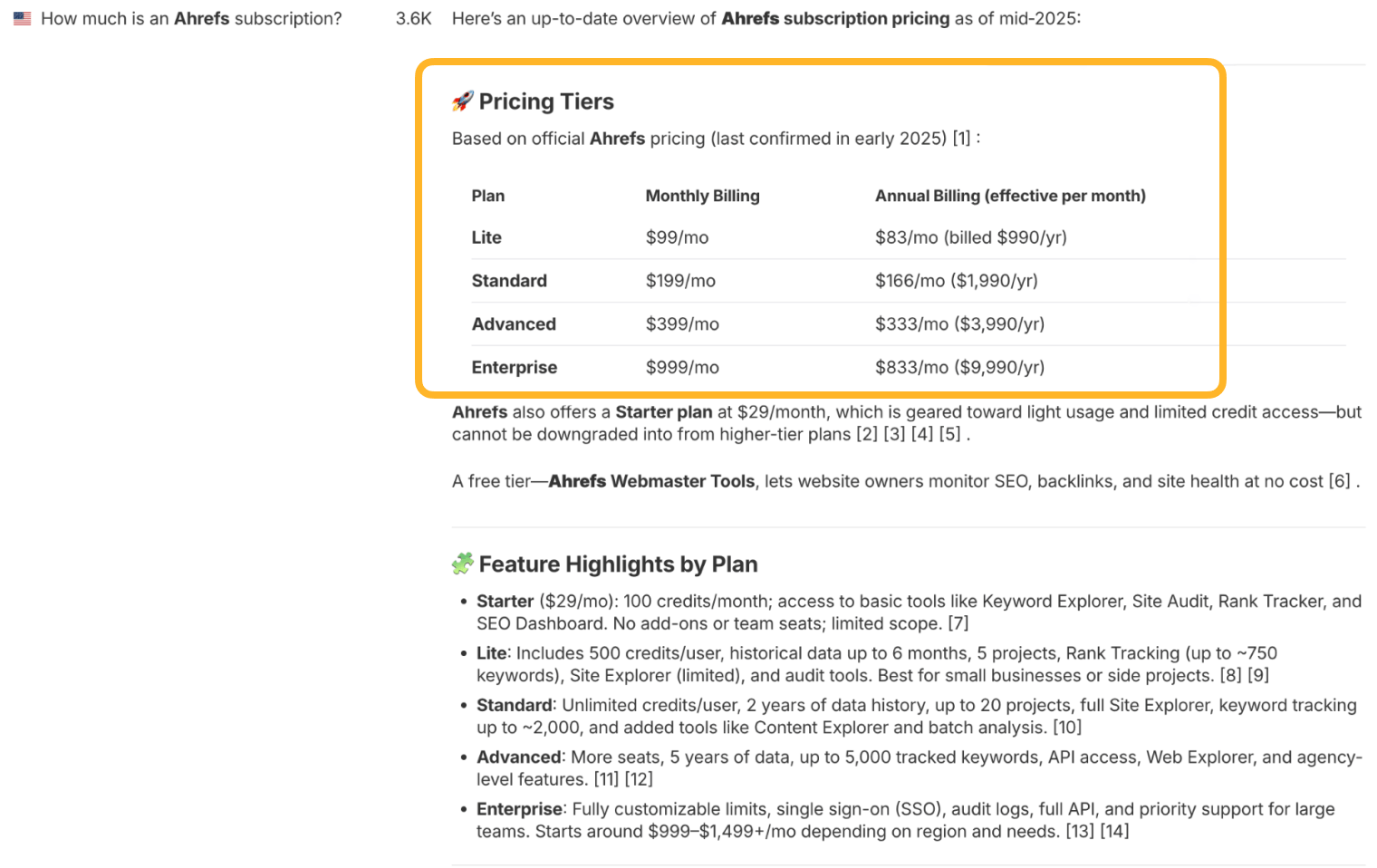
By spotting these errors, you get clear problems to work on, whether that means reaching out to the AI companies directly or creating content that sets the record straight.
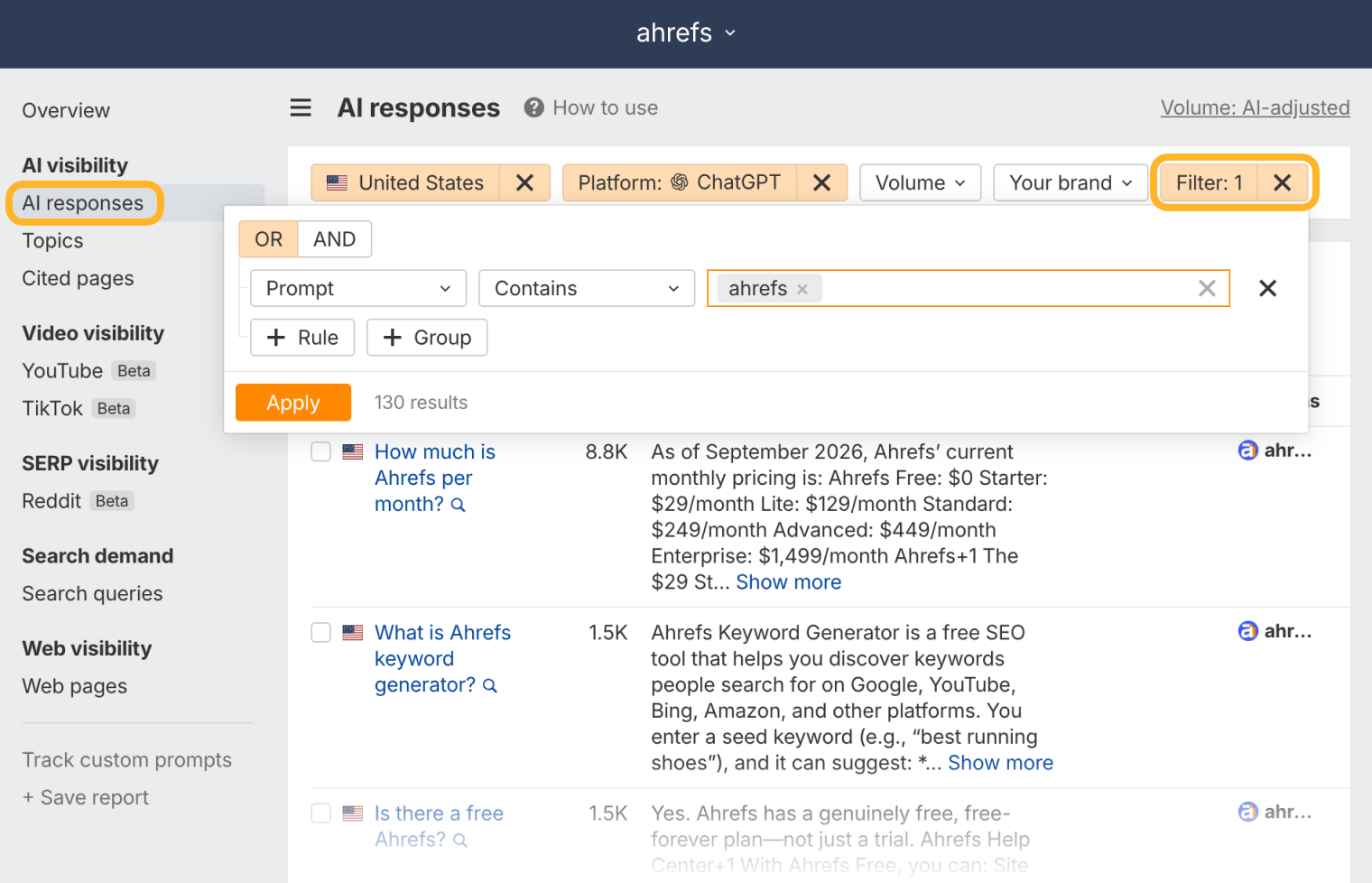
In the AI responses report, enter your brand in the filters like so:
Measure and track your AI share of voice
Think of this as your slice of the AI conversation pie. You can see what percentage of AI mentions in your industry actually go to you versus your competitors. It’s especially useful for tracking progress over time—are you gaining ground or losing it?
Enter your brand and your competitors. Your overall AI share of voice is the number at the top.
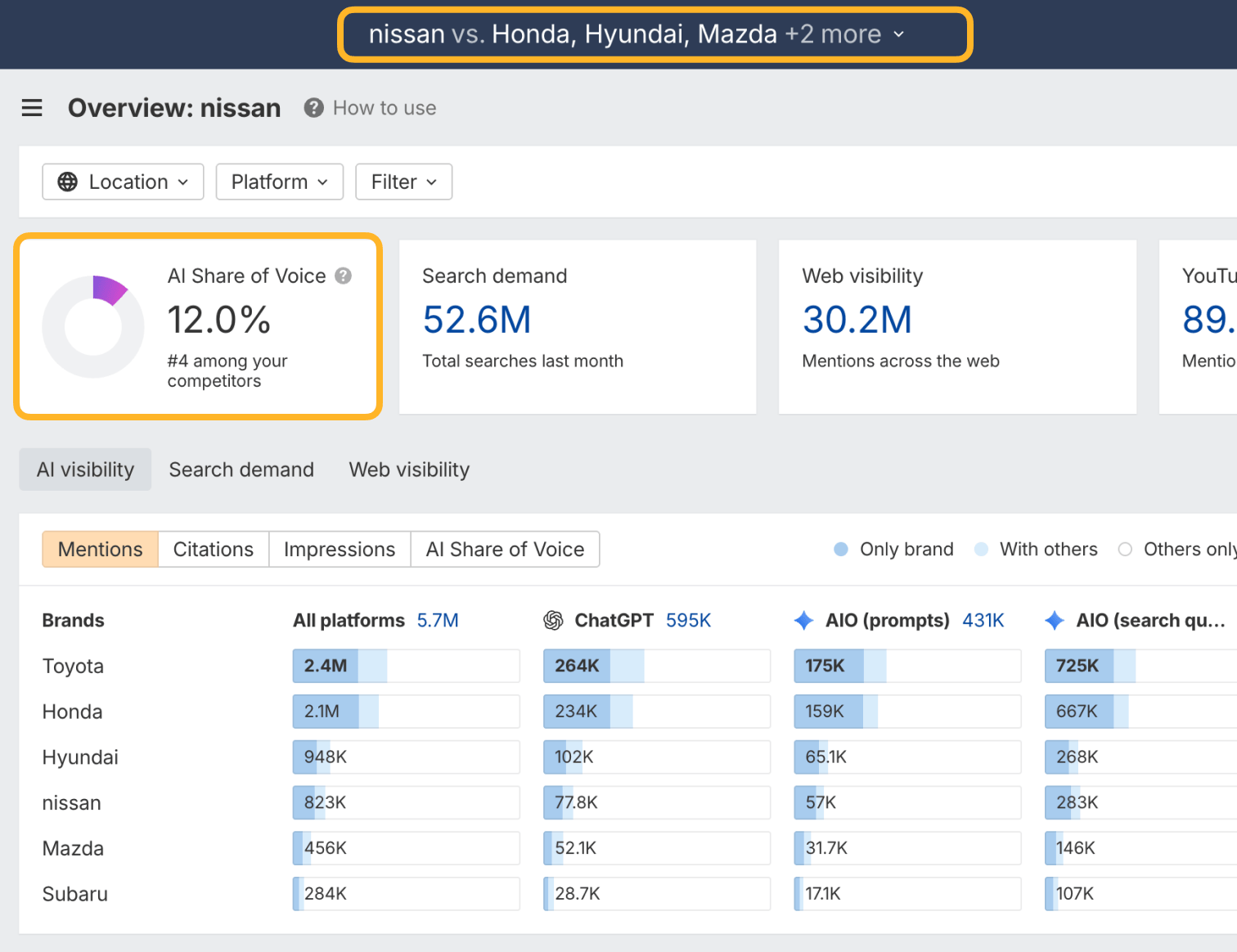
Below, you’ll get your share of voice in each of the six AI indexes.
Compare your AI visibility against competitors in specific topics
This goes deeper than the overall share of voice. You might find that your brand dominates AI mentions for “enterprise solutions” but barely shows up for “small business tools”, while a competitor has the opposite pattern.
Knowing your topic-specific strengths and gaps helps you refine your content strategy. For topics where you need to double down, you can secure more mentions on third-party sites (like product reviews) or create more of your own content (like how-to guides), or revise your own product marketing materials.
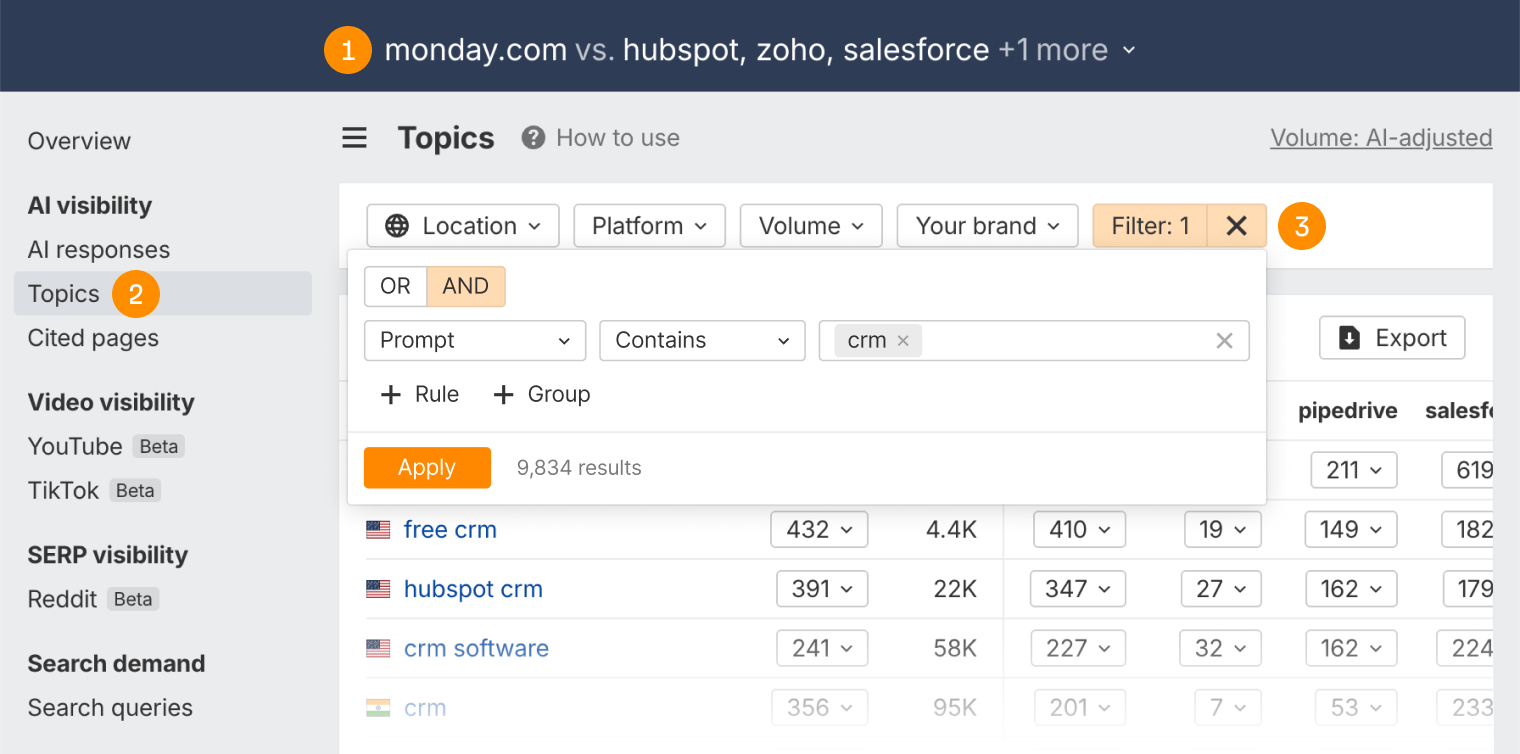
For example, when Monday.com launched its CRM feature, it was stepping into a bigger market with new competitors. Until then, the brand was mostly recognized for project management. Tracking their AI visibility showed how well they were breaking into this new space.
Identify brand mention gaps where competitors get mentioned, but you don’t
For example, AI might regularly recommend your competitors for “integration with Slack” or “GDPR compliance,” while your brand never appears, even though you offer those features too. These gaps are immediate opportunities to create new content, optimize existing pages, or adjust your messaging so your brand gets included in those AI conversations.
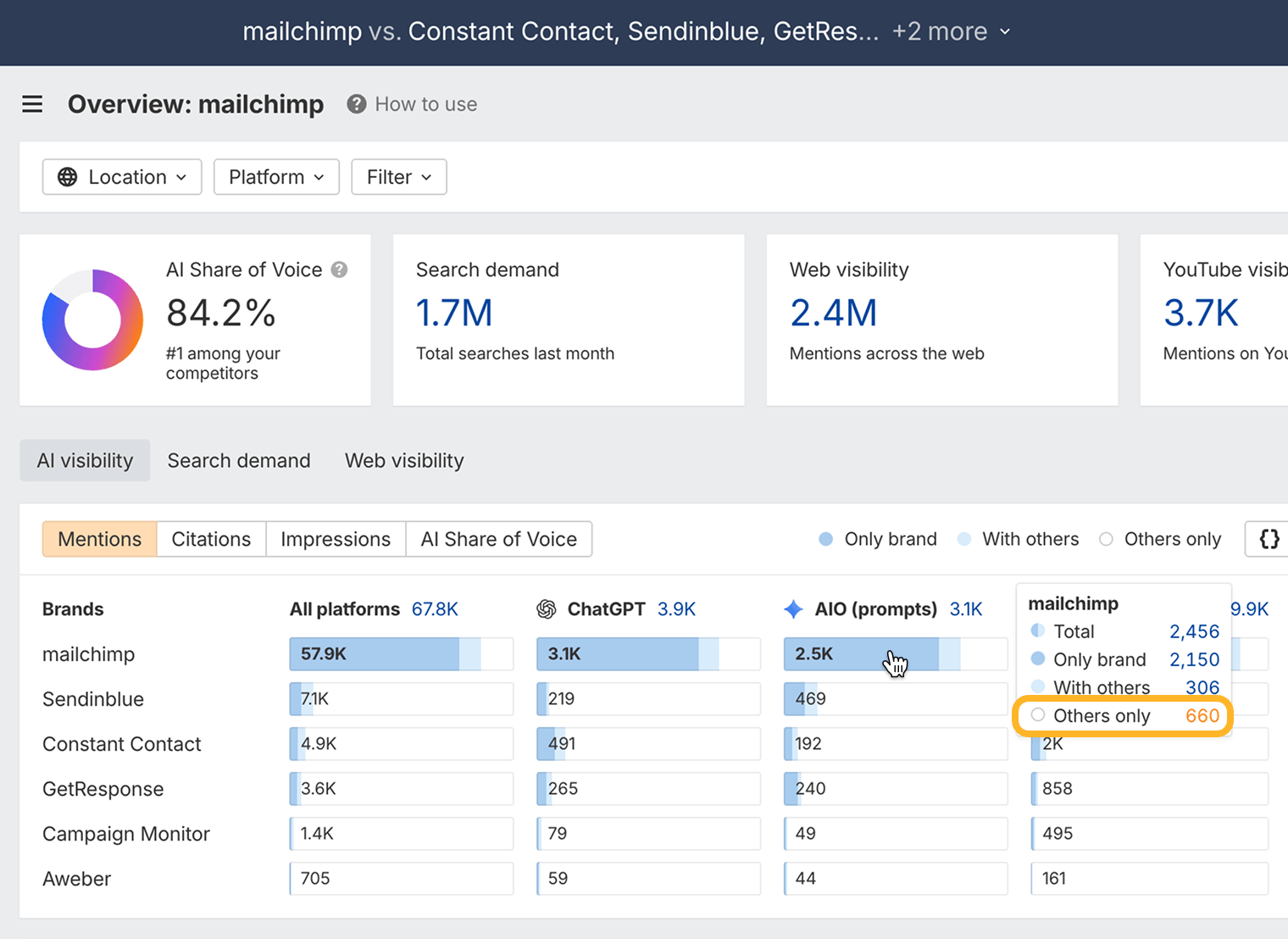
Here’s how to spot pages that talk about your competitors but don’t mention you—perfect opportunities to pitch your solution.
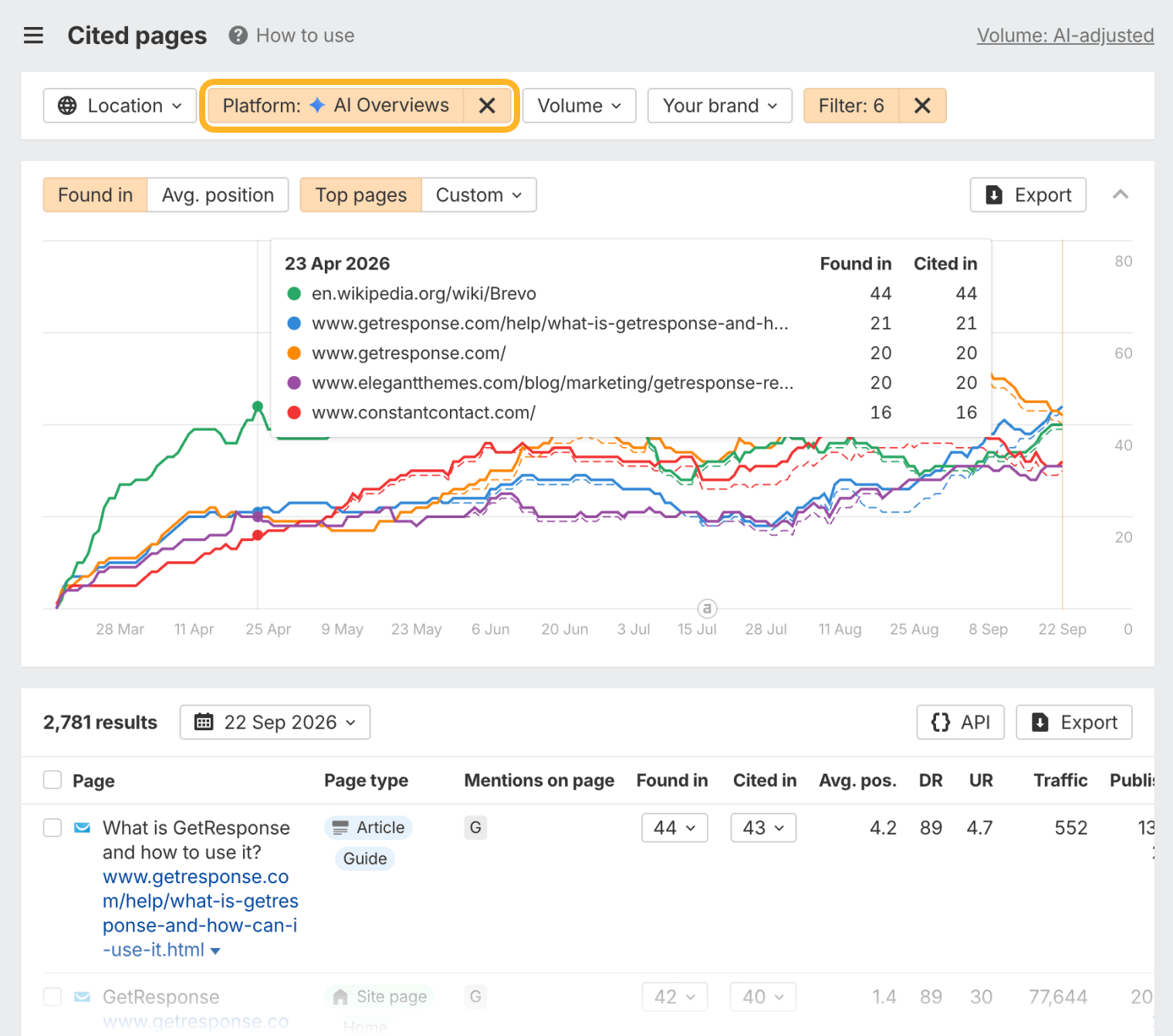
Tip
Brand Radar also tracks your search demand and web visibility. It taps into one of the largest keyword databases in the industry (28.7B keywords) and uses a bot that crawls the web more frequently than any other marketing tool (learn more about Ahrefs’ data).
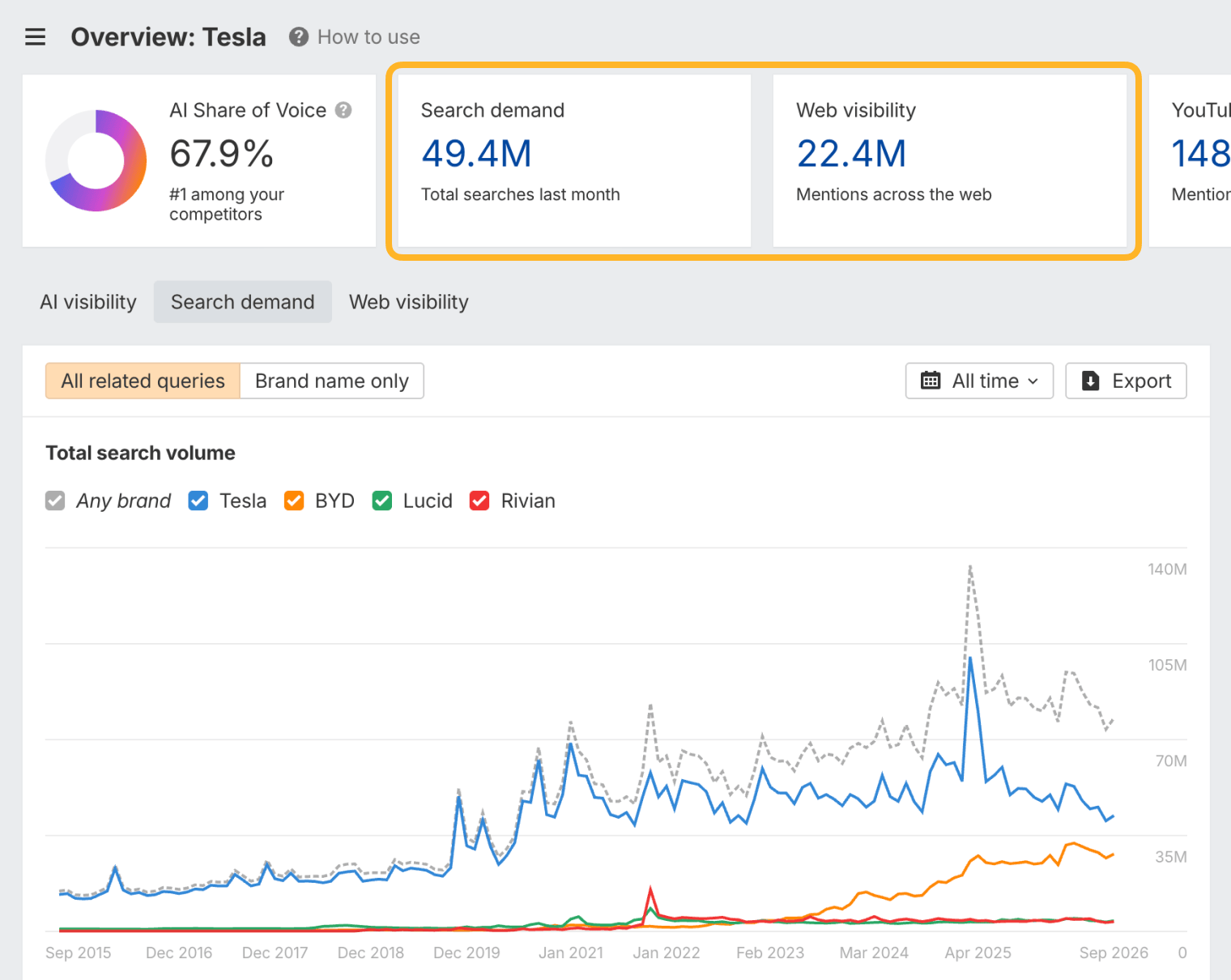
Search demand and web visibility tell you:
How often people search for your brand.
How many search queries include your brand—and whether that number is growing.
How many pages mention your brand, and how much visibility those pages get.
By the way, your search performance and web mentions directly shape how AI systems understand and represent your brand. Strong search demand and brand mentions usually lead to better AI visibility as well. That means you can approach AI brand building from multiple angles—improving search rankings, earning credible mentions, and seeing both drive stronger AI representation of your brand.
Further reading
Manual AI monitoring (free but limited)
If you’re not ready for professional tools, start with manual checks. Spend some time each month asking different AI assistants questions related to your industry:
“What are the best [your product category] tools?”
“How do I choose between [your brand] and [competitor]?”
“What should I know about [your industry] solutions?”
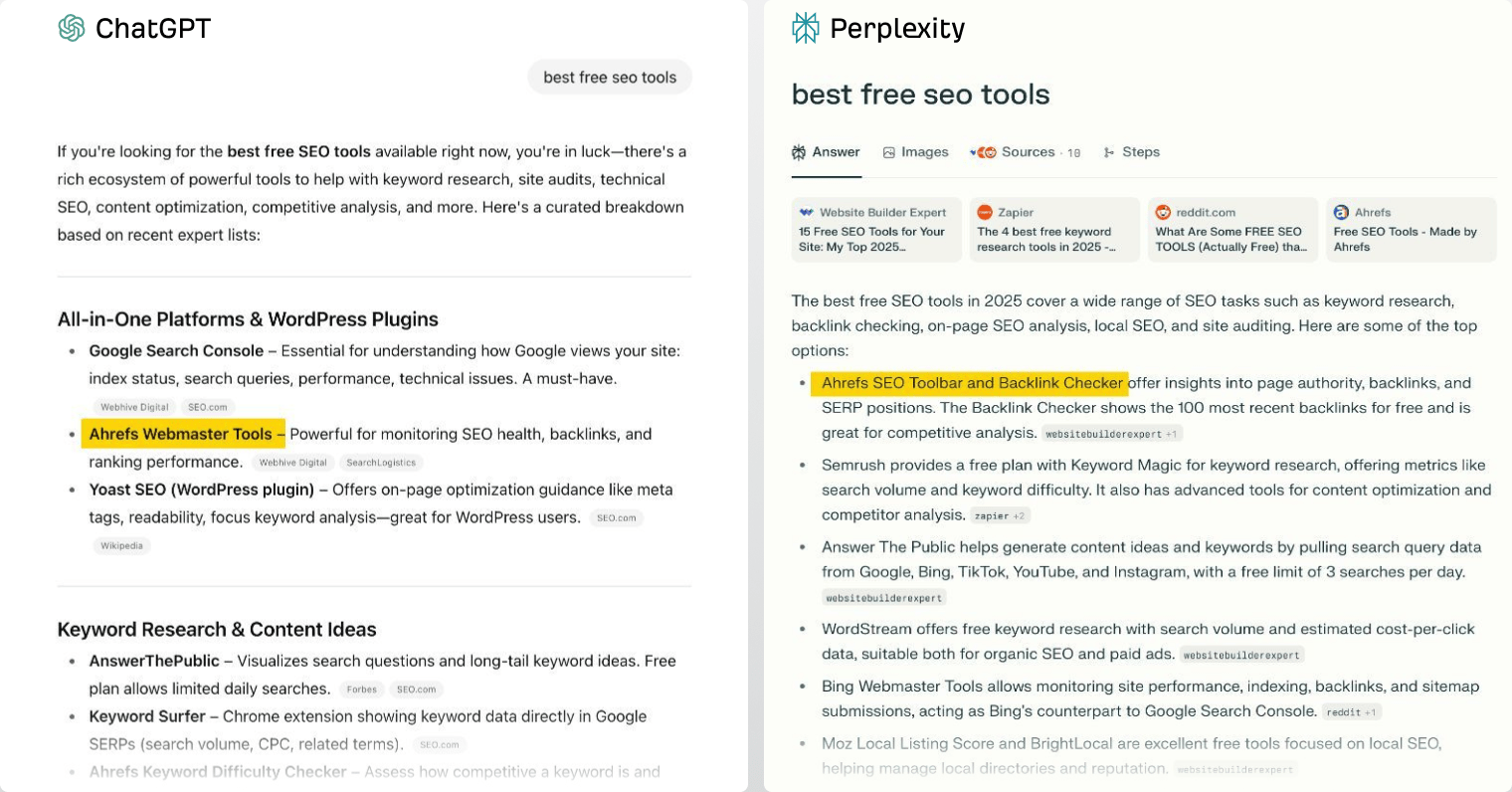
It’s a good idea to ask the same question a few times and see if you’re featured each time (take the average number, if not).
As you can imagine, this process is time-consuming, and you’ll still miss most AI mentions happening across thousands of daily conversations. But it can give you a basic sense of how AI currently represents your brand.
4 key strategies to influence and increase AI brand mentions
Here’s a timeless truth: the best way to get people talking about you is to create something they can’t ignore. When you deliver a great product, offer standout service, or create an experience people love, word spreads naturally. That buzz shows up in reviews, social posts, and articles.
All that momentum influences search engines, too. Google tends to reward brands that are mentioned often, trusted widely, and seen as relevant. And by extension, large language models like ChatGPT lean on those same signals.
The most popular LLMs use a process called retrieval-augmented generation (RAG), which pulls in information from the web through search engines. If Google already considers your brand trustworthy and worth ranking, there’s a much higher chance those same pages will be surfaced by AI systems.
And while building a great product or service is the foundation, there are a few extra steps you can take to get your brand noticed even more.
1. Create comprehensive brand information: vs pages, FAQ, etc.
AI assistants need clear, detailed information about who you are, what you do, and why you’re different. Ensure your website clearly explains your value proposition, use cases, and competitive advantages.
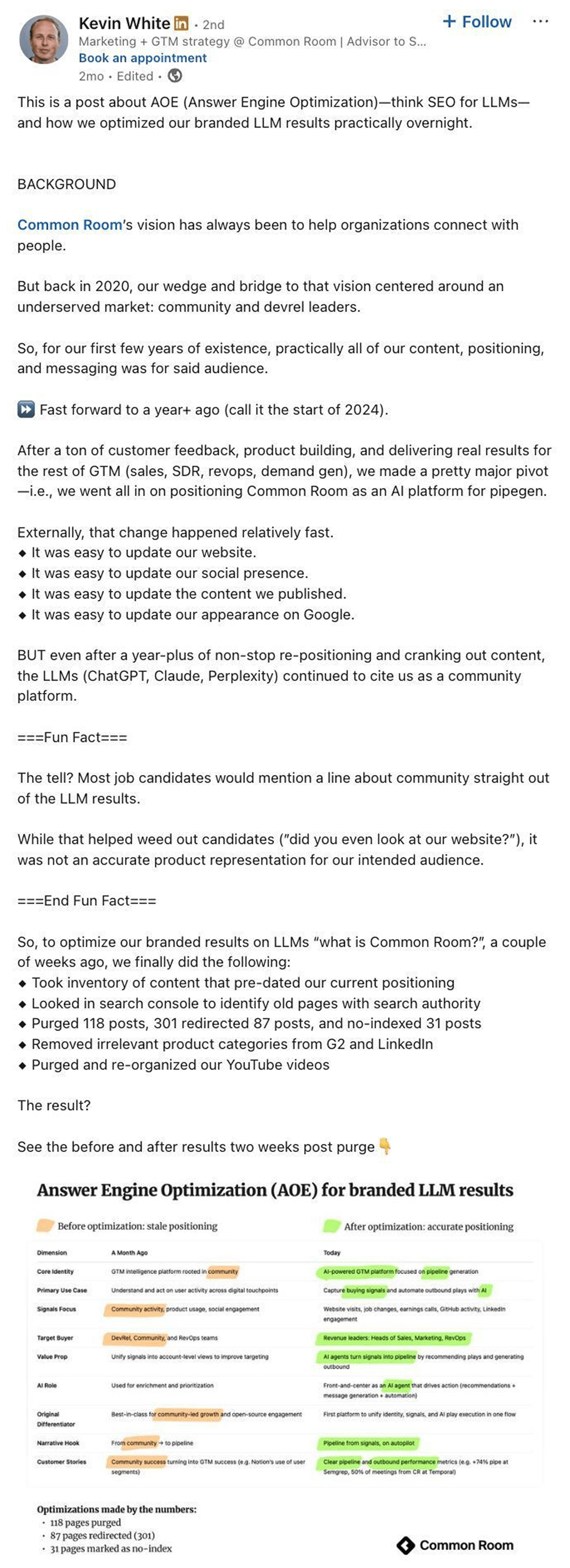
Here’s how Common Room did it:
Cleaned up outdated high-authority content, e.g., removed or redirected old pages that still influence LLMs.
Aligned external signals, e.g., made sure third-party sites and channels reflect their new positioning.
Removed irrelevant G2/LinkedIn categories and reorganized YouTube videos.
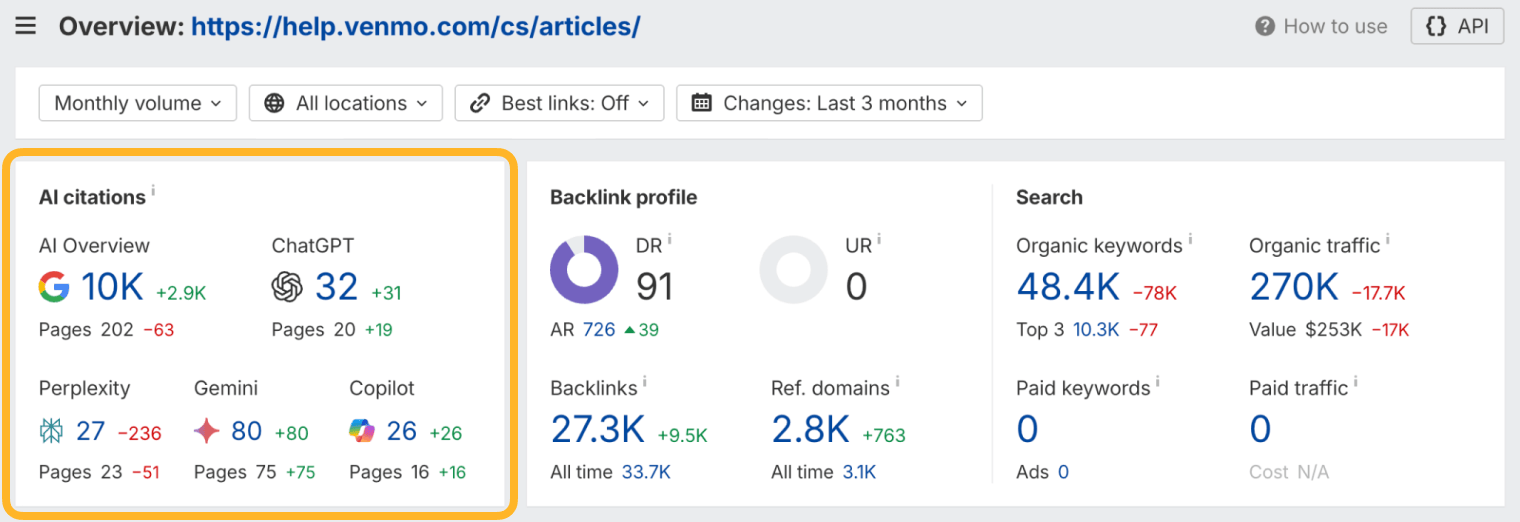
A good idea is to answer questions about your brand quite literally. You can create dedicated FAQ pages in your knowledge base, like Venmo:
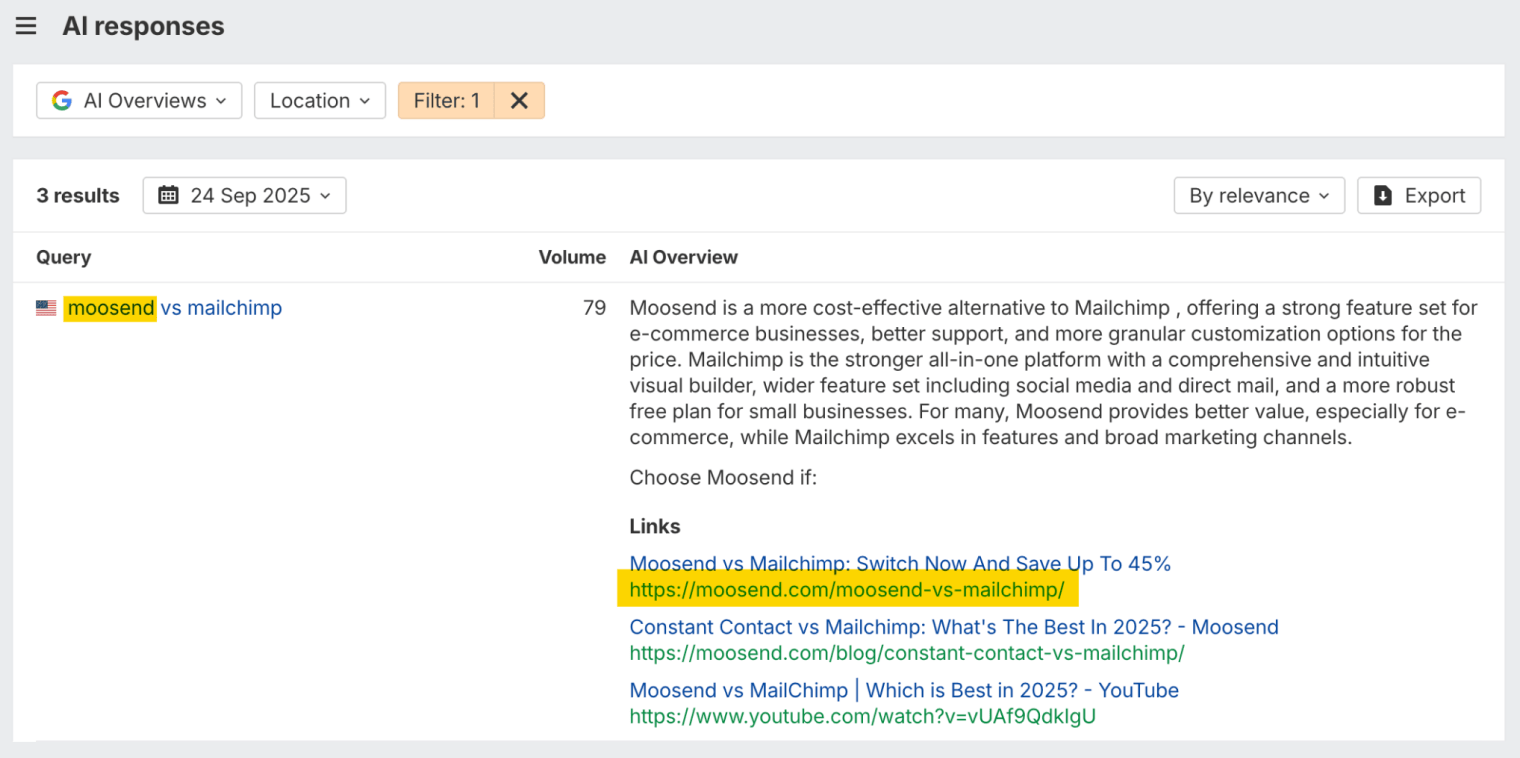
And to have a say in product comparisons, you can do it with the good old “vs” landing pages.
2. Get featured on other sites
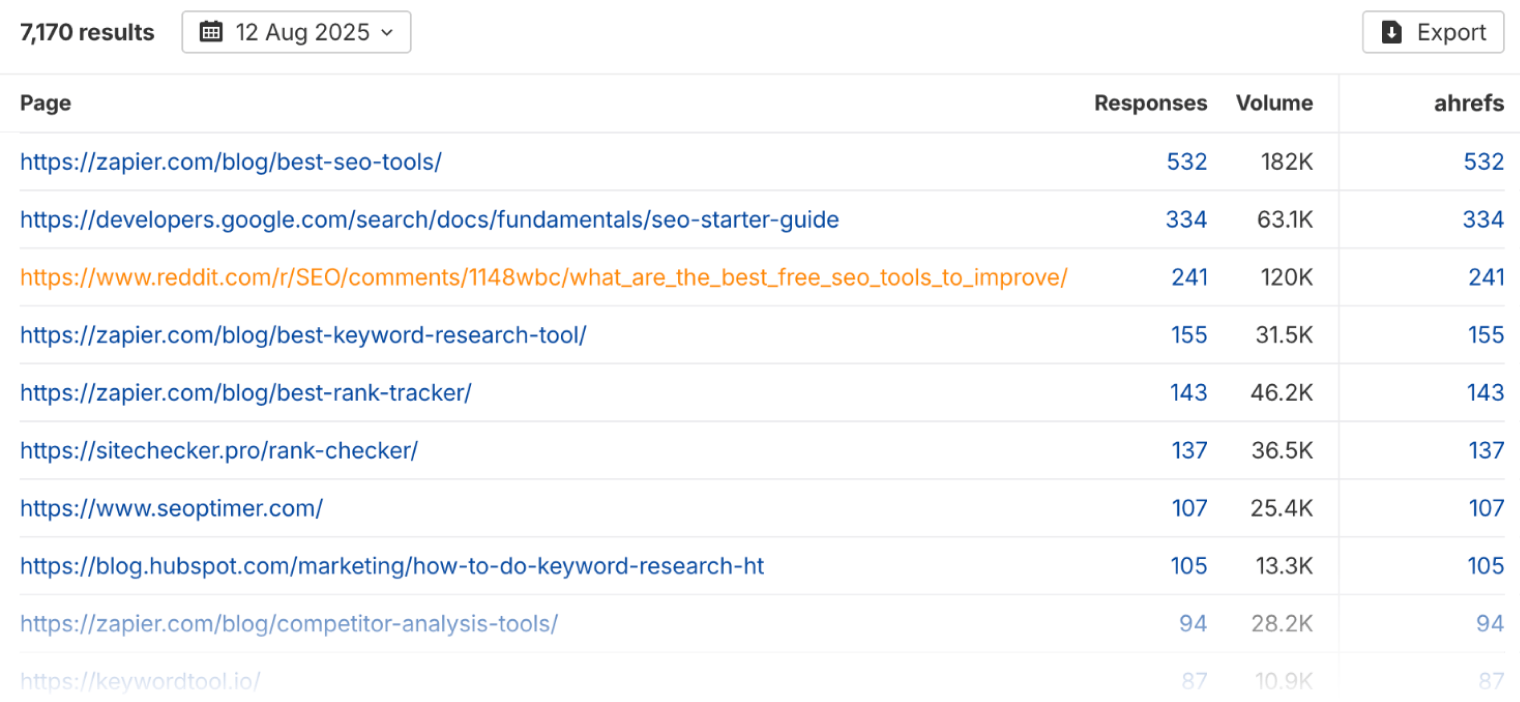
Whenever I check the top sources of mentions for a brand, most of them come from other websites. LLMs scan across these sites, looking for patterns and building confidence. So if multiple sites—especially more popular sites—agree that a brand is a good solution, the AI is likely to echo that same stance in its answers.
To illustrate, none of our own pages appeared in the top 10 sources cited for our brand.
Industry rankings, “best of” lists, reviews, PR coverage, customer feedback, case studies, and influencer partnerships can all increase the chances of AI mentioning your brand. Here are two ways to prioritize the opportunities with the highest impact:
Run a mention gap analysis in Brand Radar, as I described above.
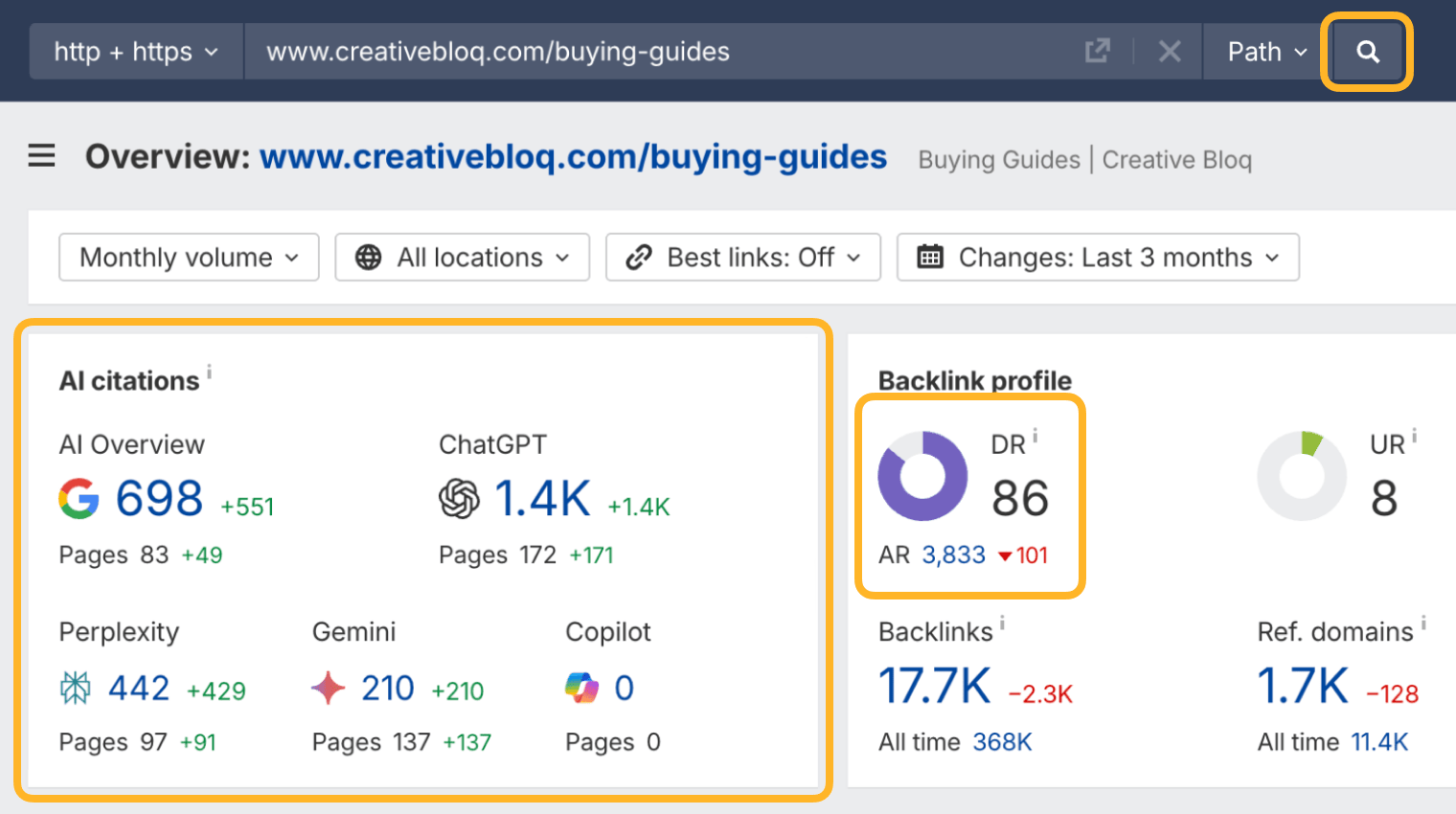
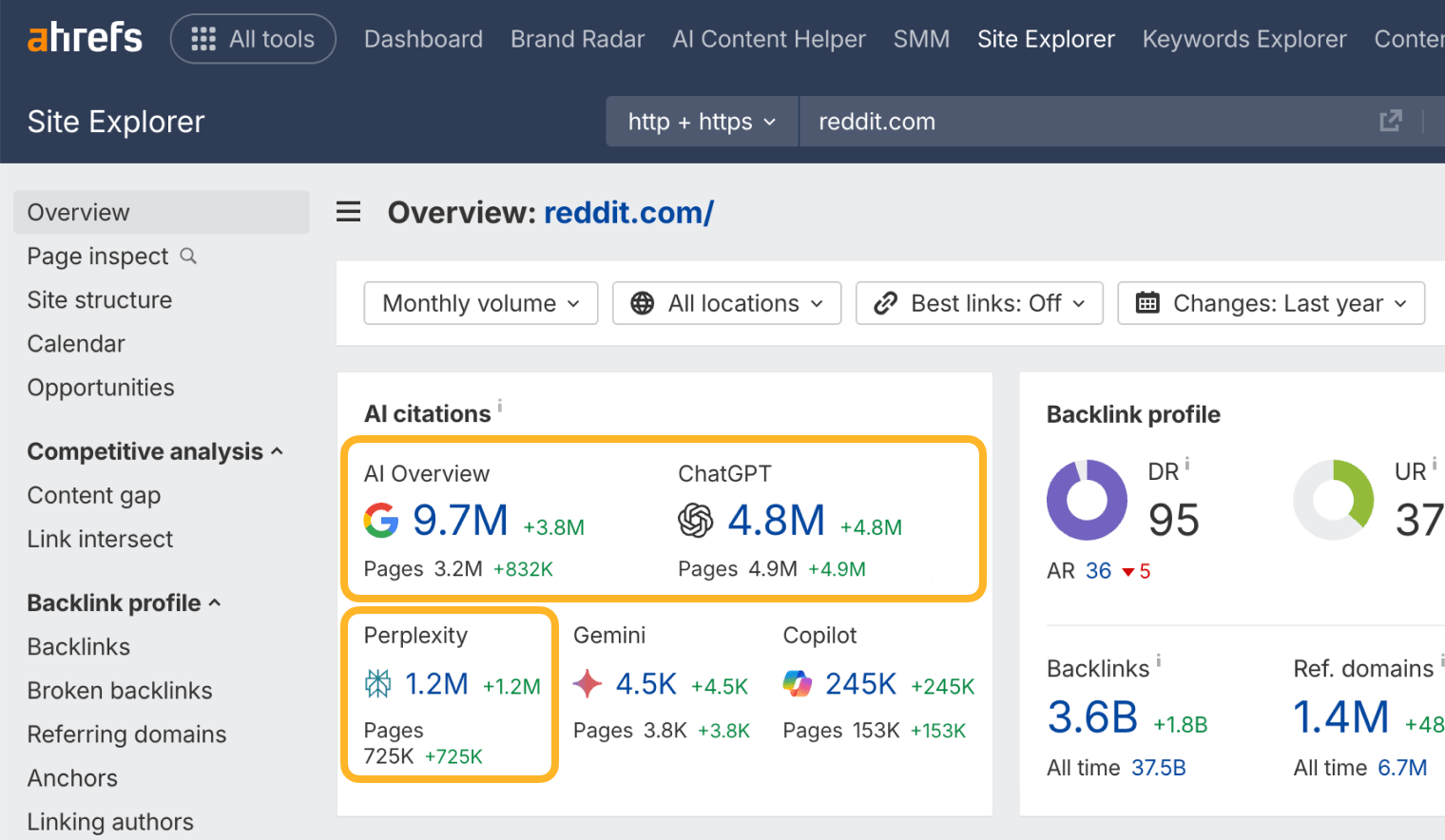
- Use Ahrefs’ Site Explorer to evaluate a site before pitching. Check its number of AI citations and review its Domain Rating (a measure of site authority).
Further reading
3. Offer solutions via free tools and how-to guides
While analyzing Ahrefs’ AI visibility, I noticed a pattern: most mentions of our brand coming from our own content were tied to free tools and how-to guides. If you’re a tech company, especially SaaS, this approach could work for you too. It’s like in that earlier ChatGPT screenshot—when a tool is directly part of the solution to a problem, AI is likely to mention it.
Here are some of our free tools mentioned in AI Overviews:
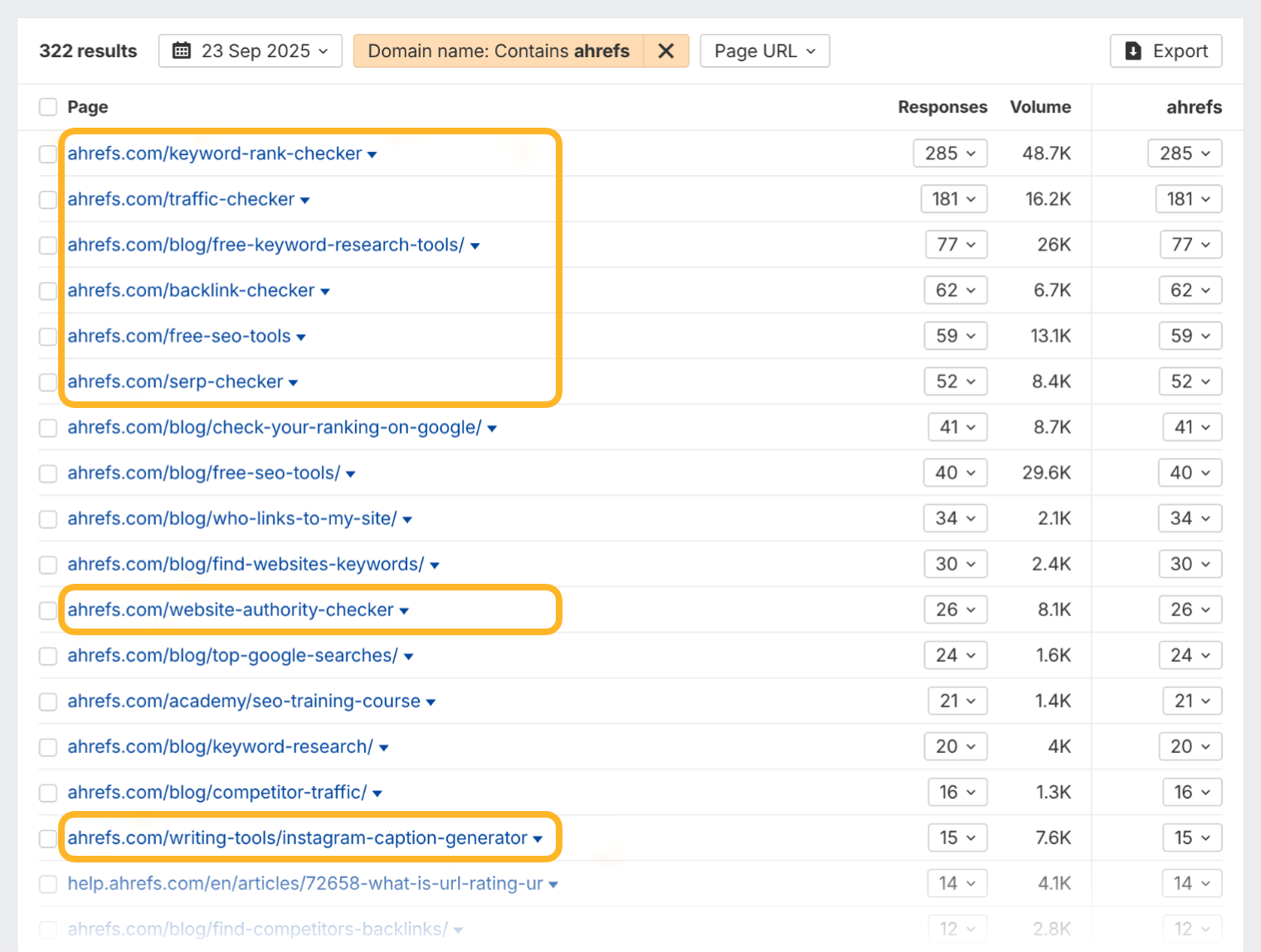
As for the how-to content, like how to do keyword research or check your competitor traffic, these appeared on 20 to 28 of the top 50 pages in AI Mode, AI Overviews, and Copilot in our case.
So, how do you find proven ideas for free tools and how-tos?
- Use a tool like Ahrefs’ Keywords Explorer to find relevant topics with strong search demand (here’s how).
Analyze your competitors’ content in Site Explorer to see which topics bring both traffic and AI visibility.
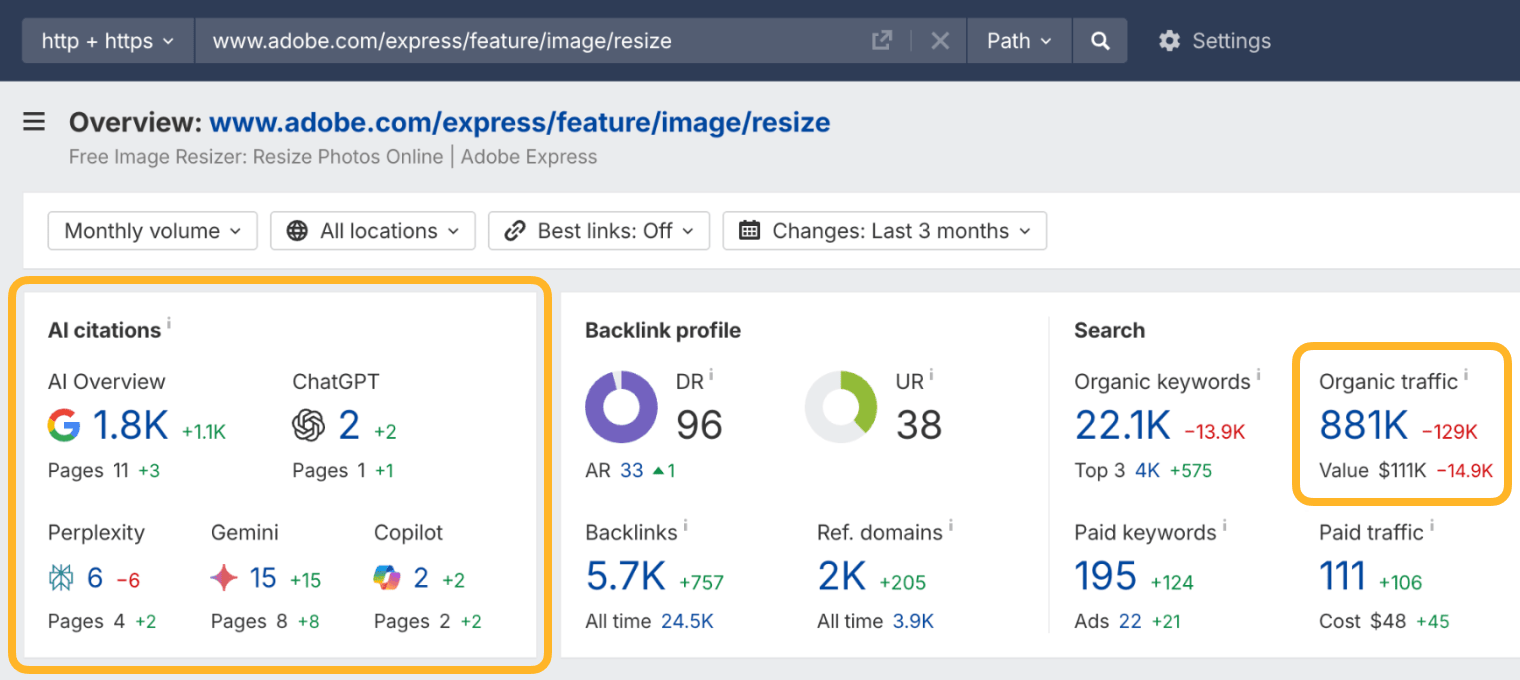
Tip
Don’t feel like you need to chase only the biggest topics with massive search demand. Not every niche has thousands of buyers waiting. If you see clear signs that your audience would truly benefit from a specific topic, it’s worth covering. One unique thing about AI search is that people often use long, detailed prompts. These prompts are broken into numerous long-tail queries in a process called query fan-out. That means you can show up in front of the right people with very specific, targeted content.
4. Increase presence on YouTube, Reddit and Quora
This is a snapshot from Brand Radar showing the top-cited domains in all of the six AI indexes it tracks. YouTube, Reddit and Quora are in the top 5. It’s clear that AI strongly favors platforms built around user-generated content.
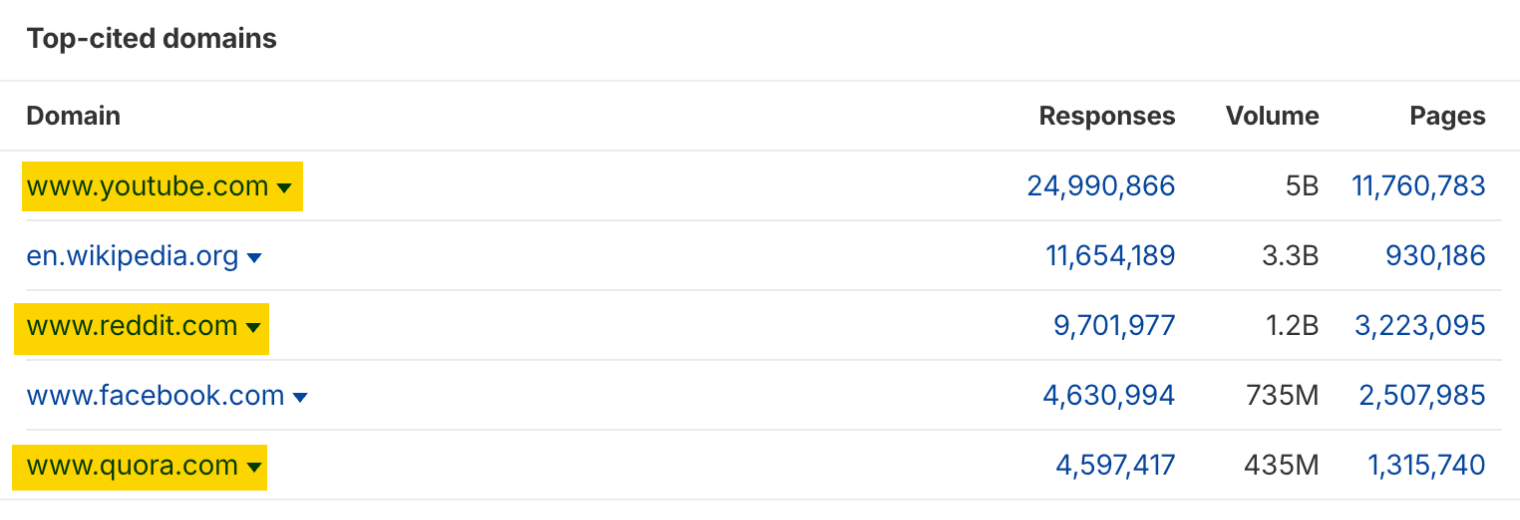
When we zoom in, we can find that these numbers vary based on the AI system. You’ll get high numbers across the board for YouTube and Reddit, whereas Quora will have a strong presence in Google’s AI Overviews, and far less in other platforms (compared to other AI assistants).
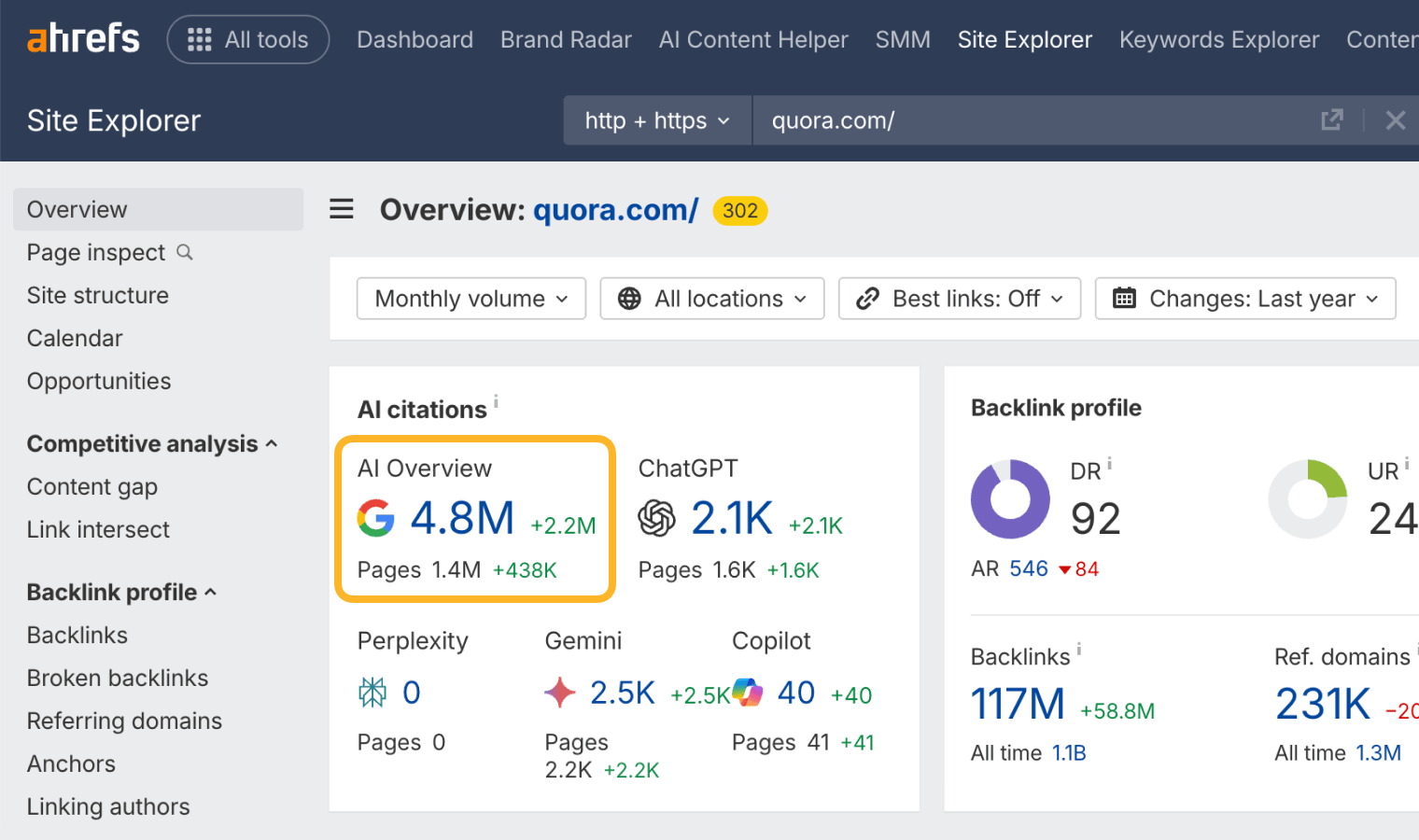
To save you hours of manually browsing these platforms for topics and threads, you can use a mention gap analysis to find places to increase your presence in one go.
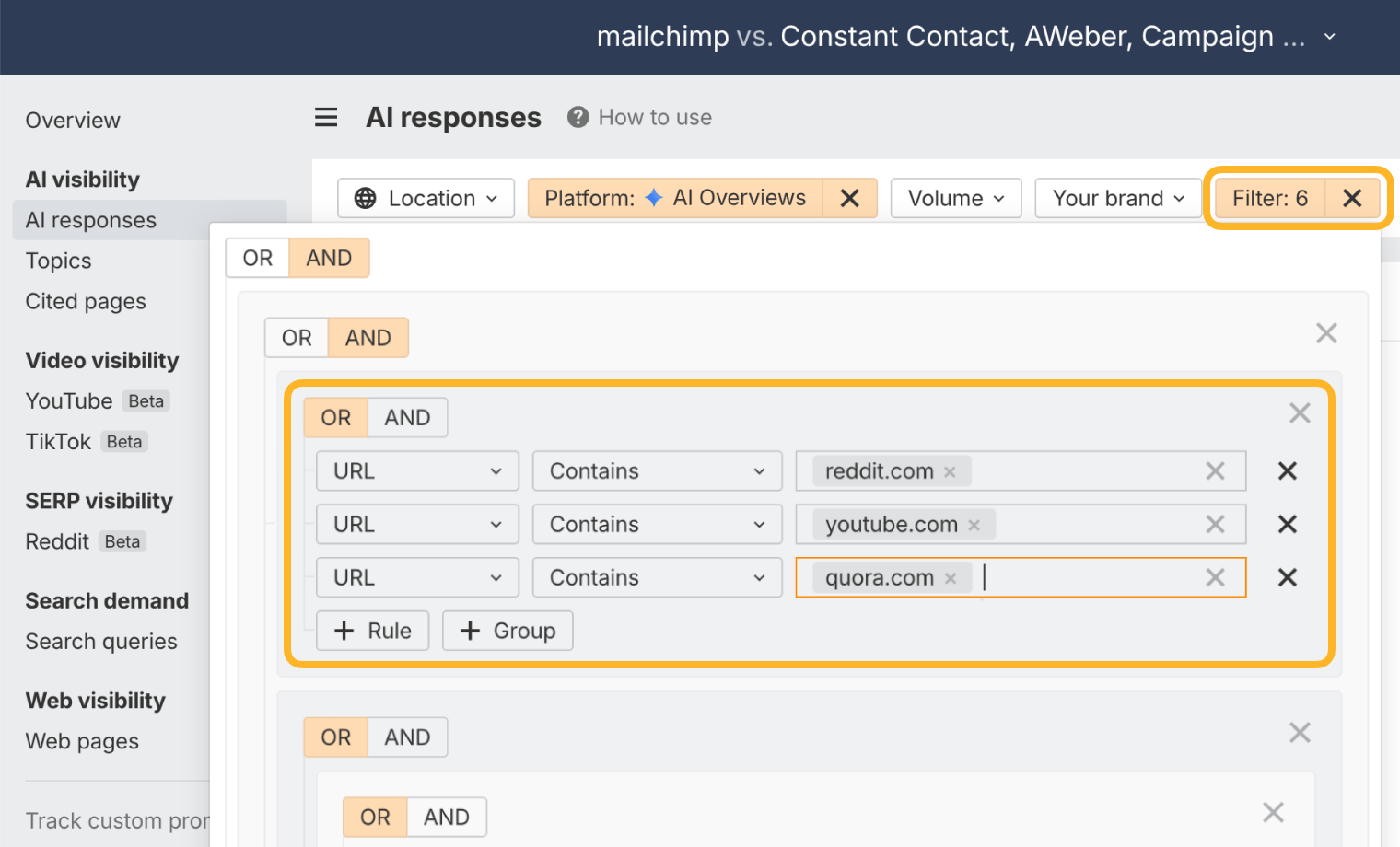
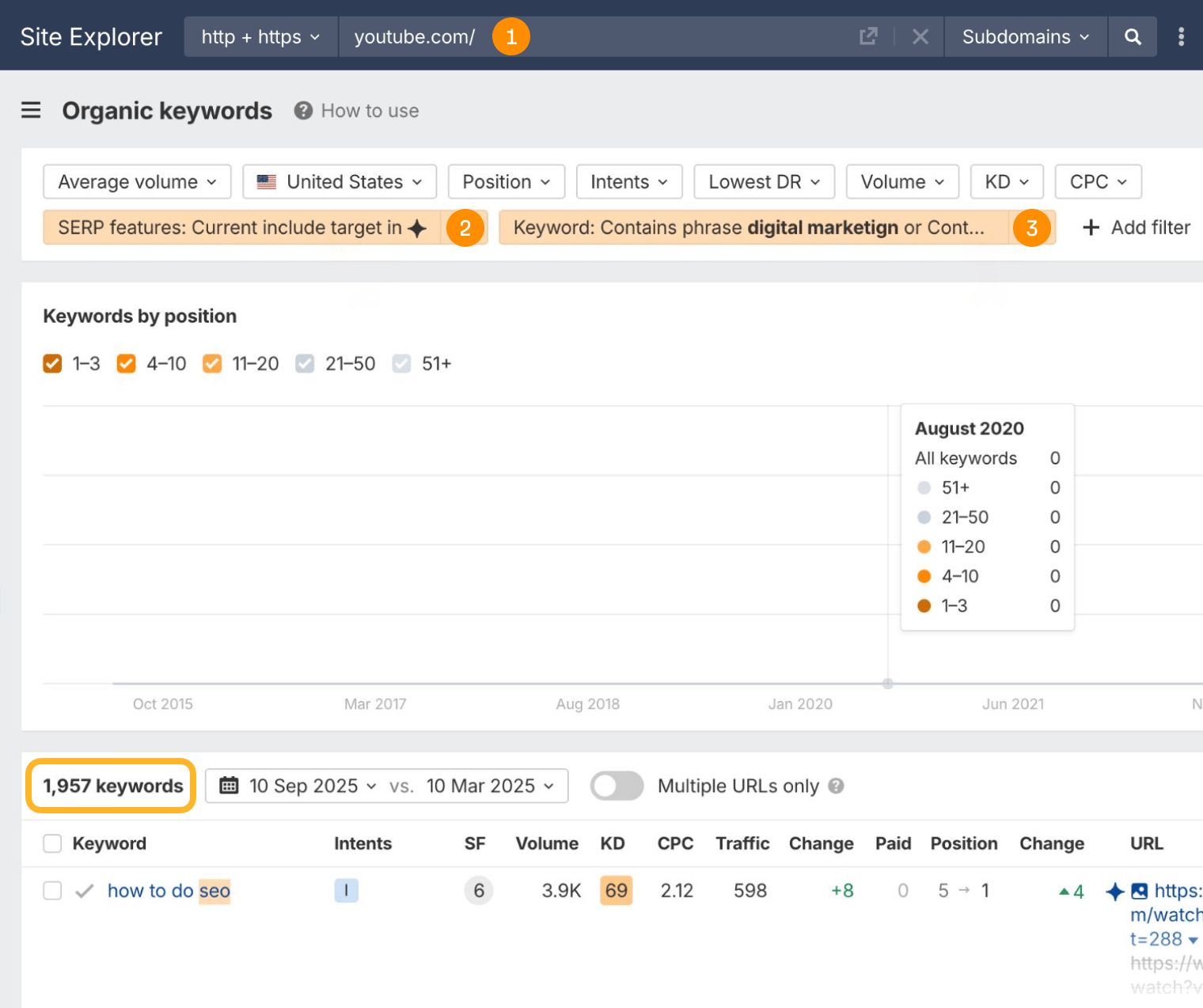
Additionally, for all three platforms, you can look for topics where they already rank in AI Overviews and make better content, or join the conversation; they don’t necessarily need to mention your competitors as long as they are relevant to your business.
Traditional brand mention tracking is still important
Before we wrap this up, I want to make sure one thing is clear: “traditional” brand mention monitoring is still critical. At the very least, set up Google Alerts for your brand name and regularly check your social media platforms for mention notifications.
And if your audience is strong on social media, you probably won’t regret investing in a tool like Mention or Brand24. The premium features can really come in handy:
- Real-time social media monitoring. Automatically scans all major platforms 24/7 instead of manual daily checks.
- Sentiment analysis across platforms. AI automatically sorts mentions as positive, negative, or neutral, so you can quickly prioritize urgent responses over celebratory posts.
- Influencer identification. Spots users with high follower counts and engagement when they mention your brand. Helps you prioritize responses.
- Crisis detection. Sends immediate notifications when mention volume spikes or negative sentiment crosses thresholds.
- Reporting features. Makes it easier to show what’s happening to your boss, client or your team.
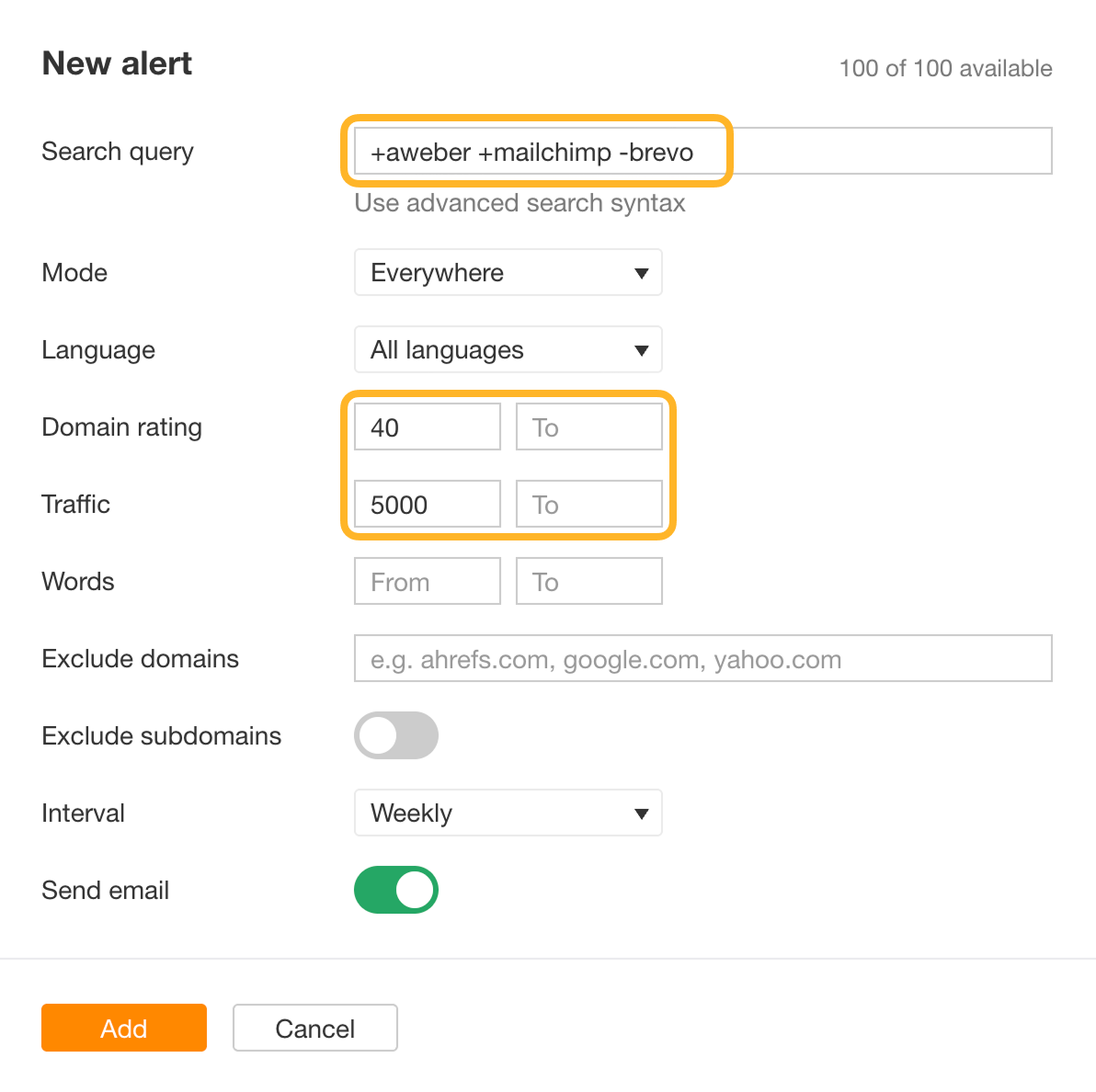
By the way, if you’re an Ahrefs user, you can set up advanced mention tracking with the Alerts tool. For example, an alert for web mentions that include your competitors but not you, and at the same time come from a site with authority and considerable organic traffic.
Final thoughts
What I’ve covered here is one piece of the broader AI visibility puzzle. If you want to go further, these two guides make a great next step. They show you how to move beyond brand mentions to actual content citations, boost your chances of being referenced by LLMs, and connect it all back to traditional SEO strategies.
Further reading
Got questions or comments? Let me know on LinkedIn.
Mateusz Makosiewicz is a marketing researcher and educator at Ahrefs. He has been involved in marketing for over 15 years, specializing in growth marketing, content marketing, marketing strategy, and management.
Mateusz studied Advertising and Media Marketing at the University of Gdańsk. He gained his marketing experience in agencies, SaaS companies, and hardware companies where he worked in various roles, from managing advertising projects for clients to leading marketing departments.
On the Ahrefs blog, he writes about SEO and marketing based on experience drawn from testing probably every piece of marketing advice ever published, trial and error in startup marketing in Silicon Valley, and tweaking growth engines like his life depended on it.
Explore all AEO guides
What Is Answer Engine Optimization (AEO)?
Start here. What AEO is, how it differs from SEO, and the seven steps to getting started.
How Answer Engines Work
What actually happens between a prompt and an answer — and where your brand can enter the process.
How to Track AI Visibility
You can’t optimize what you can’t see. Seven ways to measure where your brand shows up in AI answers.
How to Choose the Best Prompts to Track
Track clusters of prompts, not one-off responses. Eleven places to find the queries worth monitoring.
How to Optimize Content for Answer Engines
Ranking gets you considered. This is how you get cited — the topics, formats, and on-page changes that work.
How to Monitor and Win Brand Mentions in AI Answers
AI recommends the brands it has seen discussed elsewhere. Here’s how to monitor those mentions and earn more of them.
How to Optimize Your Website for Answer Engines
The technical fixes that decide whether AI can reach your pages, read them, and work out who you are.