





The 25 Top SaaS Startups (September 2026)

- The 25 fastest growing SaaS startups
- 1. Sherloq (+810%)
- 2. Melio (+710%)
- 3. Hona (+530%)
- 4. Tropic (+520%)
- 5. Gmelius (+340%)
- 6. Fyxer (+330%)
- 7. DeployHQ (+270%)
- 8. Fullfunnel.io (+230%)
- 9. SuperTokens (+210%)
- 10. Missive (+210%)
- 11. PagerTree (+200%)
- 12. NordLayer (+190%)
- 13. Parseur (+170%)
- 14. GrowthBook (+160%)
- 15. Corgea (+160%)
- 16. MailUp (+150%)
- 17. Unifonic (+130%)
- 18. Qase (+120%)
- 19. LeanCode (+120%)
- 20. Maroo (+110%)
- 21. La Growth Machine (+110%)
- 22. 360insights (+110%)
- 23. Inkeep (+100%)
- 24. Common Paper (+100%)
- 25. Nimble (+100%)
- The full list: top SaaS startups by organic traffic growth
- How to find this data in Ahrefs
- Final thoughts
We analyzed thousands of early-stage SaaS startups and ranked them by a metric that's hard to fake: how fast their organic search traffic grew over the last year. Rising organic traffic is a strong signal of real momentum, because it reflects growing awareness, demand, and a product people are actively looking for.
New SaaS startups are still finding plenty of capital. In the first quarter of 2026, early-stage funding hit $41.3 billion, up 41% year over year, as investors kept backing the next wave of software companies.
But the money is getting harder to win: seed deal counts fell 30% year over year even as total seed dollars rose, so funding is concentrating into fewer, bigger rounds, which makes fast-growing organic demand the clearest sign of a startup actually breaking out.
So the question we set out to answer is: which early-stage SaaS startups, across every category from fintech to dev tools to vertical software, are pulling in real, fast-growing organic demand right now?
This list was built with Letaido
This article was researched and built by Letaido, Ahrefs' AI marketing platform. Letaido pulls live Ahrefs data, runs its own analysis, and assembles findings like the ranking below, so the numbers you're about to read come straight from the same data set our tools run on.
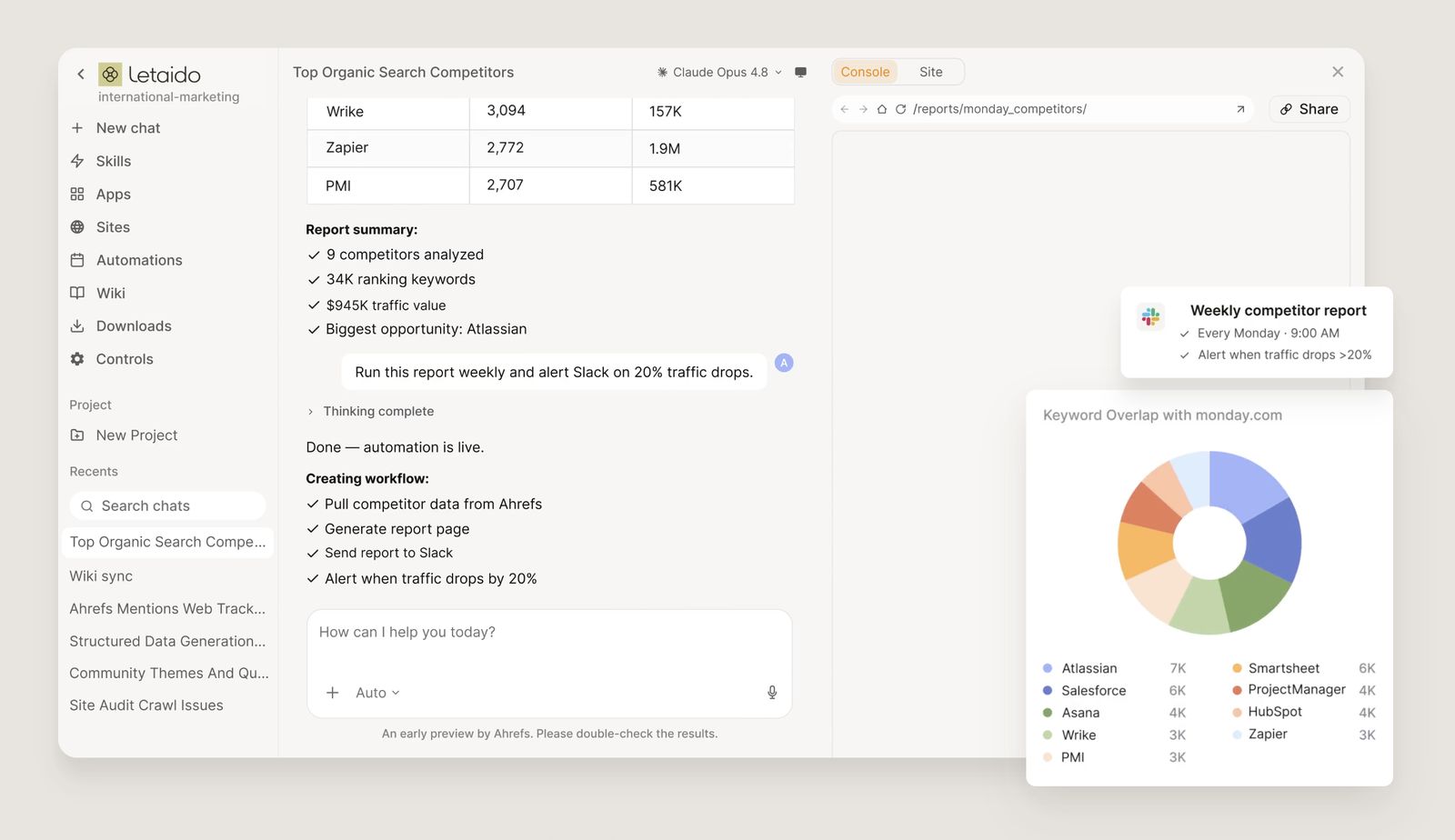
You can recreate this kind of research for your specific niche or vertical using Letaido.
Sidenote
We rank these companies by how much their organic search traffic grew over the past year: we compare each site's estimated monthly organic traffic now against twelve months ago, using Ahrefs. Organic traffic growth is a strong signal of real momentum because it reflects rising awareness and demand for a product people are actively searching for. To keep the percentages honest we only include companies that already had a real traffic base a year ago, so a jump from a handful of visits doesn't top the list. All data is from Ahrefs.
The 25 fastest growing SaaS startups
Here are the top SaaS startups whose organic search traffic grew fastest over the past year, ordered from highest growth to lowest, with the numbers and a short read on what's driving each one.
1. Sherloq (+810%)
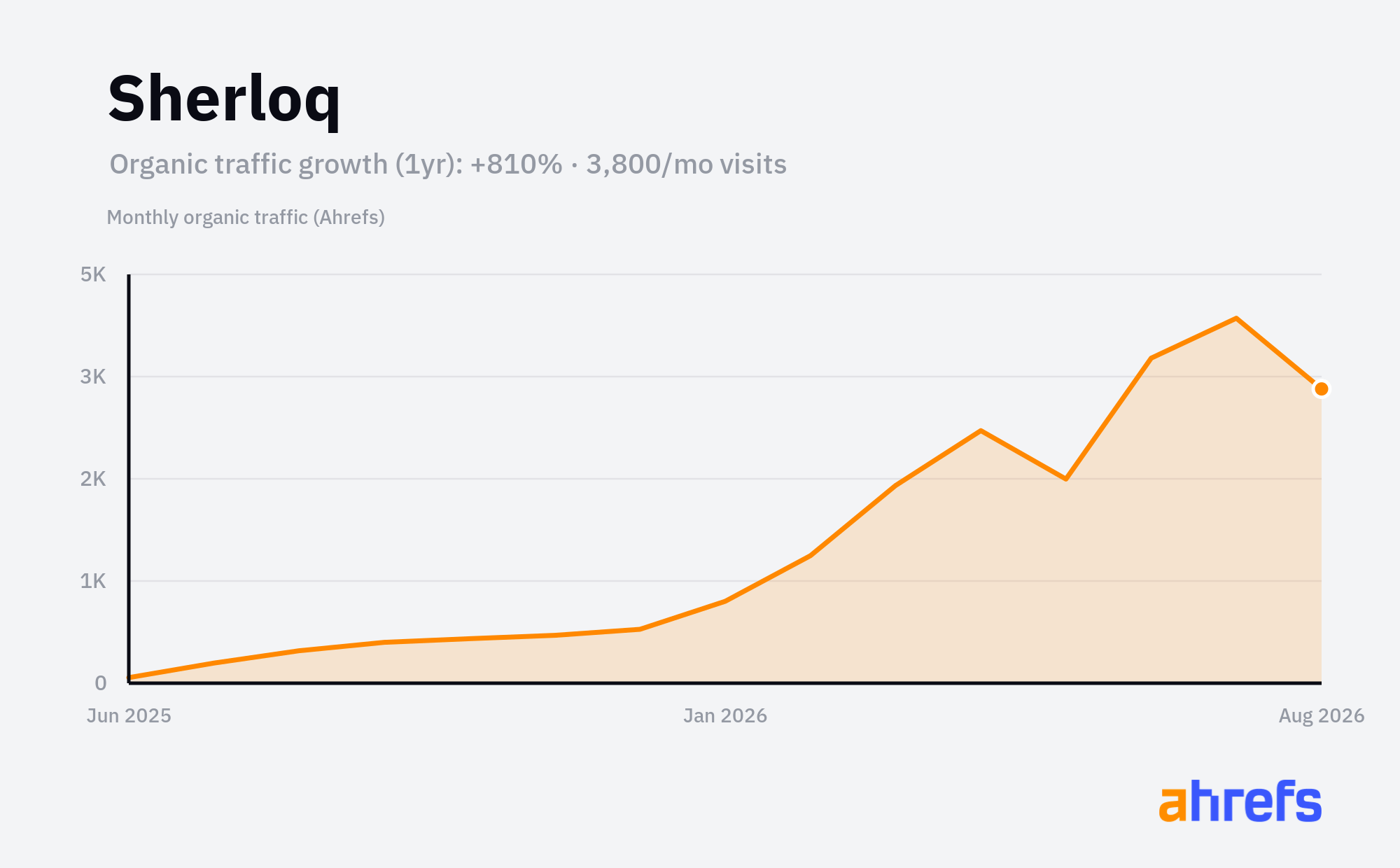
- Organic traffic growth (this year vs last): +810%
- Organic traffic (monthly): 4K
- Year founded: n/a
- Location: Tel Aviv, Israel
What they do
Sherloq is a SQL-centric collaboration platform that lets data teams save, share, and reuse queries directly inside their existing data tools.
Sherloq raised a $500K pre-seed round from Y Combinator in April 2023.
It's the fastest growing company on this whole list, and it's doing that from a standing start in a genuinely niche category: SQL collaboration for data teams. That kind of workflow problem tends to go unnoticed until someone solves it well, and the traffic jump suggests Sherloq is finding product-market fit with exactly the people who feel that pain daily.
2. Melio (+710%)
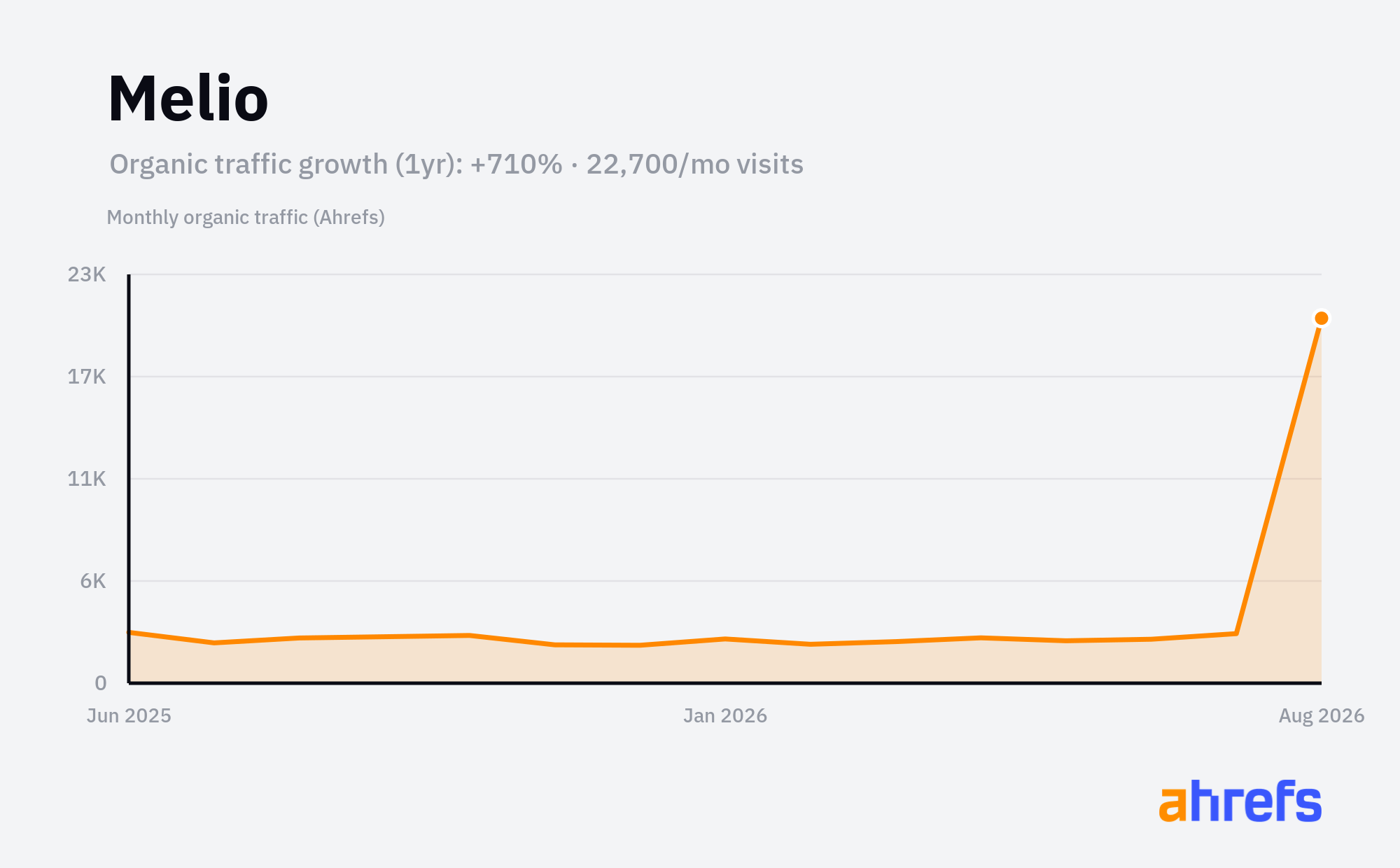
- Organic traffic growth (this year vs last): +710%
- Organic traffic (monthly): 22.5K
- Year founded: n/a
- Location: New York, United States
What they do
Melio is a B2B payments platform that lets small businesses pay vendors and bills by bank transfer or card, even when the recipient can only accept checks.
Melio's organic traffic grew ~710% over the past year, which is a serious number for a payments product competing in a crowded space. B2B payments has been a slow-moving category for a long time, and the search demand suggests small business owners are actively hunting for a modern alternative to their current setup.
3. Hona (+530%)
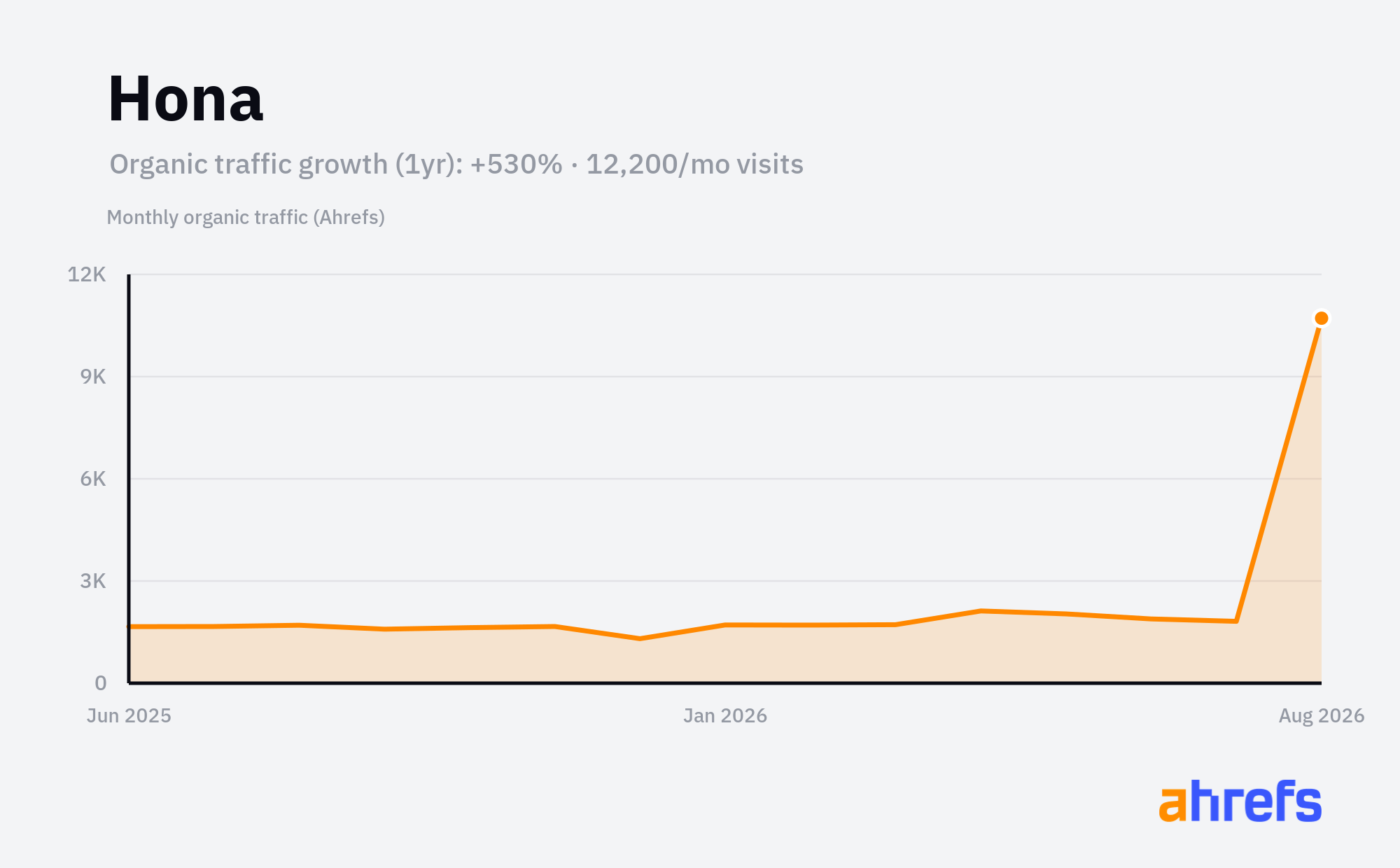
- Organic traffic growth (this year vs last): +530%
- Organic traffic (monthly): 12K
- Year founded: 2021
- Location: Lehi, UT
What they do
Hona is a client communication platform built for law firms, automating case status updates so clients stay informed without staff having to field the same phone calls over and over.
Hona raised a $9.5M Series A in June 2024, led by Costanoa Ventures, with participation from Ludlow Ventures, Soma Capital, and Y Combinator.
Legal tech is a category where the incumbents are sticky and slow to change, which is exactly why a focused point solution like Hona can get traction fast. A +530% rise in organic traffic in a single year, for a company founded in 2021, tells you that law firms are genuinely looking for a better way to handle client communication rather than just tolerating the old one.
4. Tropic (+520%)
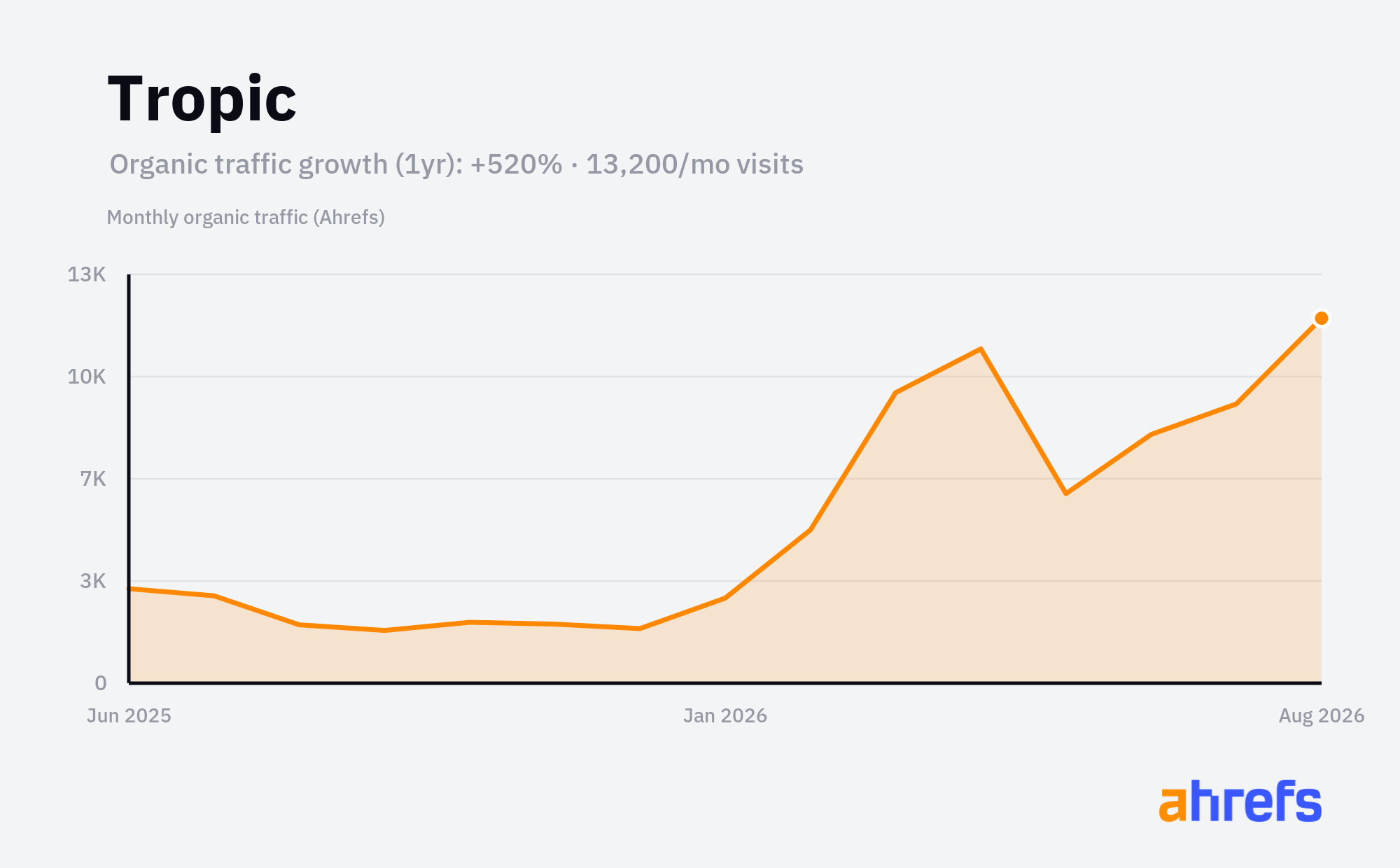
- Organic traffic growth (this year vs last): +520%
- Organic traffic (monthly): 13K
- Year founded: 2019
- Location: New York, New York
What they do
Tropic is a spend management and procurement platform that helps companies track, control, and negotiate their software vendor contracts.
Tropic has raised $67M in total funding across three rounds, with its most recent being a $40M Series B led by Insight Partners in February 2022.
The SaaS spend management category picked up serious momentum as companies started auditing their software costs after a few years of unchecked growth, and Tropic is well-positioned to catch that wave. Traffic growing ~520% in a year suggests buyers are actively researching procurement solutions, and Tropic's content and positioning are doing a good job of meeting them when they do.
5. Gmelius (+340%)
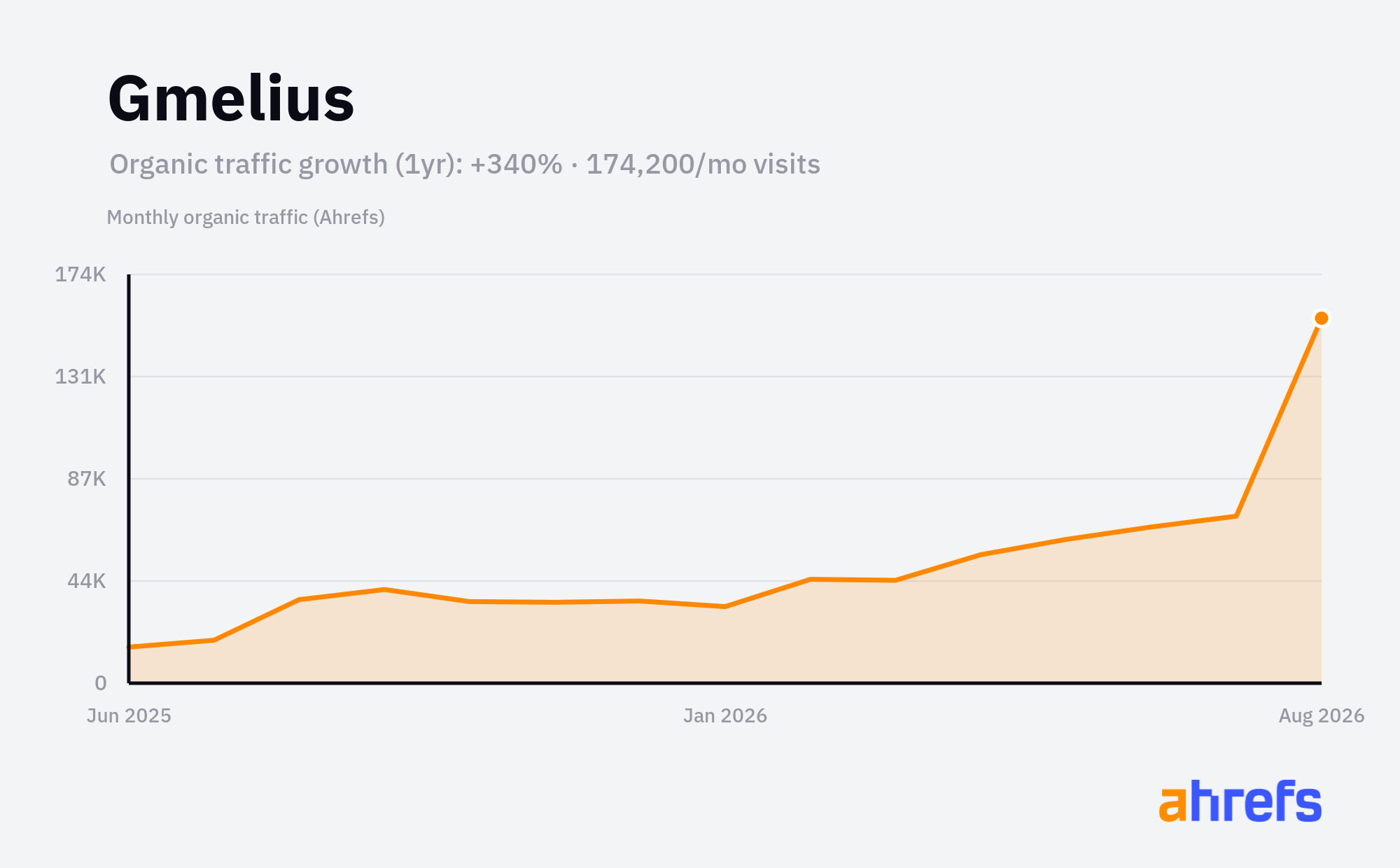
- Organic traffic growth (this year vs last): +340%
- Organic traffic (monthly): 150K
- Year founded: 2015
- Location: Geneva, Switzerland
What they do
Gmelius is a collaborative email platform that turns Gmail into a shared workspace, with shared inboxes, Kanban boards, and workflow automation built in.
As one of the most established companies on this list (founded in 2015), Gmelius has had plenty of time to build a foothold, but the traffic growth over the past year is anything but slow and steady. With ~170K monthly organic visitors and a +340% jump, it's clear that demand for Gmail-native team collaboration is still accelerating, probably as more teams look for tools that fit inside workflows they already use rather than asking everyone to switch to something new.
6. Fyxer (+330%)
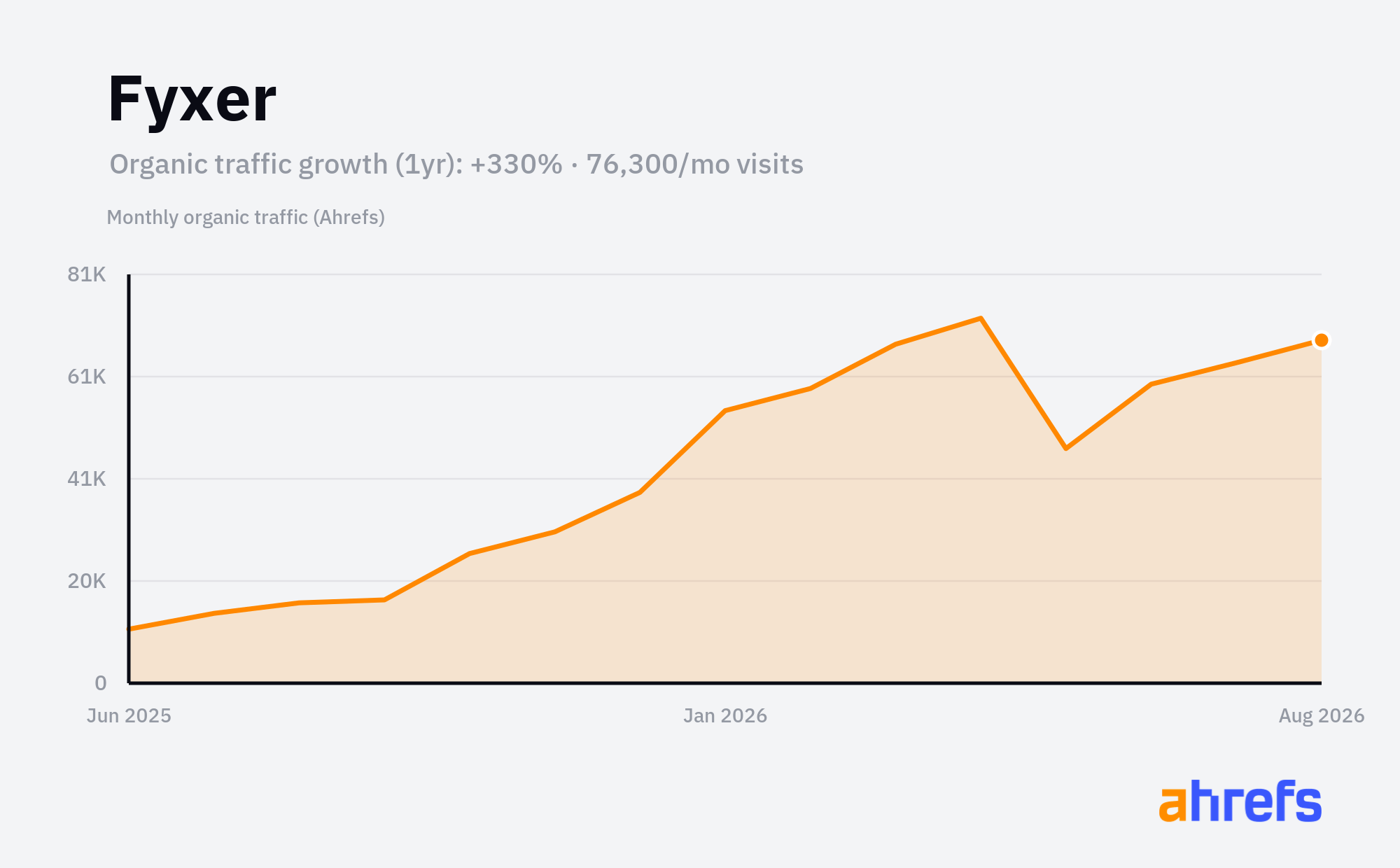
- Organic traffic growth (this year vs last): +330%
- Organic traffic (monthly): 76.5K
- Year founded: 2023
- Location: London, United Kingdom
What they do
Fyxer is an AI assistant that manages email and calendars for professionals, organizing inboxes, drafting replies, and summarizing meetings to cut down on administrative overhead.
One of the youngest companies on this list, founded in 2023, Fyxer has moved incredibly fast: ~80K monthly organic visitors and +330% traffic growth before most startups have figured out their positioning. The AI email assistant category is genuinely crowded, so hitting those numbers this early suggests it's doing something that resonates beyond the initial wave of AI-curious early adopters.
7. DeployHQ (+270%)
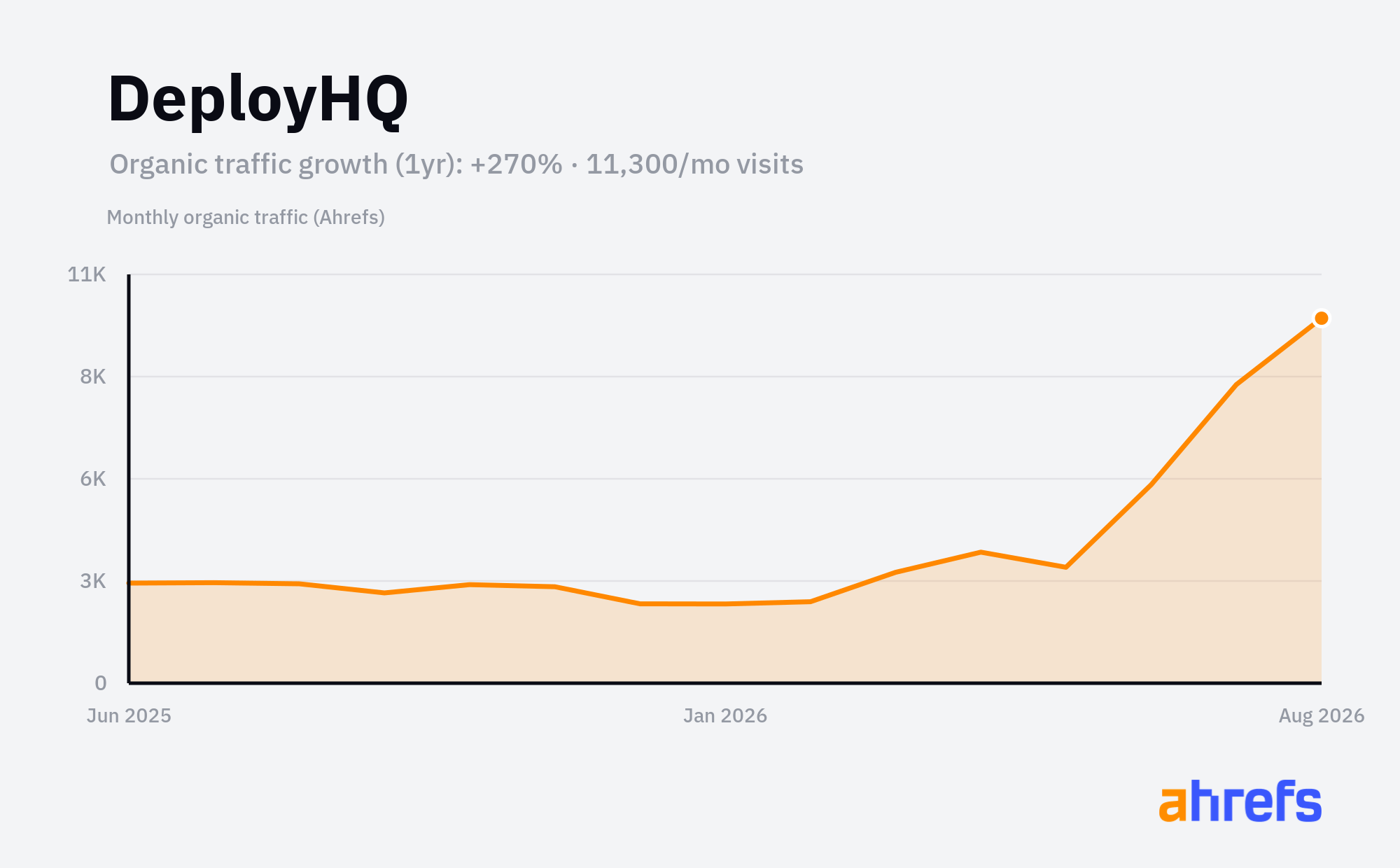
- Organic traffic growth (this year vs last): +270%
- Organic traffic (monthly): 11.5K
- Year founded: n/a
- Location: Las Vegas, Nevada
What they do
DeployHQ is a web deployment tool that automates pushing code from Git, SVN, and Mercurial repositories directly to servers.
PitchBook notes SaaS.group has a stake in the company, but no financing round amount or date has been reported.
A +270% traffic jump for a developer tool with no disclosed outside funding is worth paying attention to, because it means the growth is coming from genuine search demand rather than a big marketing budget. Automated deployment is a solved problem in theory, but plenty of development teams are still doing it manually or with fragile scripts, and that gap is clearly sending people to search for something better.
8. Fullfunnel.io (+230%)
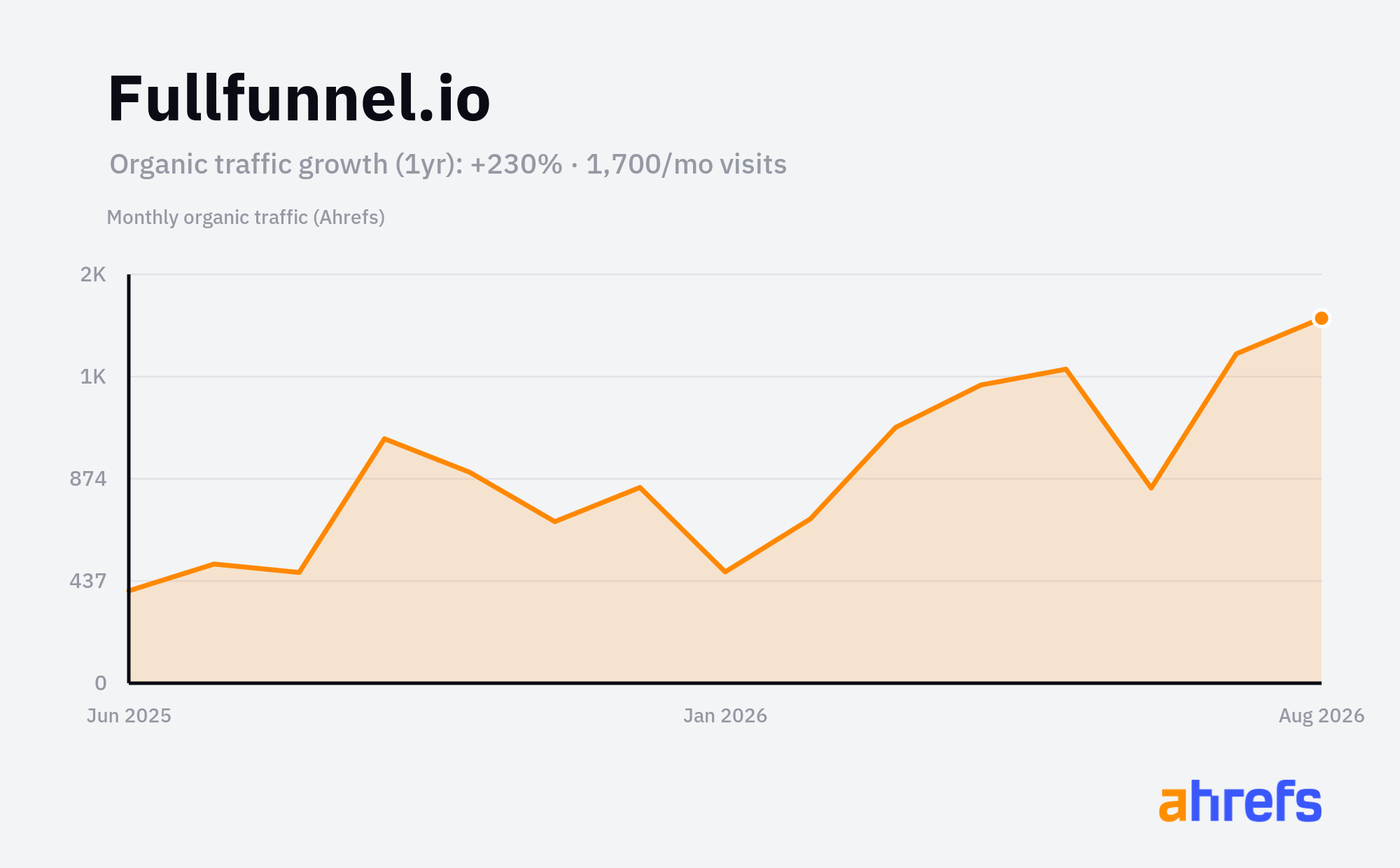
- Organic traffic growth (this year vs last): +230%
- Organic traffic (monthly): 1.5K
- Year founded: 2017
- Location: Tallinn, Harjumaa
What they do
Fullfunnel.io is a B2B revenue consultancy and training platform that teaches marketing and sales teams how to run account-based demand generation programs.
Fullfunnel.io has raised no outside funding, per its own public disclosures.
Account-based marketing has been a buzzword for years, but executing it well is still genuinely hard, and there's clearly a growing audience looking for practical guidance on how to actually do it. The +230% traffic growth is all organic, built on the back of content and community, which is a credible foundation for a company in this space.
9. SuperTokens (+210%)
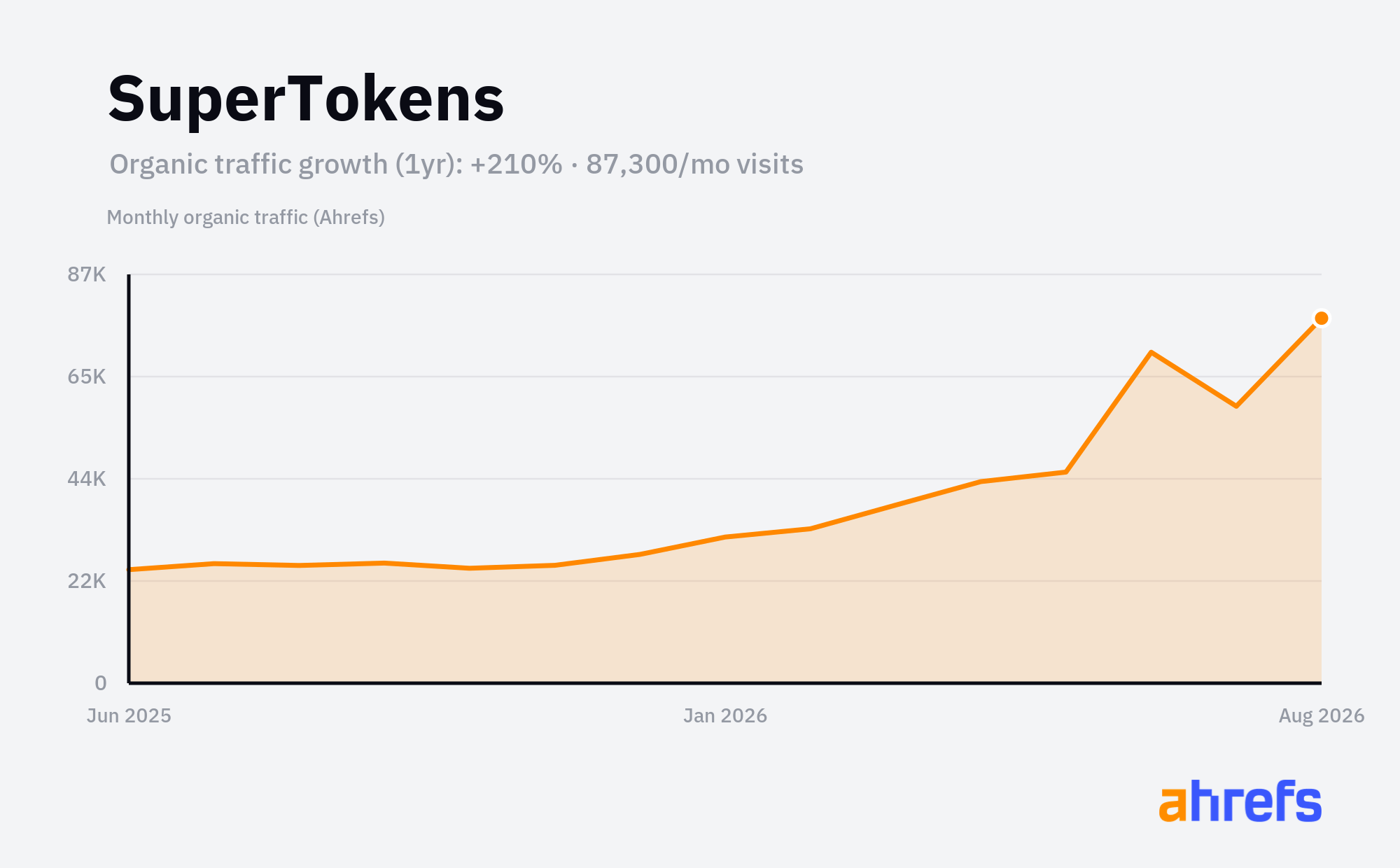
- Organic traffic growth (this year vs last): +210%
- Organic traffic (monthly): 87.5K
- Year founded: n/a
- Location: San Francisco, California
What they do
SuperTokens is an open-source authentication solution that gives development teams a self-hosted alternative to managed auth services like Auth0.
SuperTokens went through Y Combinator and raised a seed round in August 2020, though the specific amount hasn't been publicly disclosed.
Authentication is a category where developers are increasingly wary of vendor lock-in and rising per-user costs, and SuperTokens is sitting right at the intersection of those concerns. The +210% traffic growth, landing at ~90K monthly visitors, reflects a real shift in how engineering teams think about auth: open-source and self-hosted is no longer just for the most security-conscious teams, it's becoming a mainstream default.
10. Missive (+210%)
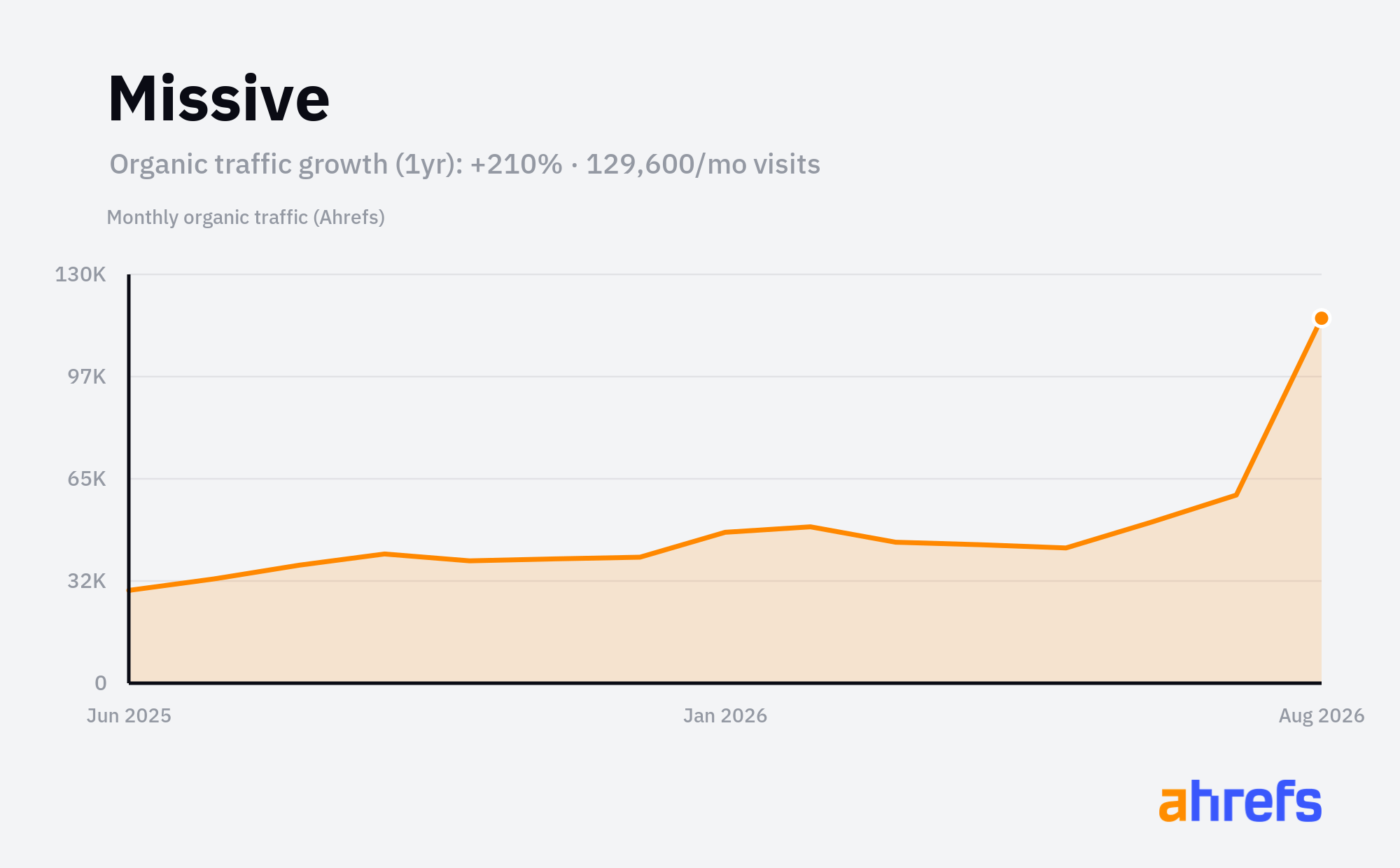
- Organic traffic growth (this year vs last): +210%
- Organic traffic (monthly): 150K
- Year founded: 2015
- Location: Quebec, QC
What they do
Missive is a shared inbox and team chat application used by small and mid-sized businesses to manage email collaboratively without losing context or accountability.
Missive is fully bootstrapped and has never taken outside investment, building entirely on revenue from customers.
Founded in 2015, Missive is one of the more established companies here, which makes a +210% traffic jump in a single year genuinely impressive for a product at this stage. The shared inbox category has gotten a lot noisier with AI-powered tools entering the market, but Missive's growth suggests that a well-built, team-focused email product with a loyal user base can still accelerate when the timing is right.
11. PagerTree (+200%)
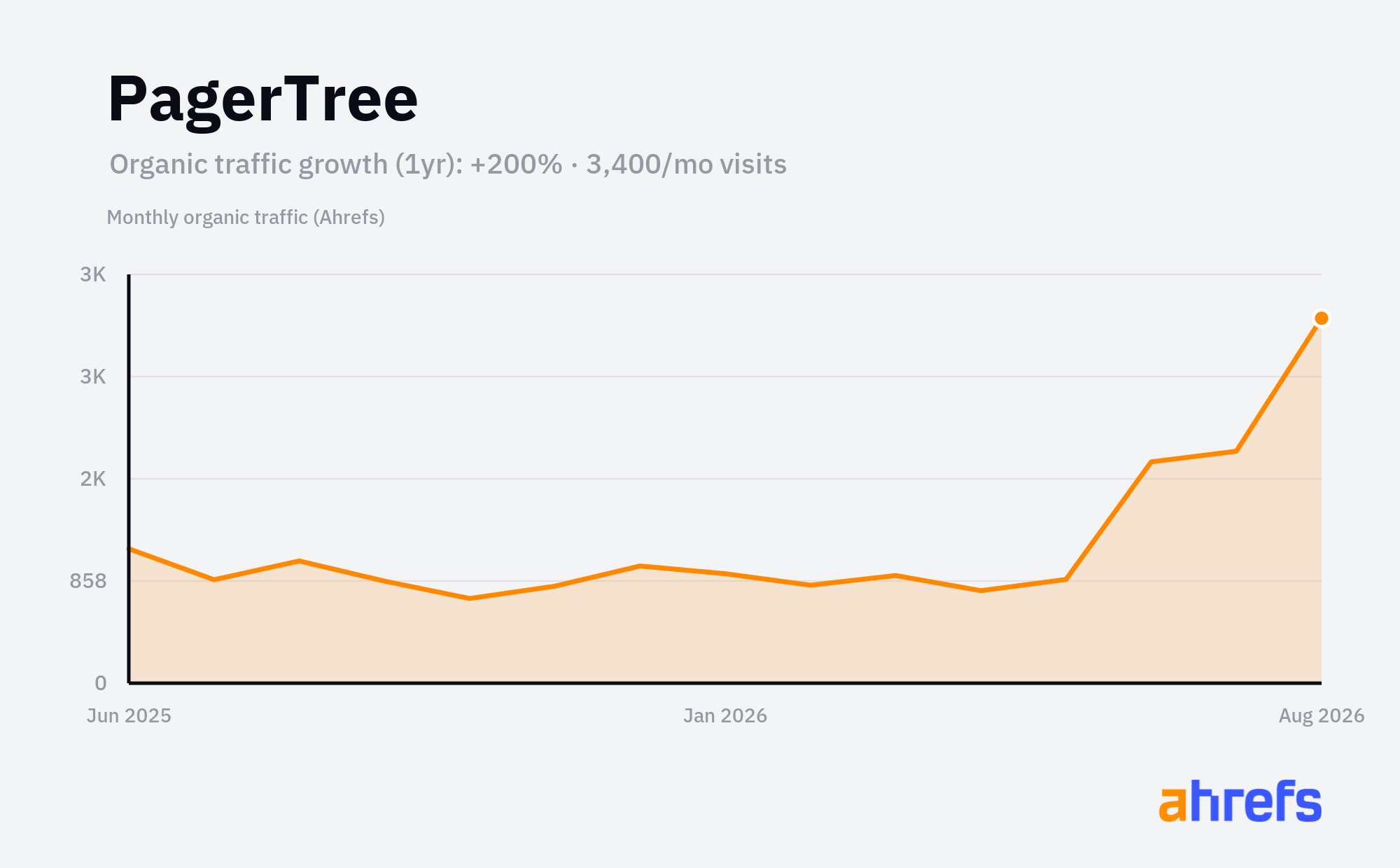
- Organic traffic growth (this year vs last): +200%
- Organic traffic (monthly): 3.5K
- Year founded: 2016
- Location: Phoenix, AZ
What they do
PagerTree is an on-call scheduling and alerting tool that routes incoming pages and notifies the right engineers when something goes wrong.
PagerTree has no recorded funding rounds and has raised no outside capital, per Tracxn and Crunchbase.
On-call management is a well-established problem, but PagerTree's +200% traffic growth in a year shows there's still plenty of room for a focused, no-frills alternative to the bigger incident management platforms. Teams that don't need the full enterprise suite are clearly looking for something simpler, and PagerTree is capturing that demand.
12. NordLayer (+190%)
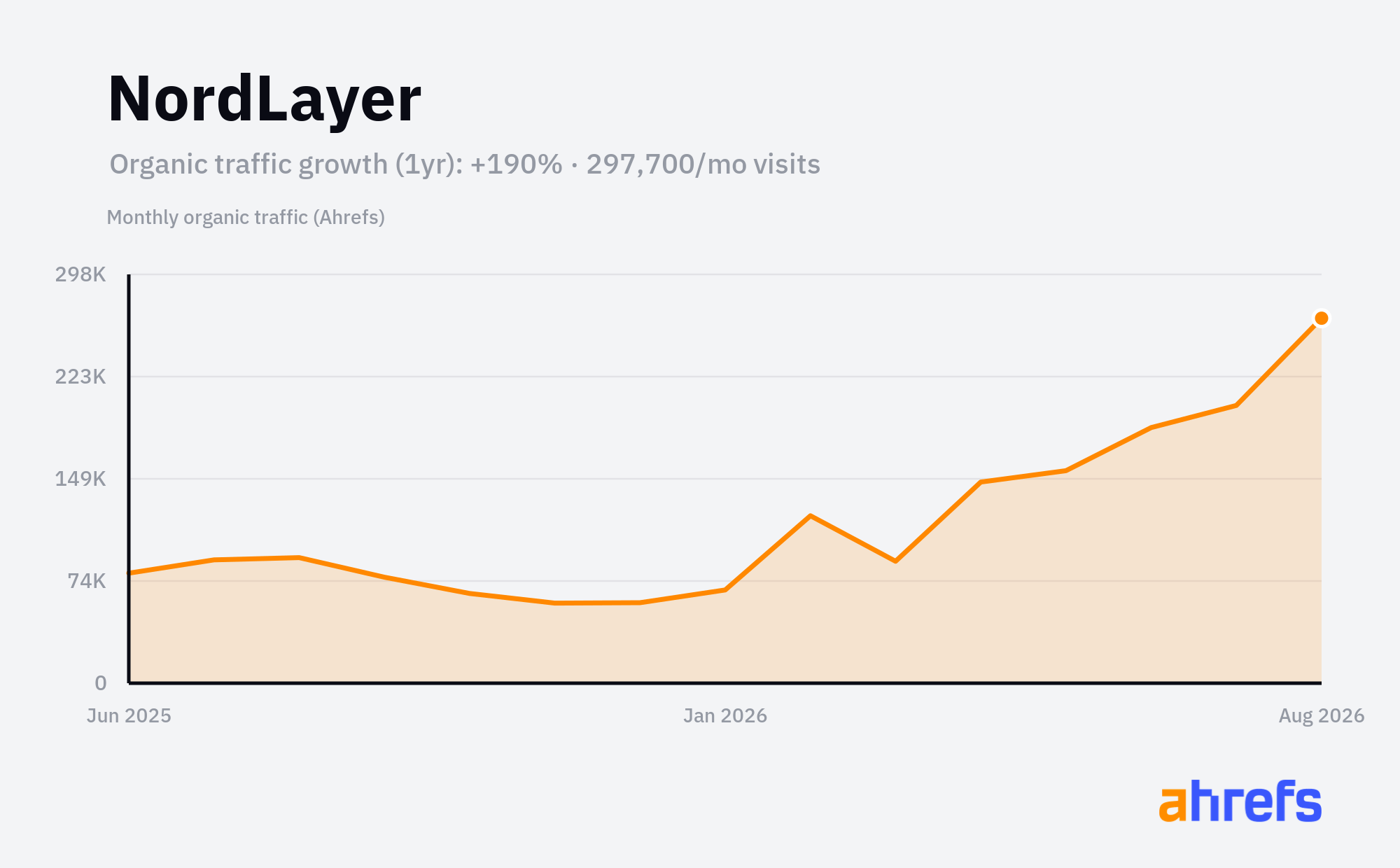
- Organic traffic growth (this year vs last): +190%
- Organic traffic (monthly): 300K
- Year founded: 2019
- Location: New York, Rockfeller
What they do
NordLayer is a business network security platform, built on the foundations of NordVPN, that gives companies tools for secure remote access, zero-trust network access, and secure web gateway capabilities.
With ~300K monthly organic visitors, NordLayer is one of the biggest brands on this list, and it's still putting up +190% growth. Business network security is getting serious attention as hybrid work and distributed teams become the default, and NordLayer's positioning as an accessible, hardware-free solution is clearly landing with the IT buyers and operations teams actively researching their options.
13. Parseur (+170%)
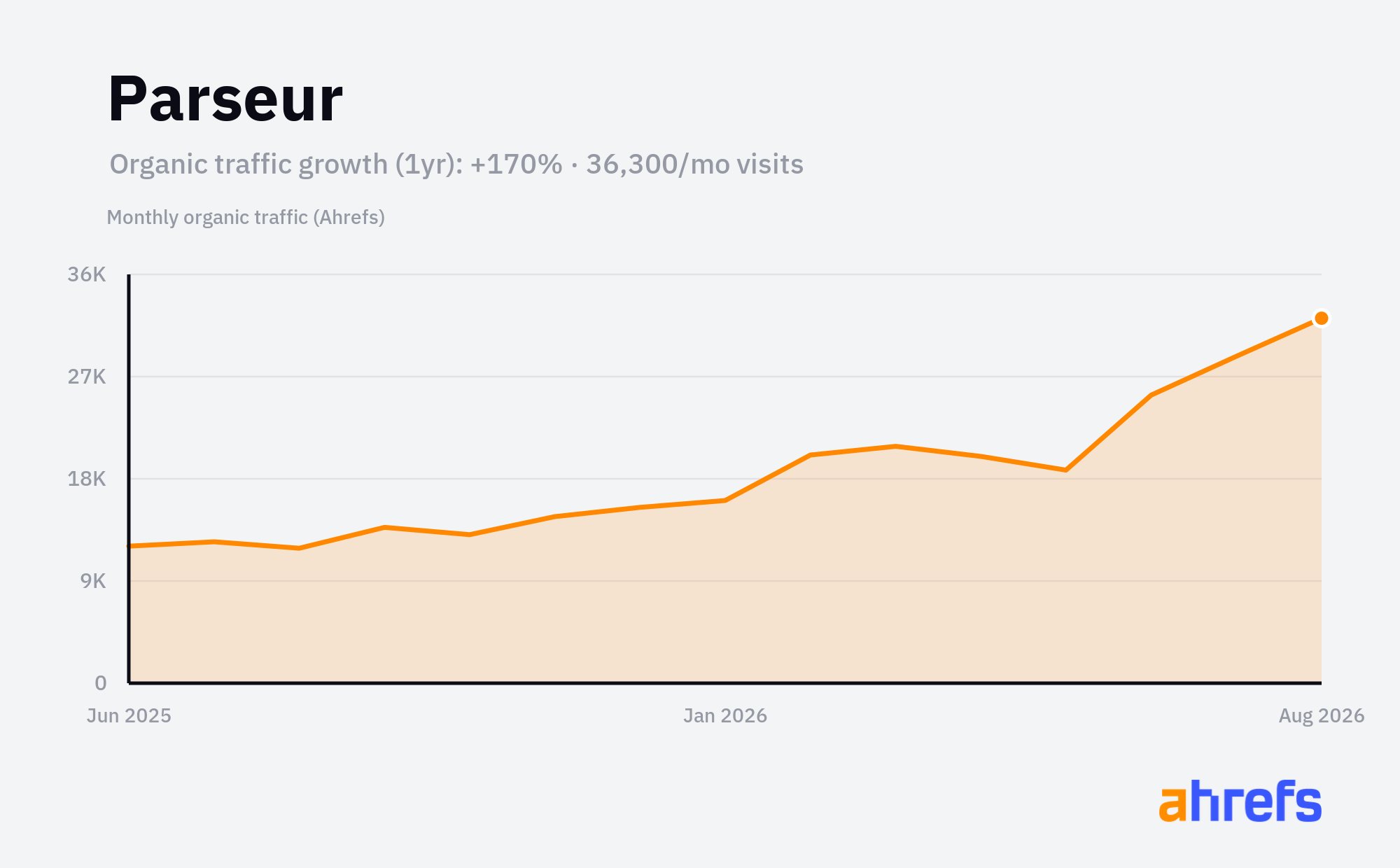
- Organic traffic growth (this year vs last): +170%
- Organic traffic (monthly): 36.5K
- Year founded: 2016
- Location: Singapore
What they do
Parseur is a document parsing tool that uses AI to automatically extract structured data from emails, PDFs, and other documents, letting businesses automate data entry workflows without writing custom code.
Parseur is 100% founder-funded with no outside investors, operating entirely on its own revenue.
The rise of AI-native document processing has pulled a lot of new interest into this category, and Parseur is benefiting from that even as a bootstrapped product that predates the current wave. Getting to ~40K monthly organic visitors with no external capital behind it is a good result, and the +170% traffic growth suggests the AI angle is opening the product up to a meaningfully wider audience than it had before.
14. GrowthBook (+160%)
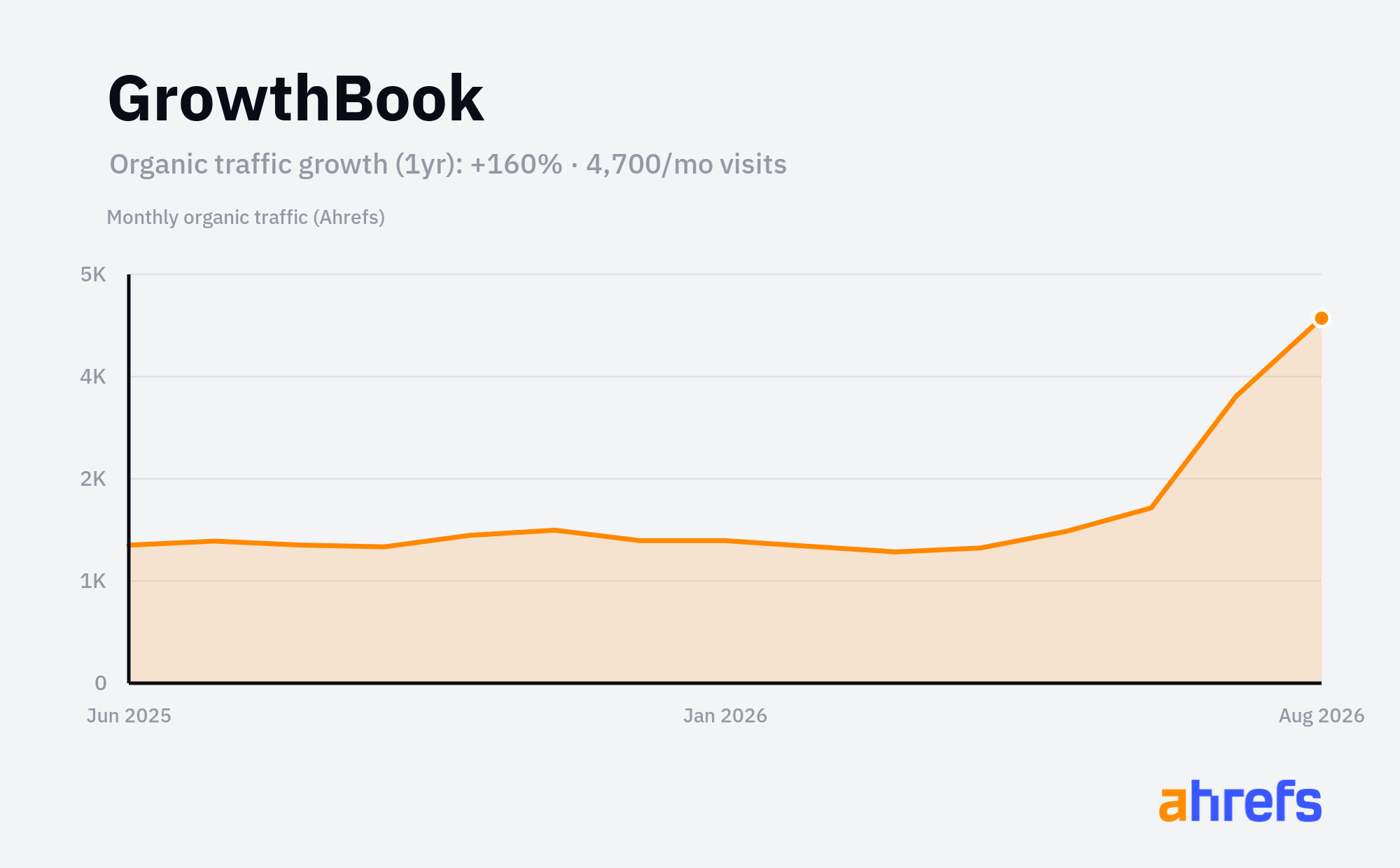
- Organic traffic growth (this year vs last): +160%
- Organic traffic (monthly): 4.5K
- Year founded: 2020
- Location: Palo Alto, California
What they do
GrowthBook is an open-source feature flagging and A/B testing platform that connects to a company's existing data warehouse so teams can run experiments without building the infrastructure themselves.
GrowthBook raised a Series A of approximately $22.6M in July 2025, bringing its total disclosed funding to around $23M.
Feature flagging and experimentation tooling has moved from a nice-to-have to a core part of how product teams ship software, and the open-source warehouse-native approach GrowthBook takes is well-timed with where engineering teams are right now. The +160% traffic growth reflects a product category that's actively being researched by teams who want the capabilities of an enterprise experimentation platform without the enterprise price tag or vendor dependency.
15. Corgea (+160%)
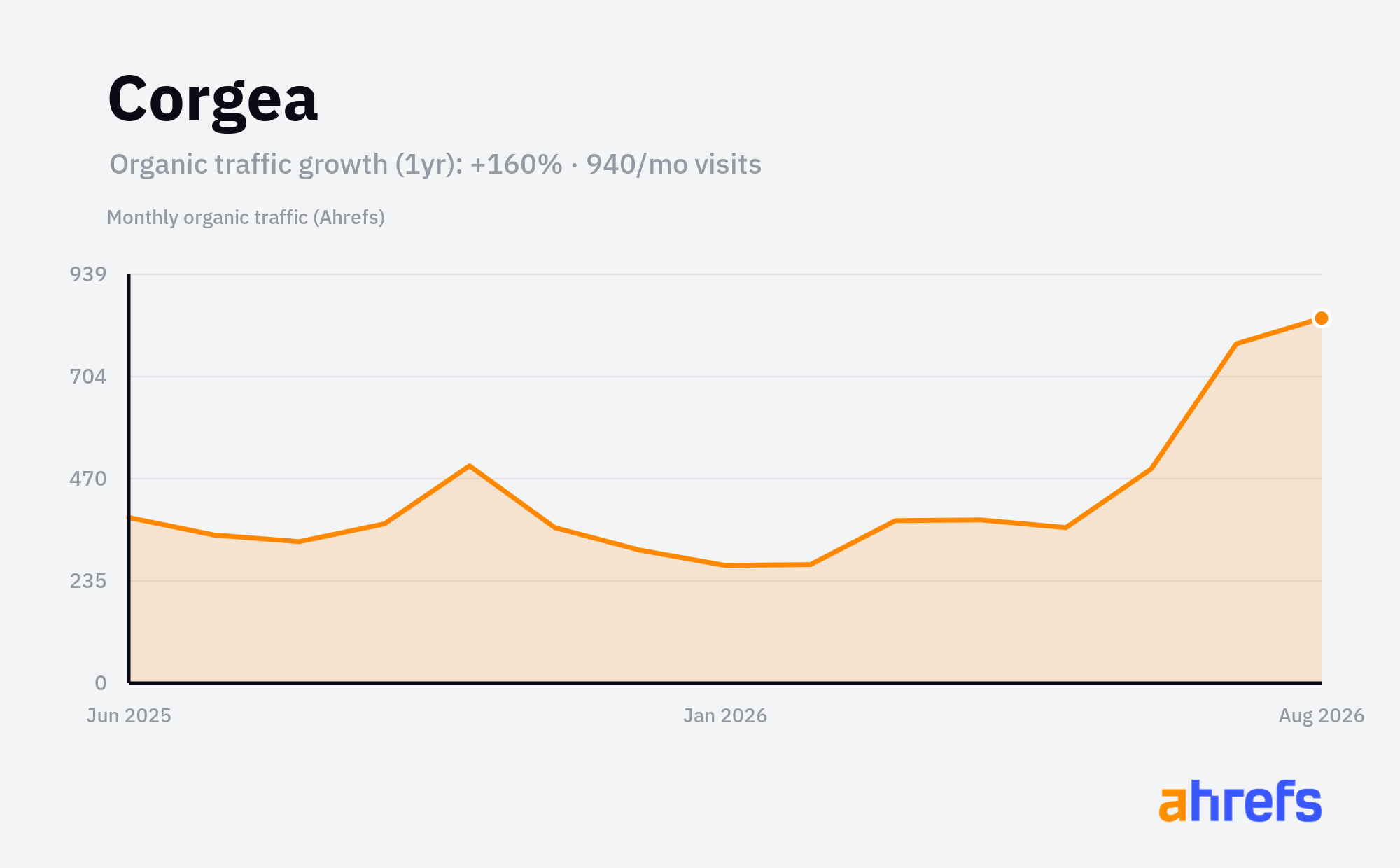
- Organic traffic growth (this year vs last): +160%
- Organic traffic (monthly): 950
- Year founded: 2023
- Location: San Francisco, CA
What they do
Corgea is an AI-powered code security tool that automatically detects vulnerabilities in source code and issues pull requests with suggested fixes for engineering teams to review and approve.
Corgea raised a $2.6M seed round in November 2024, led by Shorooq Partners, with participation from Y Combinator, Jawed Karim, and several other investors.
Founded in 2023, Corgea is one of the youngest companies on this list, and it's growing from a small base, but +160% organic traffic growth in a year for an AI security product this early is a legitimate signal. Application security is a space where development teams are actively looking for tools that fit into existing workflows rather than adding friction, and Corgea's PR-based approach speaks directly to that.
16. MailUp (+150%)
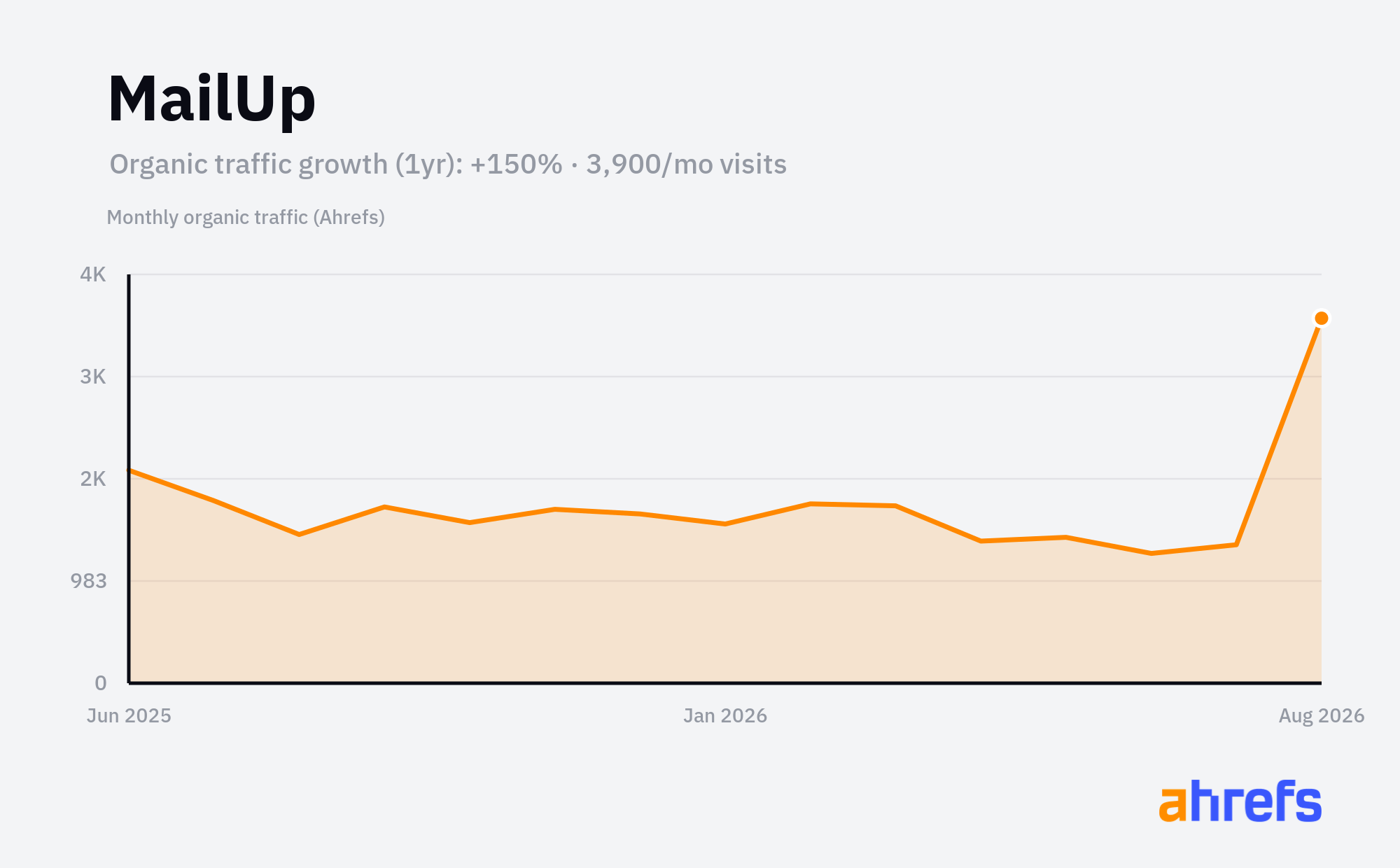
- Organic traffic growth (this year vs last): +150%
- Organic traffic (monthly): 4K
- Year founded: n/a
- Location: Milan, Lombardy
What they do
MailUp is an Italian email and SMS marketing platform used by businesses to design, send, and automate campaigns across email, SMS, and messaging apps.
MailUp has been a market leader in Italy for years, which makes a +150% organic traffic jump worth a second look, because that kind of growth from an established base usually means the product is reaching new audiences or benefiting from a shift in how marketers search for solutions.
17. Unifonic (+130%)
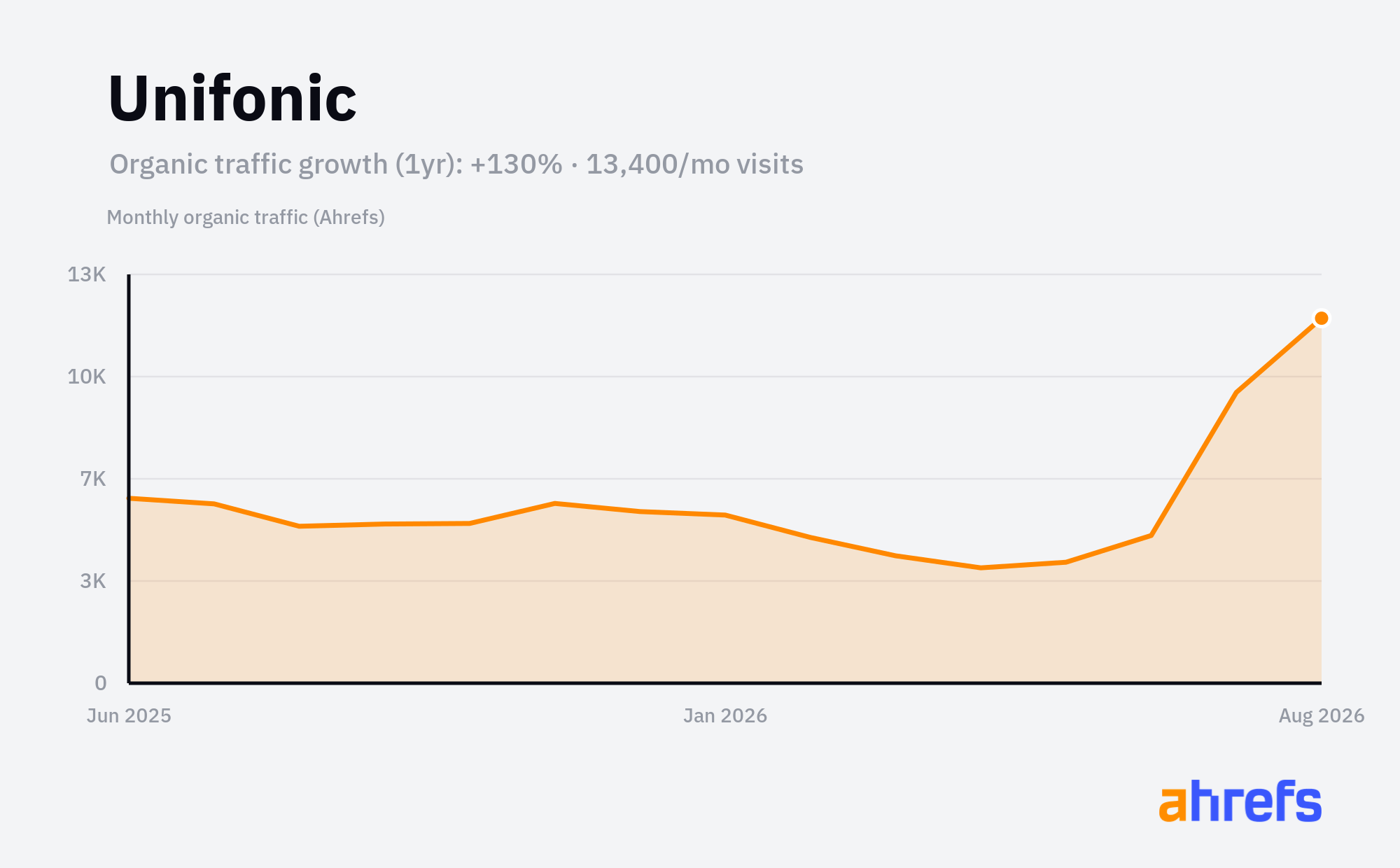
- Organic traffic growth (this year vs last): +130%
- Organic traffic (monthly): 13.5K
- Year founded: n/a
- Location: Riyadh, Saudi Arabia
What they do
Unifonic is a customer engagement platform based in the Middle East that lets businesses manage text, voice, WhatsApp, and web communications from a single interface using conversational AI.
Unifonic raised a $125M Series B in September 2021, led by SoftBank Vision Fund 2 and Sanabil Investments.
The Middle East and Gulf region is having a real moment in enterprise software, with digitization initiatives pushing businesses to rethink how they communicate with customers at scale. Unifonic's +130% traffic growth reflects that regional tailwind, as well as growing international awareness of a platform that was previously well-known locally but less visible to a global audience.
18. Qase (+120%)
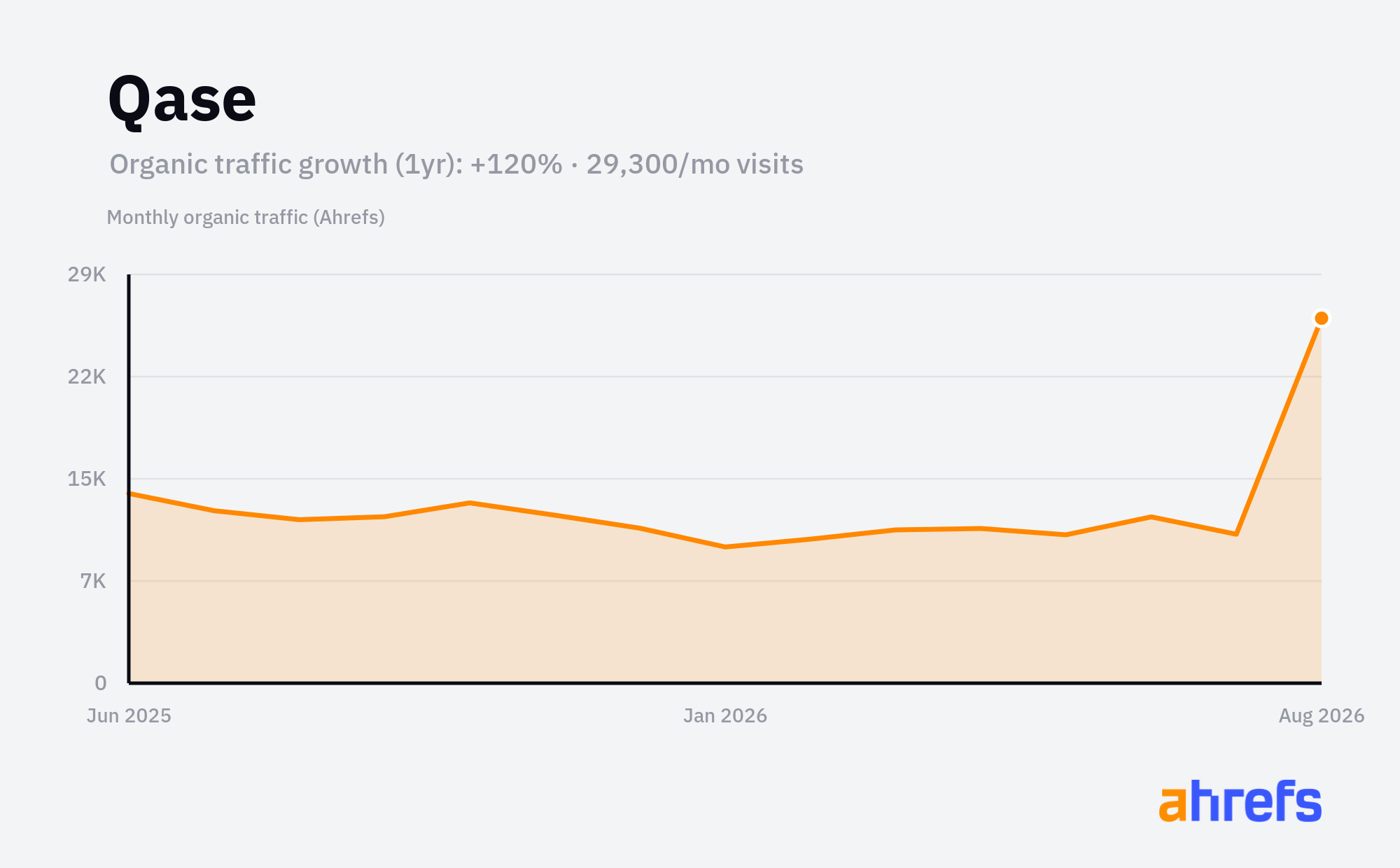
- Organic traffic growth (this year vs last): +120%
- Organic traffic (monthly): 29.5K
- Year founded: 2018
- Location: San Francisco, California
What they do
Qase is a test management platform that helps QA and engineering teams organize manual and automated test cases, track defects, and report on test runs, with integrations to tools like Jira and Slack.
Qase raised a $7.2M Series A in August 2023, led by Chrome Capital, with FinSight Ventures and S16VC participating.
Software testing tooling doesn't make headlines the way AI coding assistants do, but it's a category with persistent, genuine demand from engineering teams who need to ship confidently. Qase growing to ~30K monthly organic visitors with +120% growth in a year is a sign that test management is a problem teams are actively researching, and that Qase's approach to making it more approachable is working.
19. LeanCode (+120%)
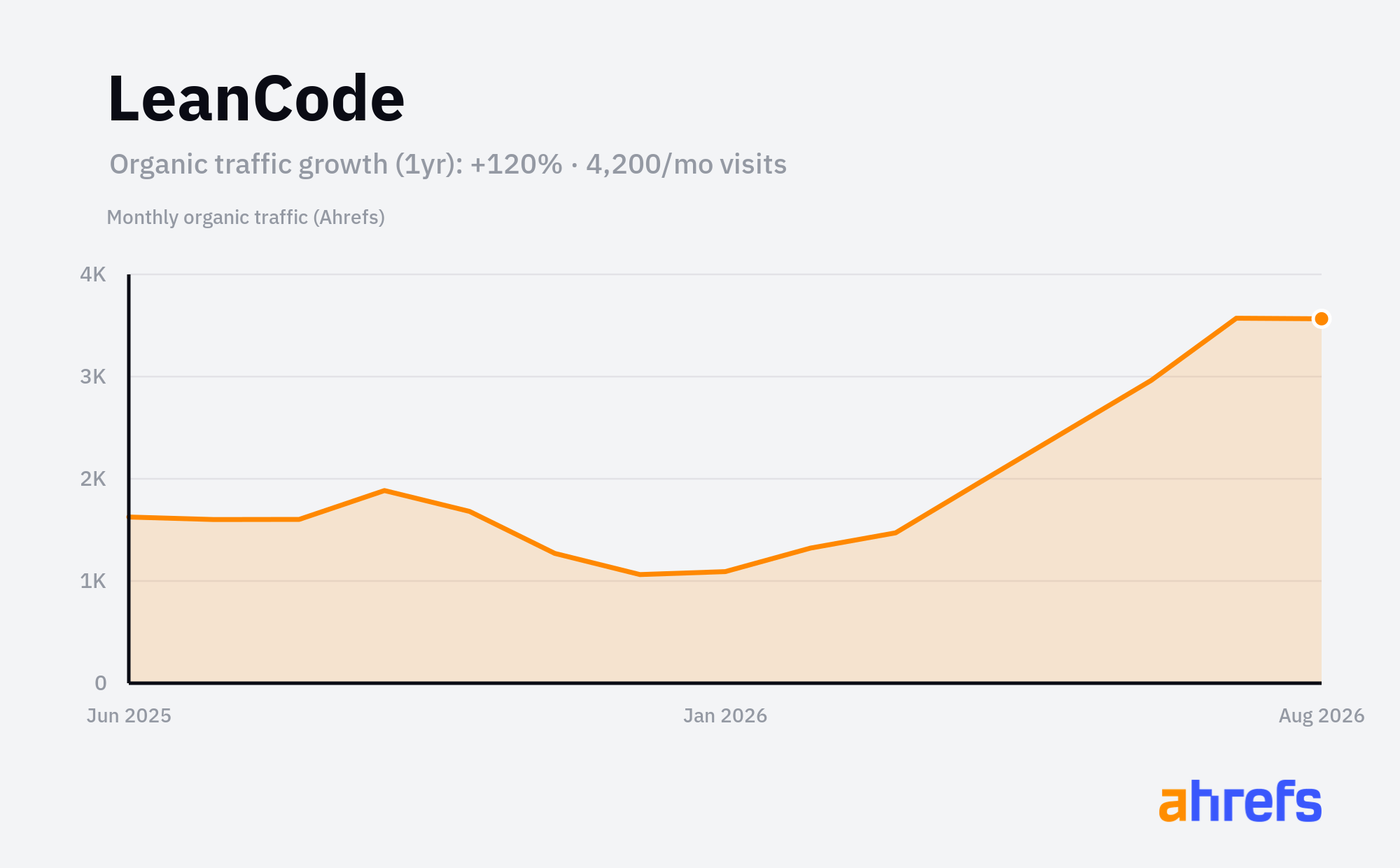
- Organic traffic growth (this year vs last): +120%
- Organic traffic (monthly): 4K
- Year founded: 2016
- Location: Warszawa, mazowieckie
What they do
LeanCode is a software development studio based in Warsaw that builds end-to-end digital products for startups and enterprises, with a focus on Flutter, .NET, and React, and also contributes open-source libraries in those ecosystems.
LeanCode has not raised any outside funding rounds and operates without external capital.
A +120% organic traffic increase for a development studio is less common than you'd expect, since most agencies grow through referrals rather than search. LeanCode's investment in open-source tooling and developer community content is clearly generating real search interest, pulling in developers who find the libraries first and then discover the company behind them.
20. Maroo (+110%)
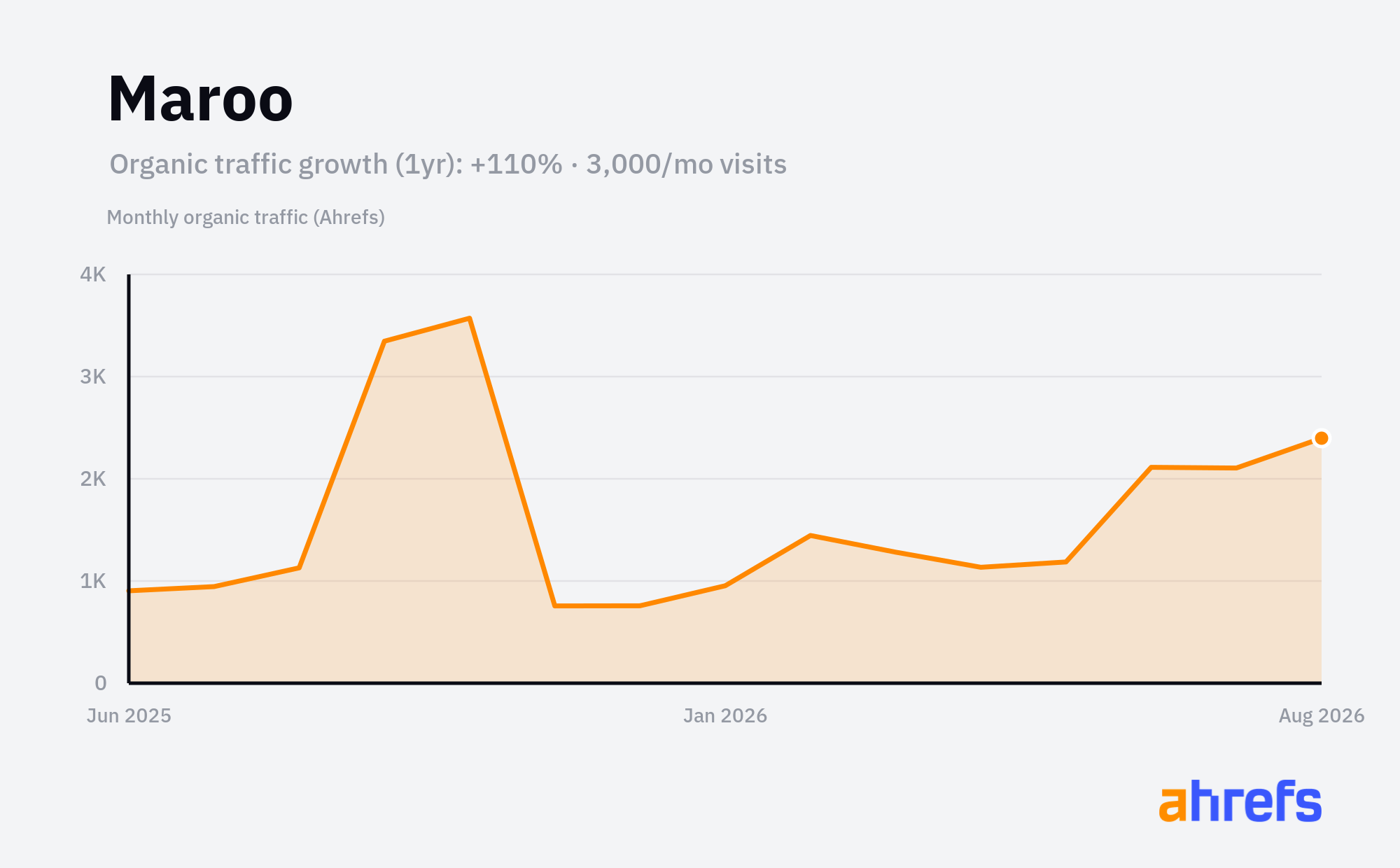
- Organic traffic growth (this year vs last): +110%
- Organic traffic (monthly): 3K
- Year founded: 2020
- Location: New York, New York
What they do
Maroo is a financial operations platform for small and medium-sized businesses that handles invoicing, contract signing, freelancer payments, and accounting in one place.
The all-in-one financial admin category is competitive, but there's still a clear gap between what enterprise finance tools offer and what small business owners actually need day to day. Maroo's +110% traffic growth in a year suggests it's finding an audience that's actively looking for something simpler than the incumbents, particularly among freelancers and small agencies managing payments and contracts together.
21. La Growth Machine (+110%)
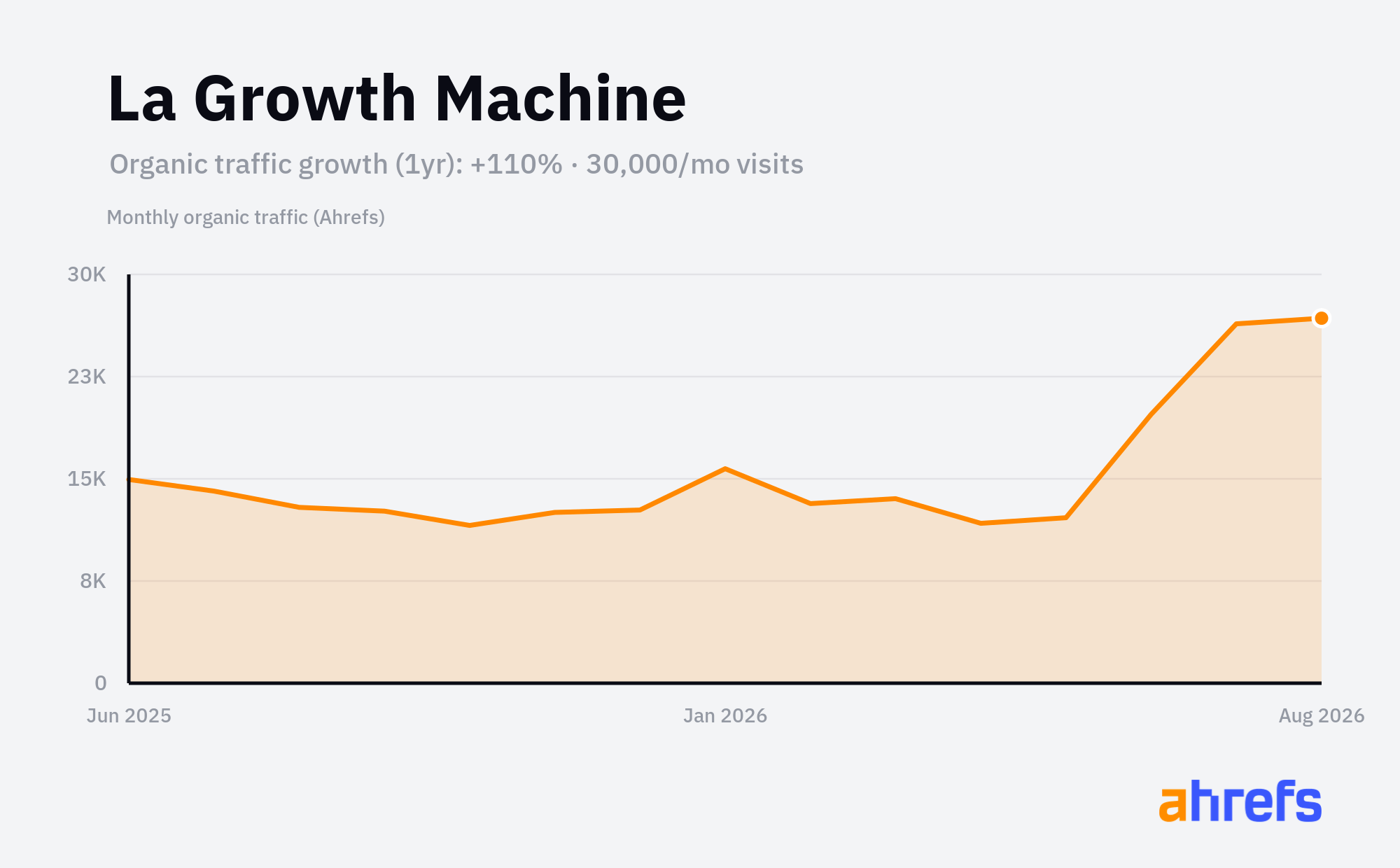
- Organic traffic growth (this year vs last): +110%
- Organic traffic (monthly): 30K
- Year founded: 2018
- Location: Paris
What they do
La Growth Machine is a multi-channel sales outreach platform that lets sales teams build automated, personalized sequences across LinkedIn, email, and other channels to reach prospects at scale.
La Growth Machine has publicly described itself as 100% bootstrapped and self-financed, with no outside investment.
Reaching ~30K monthly organic visitors without a cent of outside funding is a genuinely good result, and the +110% traffic growth shows that multi-channel outreach is still a growing search category even as the space gets crowded. La Growth Machine has built its audience largely through content and community, which is both a smart strategy for a bootstrapped company and a durable one when the product delivers on what the content promises.
22. 360insights (+110%)
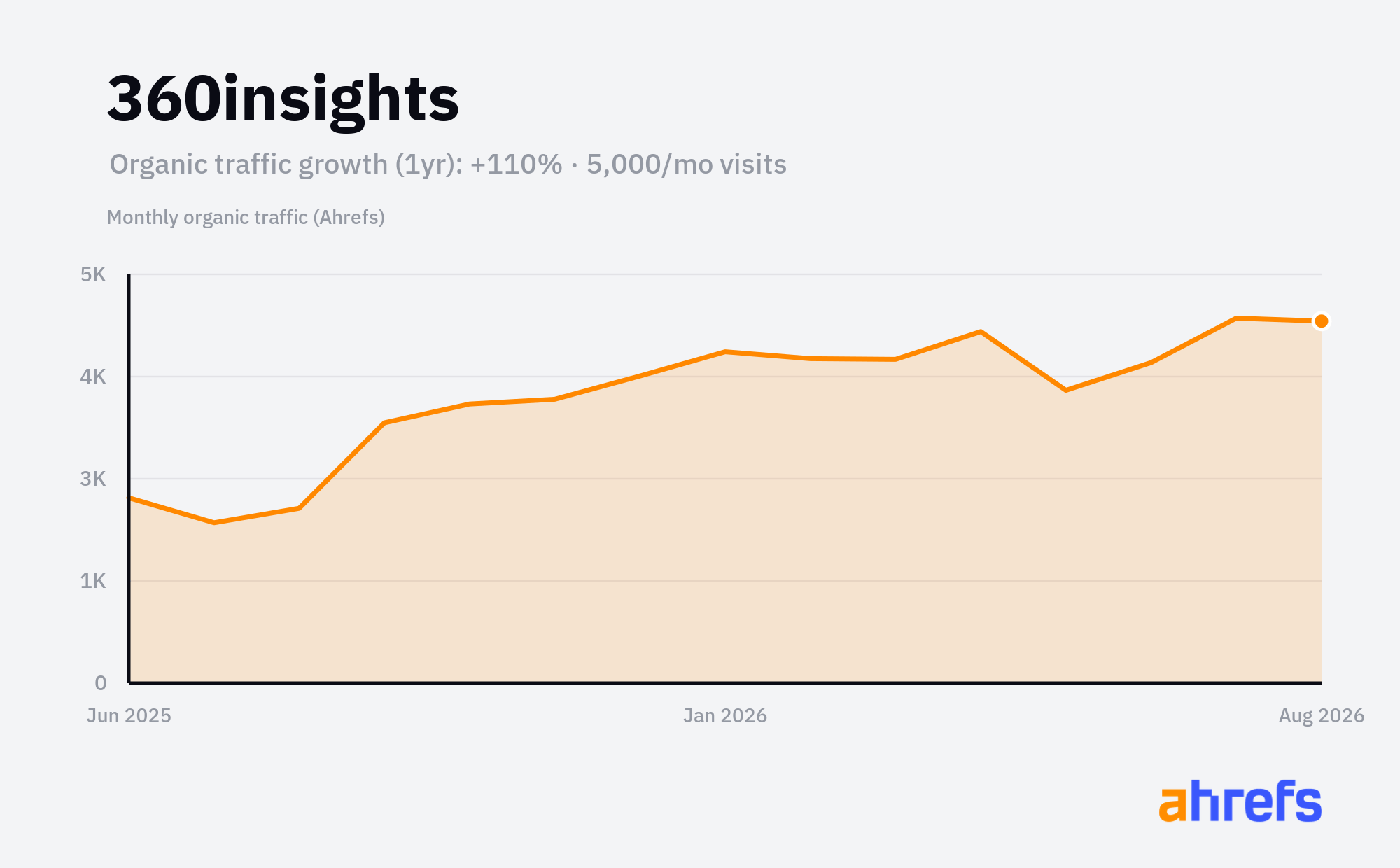
- Organic traffic growth (this year vs last): +110%
- Organic traffic (monthly): 5K
- Year founded: n/a
- Location: Whitby, Ontario
What they do
360insights is a channel incentive and partner engagement platform that helps large brands manage co-op funds, rebates, SPIFFs, and rewards programs across their distributor and reseller networks.
360insights closed a $30M growth equity round in October 2016, led by Sageview Capital, with existing shareholders participating.
Channel incentive management is a niche that most people outside of enterprise sales have never heard of, but it's a genuinely complex operational problem for brands with large partner ecosystems. The +110% traffic growth suggests either that more companies are formalizing their channel programs or that 360insights has gotten meaningfully better at capturing organic search demand from buyers researching this category.
23. Inkeep (+100%)
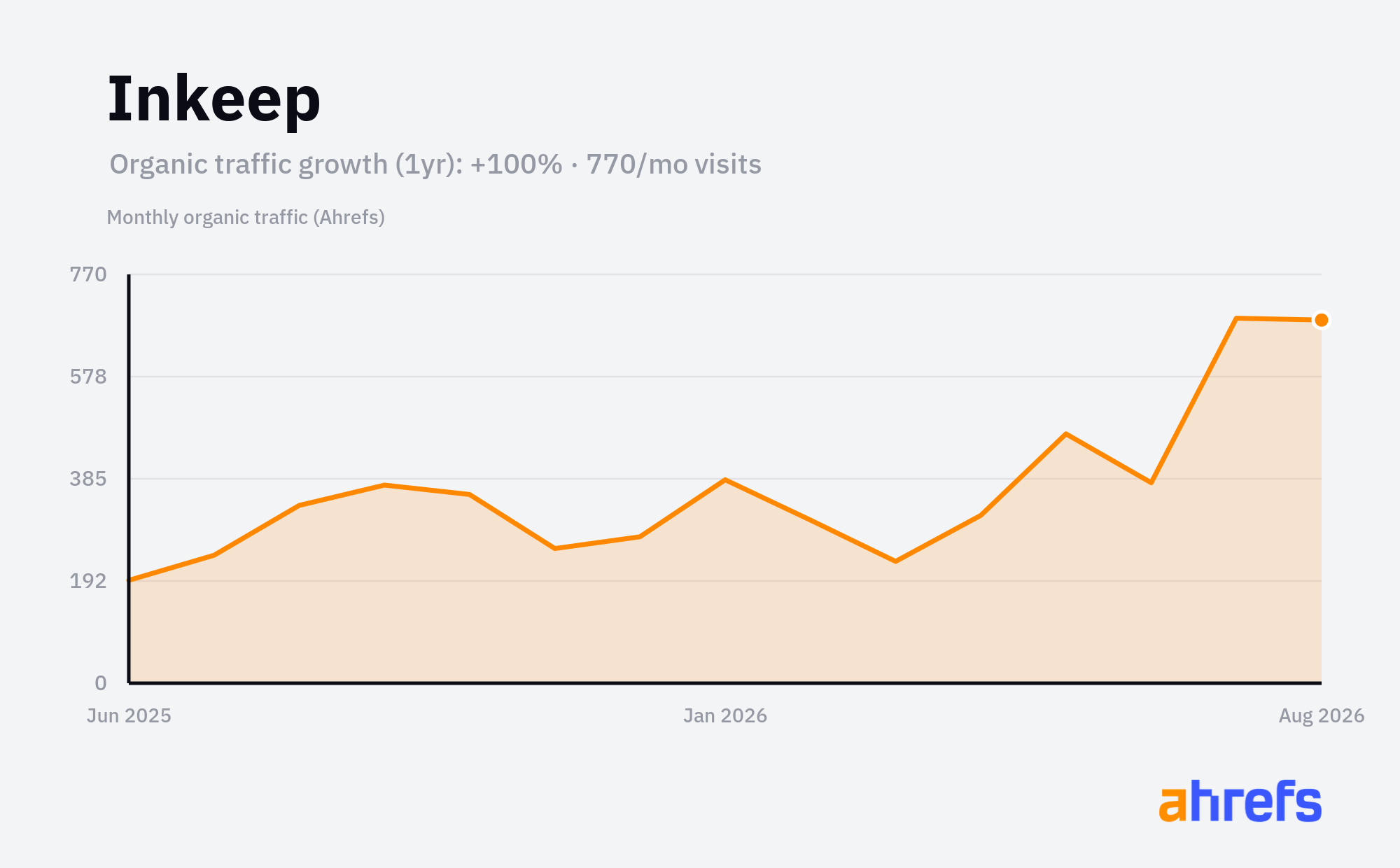
- Organic traffic growth (this year vs last): +100%
- Organic traffic (monthly): 750
- Year founded: 2022
- Location: New York, NY
What they do
Inkeep is an AI search and support tool for developer-facing products, letting teams turn their documentation into an AI-powered assistant that can answer user questions automatically.
Inkeep is one of the smallest brands on this list by monthly traffic, but doubling organic visits in a year from a genuinely early base is a real signal for a company founded in 2022. Developer documentation is a problem that scales painfully as products grow, and the list of customers already using Inkeep (Anthropic, Pinecone, Postman) signals that the product is credible where it matters most.
24. Common Paper (+100%)
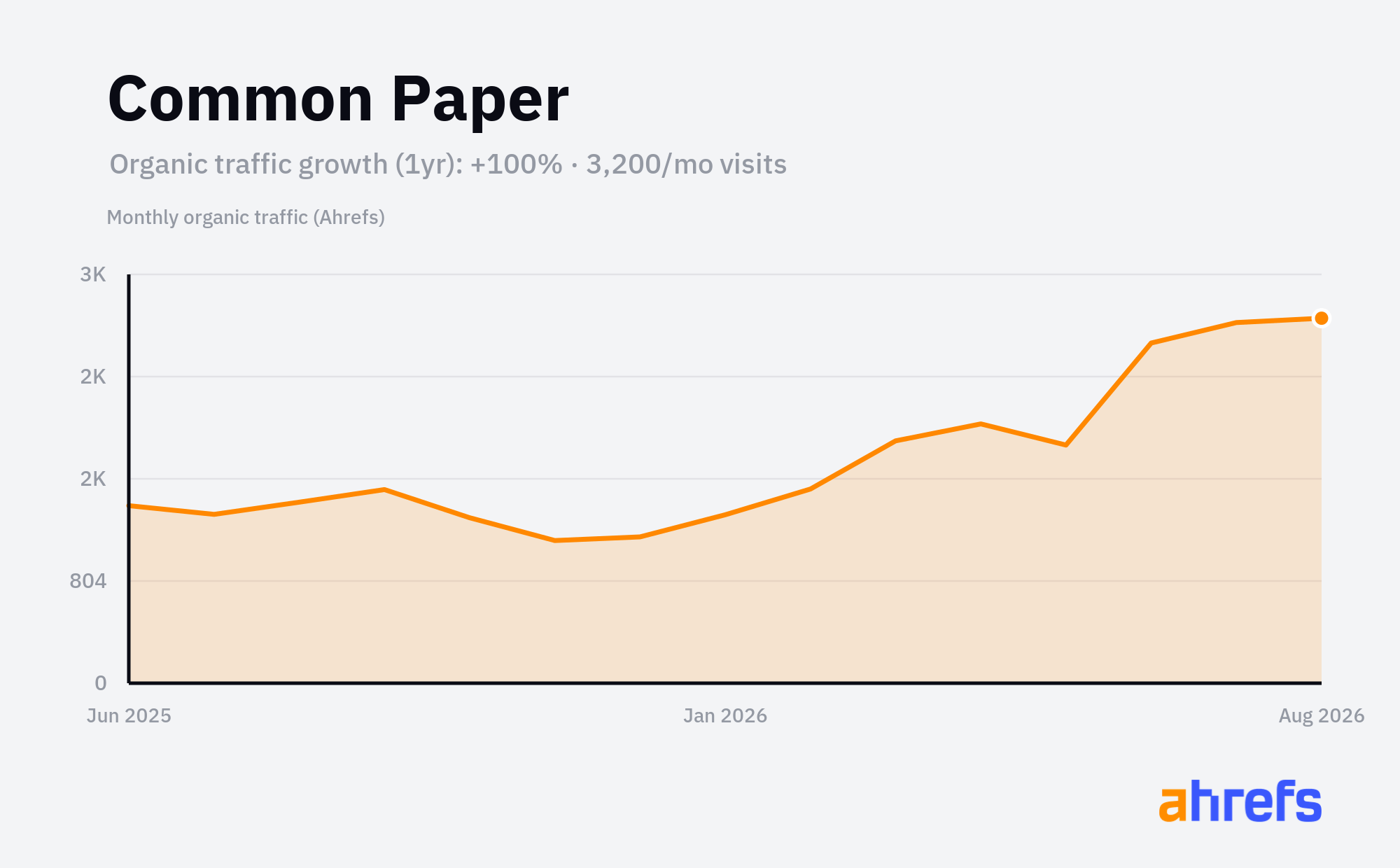
- Organic traffic growth (this year vs last): +100%
- Organic traffic (monthly): 3K
- Year founded: 2020
- Location: Philadelphia, United States
What they do
Common Paper is a contract platform that helps companies build, negotiate, and sign commercial agreements using standardized templates designed to be readable by both sides without a lawyer translating every clause.
Common Paper raised a $4.5M seed round in March 2022, co-led by Boldstart Ventures and Uncork Capital.
Contract tooling is a category with a lot of players, but Common Paper's angle, using standardized open-source contract templates rather than just digitizing whatever agreements a company already has, is a differentiated take that resonates with the startups and fast-moving teams who want to close faster without back-and-forth on boilerplate. Doubling organic traffic in a year suggests that audience is actively searching for exactly that.
25. Nimble (+100%)
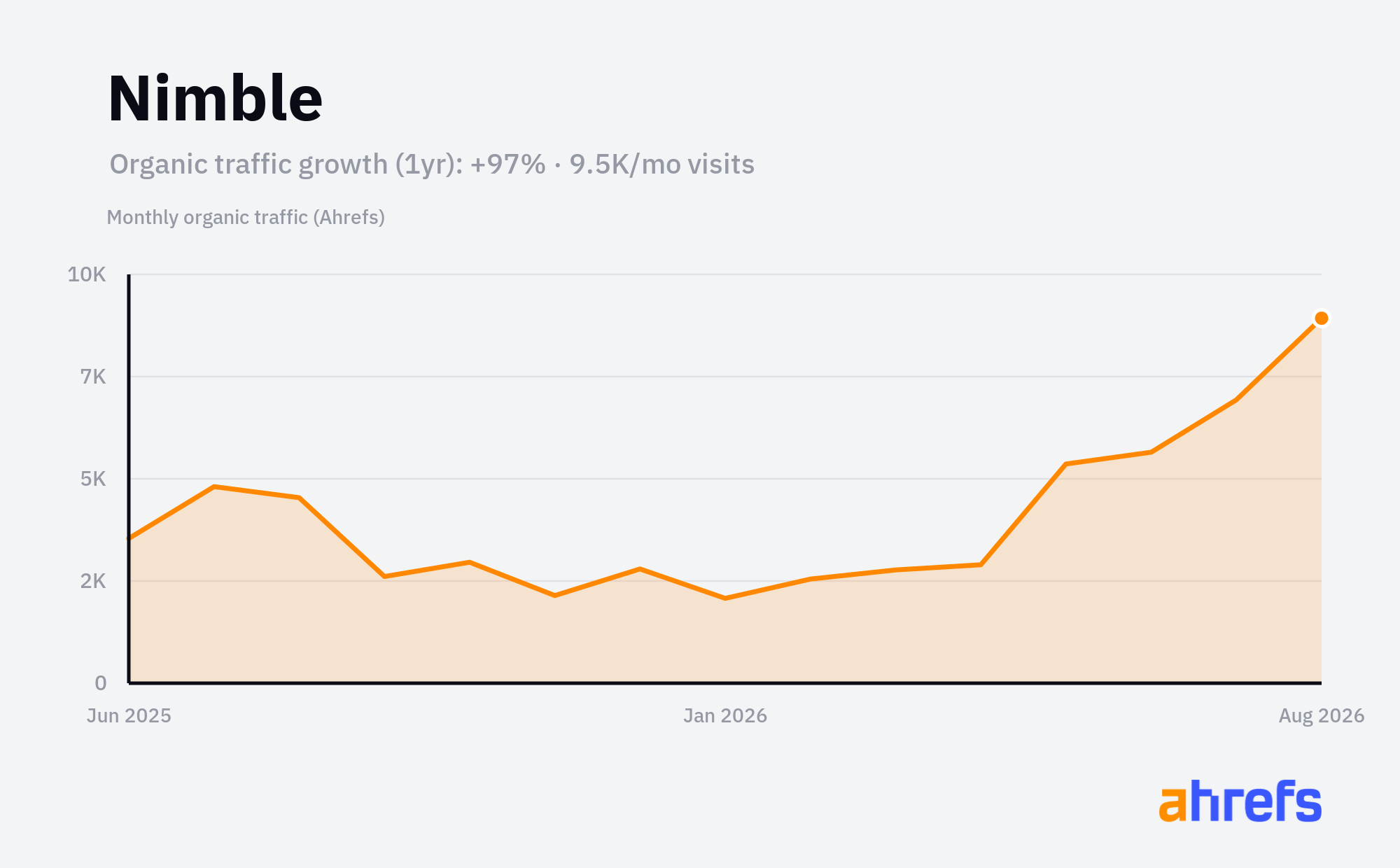
- Organic traffic growth (this year vs last): +100%
- Organic traffic (monthly): 9.5K
- Year founded: 2016
- Location: San Francisco, United States
What they do
Nimble is hiring software built specifically for K-12 schools, giving districts an applicant tracking system that posts openings, screens teaching candidates, and shows HR teams where every vacancy stands.
Teacher shortages have made hiring one of the hardest jobs in school administration, and most districts were running it on generic HR tools or spreadsheets. Nimble's predictive matching is aimed at the part that actually matters to a superintendent, which is finding candidates who will still be in the classroom in three years. Doubling organic traffic in a year suggests districts are going looking for this category on their own.
The full list: top SaaS startups by organic traffic growth
# | Company | Industry | Organic traffic growth | Monthly organic traffic |
|---|---|---|---|---|
1 | Data infrastructure | +810% (1-year) | 4K | |
2 | Fintech | +710% (1-year) | 22.5K | |
3 | Legal tech | +530% (1-year) | 12K | |
4 | Spend management | +520% (1-year) | 13K | |
5 | Productivity | +340% (1-year) | 150K | |
6 | AI / ML | +330% (1-year) | 76.5K | |
7 | Dev tools | +270% (1-year) | 11.5K | |
8 | Marketing | +230% (1-year) | 1.5K | |
9 | Security | +210% (1-year) | 87.5K | |
10 | Customer support | +210% (1-year) | 150K | |
11 | Dev tools | +200% (1-year) | 3.5K | |
12 | Security | +190% (1-year) | 300K | |
13 | AI / ML | +170% (1-year) | 36.5K | |
14 | Dev tools | +160% (1-year) | 4.5K | |
15 | Security | +160% (1-year) | 950 | |
16 | Marketing | +150% (1-year) | 4K | |
17 | Customer support | +130% (1-year) | 13.5K | |
18 | Dev tools | +120% (1-year) | 29.5K | |
19 | Dev tools | +120% (1-year) | 4K | |
20 | Fintech | +110% (1-year) | 3K | |
21 | Sales / CRM | +110% (1-year) | 30K | |
22 | Marketing | +110% (1-year) | 5K | |
23 | Customer support | +100% (1-year) | 750 | |
24 | Legal tech | +100% (1-year) | 3K | |
25 | HR tech | +100% (1-year) | 9.5K |
Organic traffic growth = growth in estimated monthly organic search traffic over the past year (now vs twelve months ago). Monthly organic traffic = current estimated monthly organic search traffic (Ahrefs). Data: Ahrefs · September 2026.
How to find this data in Ahrefs
You can rebuild this entire analysis yourself in Ahrefs. Here's the short version:
- Open Site Explorer, enter a company's domain, and look at the Organic traffic graph. The growth over the last year is what we ranked on.
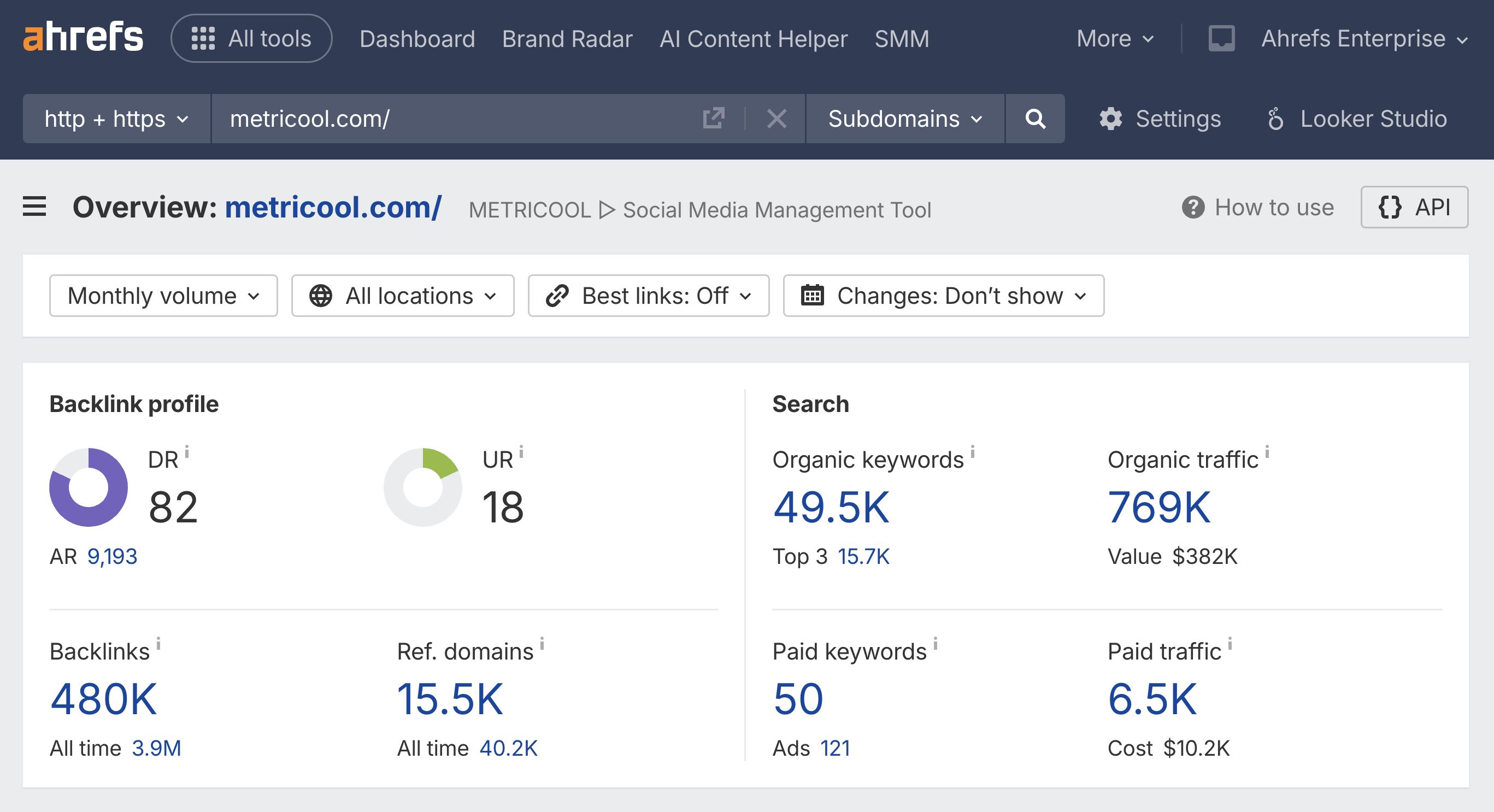
- Use the Overview to read the current Organic traffic, Referring domains, and Domain Rating shown in the profiles above, and switch the date range to compare year over year.
- Or skip the manual work and let Letaido run the whole pull, filtering, and ranking for any niche you choose, the same way it built this list.
Final thoughts
What stands out across this list of top SaaS startups is how varied the categories are: legal tech, developer tools, network security, payments, and channel incentives all show up here, a useful reminder that fast-growing organic demand is forming across the whole software landscape, beyond in the most-hyped corners of AI.
A lot of these fastest growing SaaS startups are bootstrapped or lightly funded, which makes the traffic growth more meaningful, because it's coming from genuine product-market fit and content, not a paid acquisition playbook.
If you're watching where early SaaS momentum is forming, organic search growth is one of the cleaner signals you can track, and the top SaaS startups on this list are worth keeping an eye on over the next twelve months.

Louise is a Content Marketer at Ahrefs. Over the past ten years, she has held senior content positions at SaaS brands: Pi Datametrics, BuzzSumo, and Cision. During this time, she has published hundreds of blog posts, spearheaded industry-leading research, and developed expert-led webinar programs.
Louise first learned the ropes of SEO during her time at enterprise SEO company, Pi. Within weeks of joining, she had published a piece on cannibalization that caught the attention of the biggest name in SEO at the time: Rand Fishkin. Since then, she has written on topics ranging from manipulative link building, to content syndication, and search demand forecasting. In her spare time, she has deepened her practical understanding of SEO by building websites for two local businesses.
You can read Louise's words in industry publications like Search Engine Watch, The Drum, The Telegraph, and Spin Sucks.

Keep learning



Your weekly marketing’s must-reads
Join 284K marketers for weekly news, useful reads, industry updates, and the memes you didn’t know you needed.
Explore what’s inside the newsletter →