
How to Optimize Content for AI Search Engines
Creating great content is only one part of ranking in AI search, but it has to be built on evidence, not guesswork. This lesson walks through the principles you can apply to structure your own content so it gets picked up by AI platforms.
What the data says about AI citations
Content length doesn't matter
An Ahrefs study of over 174,000 pages cited in AI overviews found the correlation between word count and getting cited to be just 0.04, essentially zero.
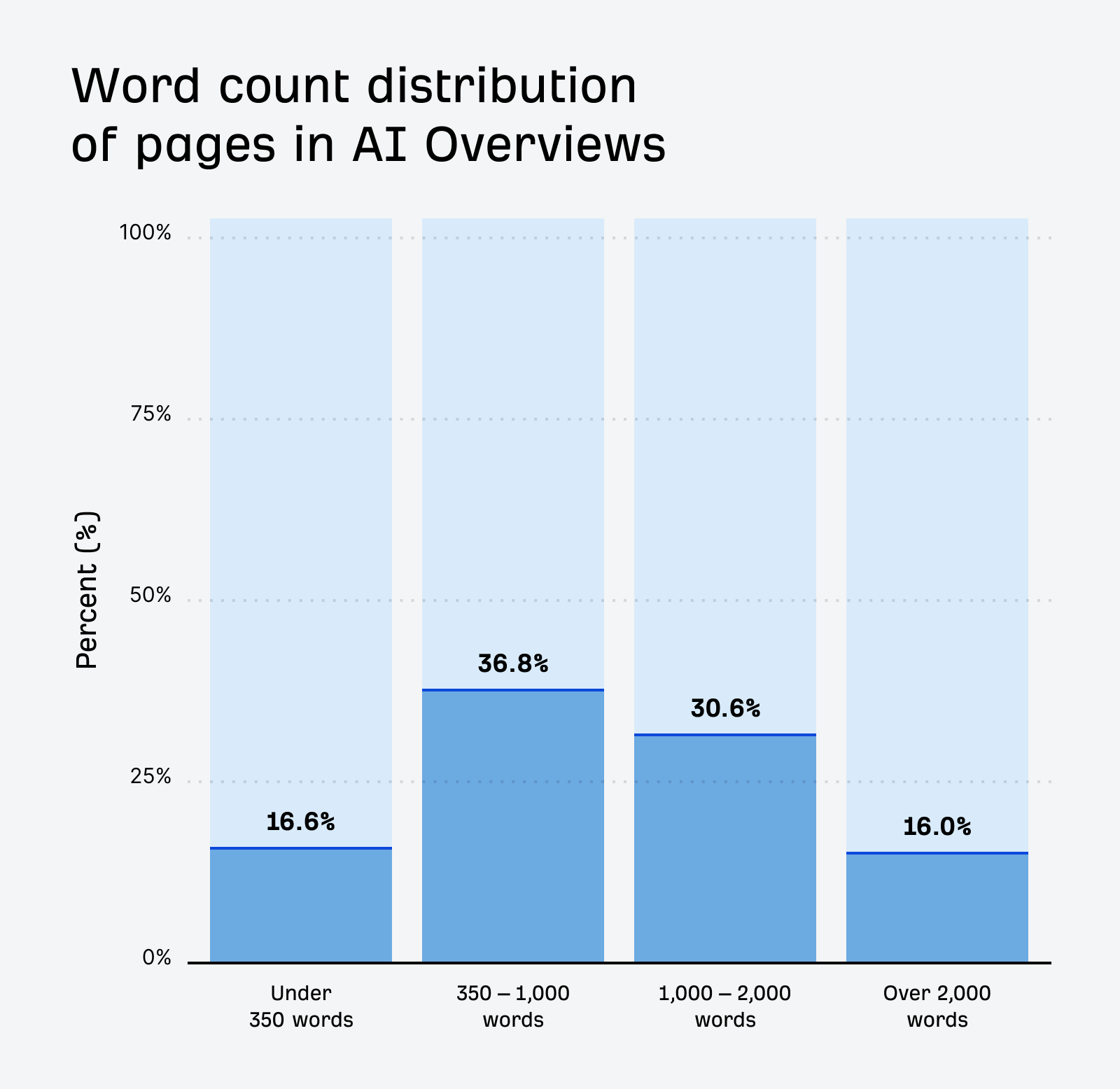
Over half of all cited pages (53.4%) are under 1,000 words. If you have been writing 3,000 word articles because you believe longer content ranks better, that logic does not apply to AEO.
AI does not care how long your page is. It cares whether your page answers the question.
Freshness matters a lot
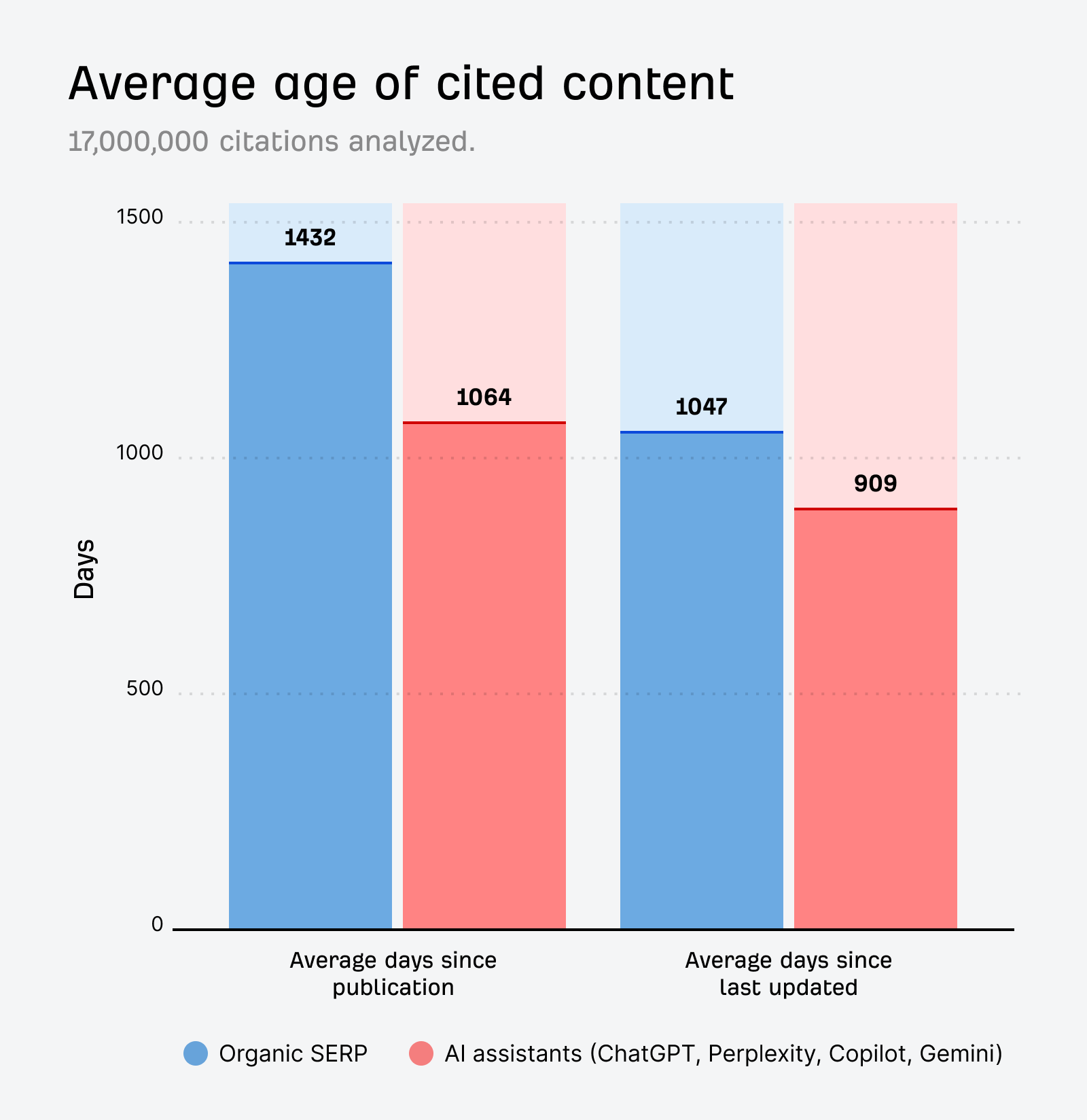
Content cited by AI is on average 25.7% fresher than what ranks in traditional organic results.
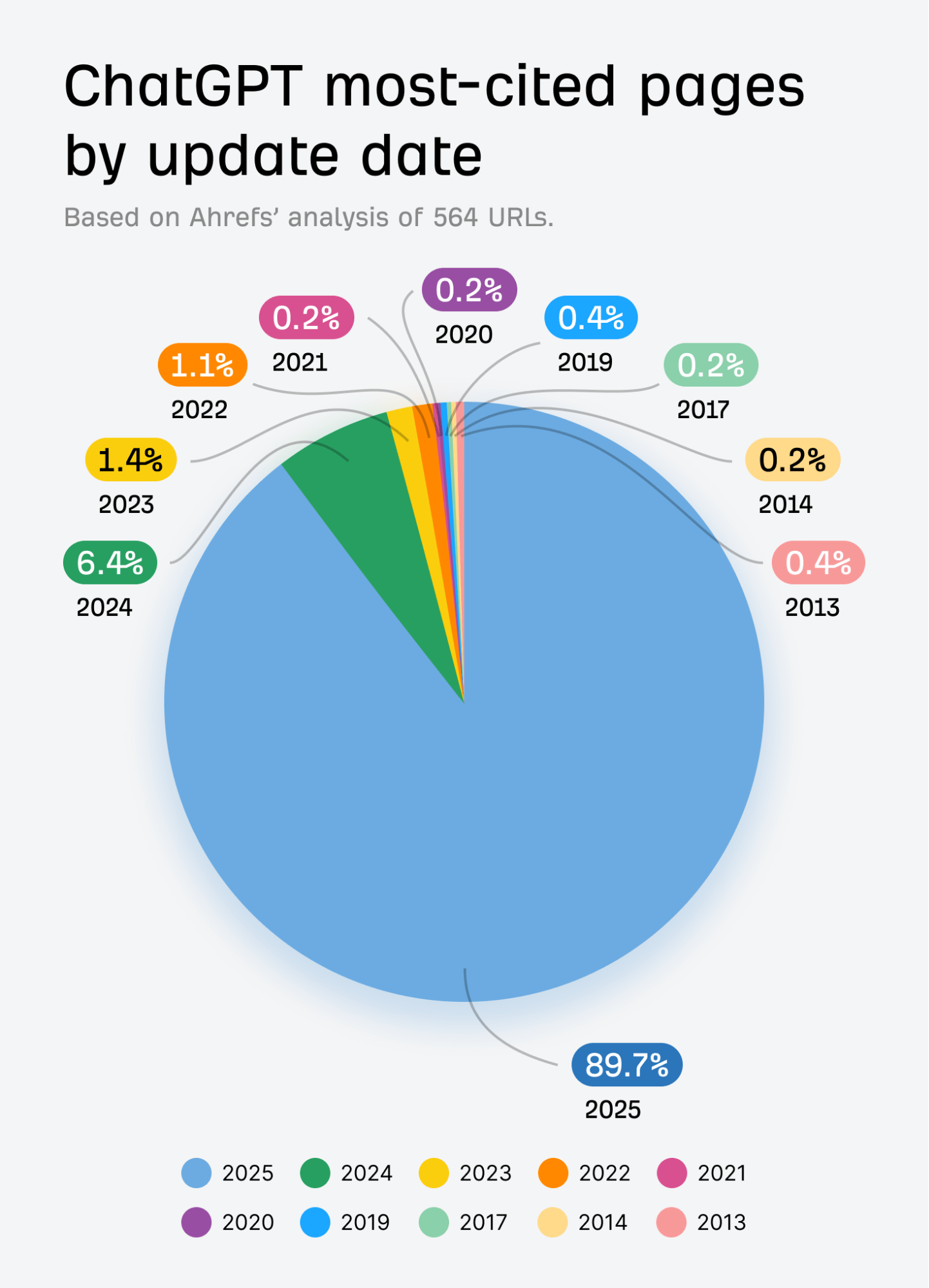
Looking at ChatGPT specifically, 89.7% of its top cited pages were updated in 2025, and 76% were refreshed within the last 30 days. If your content hasn't been touched in six months, you are already at a disadvantage for AI citations.
This does not mean you should just change the publish date and call it done. Google can detect that. You need to make meaningful updates to the actual content (more on how to do that later in this lesson).
Format matters
As covered in the previous module, 43.8% of all pages cited by ChatGPT are listicles: best X, top X, comparisons, reviews.
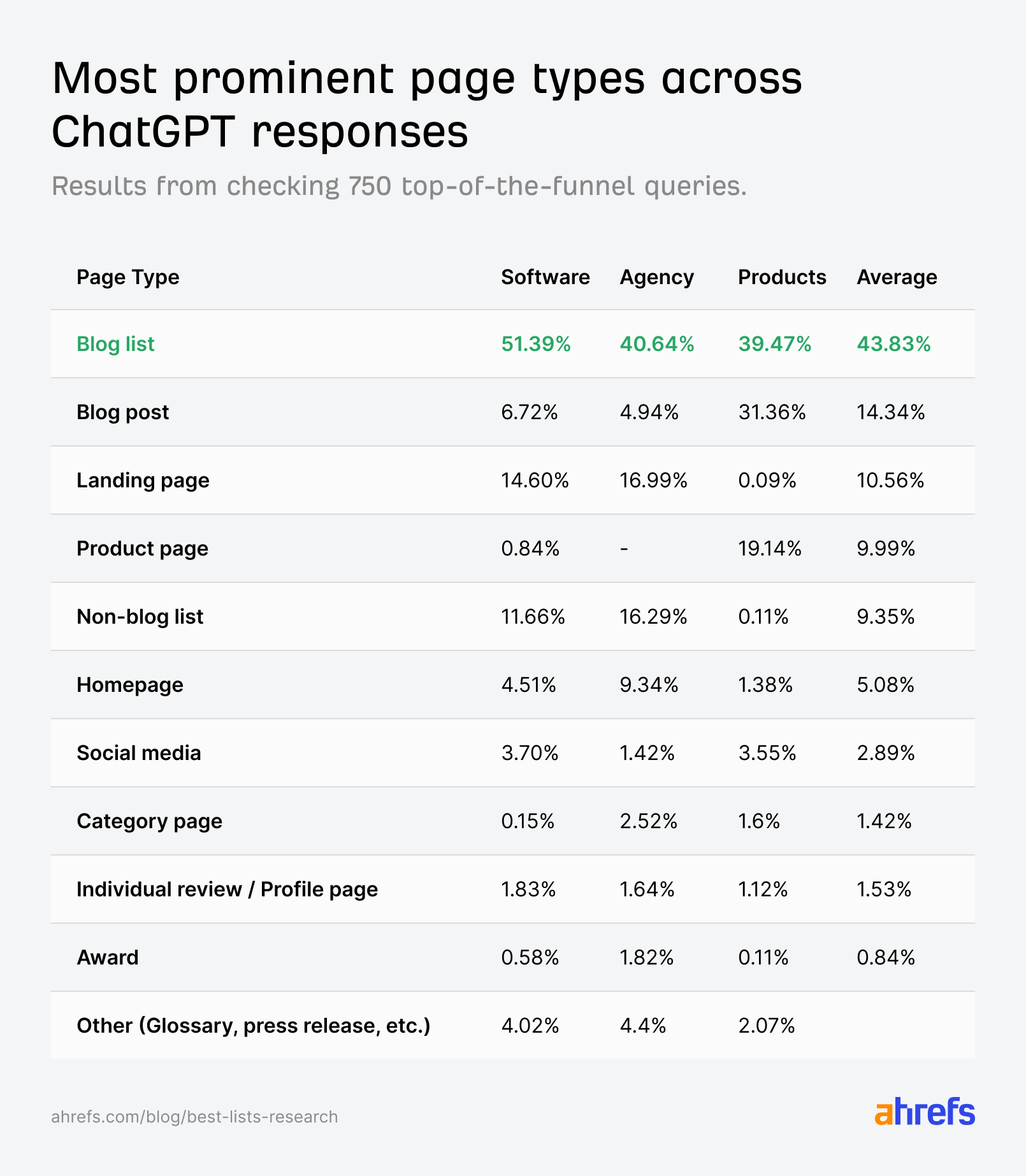
That's not a coincidence. These formats are built for AI because they give clear, structured recommendations that AI can pull from.
Lists aren't the only format that works, though:
Data-driven content with original stats gets cited heavily because AI loves citing specific numbers
Comparison content (X versus Y pages) performs well because it maps directly to how people ask AI questions
The takeaway: keep your content fresh, keep it focused, and lean into formats that AI can actually use.
How to structure content for AI
A common misconception is that you need to write differently for AI, as if there's some special AI-optimized format to follow. There isn't. You're writing for humans, and AI is trained on what humans find valuable.
Content that serves human readers well is content AI wants to cite. That said, a few principles help both humans and AI get more out of your content.
1. BLUF (bottom-line-up-front)
Borrowed from military communication: start every section with the answer, not the backstory.
For example, instead of opening with:
"Over the past few years, link-building strategies have evolved significantly due to changes in how search engines evaluate link quality,"
write:
"The most effective way to build backlinks in 2026 is to create original research."
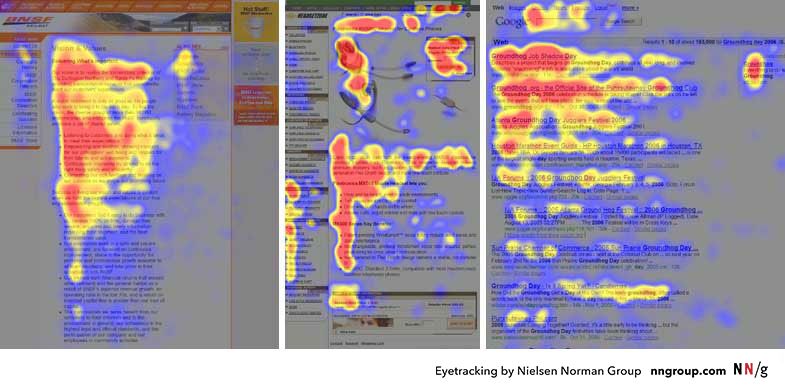
This matters because of how reading patterns work. When humans scan a page, they follow an F pattern, reading the beginning closely, skimming the middle, and maybe picking up again at the end. LLMs show a similar pattern.
2. Atomic content
Atomic content means every section on your page can stand on its own.
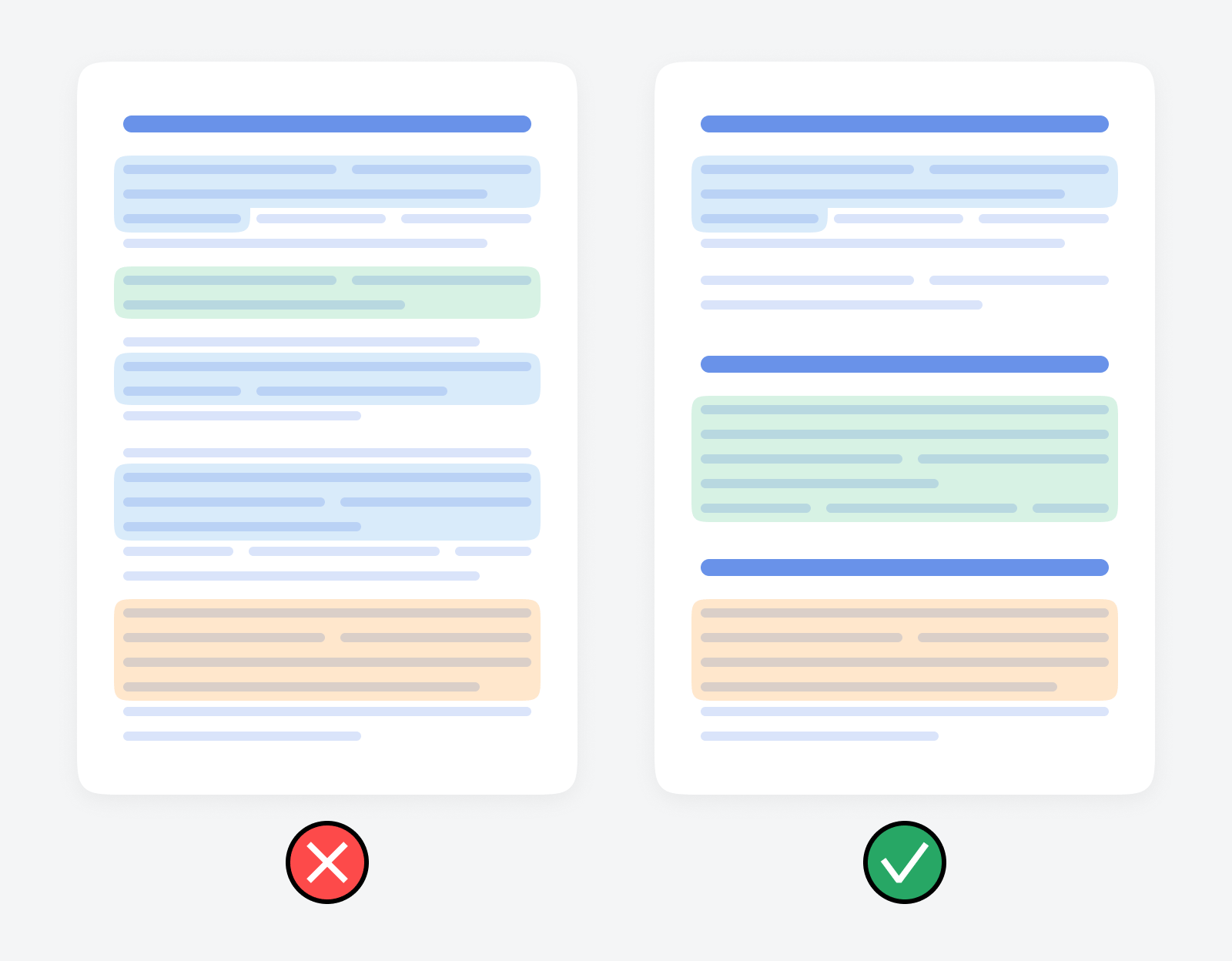
When editing, ask: if AI pulls just one section from your article, does it still make sense, or does it depend on context from three paragraphs earlier?
This matters because AI systems chunk your content into pieces when they process it, and different AI models chunk content differently. You can't control how they do it, but if every section is self-contained, it doesn't matter where the chunks fall because the meaning survives.
A good test: take any H2 section on your page and read it completely out of context. If it doesn't make sense without the rest of the page, rewrite it so it does.
3. Entity-rich writing
AI understands text by looking at entities (things like brands, products, people, places, and specific concepts) and the relationships between them.
This also ties into how AI picks what to cite: the more specific and concrete your content is, the more useful it is when AI is trying to answer a specific question.
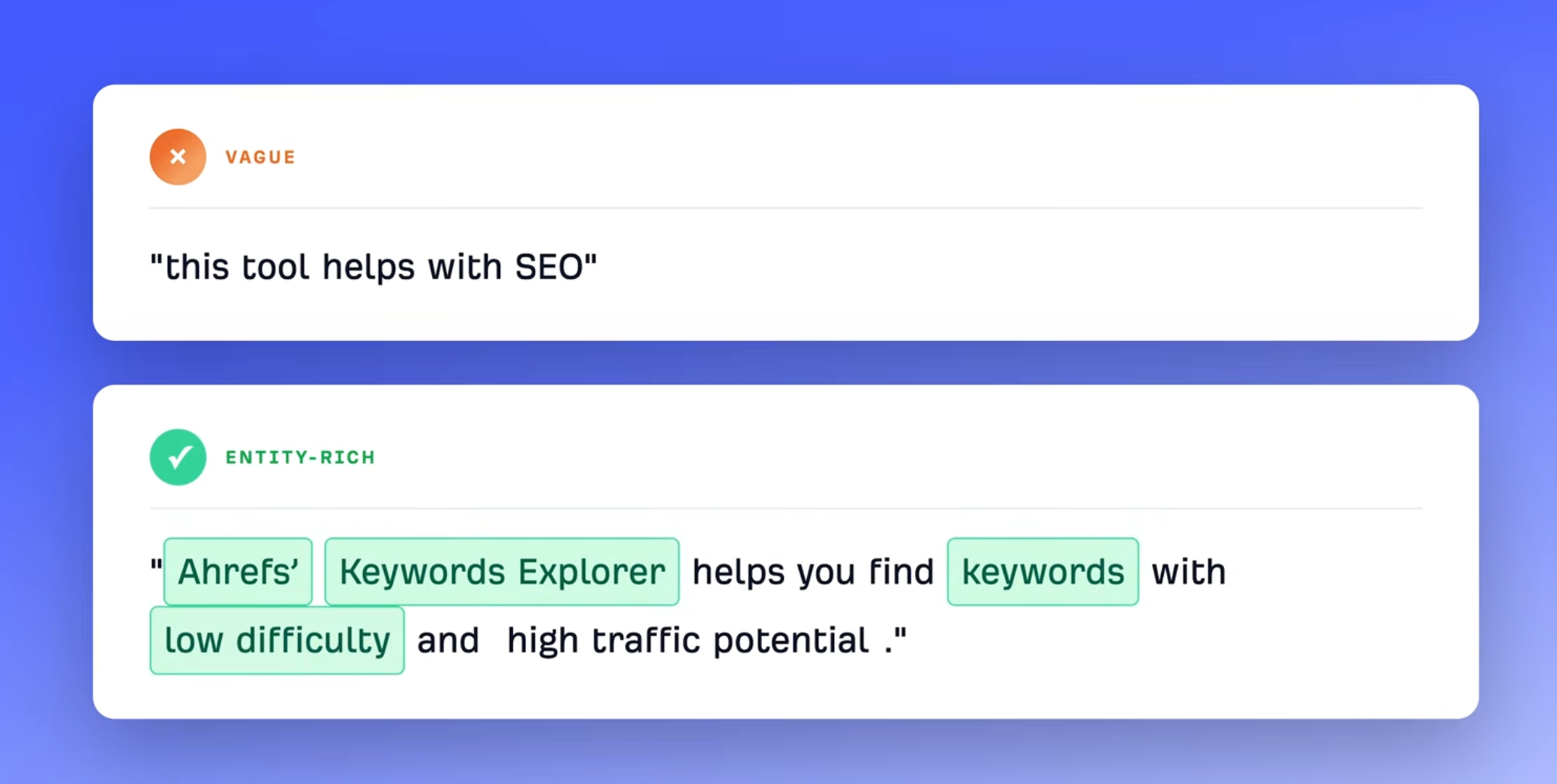
Instead of writing:
"This tool helps with SEO,"
write:
"Ahrefs Keywords Explorer helps you find keywords with low difficulty and high traffic potential."
4. Keep it simple and declarative
Use short sentences and clear subject-verb-object structure. Try to keep to one idea per sentence.
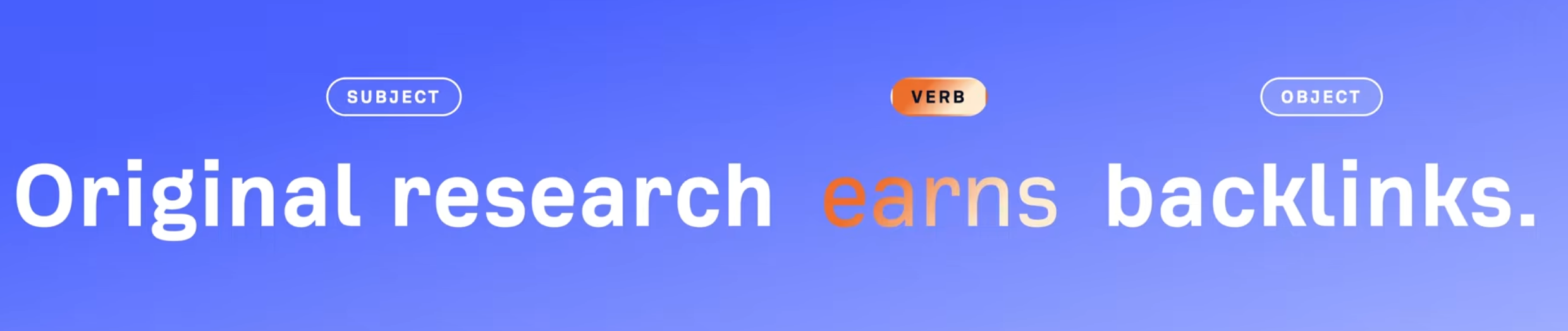
This isn't about dumbing down your content, it's about making it easy to parse for both people and AI. If a sentence takes two reads to understand, it's probably too complex. Simplify it. Your readers will thank you, and AI will have an easier time extracting the key points.
5. Label your original ideas with your brand name
LLMs have a tendency to flatten originality. If you come up with an original concept or framework and you're the only one talking about it, AI will often absorb the idea without crediting you. It becomes part of its general knowledge.
The way around this is to label your ideas with your brand name.
For example, instead of calling something a "content scoring matrix," call it the "Ahrefs content scoring matrix" or "your brand content scoring matrix."
Define it explicitly, then distribute it widely across your blog, social media channels, podcasts, Reddit, etc.
6. Refresh your "sleeper pages"
Sleeper pages are pages on your site that used to rank well but have slowly declined over time. They already have the backlinks and the authority, they just need a refresh.
Because freshness is such a strong signal for AI citations, updating these pages can be one of the fastest ways to gain AI visibility.
To find them:
1. Go to Site Explorer and enter your domain.
2. Head to the Top Pages report.
3. Sort by traffic change and look for pages with significant declines.
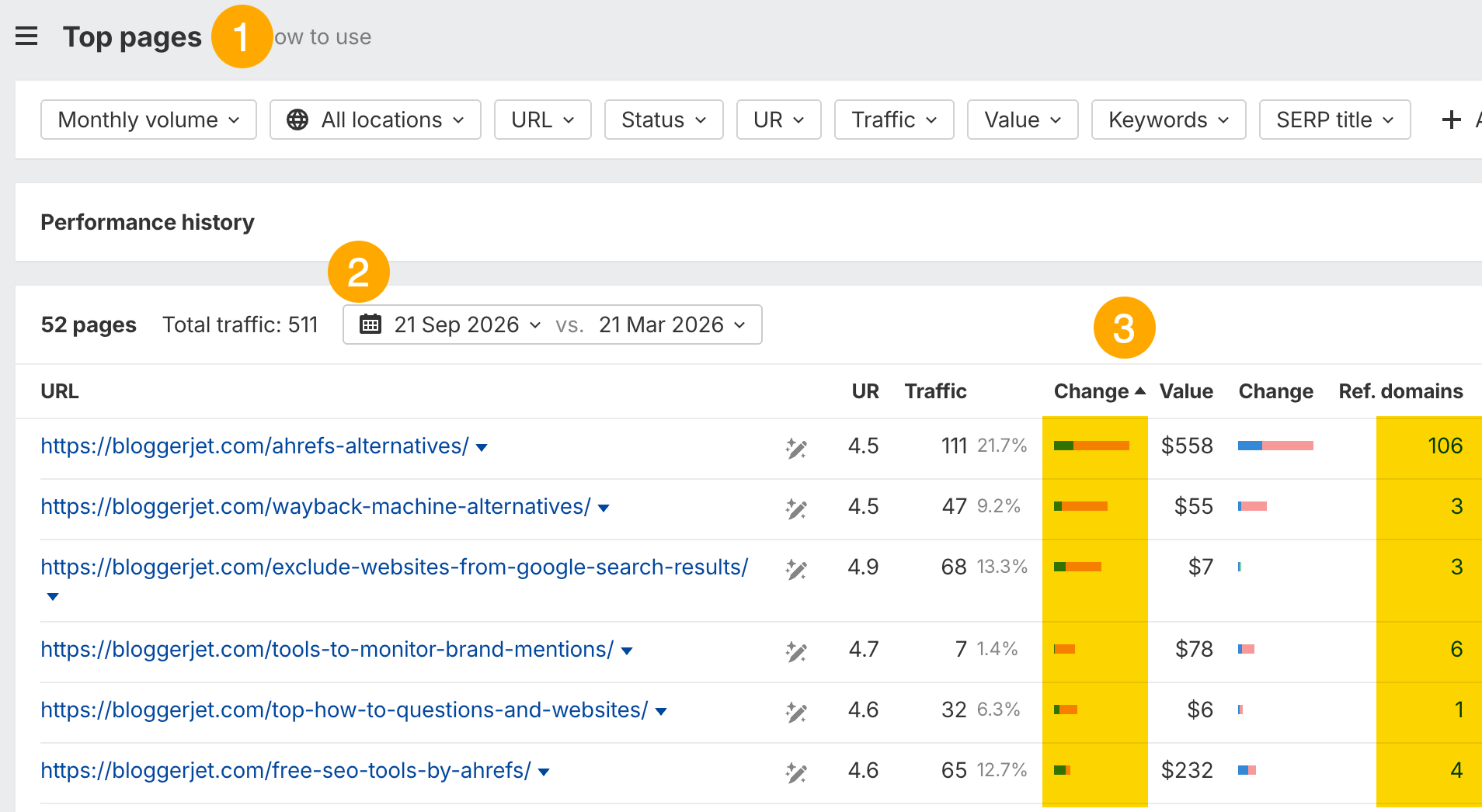
What you're looking for are pages with two things: a decent number of backlinks (meaning they already have authority) and a clear traffic decline (meaning the content has gone stale).
Before updating anything, confirm it's actually a content issue and not a backlinks issue.
Check out some of the articles on the Ahrefs blog to learn about AEO:
Answer Engine Optimization (AEO) Course
What you'll learn
The fundamentals of how AI search works and why AEO matters
How different AI platforms decide what to cite
How to find gaps between your brand and competitors in AI search
How to do keyword and prompt research for AEO
How to create content that AI wants to cite
How to earn brand mentions across the web
How to optimize YouTube videos for AI visibility
Technical AEO best practices
How to track AI traffic and measure your progress
