
Copywriting SEO : Qu’est-ce que c’est et comment faire ?

Par Si Quan Ong
SEO & Marketing Educator chez Ahrefs
La combinaison des techniques SEO et de rédaction peut vous aider à obtenir un bon classement sur Google et d’autres moteurs de recherche, ainsi qu’à générer des ventes.
Dans cet article, vous apprendrez ce qu’est le copywriting SEO et comment le réaliser.
Qu’est-ce que le copywriting SEO ?
La rédaction ou copywriting SEO consiste à créer un contenu de haute qualité qui plaît à la fois aux algorithmes des moteurs de recherche et aux utilisateurs humains. Il s’agit de rédiger un contenu conçu pour être bien classé dans Google et, en même temps, un contenu que les internautes veulent consommer, vers lequel ils peuvent créer des liens et qu’ils peuvent partager sur les médias sociaux.
Pourquoi le copywriting SEO est-il important ?
Un contenu qui se classe et obtient des tonnes de trafic de recherche, mais qui ne permet pas d’atteindre les objectifs de l’entreprise, est inutile. Il en va de même pour un contenu convaincant qui ne génère pas de trafic.
Mais si vous parvenez à combiner les principes fondamentaux du référencement et les bonnes techniques de rédaction, vous pouvez créer un contenu de valeur qui se classe bien dans les moteurs de recherche et incite les utilisateurs à consommer, à partager et même à acheter.
C’est exactement de cette manière que nous avons fait passer Ahrefs à 3,5 millions de visites de recherche mensuelles tout en générant un revenu annuel récurrent à huit chiffres. C’est le cœur de notre stratégie de contenu SEO.
Comment faire du copywriting SEO
Le copywriting SEO se déroule en trois étapes :
Étape 1. La recherche
Cette étape consiste à planifier ce qu’il faut écrire. Voici quelques conseils de rédaction pour le référencement :
1. Commencez par la recherche de mots-clés
Si vous voulez obtenir du trafic de recherche, vous devez écrire sur des sujets que votre public cible recherche. Avant de prendre la plume, vous devez donc disposer d’une liste de mots-clés pertinents à cibler.
Le moyen le plus simple d’y parvenir est d’utiliser un outil de recherche de mots-clés. Voici comment procéder :
- Allez sur le Keywords Explorer d’Ahrefs
- Entrez des mots-clés spécifiques pertinents pour votre site.
- Aller au rapport Termes correspondants.
Parcourez la liste et recherchez des mots-clés pertinents que vous pourriez utiliser. Par exemple, ce mot-clé conviendrait parfaitement à une entreprise de matelas :
2. Correspondre à l’intention de recherche
Google ne veut classer que les contenus pertinents. Or, la plupart des internautes recherchent généralement l’un de ces types de contenu lorsqu’ils effectuent une recherche sur Google :
- Article de blog
- Vidéo
- Page produit
- Page de catégorie
- Outil
Par conséquent, si vous voulez avoir les meilleures chances d’être bien classé dans les moteurs de recherche, vous devez vous aligner sur l’intention de recherche.
Vous pouvez vous en rendre compte en consultant les pages les mieux classées.
Par exemple, si nous regardons la Vue d’ensemble du SERP pour “comment mieux dormir”, nous pouvons voir qu’il s’agit principalement d’articles de blog basés sur des listes :
C’est ce que nous devons créer si nous ciblons ce terme de recherche.
3. Créer un plan fondé sur des données
Chaque sujet génère naturellement des sous-thèmes. Plus vous abordez de sous-thèmes pertinents, plus vous avez de chances d’être classé pour un plus grand nombre de mots-clés et d’obtenir davantage de trafic.
Vous pouvez trouver ces sous-thèmes en examinant le classement des mots clés communs dans les pages les mieux classées. C’est également un bon moyen d’élaborer les grandes lignes (outline) de votre article de blog.
Voici comment trouver ces sous-thèmes :
- Allez sur le Keywords Explorer d’Ahrefs
- Saisissez votre mot-clé cible
- Défilez jusqu’à la Vue d’ensemble du SERP
- Consultez quelques-unes des pages les mieux classées
- Cliquez sur Ouvrir dans et choisissez Gap de contenu.
Cela ouvre le rapport Gap de Contenu, où vous verrez le classement des mots clés communs à ces pages. Examinez les résultats pour voir s’il y a des sous-thèmes que vous pouvez couvrir.
Par exemple, si nous créons du contenu sur le thème “comment mieux dormir”, cela peut constituer un bon H2 :
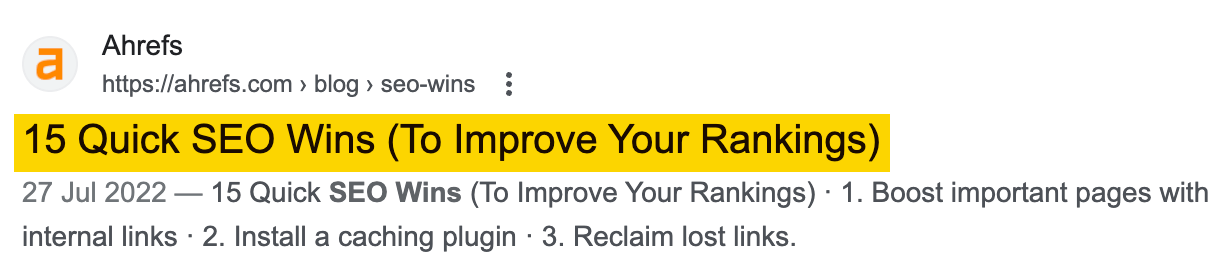
Les liens, un levier SEO à ne pas négliger
Les liens internes jouent un rôle clé dans le classement de vos pages, mais ils ne sont qu'un élément parmi d'autres leviers à activer. Si vous souhaitez aller plus loin sans forcément créer de nouveau contenu, il existe des tactiques concrètes pour améliorer votre positionnement. Découvrez 15 tactiques pour booster votre classement SEO et tirer le meilleur parti de vos pages existantes.
- Comment bien dormir la nuit
- Comment trouver le sommeil
- Améliorer son sommeil
- Combien d’heure de sommeil profond
- Conseil pour bien dormir
4. Faites ressortir votre contenu en lui donnant une tournure unique
Les liens sont un facteur de classement important pour Google. Si votre contenu est identique à celui de tous les autres, il n’y a aucune raison pour que quelqu’un crée un lien vers vous plutôt que vers d’autres.
Le copywriting SEO est un équilibre entre le fait de donner aux chercheurs ce qu’ils veulent et celui de dire quelque chose d’unique et d’original.
Une façon d’ajouter une touche unique est de écrire à partir d’une expérience personnelle.
Les internautes recherchent des astuces et des conseils concrets, testés et éprouvés, et non des conseils génériques. Google l’a bien compris. C’est pourquoi il a introduit E-E-A-T, où le premier “E” signifie Expérience.
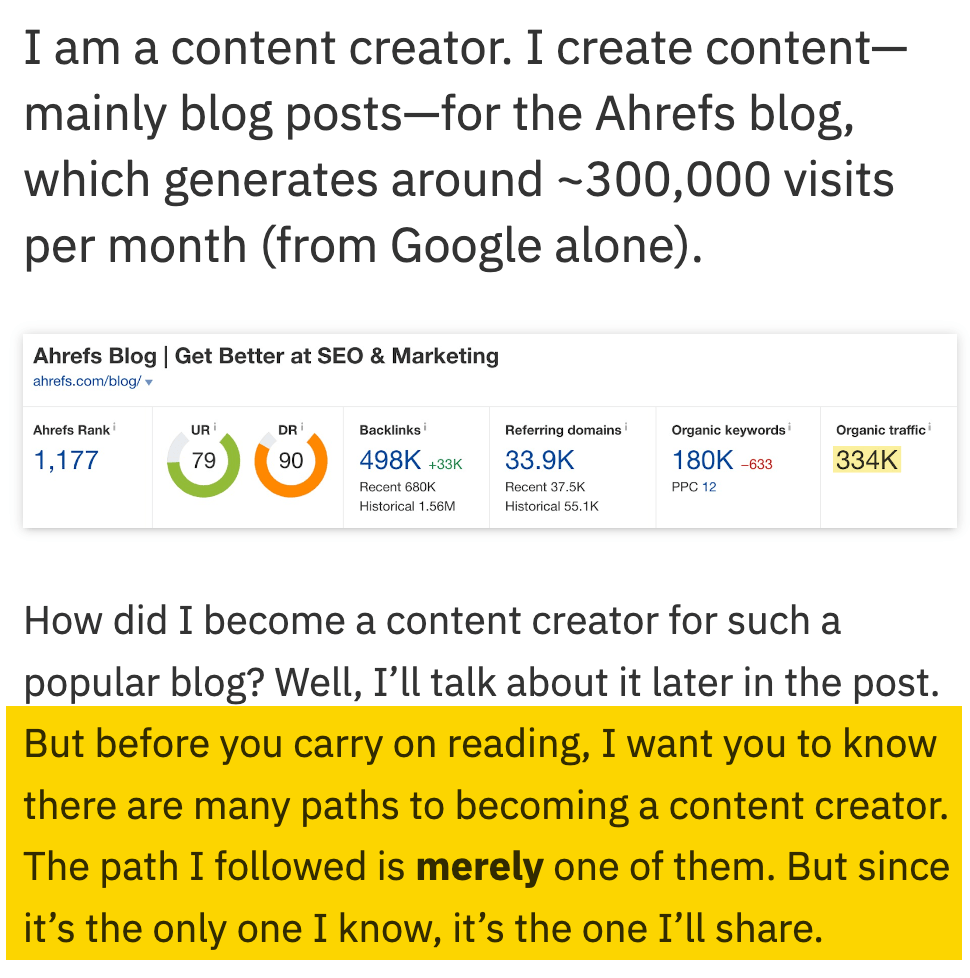
Par conséquent, si vous voulez donner des conseils sur le sommeil, essayez-les d’abord avant d’écrire à leur sujet. Par exemple, lorsque j’ai écrit sur être un créateur de contenu, je l’ai fait à partir de mon expérience.
5. Aller à l’essentiel avec la méthode de la “pyramide inversée”
Certaines personnes veulent simplement savoir quelle est la meilleure poêle antiadhésive. C’est pourquoi Wirecutter leur donne la réponse :
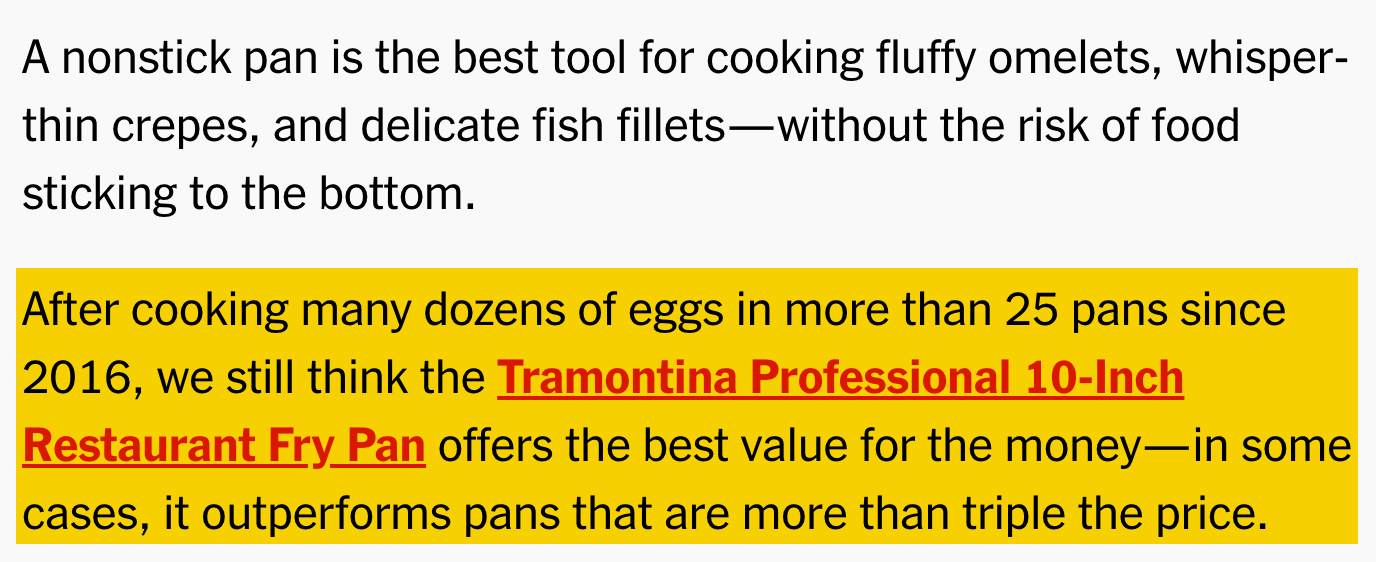
Pour tous les autres, le contexte est plus complexe.
Ce format est connu sous le nom de pyramide inversée, où l’on donne l’essentiel avant le reste :
Du point de vue du référencement, donner aux lecteurs ce qu’ils veulent immédiatement peut contribuer à réduire le “pogo-sticking” et à améliorer le temps d’attente.
Par exemple, j’ai défini la “création de contenu numérique” immédiatement dans mon billet :

6. Établir la preuve et la crédibilité
Google sait que les internautes veulent apprendre à soulever des poids auprès d’un entraîneur personnel, et non d’un inconnu de la rue.
C’est pourquoi Google a introduit E-E-A-T, le deuxième “E” signifiant Expertise. Bien qu’il ne s’agisse pas de facteurs de classement directs, les évaluateurs de qualité humains de Google les utilisent pour évaluer la qualité des résultats de recherche.
L’important est donc de prouver que vous savez ce que vous dites. Par exemple, les articles de Wirecutter comprennent une section intitulée “Pourquoi devriez-vous me faire confiance” :

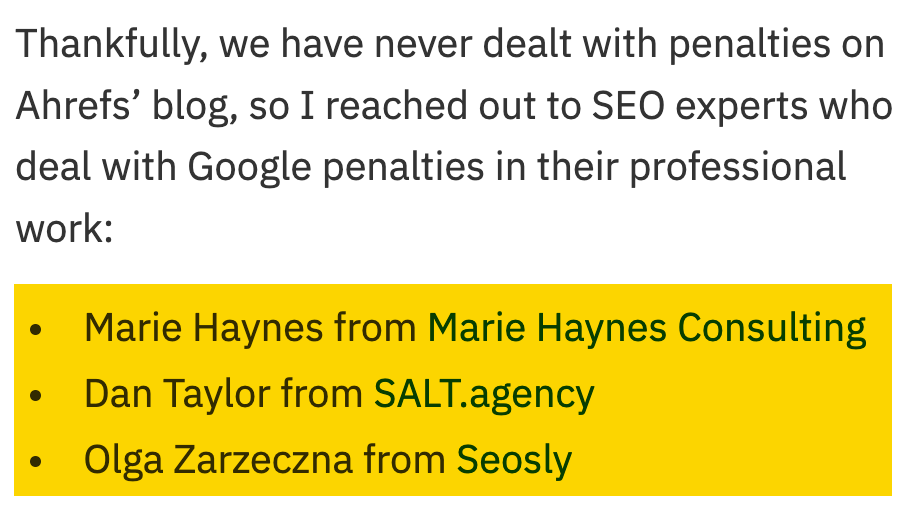
Si vous ne possédez pas l’expertise requise pour votre mot-clé cible, interrogez quelqu’un qui la possède. C’est ce que nous avons fait lorsque nous avons écrit un article de blog sur les pénalités Google :
Voici comment trouver des experts si vous ne savez pas à qui vous adresser :
- Allez sur le Content Explorer d’Ahrefs
- Saisissez votre mot-clé cible
- Allez dans l’onglet “Auteurs”
Vous obtiendrez ainsi une liste d’auteurs ayant publié du contenu sur le sujet.
Étape 2. Rédaction
À ce stade, il s’agit de mettre les doigts sur le clavier et de rédiger. En bref : commencez à écrire. Chaque rédacteur a son propre style, mais les rédacteurs SEO ont généralement les mêmes objectifs : créer un contenu de haute qualité qui éduque, divertit et ravit les lecteurs tout en les menant vers la conversion.
Voici quelques conseils de rédaction pour le référencement que vous pouvez utiliser :
7. Accrocher le lecteur avec la formule PAS
Votre introduction doit accrocher le lecteur et l’inciter à lire la suite. Pour ce faire, vous pouvez utiliser la formule “problème-agitation-solution” (PAS).
Tout d’abord, vous définissez le problème :
Puis vous l’agitez :
Enfin, révélez la solution :
8. Utiliser des “bucket brigades” pour inciter les lecteurs à continuer à lire
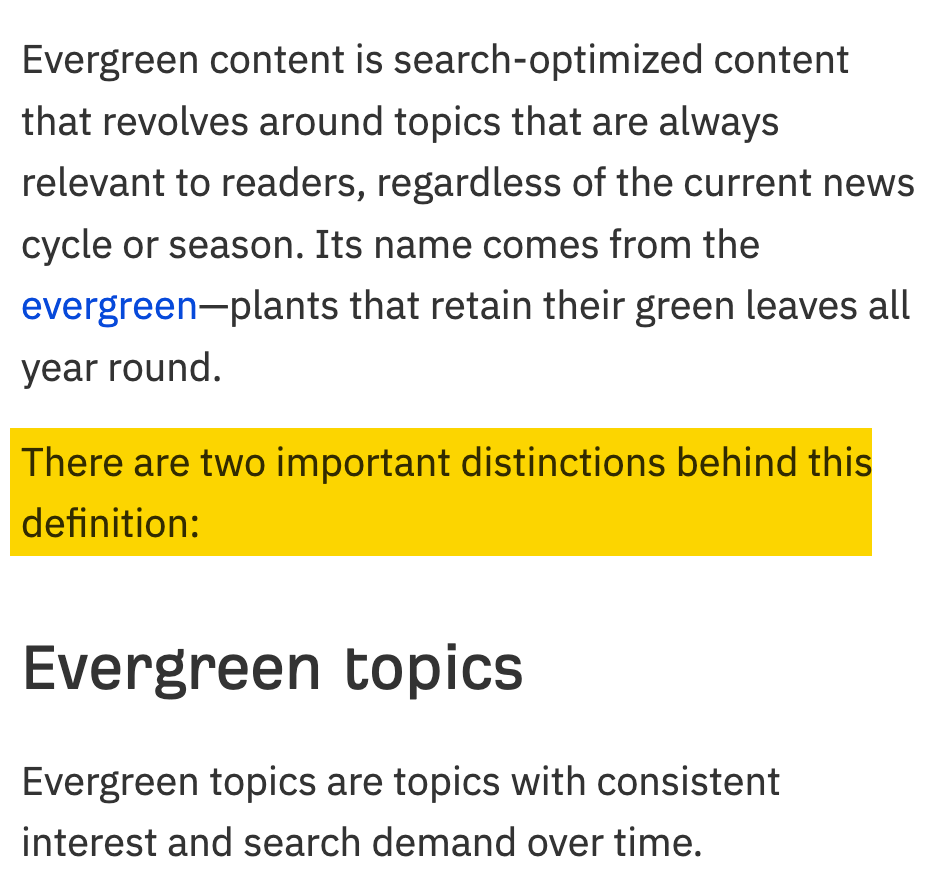
Les “bucket brigades” sont des mots et des phrases de transition qui encouragent les lecteurs à poursuivre leur lecture. Elles stimulent la curiosité en laissant intentionnellement les choses en suspens.
Voici des exemples tirés de mes propres écrits :
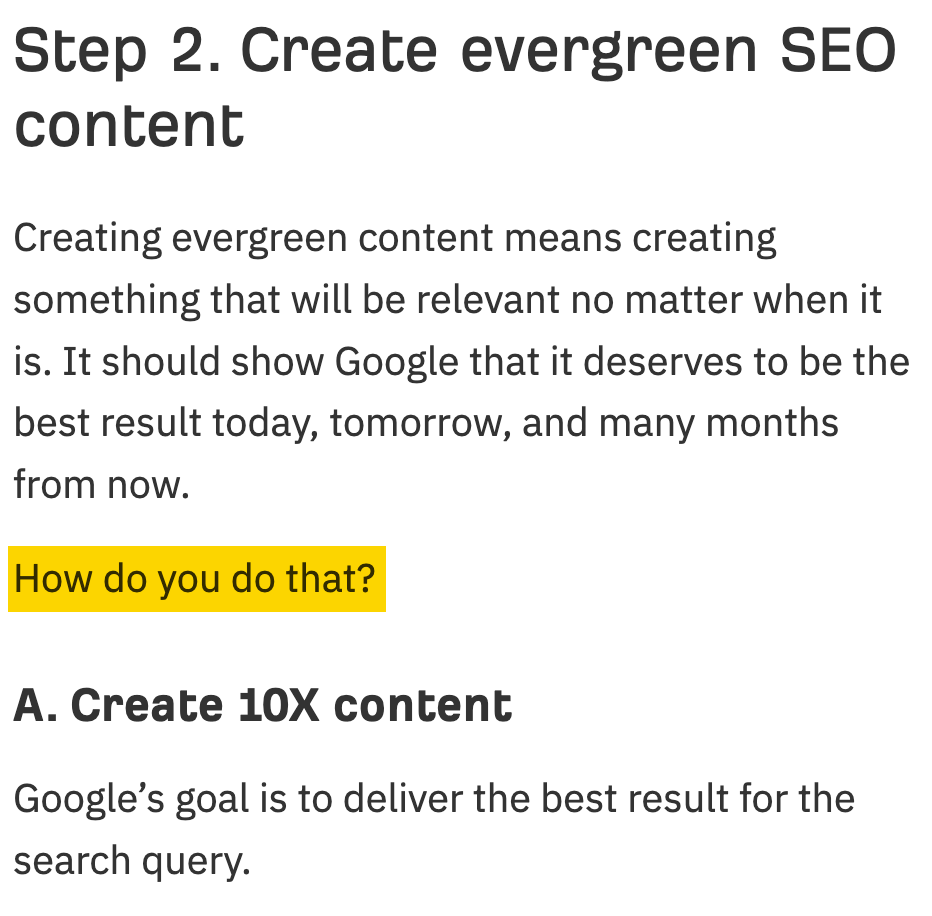
Consultez ce billet pour d’autres exemples de bucket brigades à utiliser.
9. Rendez votre contenu encore plus utile en ajoutant une section FAQ
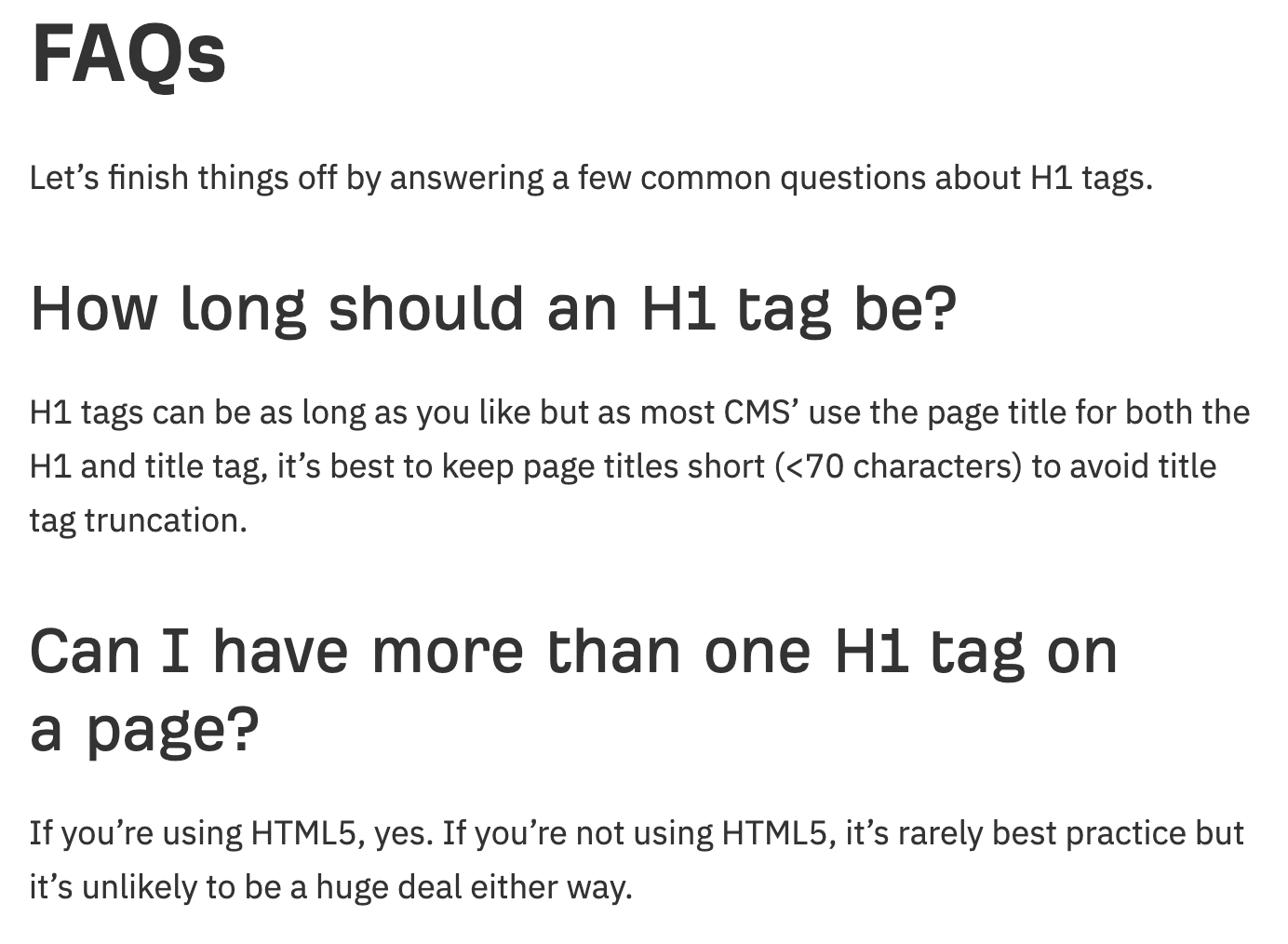
Les internautes deviennent naturellement plus curieux lorsqu’ils font des recherches sur un sujet. Ils peuvent se poser des tonnes de questions sur le sujet. Mais il peut être difficile de répondre à toutes ces questions sans interrompre le fil de votre article.
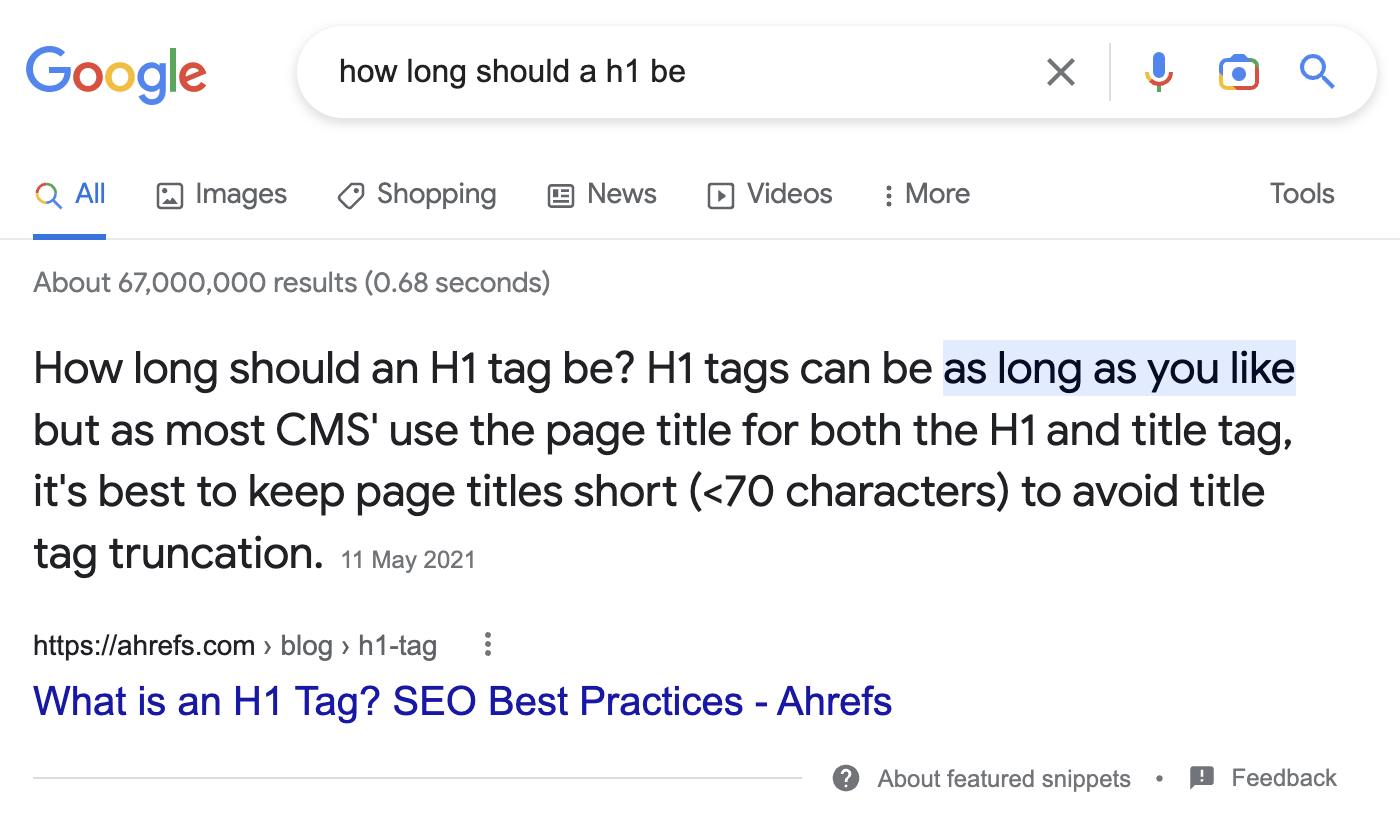
Pour résoudre ce problème, créez une section FAQ. Répondre aux questions les plus courantes sur votre page peut vous aider à obtenir un meilleur classement pour les mots-clés à longue traîne. C’est par exemple ce que nous avons fait dans notre article sur les balises H1 :
Parce que nous avons répondu à une question courante, nous sommes désormais classés dans Google lorsque les internautes recherchent cette réponse :
Voici comment trouver les questions les plus fréquemment posées :
- Allez sur Keywords Explorer
- Entrez votre sujet
- Aller au rapport Termes correspondants
- Aller à “Questions”
Étape 3. L’édition
La dernière étape consiste à améliorer votre projet et à vous assurer que ce que vous avez écrit correspond à ce que vous voulez dire.
Voici quelques conseils :
10. Optimiser pour les “featured snippets”
Les “featured snippets” sont des réponses rapides dans les résultats de recherche que Google tire d’une page classée dans le top 10.
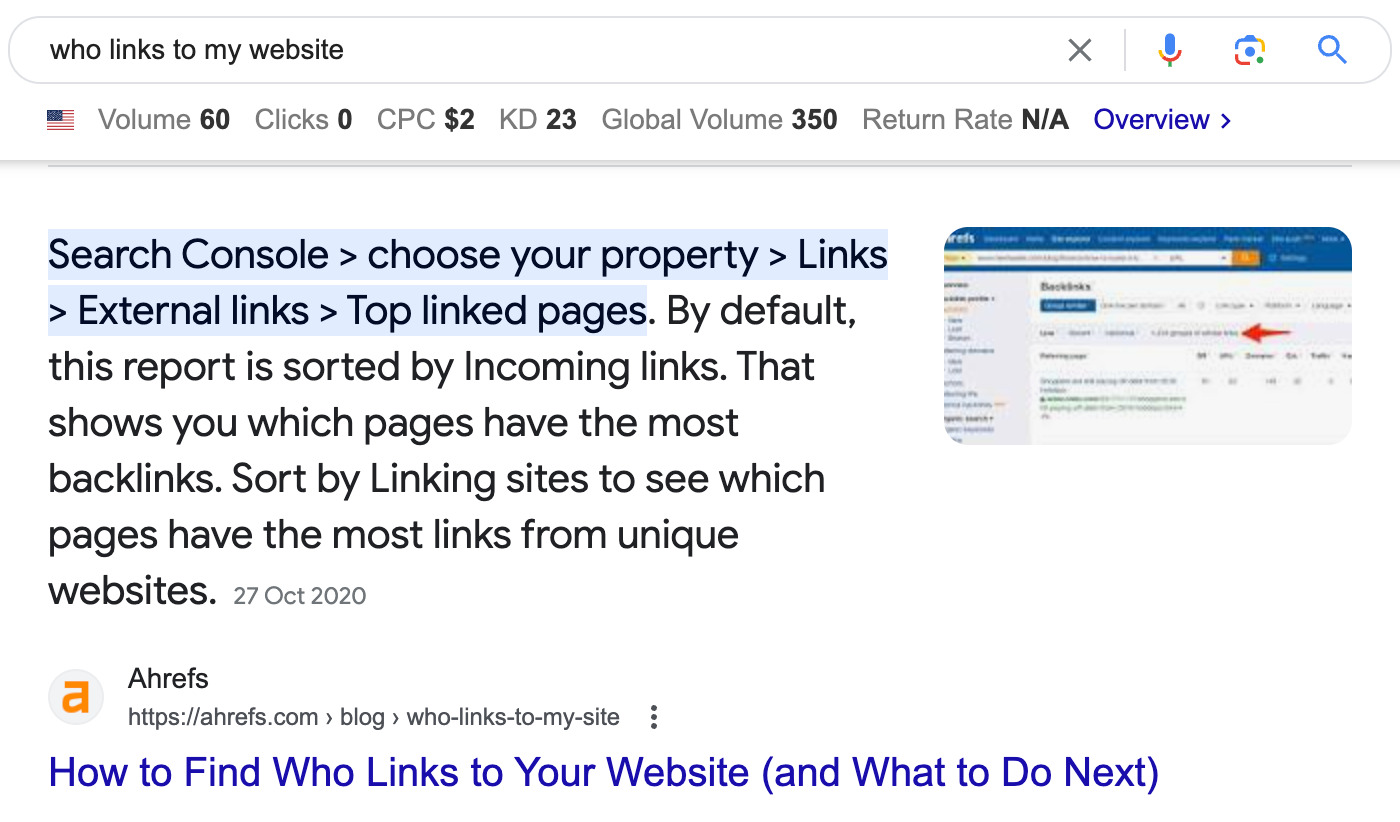
Vous pouvez vous hisser rapidement au sommet de la liste si vous le “capturez”. Préparez-vous donc à le faire en vérifiant s’il existe un featured snippet pour votre mot-clé principal et en déterminant ce qu’il faut faire pour l’obtenir.
Par exemple, si nous cherchons “marketing funnel” (entonnoir marketing), nous voyons que Google en donne une définition :
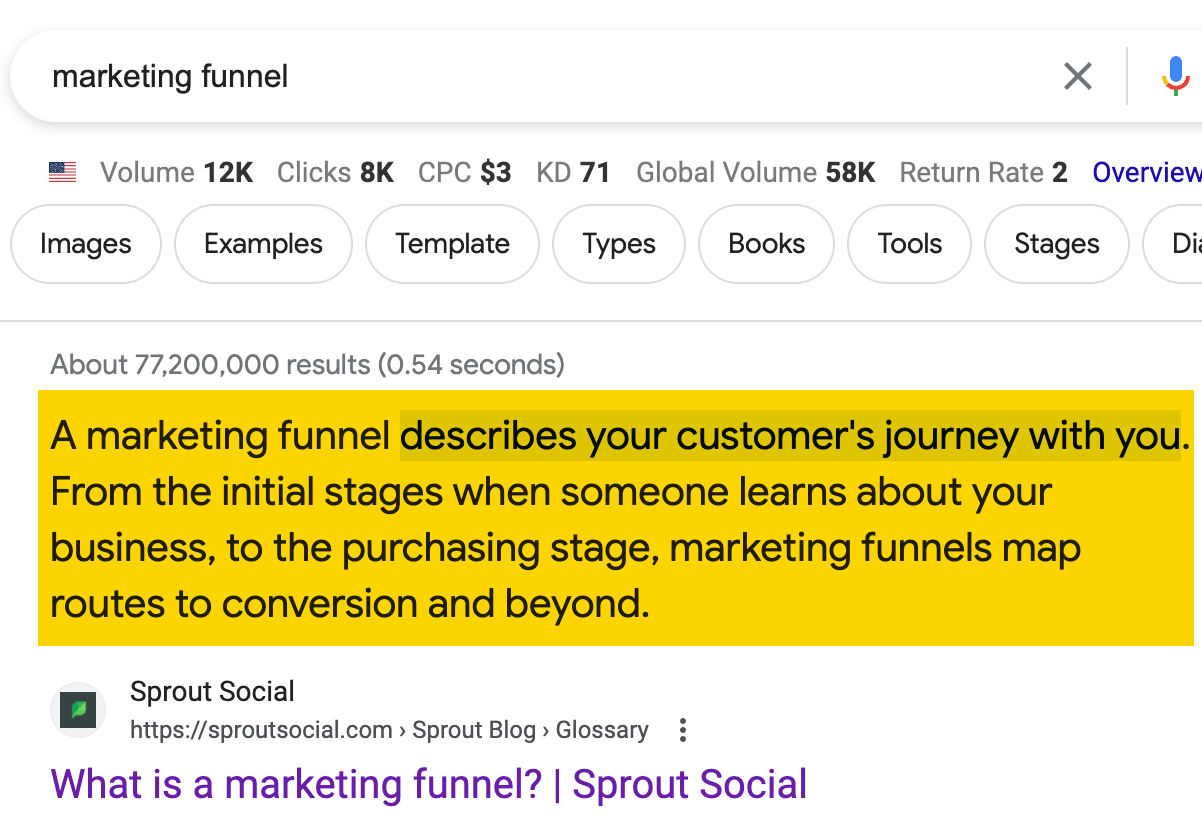
Si nous voulons capturer cela, nous devrons inclure une définition, ce que nous avons fait :
11. Écrivez comme vous parlez
Rien n’incite plus à arrêter de lire qu’un texte aride, un langage d’entreprise et un jargon dénué de sens. Un langage complexe aliène les lecteurs et les renvoie vers les SERP.
Un bon texte Web est écrit sur un ton décontracté. Imaginez donc que vous discutez avec un ami sur le web.
Si vous craignez que votre texte sur le référencement ne paraisse trop pompeux, collez-le dans Hemingway:
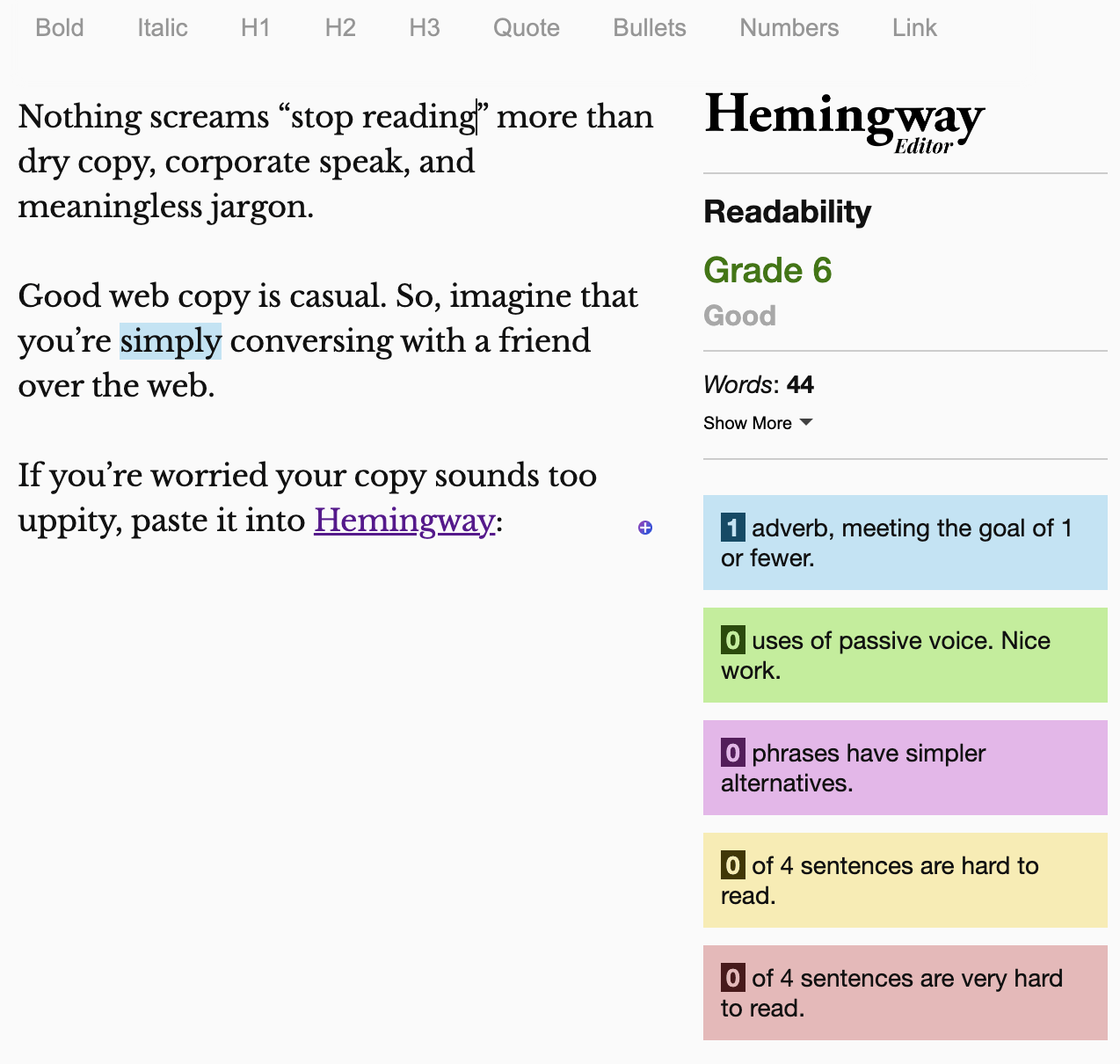
Il vous donnera une note de lisibilité et des suggestions sur la manière de l’améliorer.
12. Faciliter la lecture en utilisant la formule ASMR
La lecture est une transaction. Vos lecteurs échangent leur temps contre vos mots. Si la lecture est une corvée, ils appuieront sur le bouton “retour”.
Veillez donc à ce que votre contenu soit agréable à lire. Pour ce faire, suivez la formule ASMR.
Tout d’abord, ajoutez des annotations. L’inclusion d’éléments tels que des notes en marge, des citations et des liens vers des médias sociaux peut rompre la monotonie :
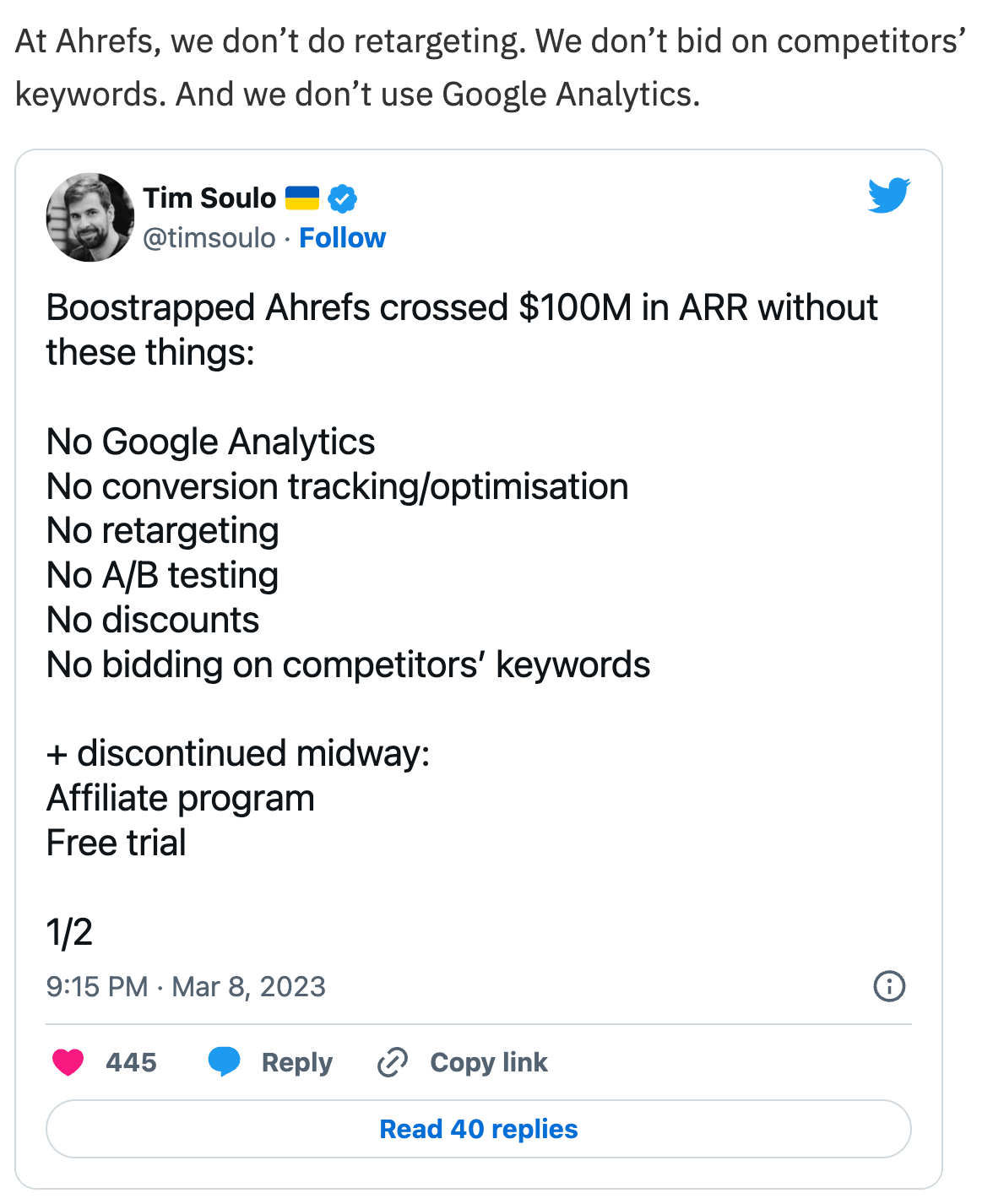
Ensuite, utilisez des s (s pour “short”) phrases et des paragraphes courts. Décomposez les phrases longues contenant des mots de transition (par exemple, “et”, “que”) en phrases courtes.
Troisièmement, incluez des éléments multimédias. L’insertion de vidéos, d’images et de GIF permet d’illustrer vos propos sans ajouter de mots supplémentaires, comme cet organigramme :
Enfin, relisez votre texte à haute voix. Cela permet de repérer les zones où votre contenu n’est pas fluide.
Bonus : conseils de copywriting pour le SEO
Ces conseils supplémentaires en matière de rédaction SEO peuvent vous aider à améliorer votre contenu.
13. Inclure une table des matières
Votre lecteur veut savoir si votre contenu répond à ce qu’il recherche. Vous pouvez l’aider à le faire en ajoutant une table des matières :
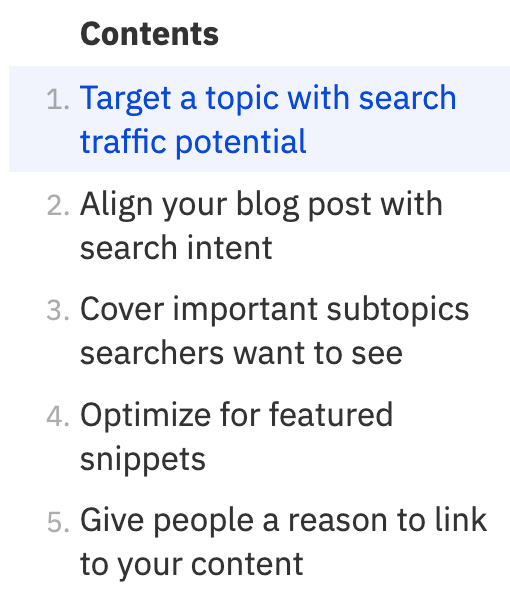
Cela leur permet de naviguer jusqu’à la section de leur choix. Une fois qu’il a commencé à lire, il peut être aspiré par votre texte et lire le reste de votre contenu.
L’ajout d’une Table des matières peut également créer des sitelinks pour votre page, que Google affiche parfois dans les résultats du moteur de recherche :
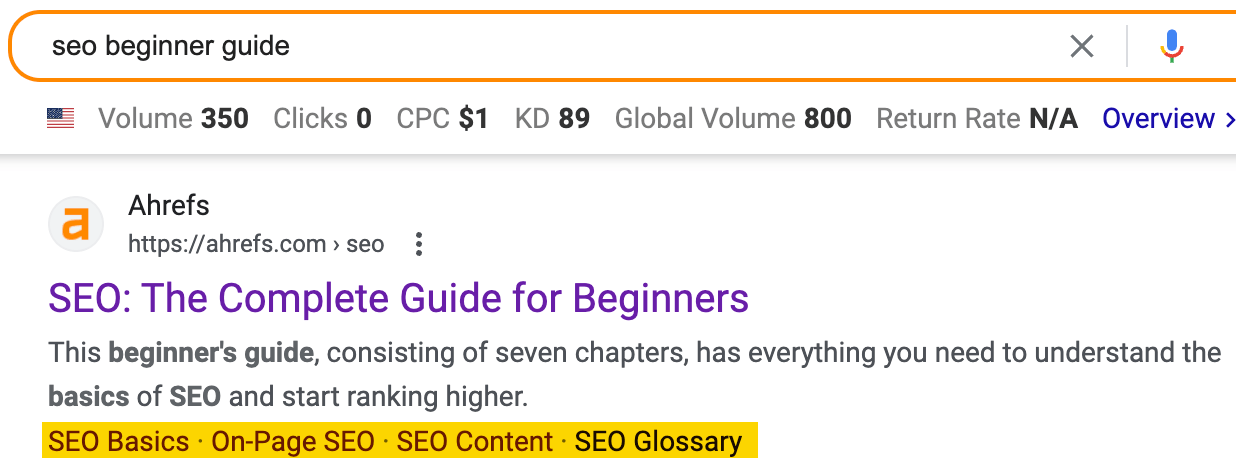
Cela peut potentiellement conduire à un plus grand nombre de clics.
14. Obtenir plus de clics en élaborant des balises de titre convaincantes
La balise de titre est l’une des premières choses qu’un chercheur verra. Elle doit donc l’inciter à cliquer.
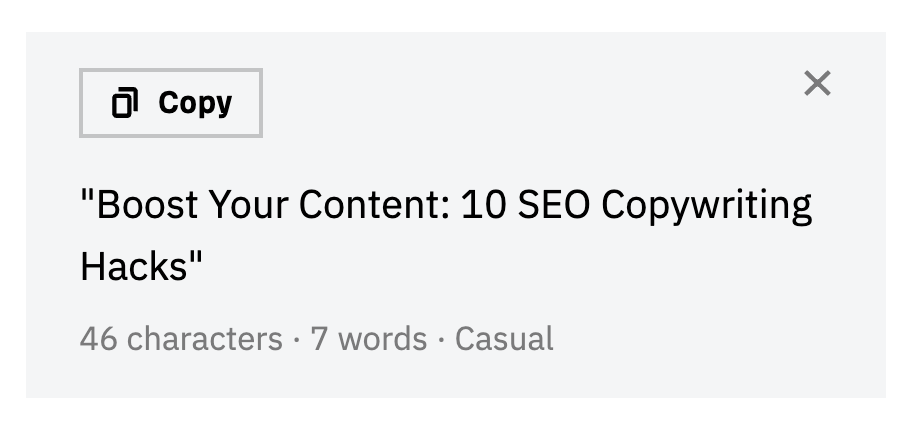
Le moyen le plus simple de créer des balises de titre attrayantes est d’utiliser notre générateur de balises de titre gratuit. Ajoutez un prompt, choisissez un ton et cliquez sur “Générer un titre” :
Vous obtiendrez une suggestion de balise de titre, que vous pourrez améliorer :
Outils de copywriting SEO
Les outils sont vos amis en matière de rédaction SEO. Ils vous aident à créer du contenu plus efficacement. Voici les outils de rédaction SEO que nous recommandons :
- Ahrefs - Outils de référencement qui vous aideront à rechercher des mots-clés à cibler, à trouver des idées de contenu et des lacunes dans le contenu, à découvrir des personnes à contacter, à rechercher vos concurrents, à suivre votre classement, et bien plus encore.
- Google Search Console - Voyez si vous êtes bien classé pour vos mots clés cibles et si vous générez du trafic organique.
- Outils de rédaction AI gratuits d’Ahrefs - Une collection d’outils de rédaction alimentés par l’IA qui peuvent aider à générer des idées pour les plans, les paragraphes, les balises de titre, les méta-descriptions, et plus encore.
- Grammarly - Corrigez les fautes de grammaire, améliorez votre clarté et votre écriture.
- Hemingway - Simplifiez votre contenu et améliorez sa lisibilité.
- ChatGPT - Créez des plans et des notes de synthèse, relisez votre contenu SEO, générez des balises de titre et des méta-descriptions, trouvez des mots-clés à longue traîne et bien plus encore.
FAQ
Voici une question fréquemment posée sur le copywriting SEO :
Quelle est la différence entre la rédaction SEO, le copywriting SEO et le copywriting ?
La rédaction SEO et le copywriting SEO sont la même chose. Le copywriting consiste à utiliser des mots pour persuader quelqu’un d’agir, par exemple de faire un achat ou de s’inscrire à une lettre d’information.
Dernières réflexions
Rédacteurs de contenu et spécialistes du marketing de contenu, prenez note : le référencement ne consiste pas seulement à obtenir un meilleur classement sur Google. Il s’agit également d’inciter vos lecteurs à vous lire, à partager votre contenu et à créer des liens vers vous.
C’est pourquoi la rédaction SEO est importante. Personne ne lira un contenu de mauvaise qualité, même s’il est très bien classé.
Vous avez des questions ? Faites-moi signe sur Twitter ou Threads.
Service Marketing @ Ahrefs. Projet d’apprentissage en cours : coréen. Je résume également des livres sur mon blog perso.