The problem: ChatGPT doesn’t have “rankings”. At least not in any traditional sense. Its responses are probabilistic: different every time, with brands appearing and disappearing from one query to the next.
According to research from SparkToro, there’s a <1 in 100 chance that ChatGPT, if asked 100X, will give you the same list of brands in any two responses.
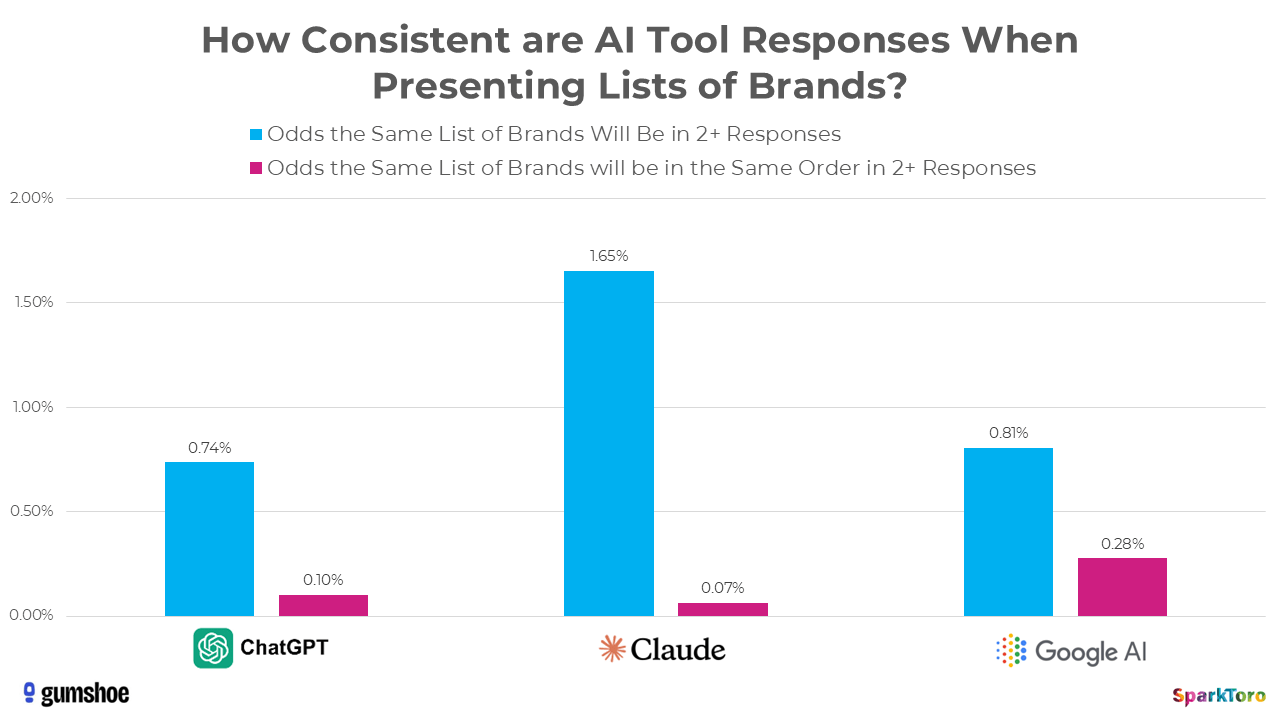
So you can’t rank #1 in ChatGPT. But you can increase your visibility, the percentage of relevant queries where your brand gets mentioned at all. You can also work to get your pages cited.
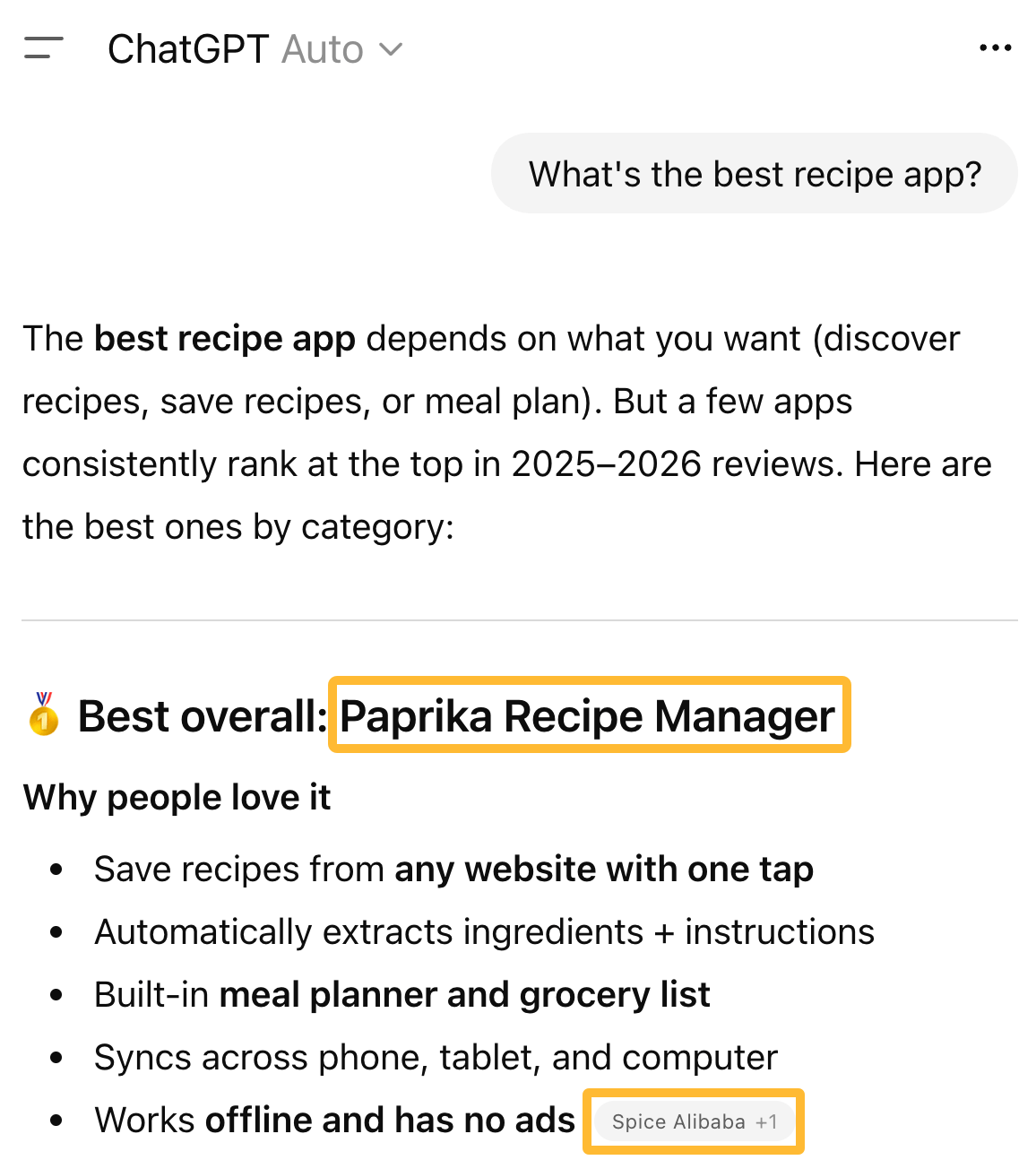
How do you do that? To find out, we analyzed 75,000 brands and reviewed third-party studies to see which search factors are most likely to influence brand mentions in ChatGPT.
Here’s what we know about improving that visibility based on the data.
In our study, YouTube mentions and mention impressions showed the strongest correlation with ChatGPT visibility, outperforming every other factor.
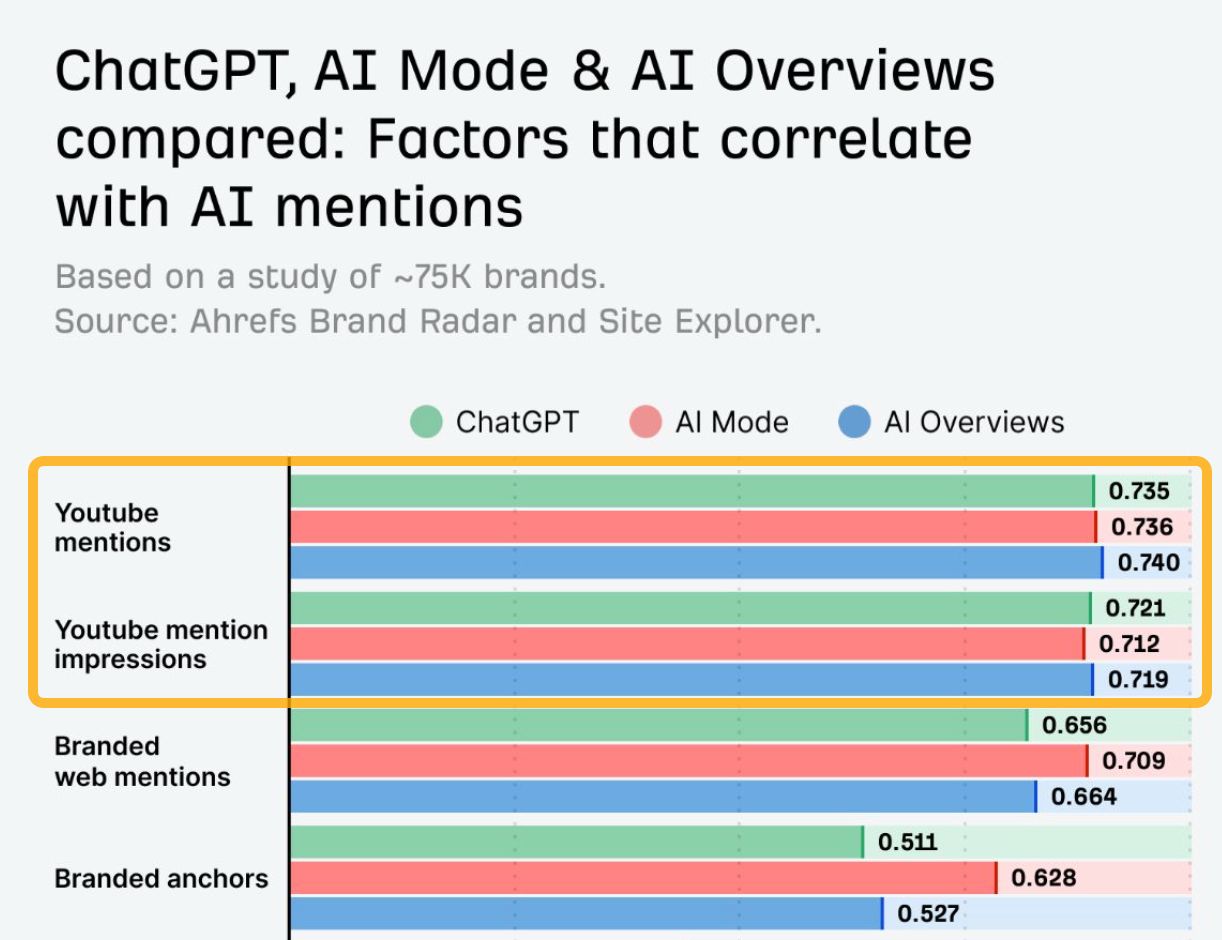
Why does YouTube matter so much? One reason is because YouTube is training data for LLMs. The New York Times reported that OpenAI’s GPT-4 model was trained on over a million hours of YouTube transcriptions. When your brand gets mentioned in YouTube videos, that mention becomes part of the corpus ChatGPT learns from.
Another reason is because LLMs cannot provide video content by itself. So, when the prompt demands it, LLMs would prefer to retrieve YouTube videos relative to other websites.
What exactly is a YouTube mention? A YouTube mention is any instance where your brand name appears in a channel name, title, description, transcript, or link.
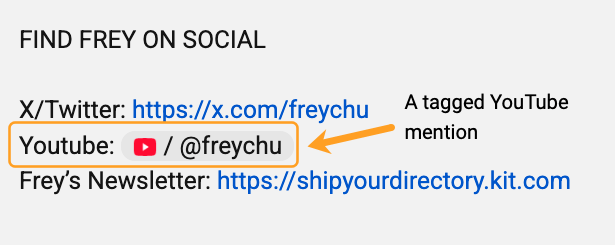
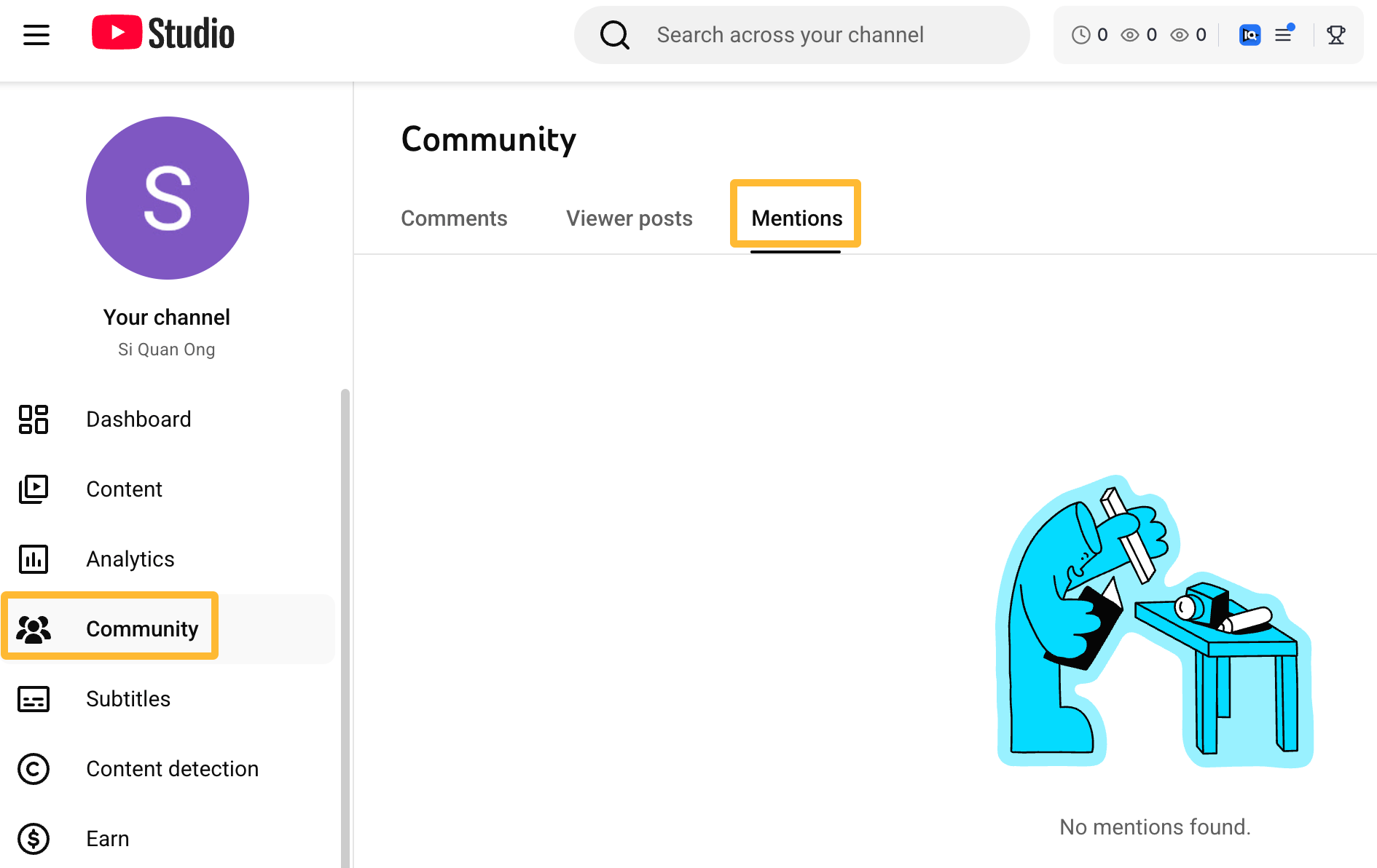
How do you know how many YouTube mentions you have? To see tagged mentions, i.e. mentions where you’re linked to, go to your YouTube Studio, click the Community tab, then the Mentions tab.
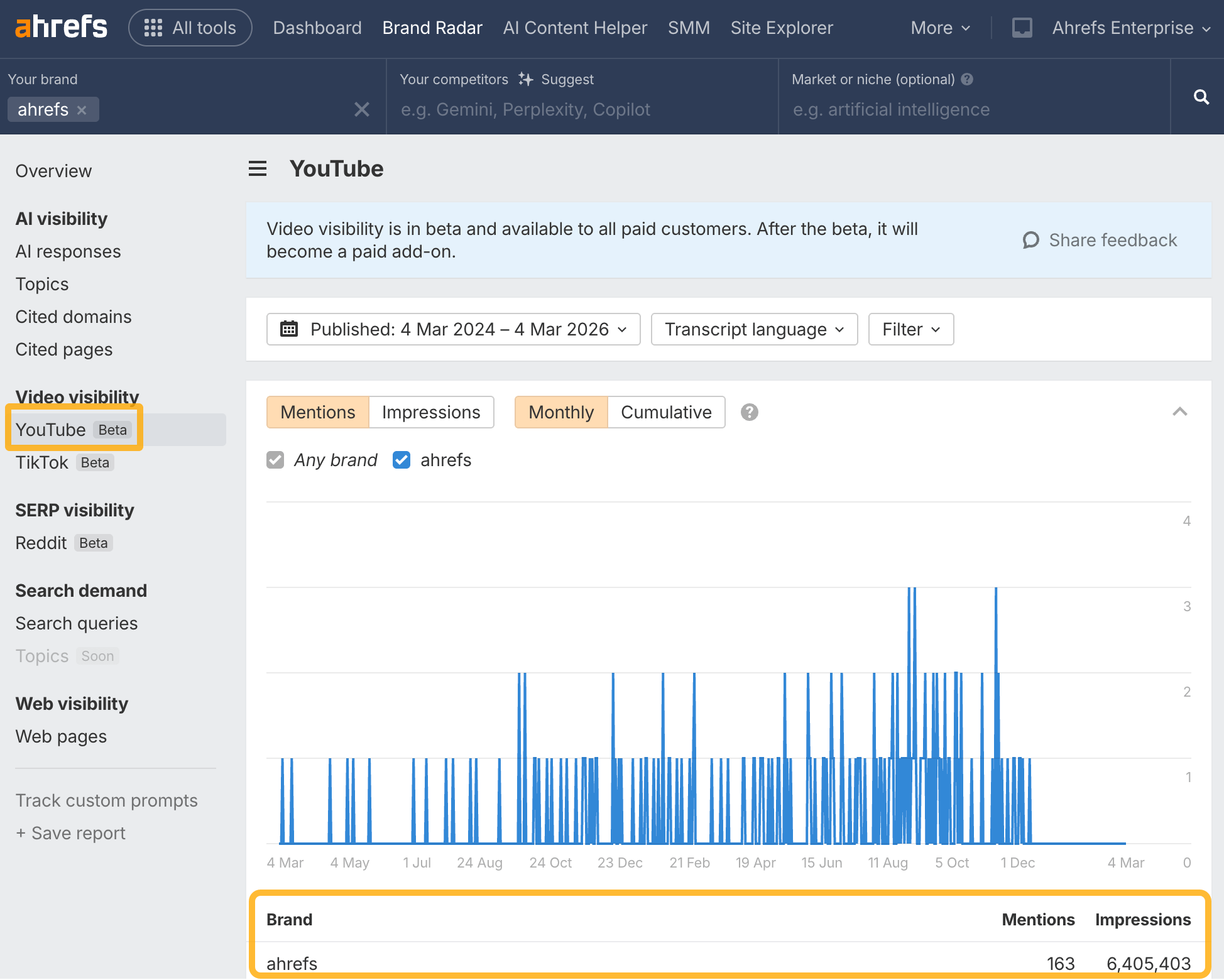
To see untagged mentions, i.e. mentions where you’re not linked to, you’ll need a tool like Brand Radar.
So, now the key question: how can you get more YouTube mentions?
The most obvious way is to start publishing videos on your YouTube channel. For example, you can see that we have tons of YouTube mentions across our different YouTube channels:
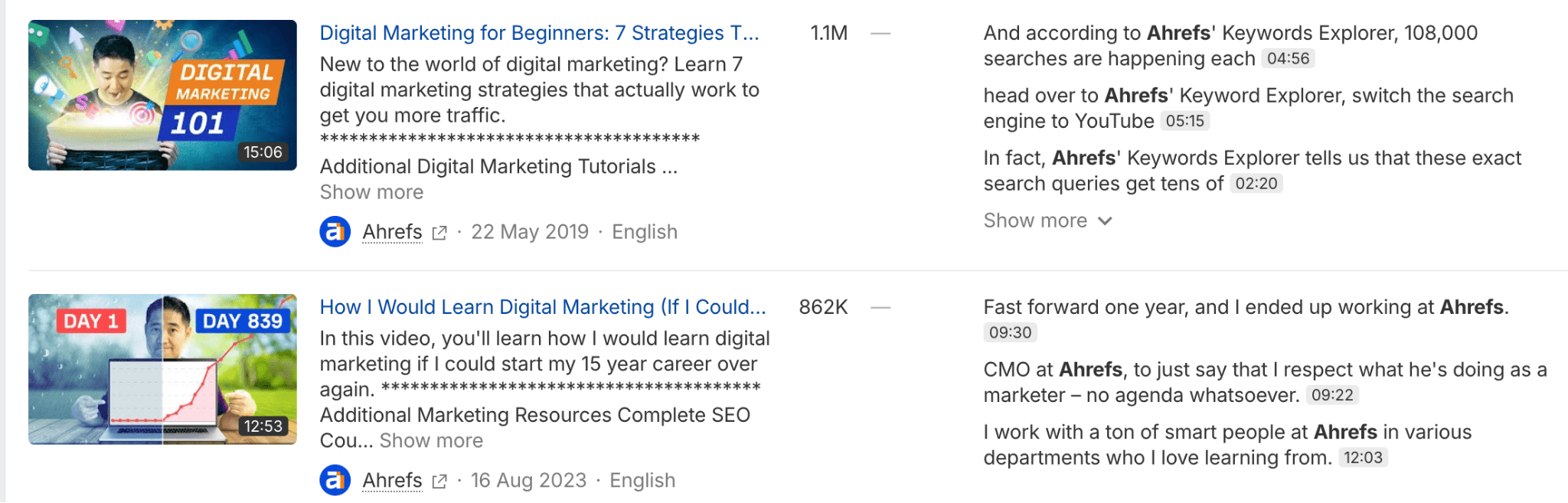


I recommend watching our video on YouTube SEO to learn how to make videos that’ll rank high on YouTube, and therefore gets you mentions.
The other way is to get more YouTube videos and channels to mention you. The long-term way is to build a great product that people will use and naturally mention, but you can also work with YouTube creators by sponsoring them.
Which is what we do:
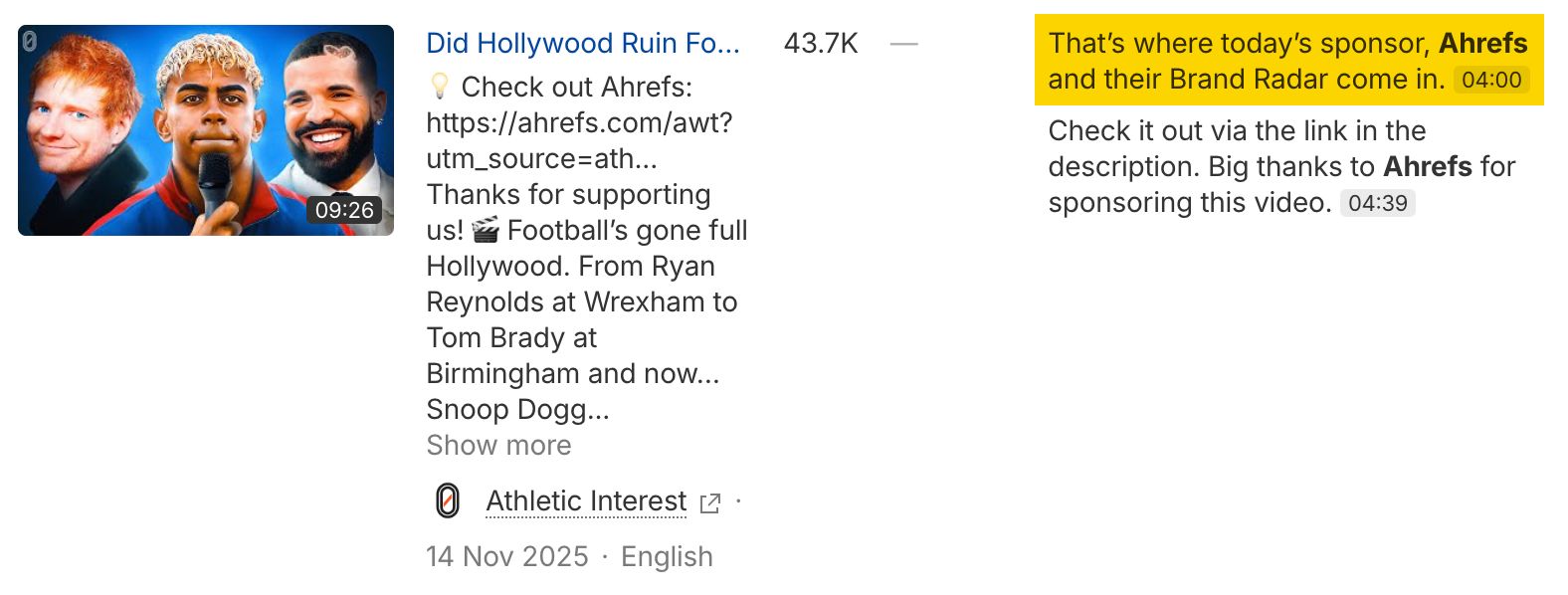
To find relevant YouTube creators to sponsor, you can use Brand Radar. For example, we can build filters to find relevant creators in the “AI marketing space” so we can sponsor them:
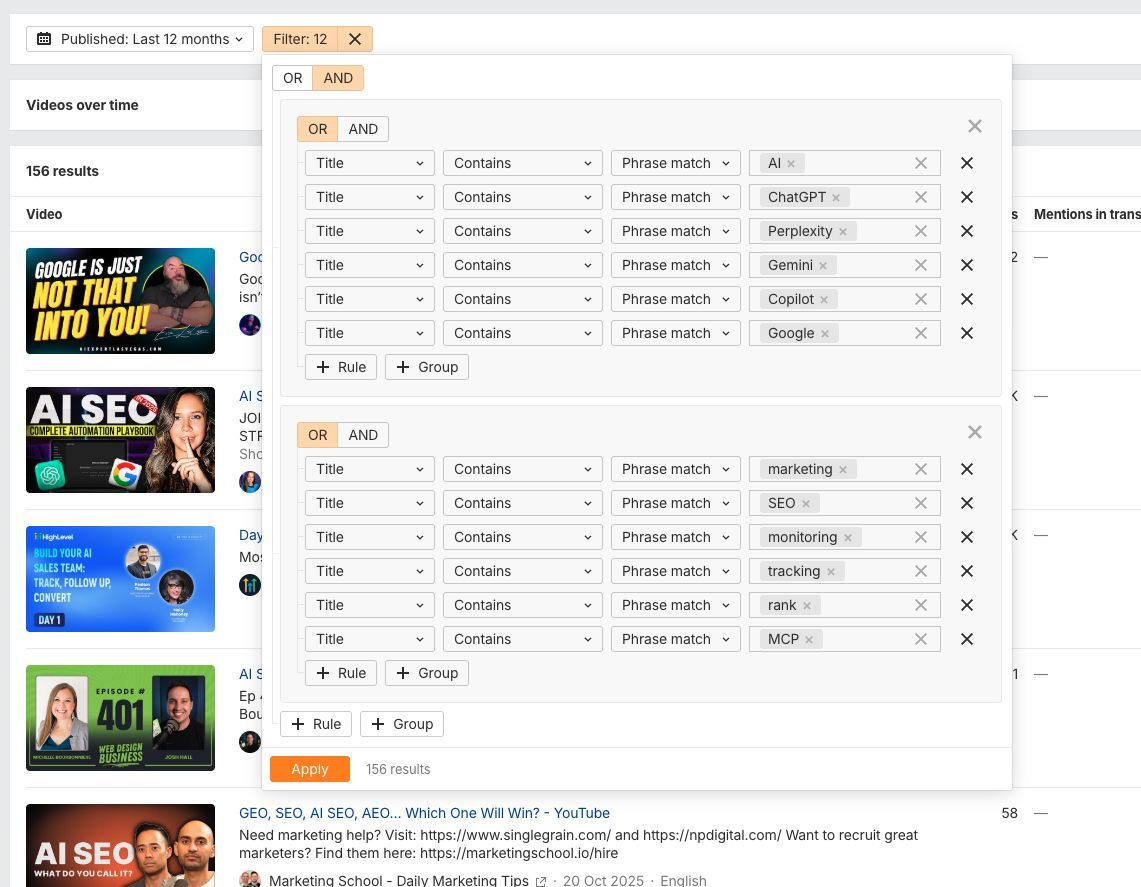
Use the filters to sort through your mentions until you find creators worth partnering with.
The next step is to reach out to these creators and find out how to work with them. You can offer free access to your product or service in exchange for a review, pay for a pre-roll/mid-roll ad in the middle of the video, or offer to be a guest (if the YouTube channel is a podcast). There are many ways to do this and it’s really up to the opportunity and your creativity.
After YouTube, branded web mentions showed the next strongest correlation with ChatGPT visibility.
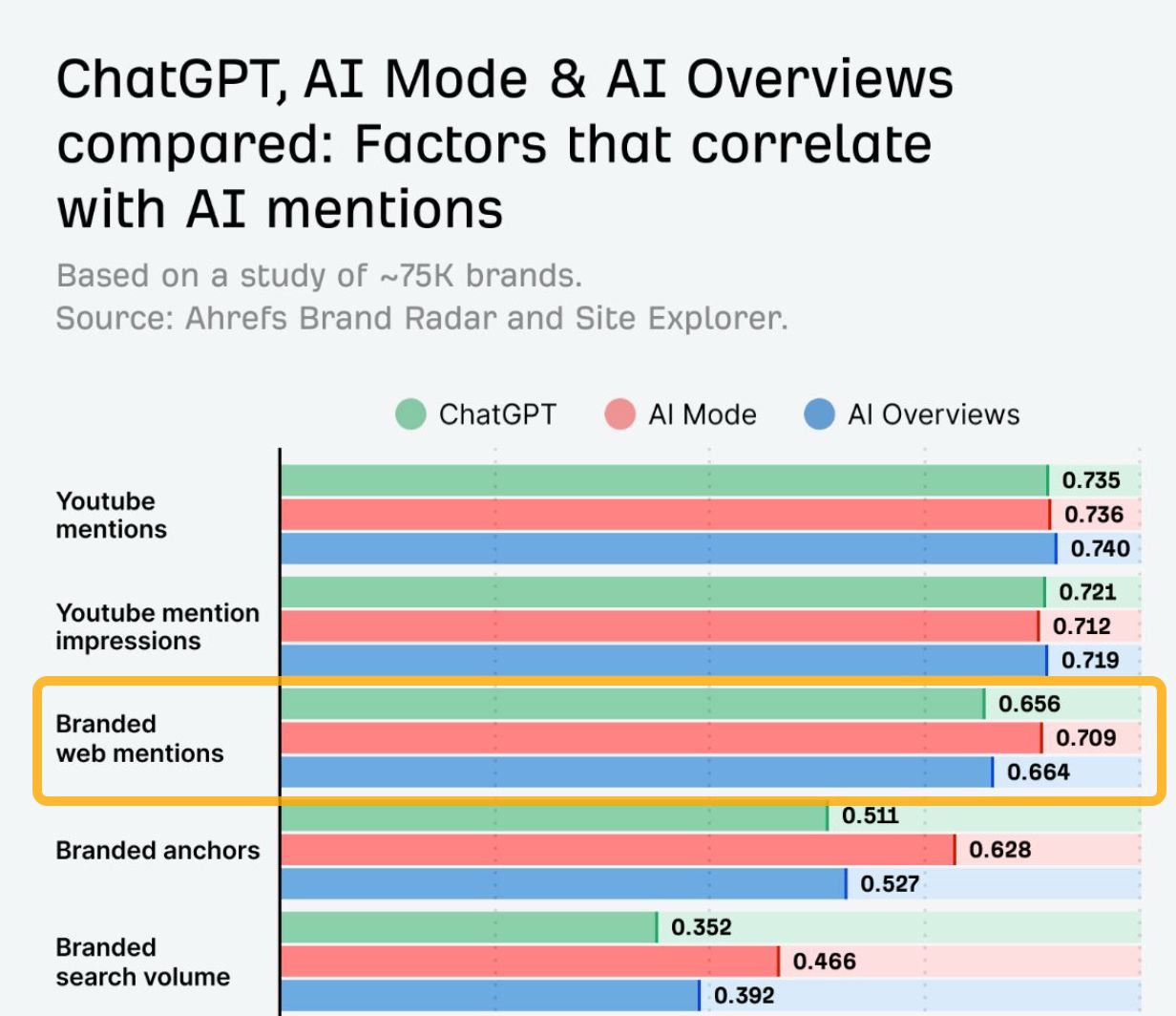
This is different from backlinks. We’re talking about mentions: instances where your brand name appears across the web, with or without a link.
The logic is straightforward: LLMs look for consensus. When multiple sources, particularly authoritative ones, describe a brand as a strong solution for a given problem, the model learns to reflect that consensus in its responses.
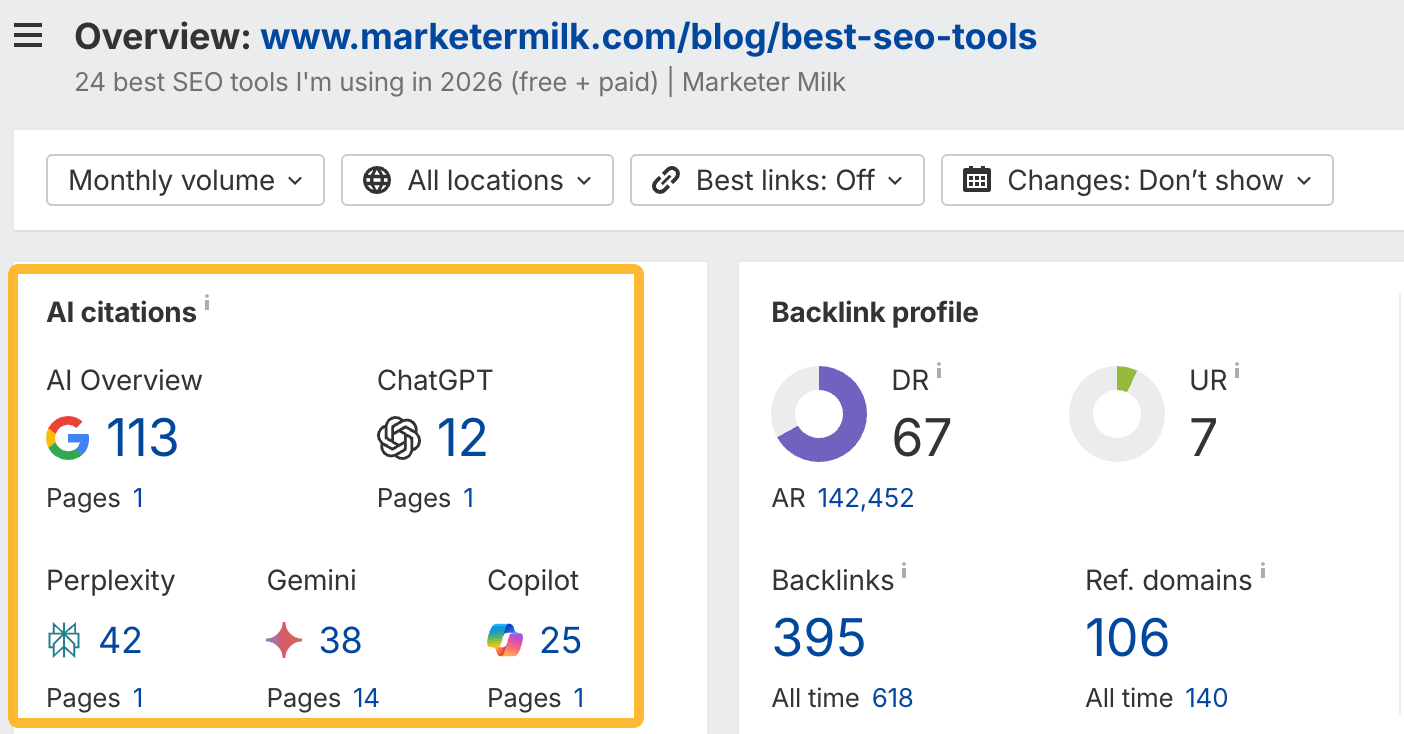
When I analyzed the top sources driving mentions for Ahrefs in ChatGPT, third-party sites dominated.
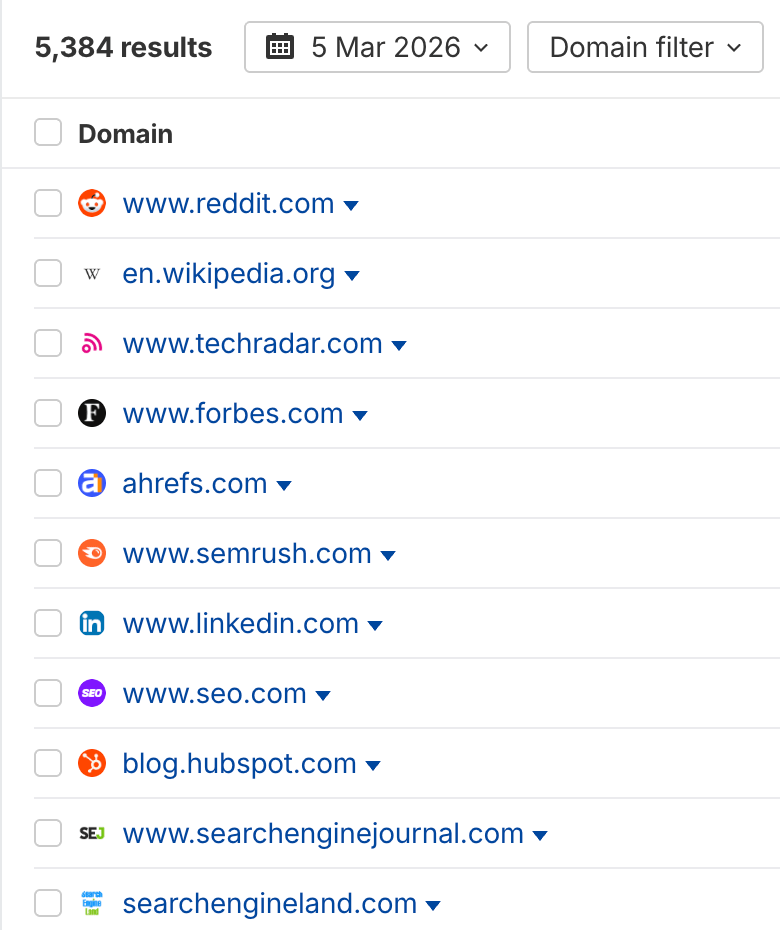
So, how can you proactively build your off-site mentions?
Get on the sites ChatGPT cites
Not all mentions are equal. A mention on a site ChatGPT frequently cites is worth far more than one on a site it ignores.
To find the most cited domains in your industry, go to Brand Radar, enter keywords related to your niche, then open the Cited domains report.
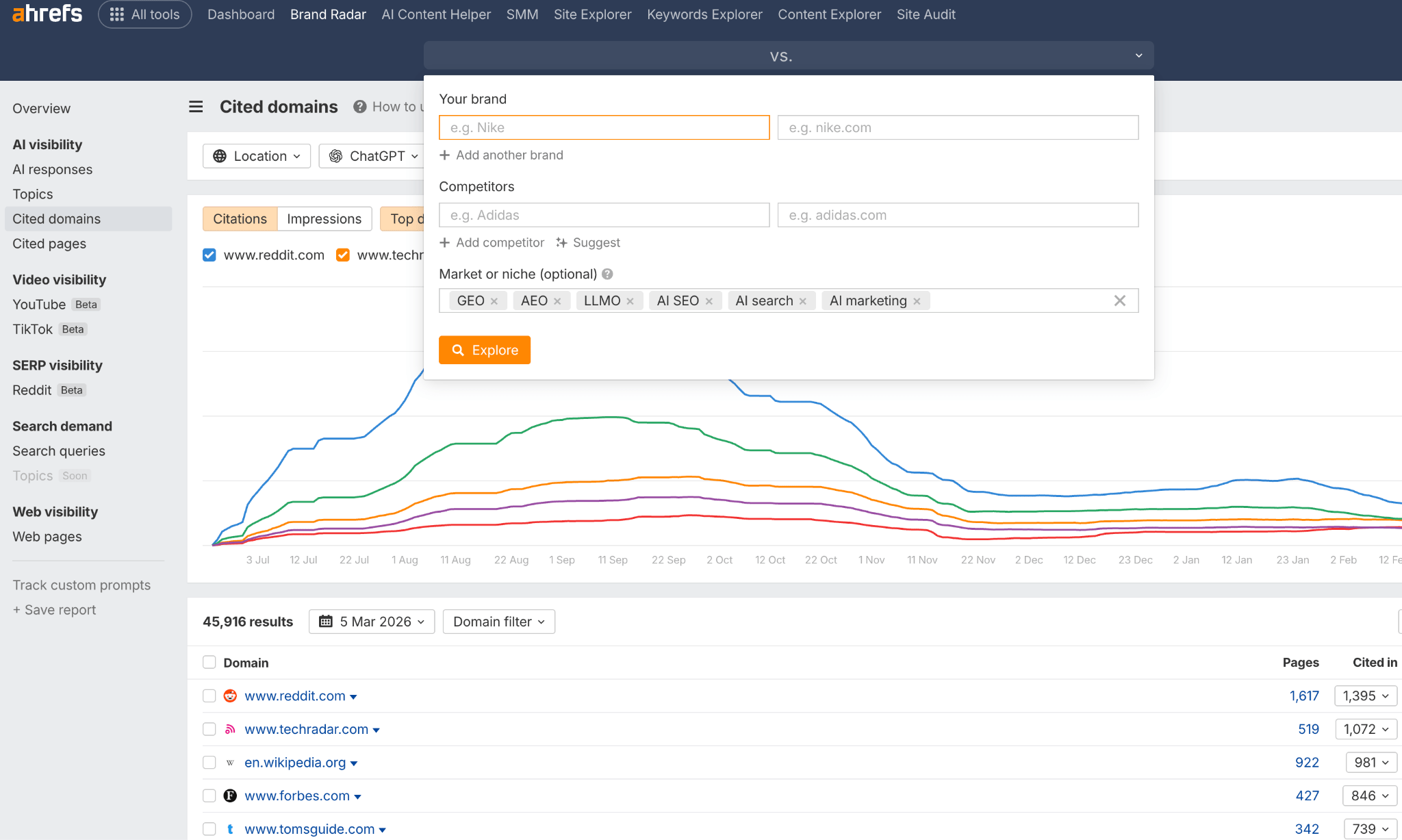
These are the sites you’d want your brand to appear in. Once you’ve identified these sites, look for ways in:
- Review platforms: Claim your profile, fill out every field, and actively solicit customer reviews. A complete profile with 50+ reviews signals legitimacy both to buyers and to the models citing these platforms.
- Industry publications: Check if they accept contributed articles, expert commentary, or source requests. Many have editorial calendars or contributor guidelines buried in their footers.
- Comparison and roundup content: Search the domain for “[your category] comparison” or “best [your category]” to find existing content you could be added to, or gaps where no such content exists yet.
The key is working backward from what ChatGPT actually cites, not guessing which sites might matter.
Target “best of” lists strategically
Research from Glen Allsopp, our Head of Marketing Strategy & Research, found that “best of” posts account for nearly half of ChatGPT citations for a very particular type of query.
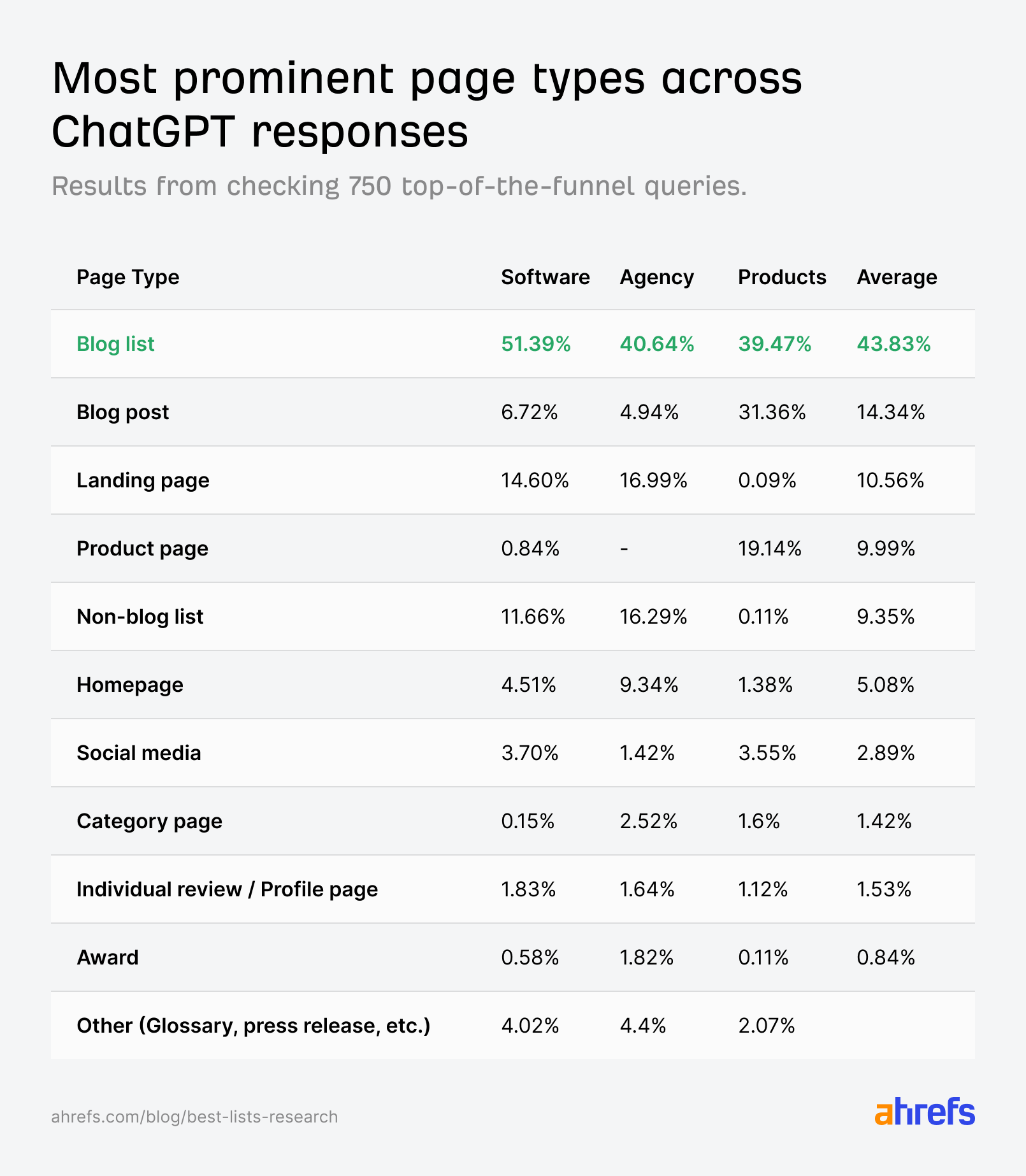
But chasing mentions on every listicle isn’t the right approach. Forced or inauthentic recommendations won’t build real brand equity, and experienced writers can spot a desperate pitch.
A better strategy: instead of asking writers to squeeze you into existing articles, find authoritative sites in your space that haven’t published a “best of” post yet.
When you reach out, pitch them on creating the content, not on mentioning you. Offer to:
- Share keyword research: Show them search volume for “best [category]” queries and how competitors are capturing that traffic
- Provide competitive data: “Your three main competitors have posts ranking for this term driving X visits per month”
- Give them product access: Offer a demo or free trial so they can evaluate your product firsthand and write authentically
This reframes the conversation. You’re bringing them a content opportunity backed by data, not asking for a favor.
If they do write the post, you’ve created a new citable page: one that ChatGPT may start referencing in future responses.
Find where you’re missing mentions
The fastest path to more visibility is closing gaps: finding pages that already mention competitors but not you, and getting added to them.
Here’s how to find them:
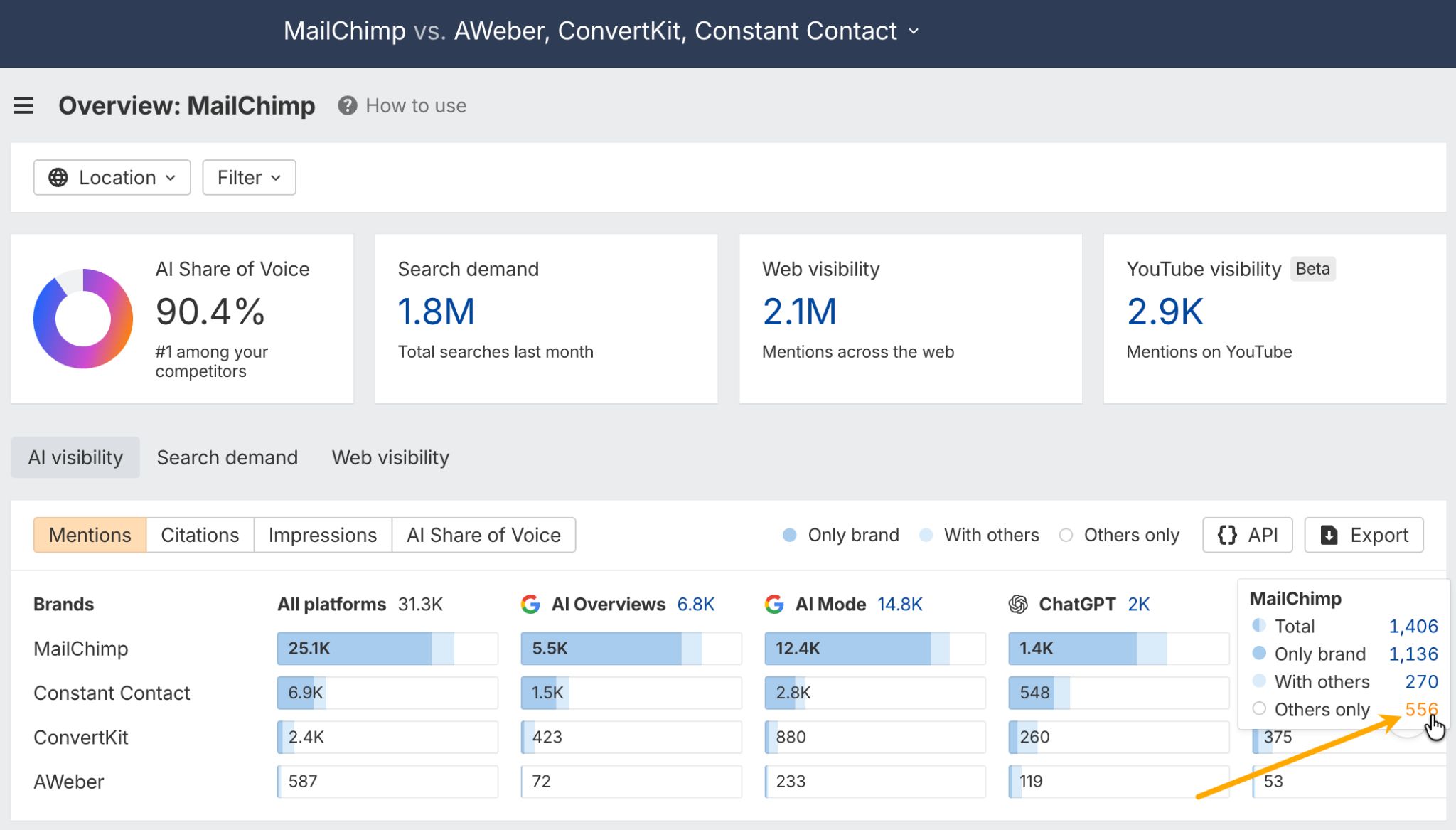
- Go to Brand Radar
- Enter your brand and your competitors.
- In the Mentions Gap view, hover over your brand under ChatGPT and click Others only.
- Open the Cited Pages report to find the sites you could reach out to and close your AI mention gap.
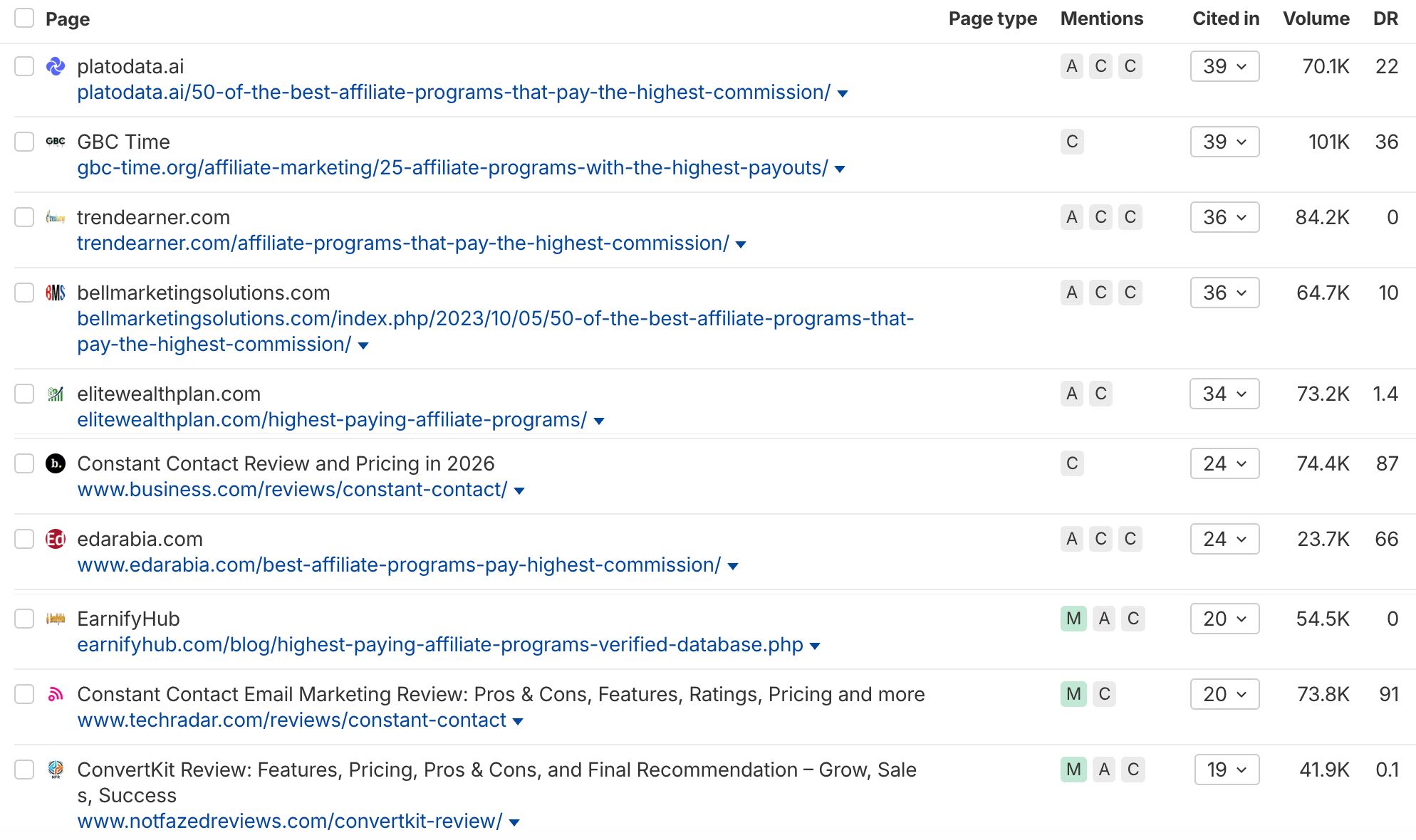
The pages where your brand isn’t highlighted green (under the Mentions column) are the pages where you’re currently not mentioned.
For each page, ask:
- Is this content I could be added to? Listicles, comparison posts, and review roundups are often updated periodically. The author may be open to including you in the next revision.
- Is this a site I should pitch directly? If the domain appears repeatedly across multiple gaps, it’s worth building a relationship with the publication rather than pitching individual pages.
- Is this page actually driving the mention? Click through to verify the page discusses your category and that your competitors are mentioned in context. Sometimes citations are tangential.
You can also check individual pages ad hoc. When you come across a review or comparison article that covers your category but doesn’t include you, paste the URL into Site Explorer and check the AI Citations data. If ChatGPT is already citing that page, getting added to it becomes a high-priority opportunity. You’d be inserting your brand into a source the model already trusts.
Reddit is ChatGPT’s #1 most-cited domain across our analysis of millions of AI responses.
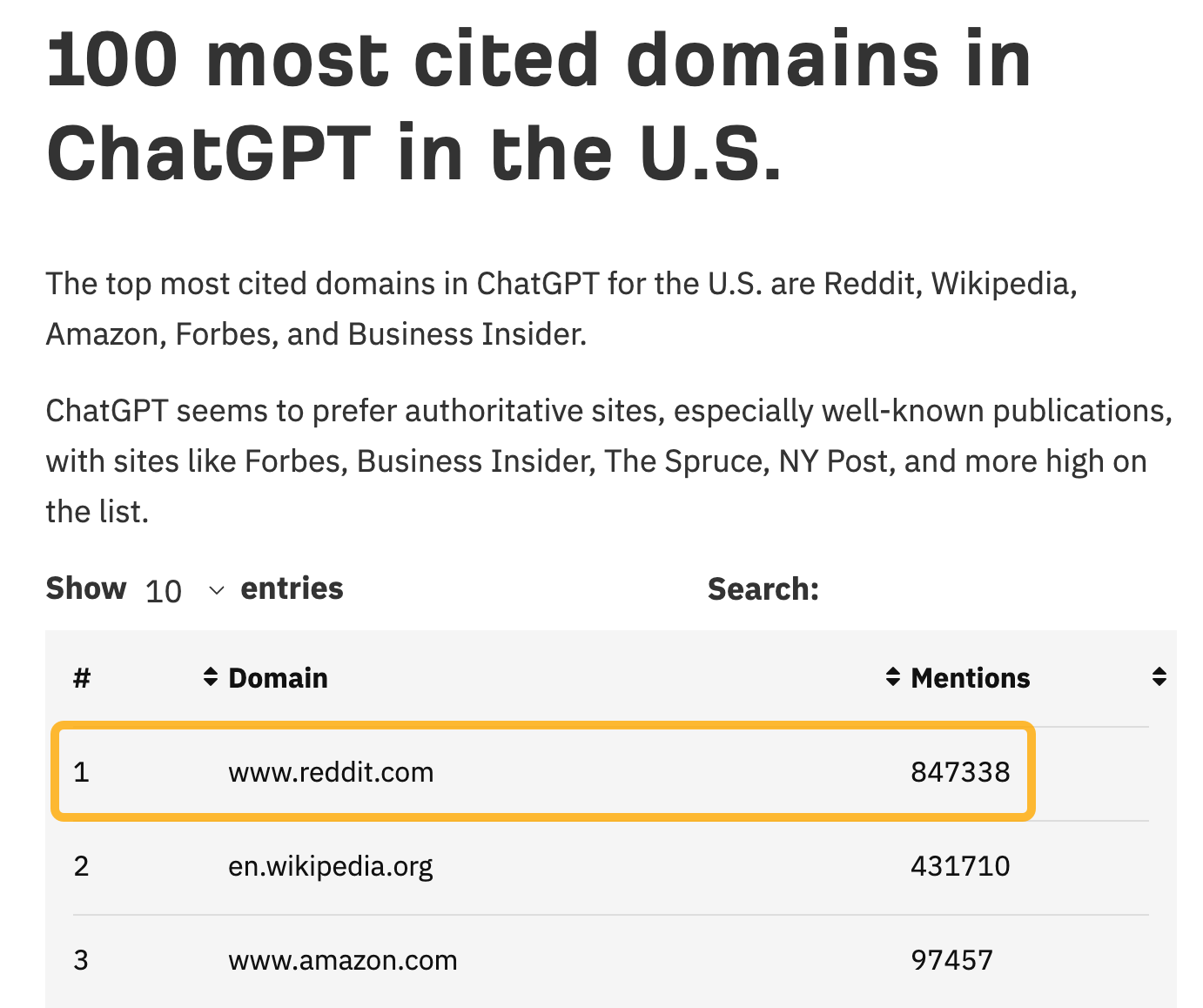
This makes sense. Reddit discussions contain authentic user opinions, real recommendations, and the kind of conversational context that LLMs are trained to understand and reference.
But you can’t game Reddit. The community is allergic to marketing, and overt promotion will backfire spectacularly.
How do you find Reddit threads to contribute to?
The easiest way is to find the Reddit threads that ChatGPT already cites. You can do this by running the filters I mentioned earlier for mention gap analysis and filter for Reddit:
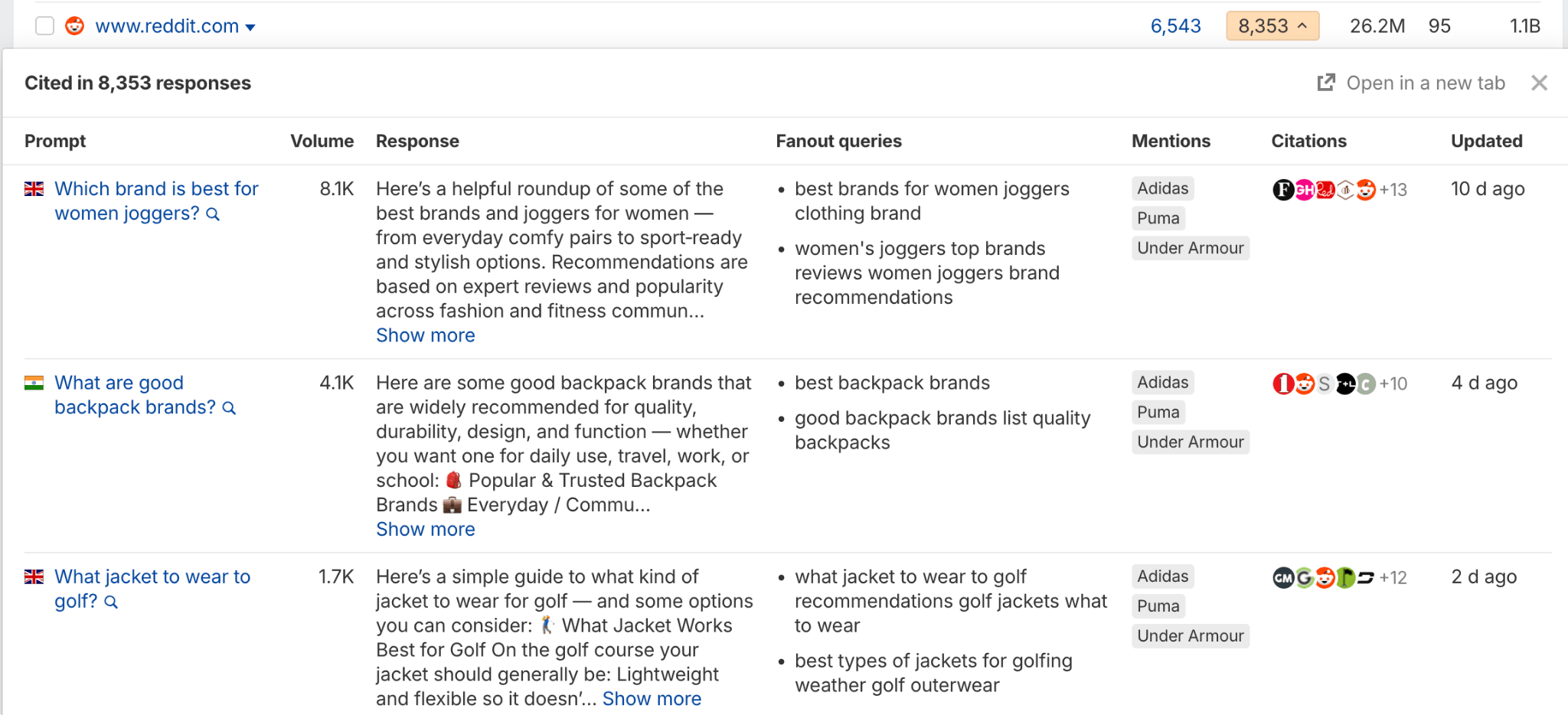
This shows you specific threads ChatGPT references when answering questions in your space.
However, the goal is to not jump right in, plug your product, and disappear. You have to contribute authentically. Actively show up on different subreddits and build your reputation first:
- Answer questions in your expertise area without mentioning your product
- Provide genuinely helpful information
- Mention your product only when directly relevant and naturally helpful
Beyond these threads, you’d want to explore Reddit as a whole and see where else you can add value. Many people just think of the most direct subreddit to contribute to (e.g., r/SaaS if you’re a SaaS company) and leave it as that.
But the game is in the larger subreddits. To do that, you have to think like a PR person. What angle could be interesting to a less obvious subreddit?
One of my earliest successes was cross-posting a “fitness”-related post to r/DotA2.

Someone promoting a post on stretching wouldn’t directly think of a gaming subreddit. But if you see the connection—gamers sit for long periods of time; they experience shoulder and back pain; they need help—then you can think of multiple angles to promote your brand in different subreddits.
This is a long game. Meaningful Reddit presence takes months to build. But the payoff will be worth it.
ChatGPT doesn’t read your content like a human browsing a website. It extracts relevant passages to assemble answers.
When someone asks “What’s the best proposal software for small teams?” ChatGPT searches the web, retrieves passages from multiple sources, and synthesizes an answer. If your content isn’t structured for extraction, you get skipped.
Recent research quantifies exactly how ChatGPT reads. Kevin Indig analyzed 1.2 million ChatGPT citations and found what he calls the “ski ramp” pattern: 44.2% of all citations come from the first 30% of content. The middle section (30-70%) accounts for 31.1%, and the final third just 24.7%.
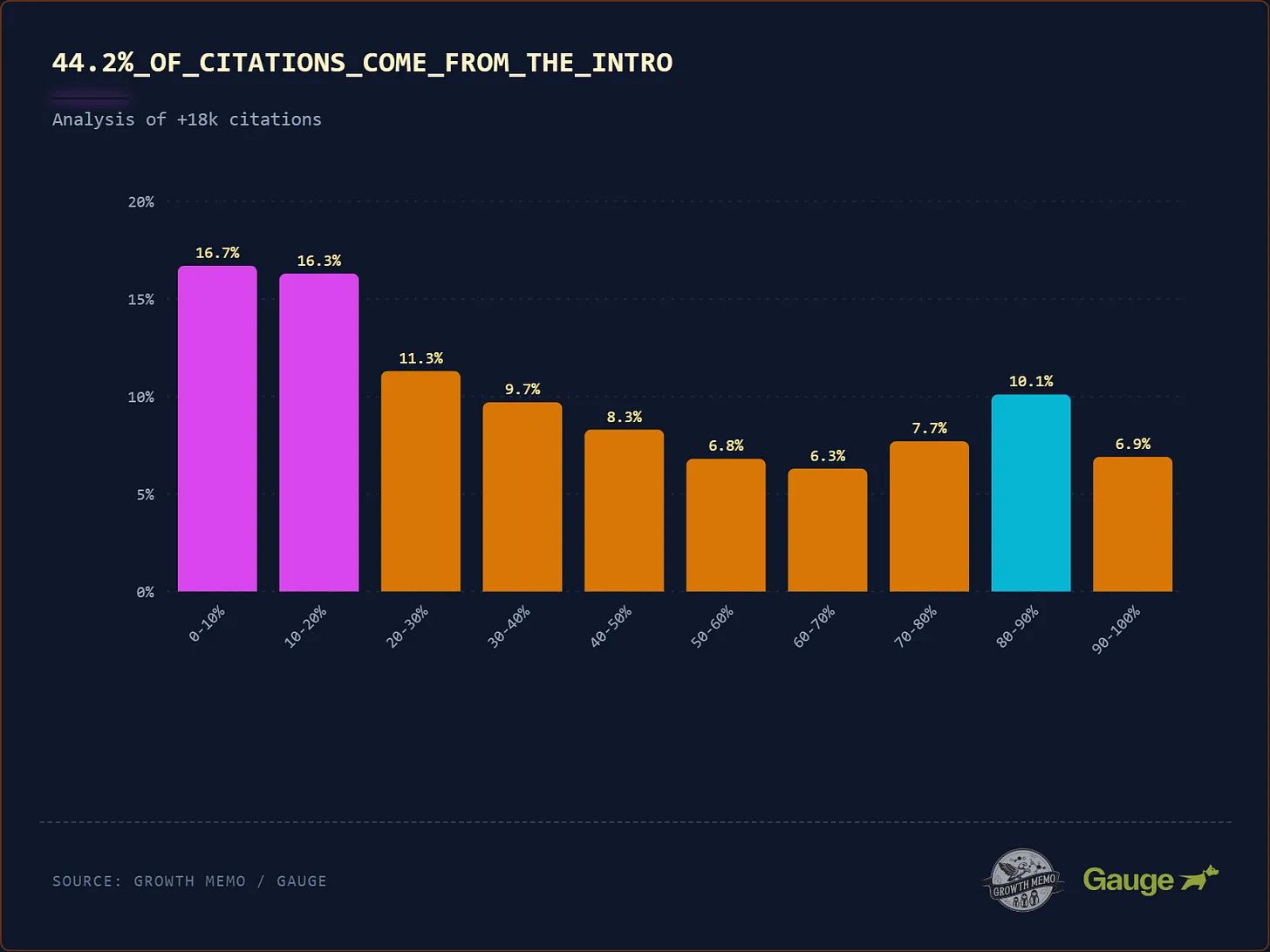
The implication is stark: if your key insight is buried in paragraph 12 of a 20-paragraph post, ChatGPT is 2.5x less likely to cite it than if it appeared in the intro.
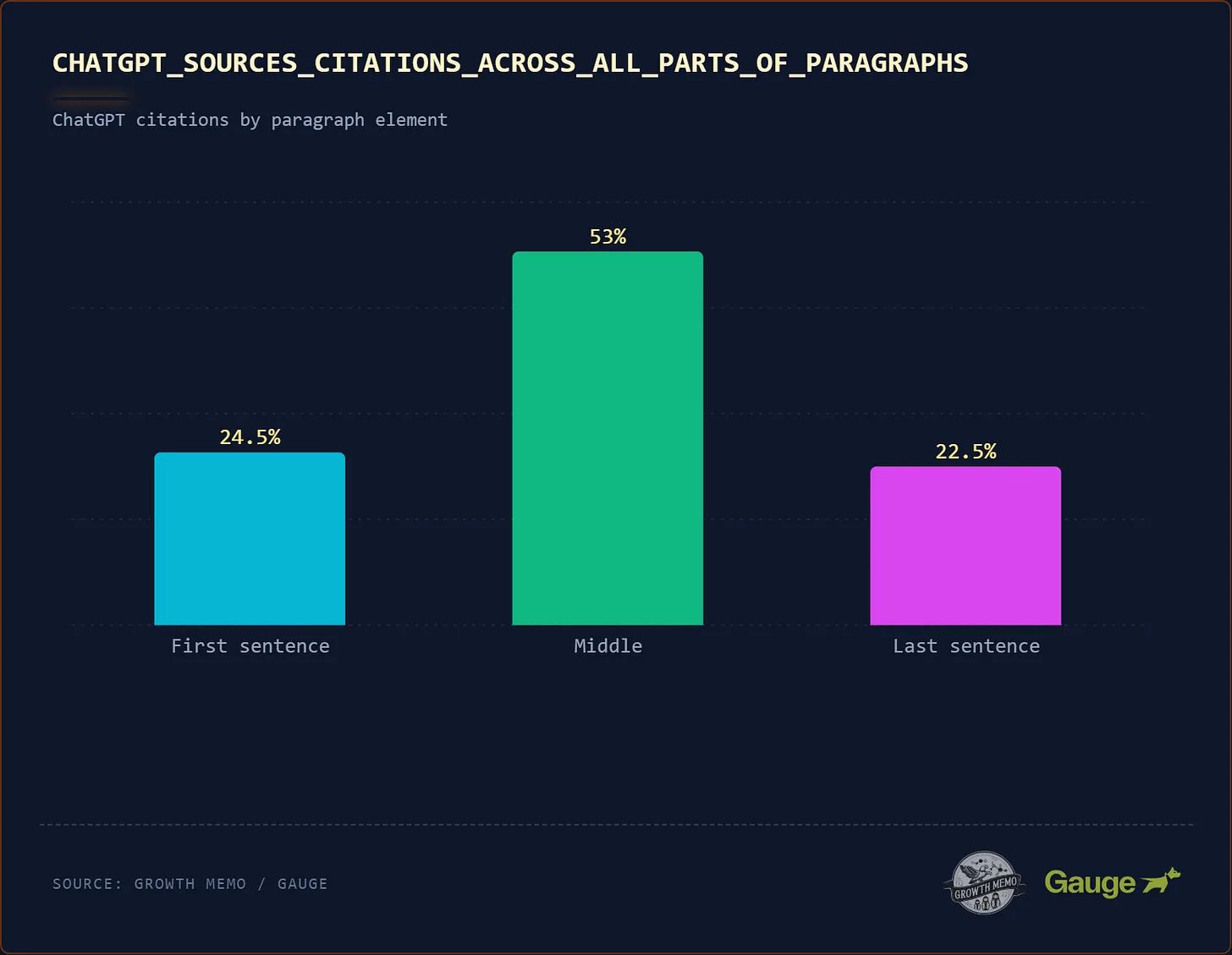
This doesn’t mean you need to cram everything into your first sentence. Within paragraphs, 53% of citations come from the middle sentence. ChatGPT looks for the sentence with the highest “information gain,” not necessarily the first one. But that sentence needs to be in a paragraph near the top of your page.
How do you optimize your content for LLMs?
- Use BLUF (Bottom Line Up Front) format: Don’t bury the answer after three paragraphs of context. Lead with the answer, then explain. For example, “The best proposal software for B2B sales teams in 2026 are PandaDoc, Proposify, ProposalPilot, and Qwilr. PandaDoc offers the most integrations. Proposify has the strongest template library. ProposalPilot provides the best engagement analytics. Qwilr excels at interactive, web-based proposals.”
- Use definitive language: Cited text is nearly twice as likely (36.2% vs 20.2%) to contain definitive phrases like “is defined as,” “refers to,” or clear “X is Y” statements. Vague framing gets skipped.
- Write atomic paragraphs: Each paragraph should stand alone as a complete answer if extracted out of context.
- Use question-based headings: Content with question marks in headings gets cited at double the rate (18% vs 8.9%). ChatGPT treats your H2 as the user’s query and the following paragraph as the answer.
- Add FAQ sections: The Q&A format is ideal for LLM extraction because each answer is atomic.
- Name names, even competitors: This might be the most counterintuitive finding: heavily cited text has an “entity density” of 20.6%—roughly 3-4x higher than normal English writing (5-8%). Entities are proper nouns: brands, tools, people, specific products.
- Balance fact and analysis: Cited content hits a subjectivity score of around 0.47 on a 0-1 scale—not dry Wikipedia text, not pure opinion. It’s the “analyst voice” that explains how facts apply.
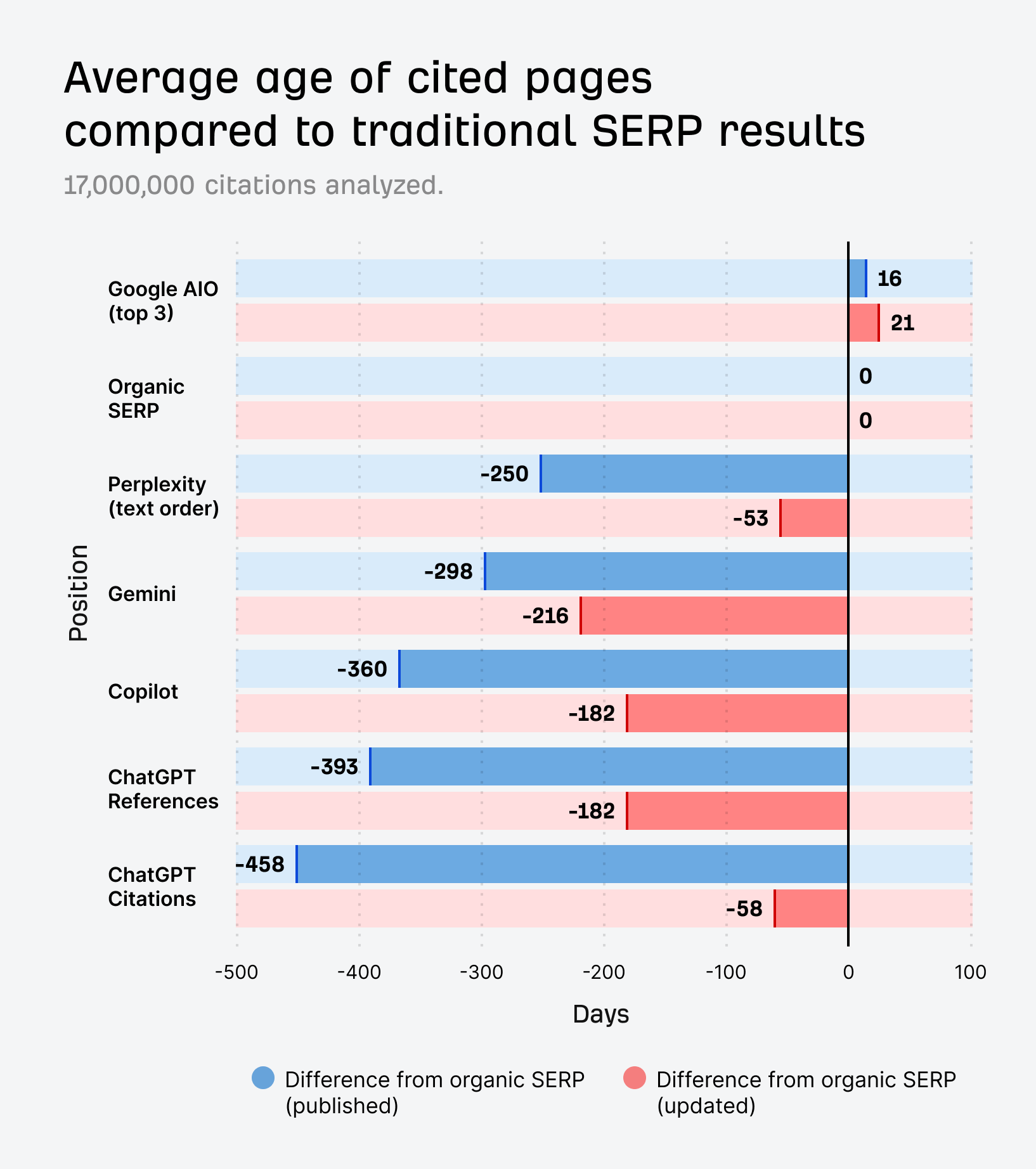
In our study of 17 million citations across 7 AI search platforms, we found that AI assistants prefer content that is 25.7% fresher. ChatGPT shows the strongest preference for new content, preferring to cite URLs that are 393 days newer than organic Google results in their in-text references, and a whopping 458 days newer in their citations.
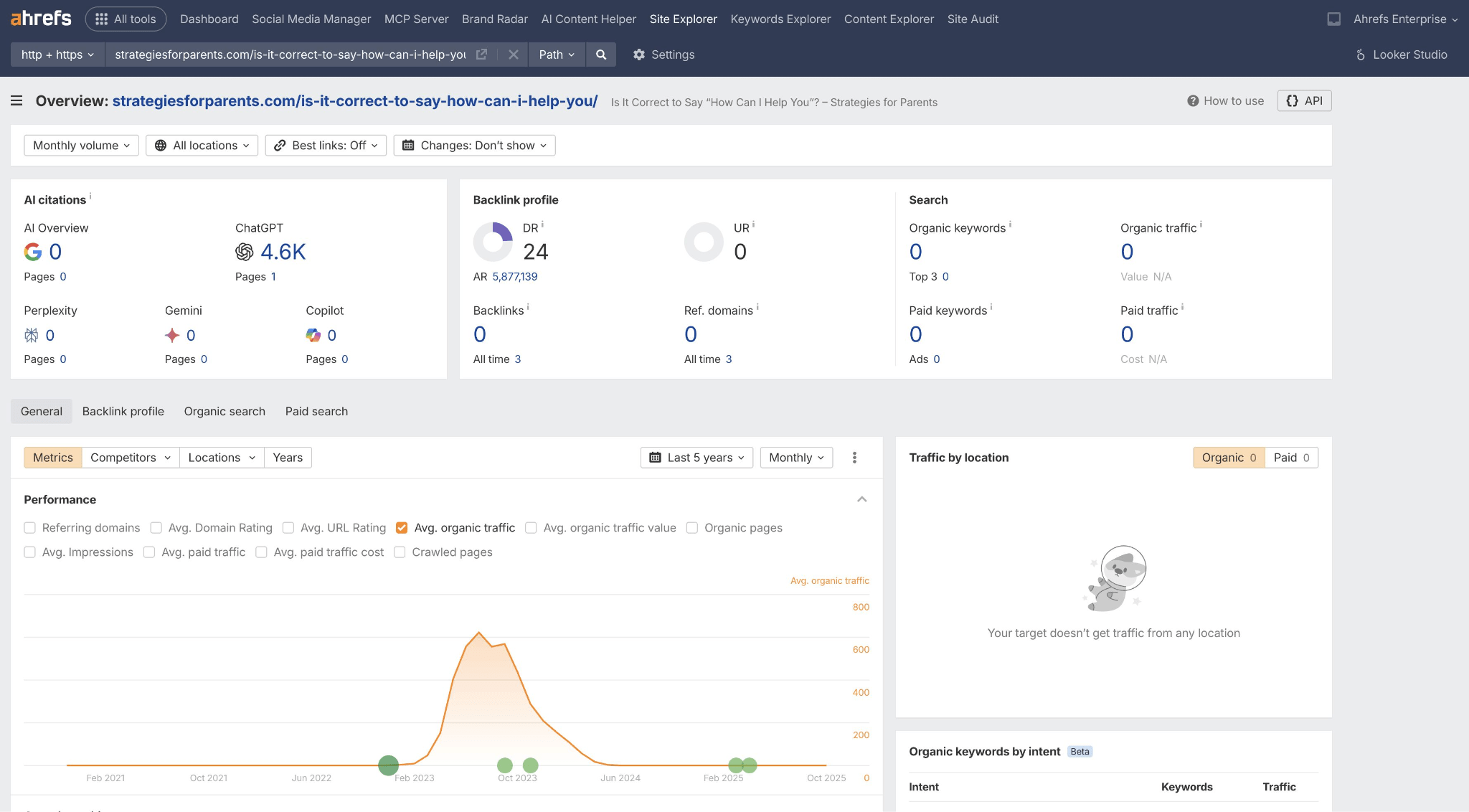
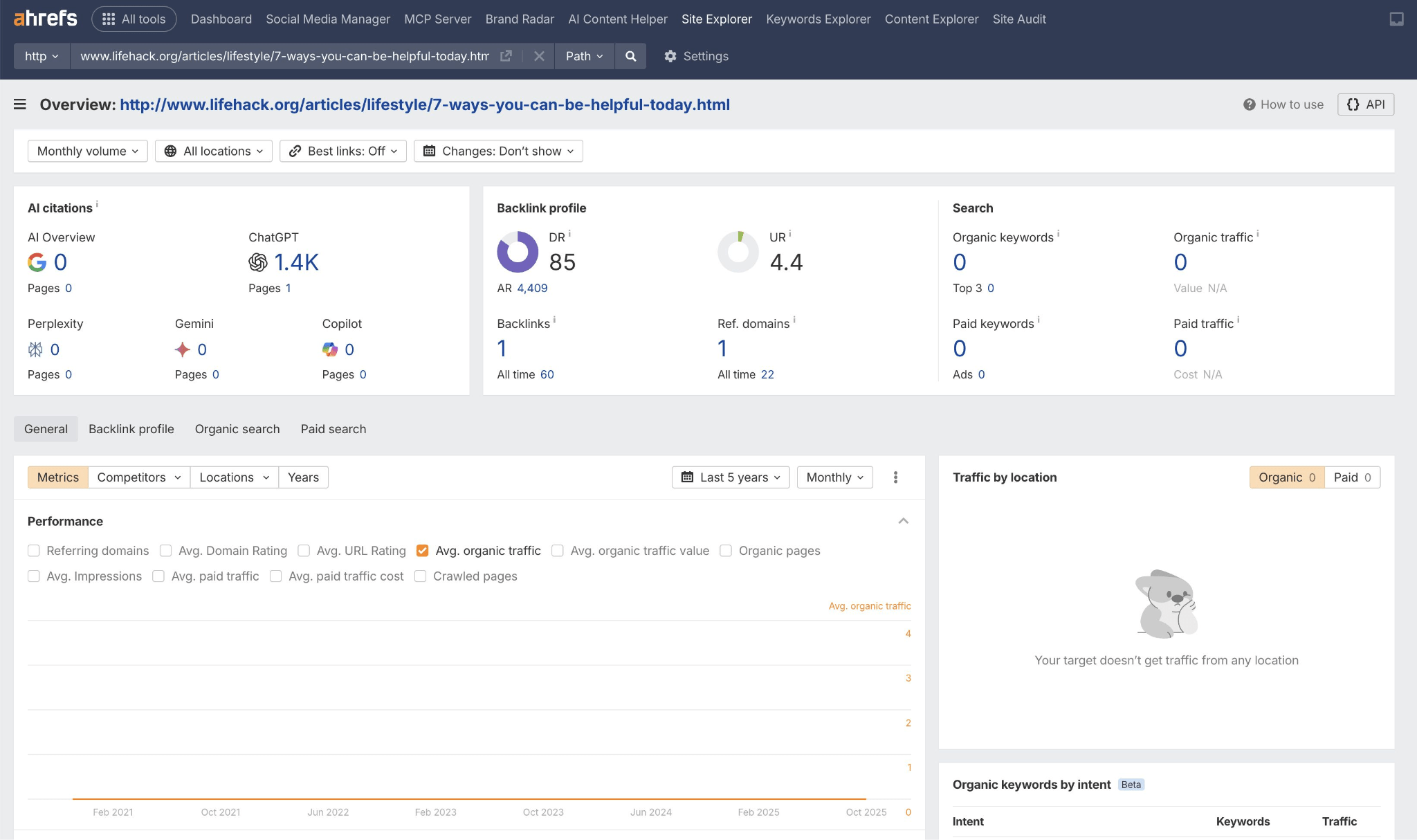
In fact, we’ve found specific examples of pages with zero traditional search visibility—no rankings, no organic traffic—that were cited thousands of times by ChatGPT simply because they were fresh and relevant.
But don’t take this to mean you can game the system by just changing your publish date. Actually make substantive updates:
- Replace outdated statistics with current ones
- Update screenshots if UI has changed
- Revise recommendations if the competitive landscape has shifted
- Add new sections addressing questions that have emerged
Faking freshness erodes trust. ChatGPT’s systems may detect when metadata changes don’t correspond to content changes.
The number of pages on your website has an extremely low correlation with ChatGPT visibility.
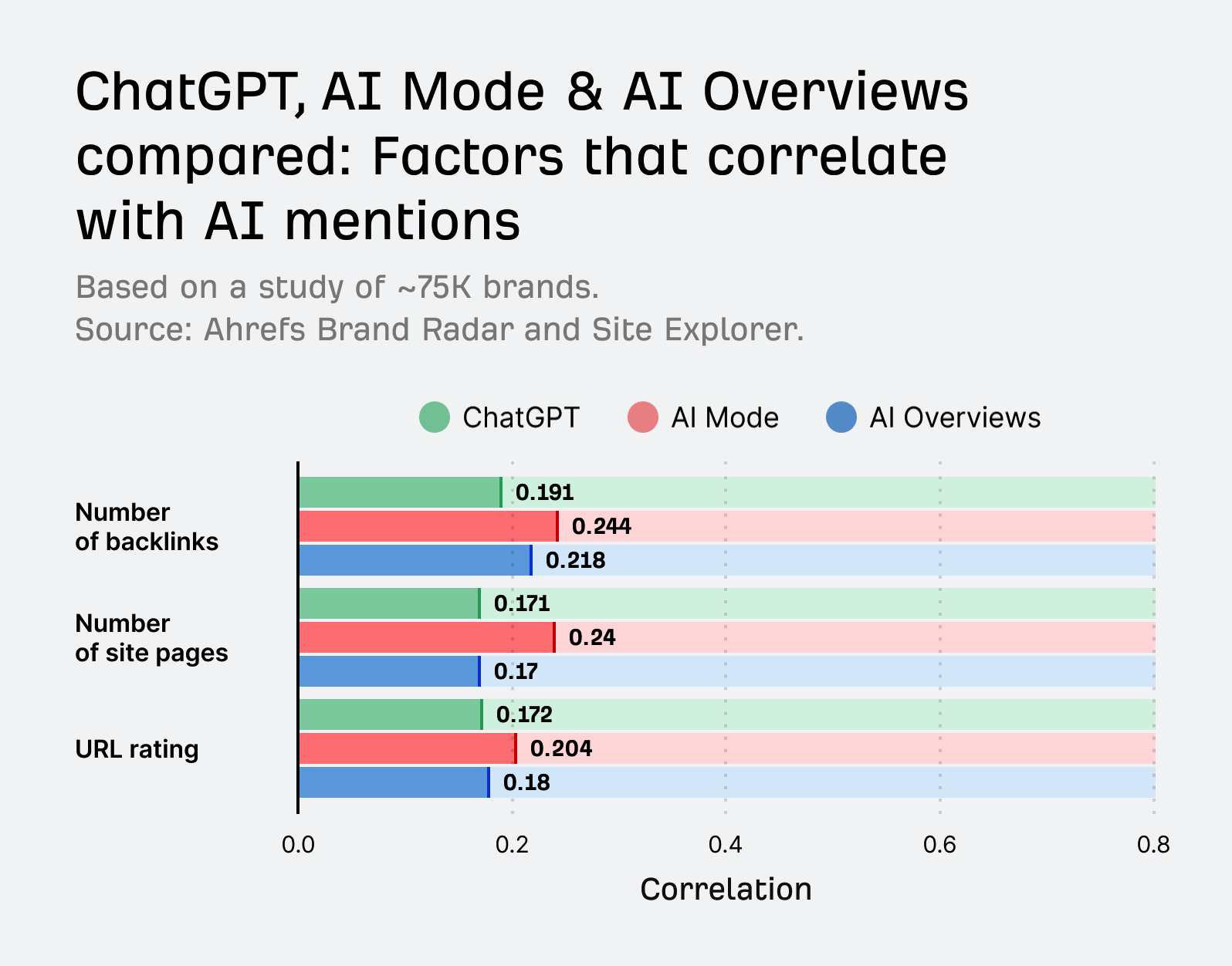
I know it feels easy to publish a lot, especially now with content creation costs almost at zero. It almost seems like opportunity.
But I expect things to tighten. Every major AI platform is working on quality signals, and sites gaming AI search today will likely face the same fate as content farms did after Google’s Panda update.
The “content at scale” playbook that worked for traditional SEO doesn’t transfer, and as AI platforms mature, it will transfer even less. What matters isn’t how much you publish. It’s whether your content gets talked about by others and whether it’s structured for LLM extraction.
So, instead of publishing more, make what you have better. For example, create original research that ChatGPT can cite. ChatGPT loves citing specific, quantified claims. If you have proprietary data, publish it.
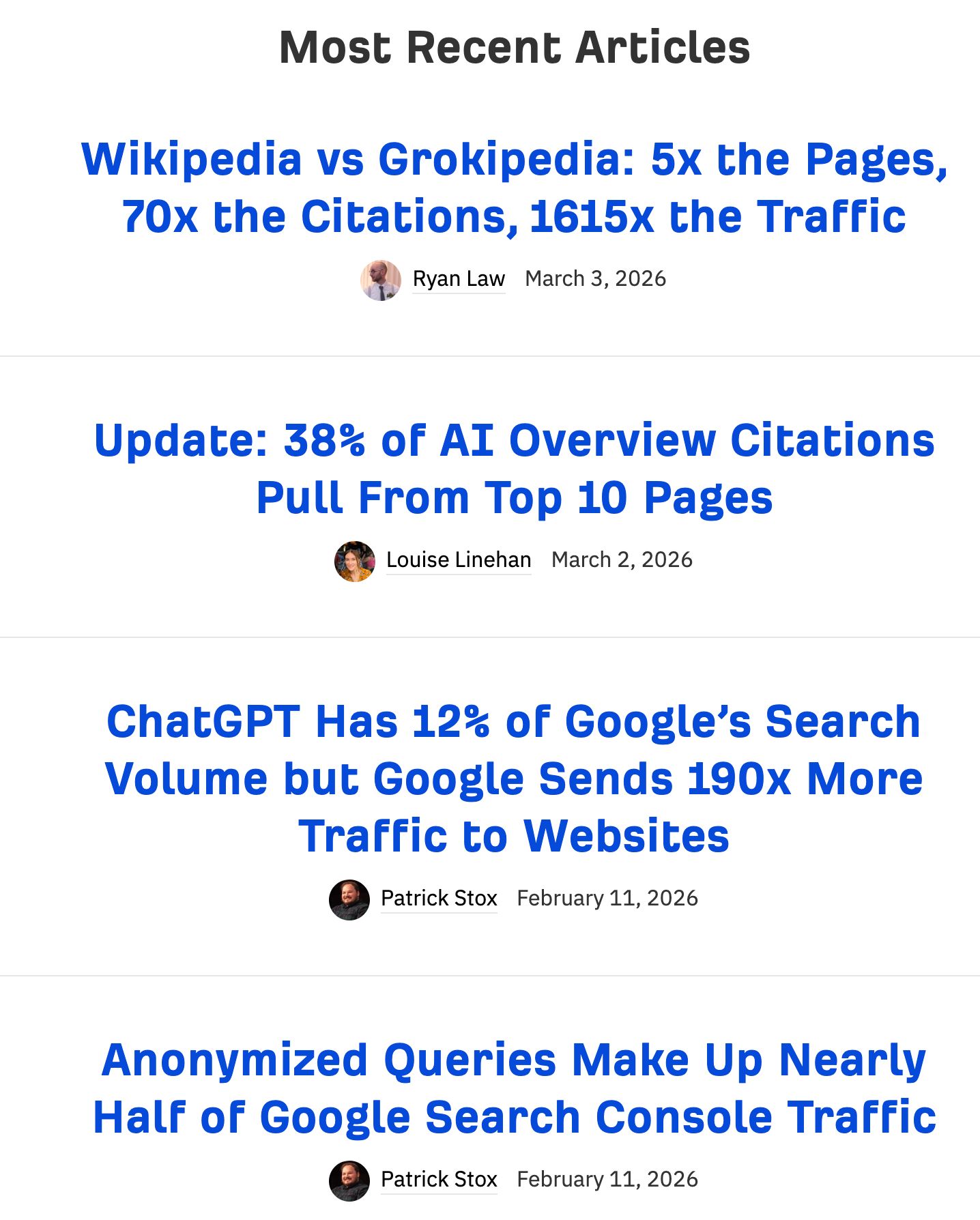
In fact, this is what we’ve been publishing on the blog for the past year, data studies after data studies:
Don’t forget: great content also helps to build brand, which is critical for AI visibility.
If ChatGPT can’t crawl your site, nothing else matters. Technical accessibility is the foundation everything else builds on.
Check your robots.txt for AI crawler blocks
Go to yoursite.com/robots.txt and search for these user agents:
- GPTBot (OpenAI’s training crawler)
- OAI-SearchBot (OpenAI’s search indexer)
If you see Disallow: / under any of these, your content is blocked:
&amp;lt;/p&amp;gt; &amp;lt;!-- /wp:paragraph --&amp;gt; &amp;lt;!-- wp:paragraph --&amp;gt; &amp;lt;p&amp;gt;User-agent: GPTBot&amp;lt;/p&amp;gt; &amp;lt;!-- /wp:paragraph --&amp;gt; &amp;lt;!-- wp:paragraph --&amp;gt; &amp;lt;p&amp;gt;Disallow: /&amp;lt;/p&amp;gt; &amp;lt;!-- /wp:paragraph --&amp;gt; &amp;lt;!-- wp:paragraph --&amp;gt; &amp;lt;p&amp;gt;User-agent: ChatGPT-User&amp;lt;/p&amp;gt; &amp;lt;!-- /wp:paragraph --&amp;gt; &amp;lt;!-- wp:paragraph --&amp;gt; &amp;lt;p&amp;gt;Disallow: /&amp;lt;/p&amp;gt; &amp;lt;p&amp;gt;
Unless you have specific legal or business reasons to opt out, remove these blocks.
Check your Cloudflare AI crawler settings
If you use Cloudflare, check your DNS settings immediately. Cloudflare has a beta feature called “Instruct AI bot traffic with robots.txt” that’s enabled by default on many accounts.
When this is on, Cloudflare automatically updates your robots.txt to signal that your content shouldn’t be used for AI training.
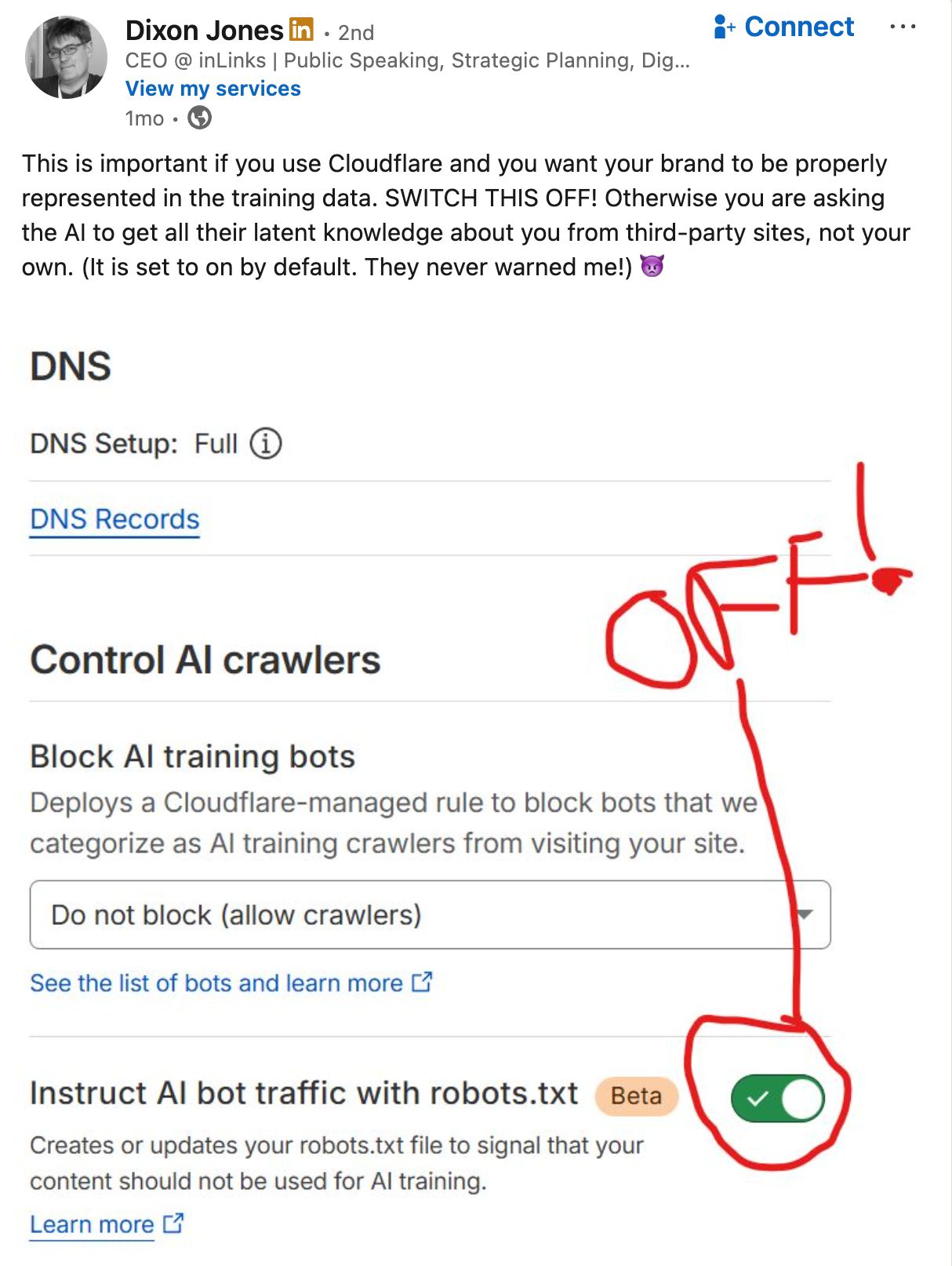
The problem: if AI models can’t learn from your site directly, they learn about your brand from third-party sources instead: review sites, forums, competitor comparisons, news coverage. You lose control of your own narrative in the training data.
Final thoughts
ChatGPT visibility isn’t random, and it isn’t determined by traditional SEO authority alone.
The brands appearing in AI responses are those being talked about on YouTube, across review sites, in Reddit discussions, in industry coverage. They have fresh content that makes specific, citable claims. They’ve built a presence on the platforms ChatGPT actually cites.
All of these won’t help your domain “rank” in ChatGPT. But it will help your brand get mentioned on sites that ChatGPT prefers to cite. That way, you can improve your ChatGPT visibility for your brand and its products.
The question isn’t whether you can afford to do this work. It’s whether you can afford not to, while your competitors build the visibility you’re missing.