

They are a logical, SEO-friendly way to organize your content, and they’re only becoming more important in 2026.
Content pillars (also called “pillar pages”, “content hubs” or “pillar content”) are high-level introductory guides that cover a broad topic.
Think of them like a hub with spokes:
- The pillar = hub (broad overview)
- Cluster content = spokes (detailed deep-dives)
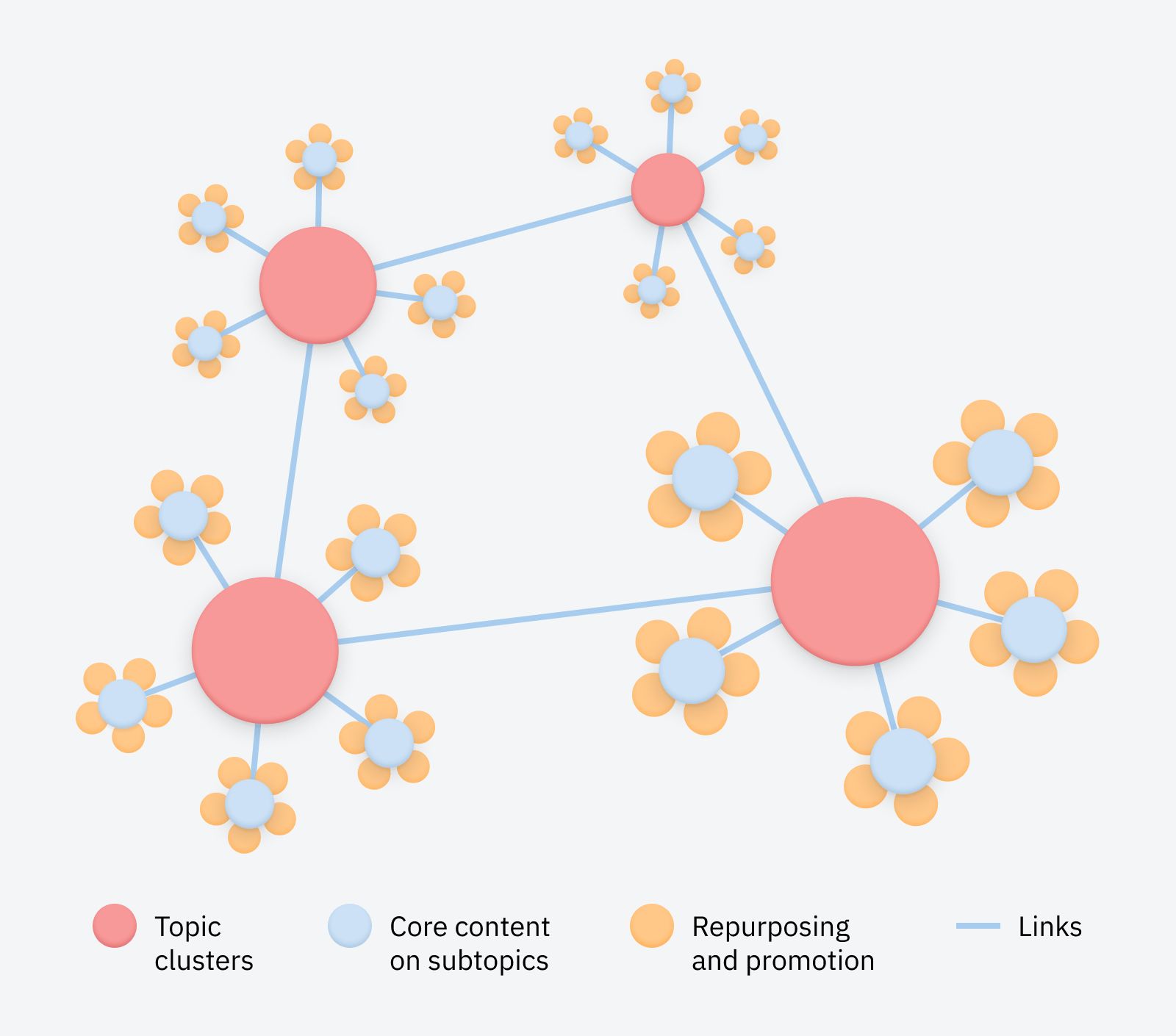
In between the hub and spokes you have internal links, and the flower-like petals you see in the visual above represent the channels for promoting your content—but we’ll get to that later.
Unlike regular blog posts that target specific longer-tail keywords, content pillars target broad topics, known as “head terms”.
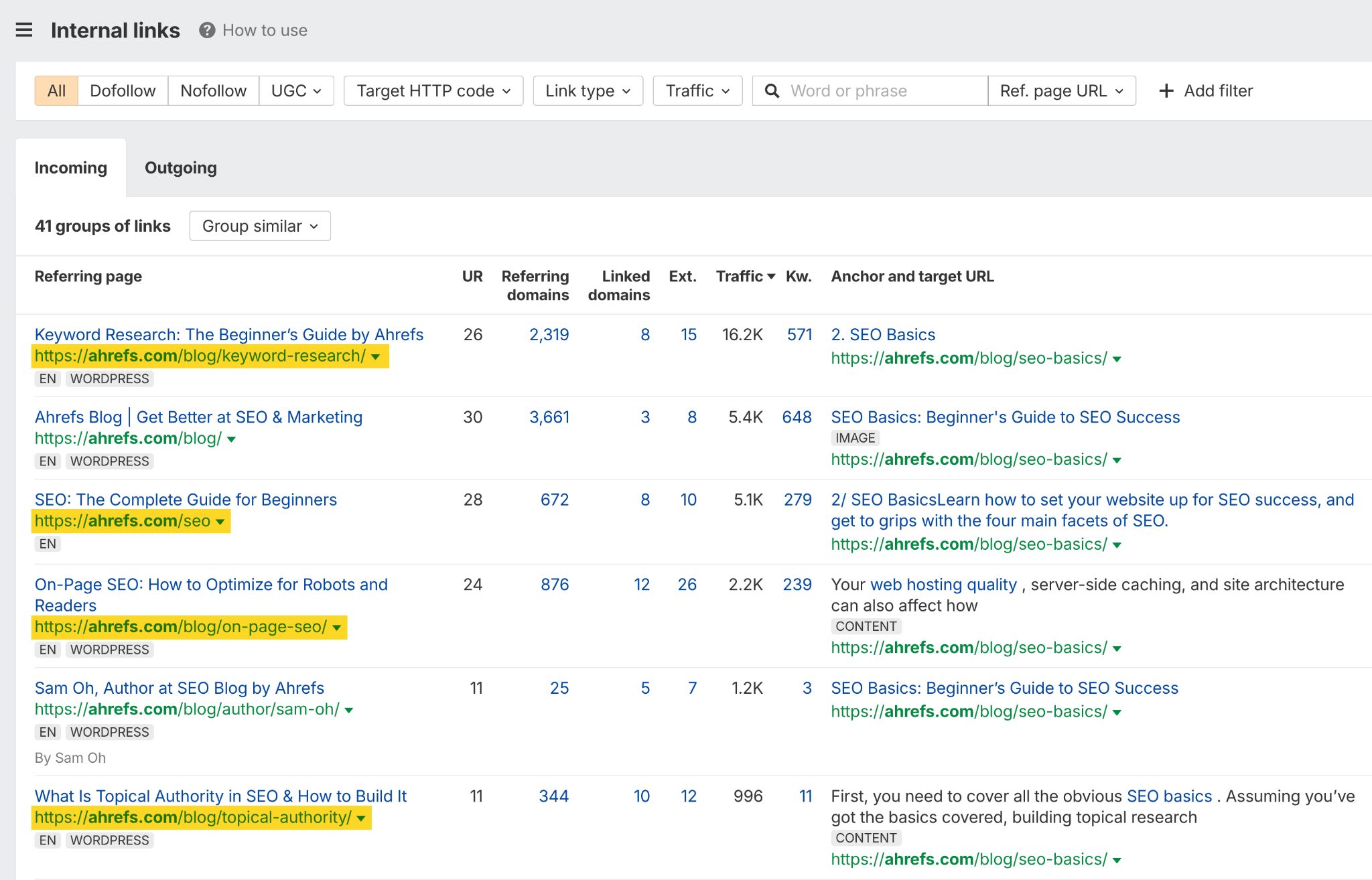
For example, our guide on “SEO basics” is an example of a content pillar—it covers the topic broadly and we link back to it from related, longer-tail supporting resources like our blogs on keyword research, on-page SEO, and topical authority.
Usually, pillar page topics have higher search volume and, therefore, higher competition.
The reason some SEOs and marketers are able to rank for these popular topics is because they’ve built defensible content pillars that get lifted by the internal links coming from their supporting “spokes”.
These “spokes” pass on what is known as PageRank—the value assigned to their backlinks, based on their quantity and quality.
The more quality associations you can build between your content through internal linking, the more authority flows to your pillar pages, giving them a better shot at ranking for those competitive terms.
Content pillars are important for SEO because they:
- Improve organic search and AI visibility through strong internal linking and semantic connections
- Rank for competitive keywords by covering topics comprehensively
- Build topical authority by demonstrating your experience, education, authority, and trust (Google E-E-A-T) across a subject area
- Create strong internal linking structures that pass PageRank efficiently
- Create a clearer content hierarchy that helps search engines and AI crawl and understand your site
- Improve user experience, making it easier for readers to find related content and consume more
- Attract more quality links, since pillar pages are natural starting points for people learning about a topic
In this guide, you’ll learn how to create a content pillar for your website.
Content pillars matter more now because they help you rank in traditional search and increase your chances of getting cited by AI platforms.
AI systems like ChatGPT literally map out how close your content is to specific topics in their “understanding.”
When you build content pillars—clusters of interconnected articles on the same topic—you’re essentially teaching the AI that you’re a strong, consistent source on that subject, because it sees your brand repeatedly associated with those concepts.
And AI assistants are more likely to cite or reference sources they have learned are deeply connected to a topic.
With traditional search declining and AI answers taking over, being recognized as topically authoritative by these systems is becoming essential for visibility.
There are two approaches to creating your pillar content:
Turn existing content into a pillar page
Audit the performance of your existing content to check it’s worth upgrading to a pillar. You can do this by checking organic performance (e.g. via GA4), email performance (e.g. via Mailchimp), and social engagement (e.g. via LinkedIn Analytics) to confirm your audience cares about it.
Create a pillar page from scratch
You can also create your hub content from scratch, following the five steps below…
1. Find the main topic to create a content pillar around
Grab a seat, a pen and paper (or laptop), then brainstorm ideas for content pillars. If you’re familiar with the niche, many topics should come to mind.
For example, I’ve been breakdancing for the past 10 years, and I can think of plenty of topics for pillar pages (e.g., types of power moves, must-know footwork steps, and more).
Alternatively, you can also use Ahrefs’ Keywords Explorer to find ideas. Just enter a broad term related to your niche and go to the Matching terms report.
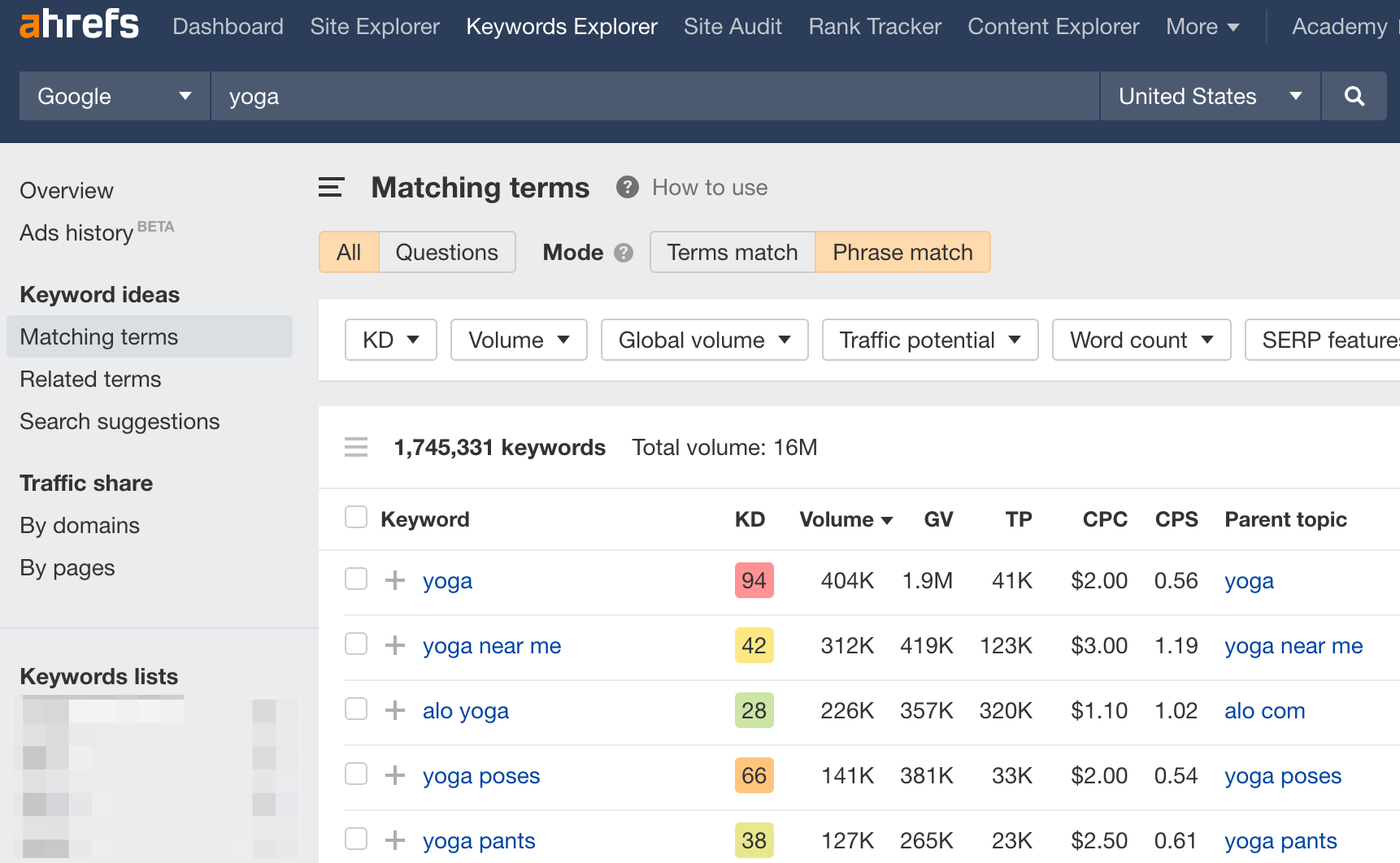
However, not every term here will be a suitable topic. What’d you want are topics that:
- Have search traffic potential: Look at the Traffic Potential (TP) column beside each keyword to see its search traffic potential.
- Are broad enough: The topic shouldn’t be so narrow that there aren’t any subtopics to talk about. And it shouldn’t be so broad that your pillar page is 50,000 words long either. As a general rule of thumb, look for topics with between 10 and 20 subtopics.
For example, let’s compare the topic “yoga poses” against the criteria:
- Has search traffic potential: The topic’s TP is 33K (in the US alone)
- Is broad enough: There are potentially hundreds of yoga poses to cover. But if we narrow down to the “best” ones for beginners, there should be a nice range for a pillar page.
If you’re a yoga site, this could be a fantastic topic for a content pillar.
Use Parent Topics to organize your cluster
If you’re still unsure of how to connect your pillar and cluster pages together, or which keywords to assign to relevant pages, use Ahrefs’ Parent Topics report to build your pillar structure from the ground up:
1. Find your pillar candidates: Enter seed keywords into Keywords Explorer and cluster by Parent Topic—the biggest rectangles show you the broad topics with the most search volume that should become your pillar pages.
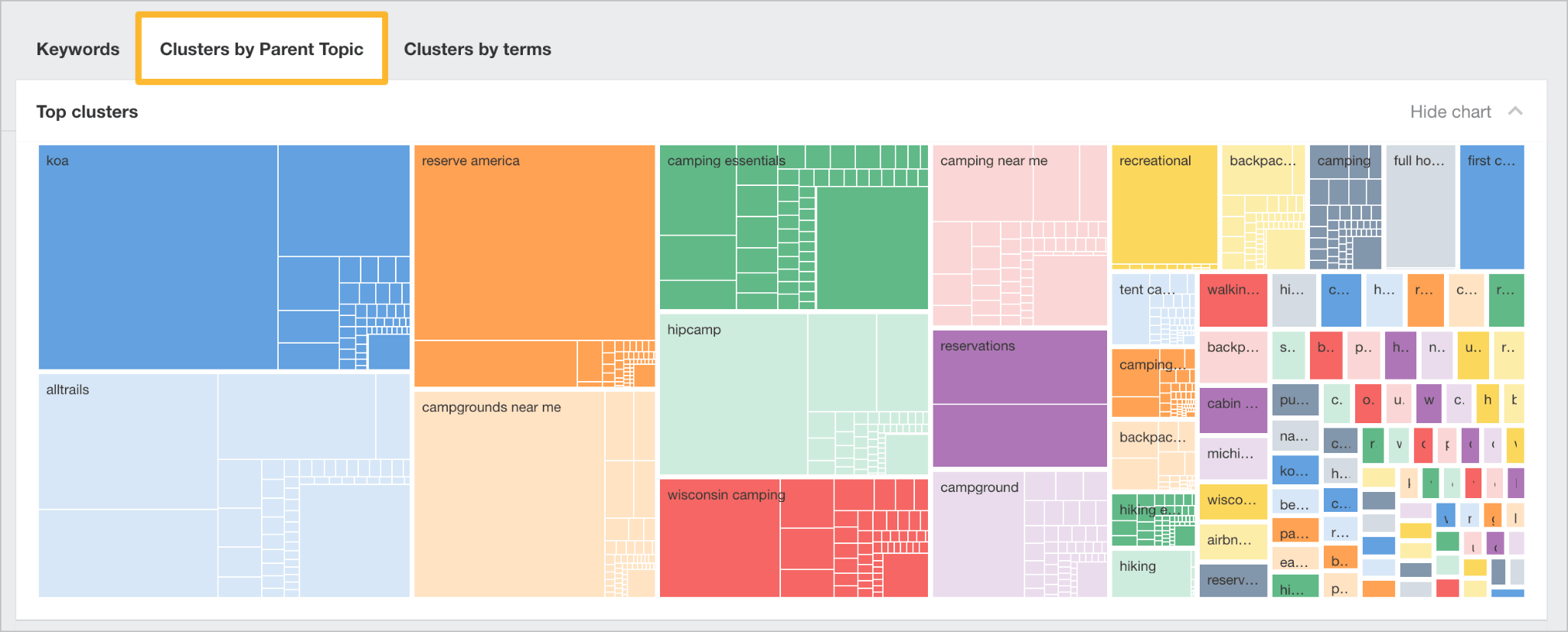
2. Identify cluster content: Click into each Parent Topic to see all the long-tail variations (like the 131 keywords under “campgrounds near me”)—these become your supporting cluster posts that link back to the pillar.
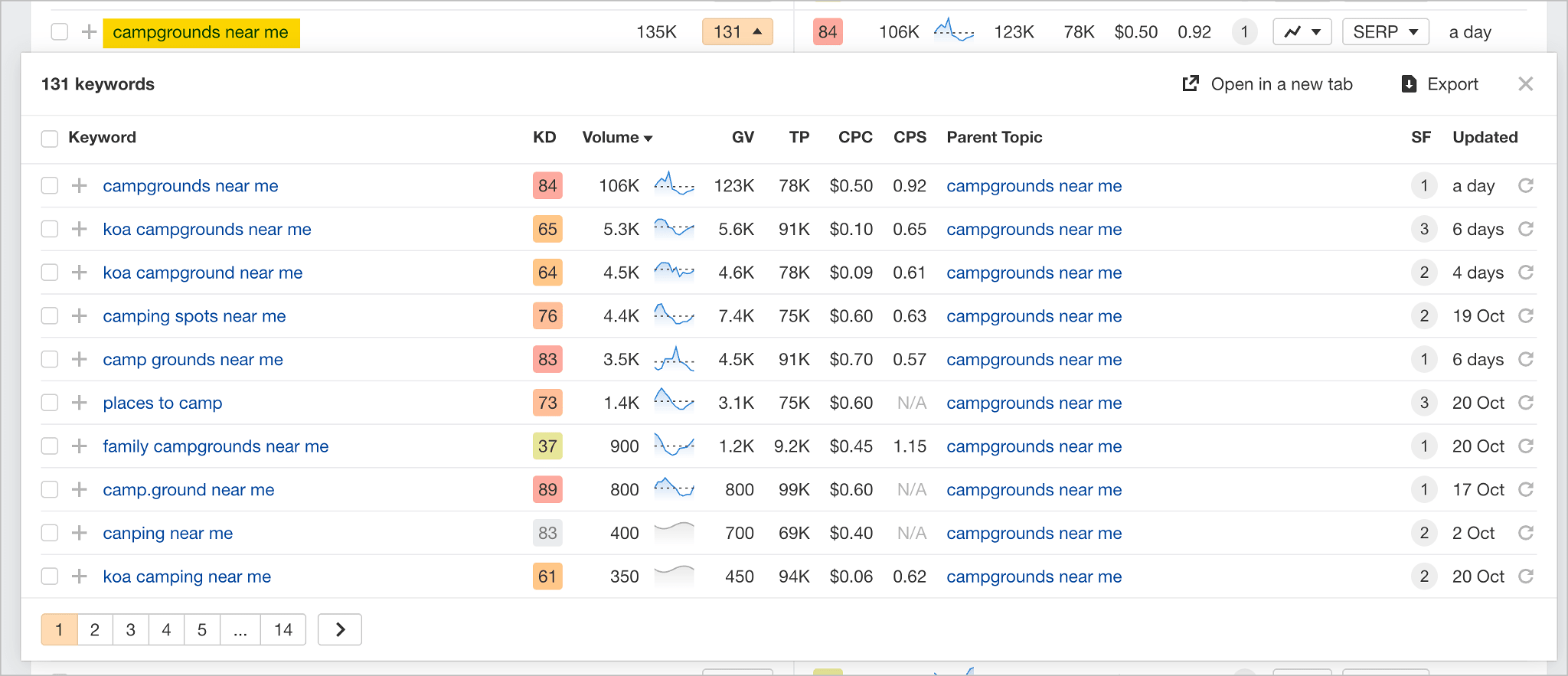
3. Measure the impact of your content pillar: Check if your existing pages are actually ranking for the Parent Topic you intended, or if Google sees them differently—this tells you whether you’ve structured things correctly or need to consolidate/reorganize.
The treemap visualization makes it obvious which topics deserve pillar treatment versus which are just subtopics that belong under a bigger umbrella.
2. Figure out what you need to cover in your content pillar
The key here is to choose subtopics that are highly related to the main topic. Here are a few ways to find them:
A. Draw on your own expertise
If you’re an expert or familiar with the niche, then you probably have an idea of what you need to cover. For example, if you’re a yoga teacher, you likely already know the different types of yoga poses that beginners should master first.
B. Check Wikipedia
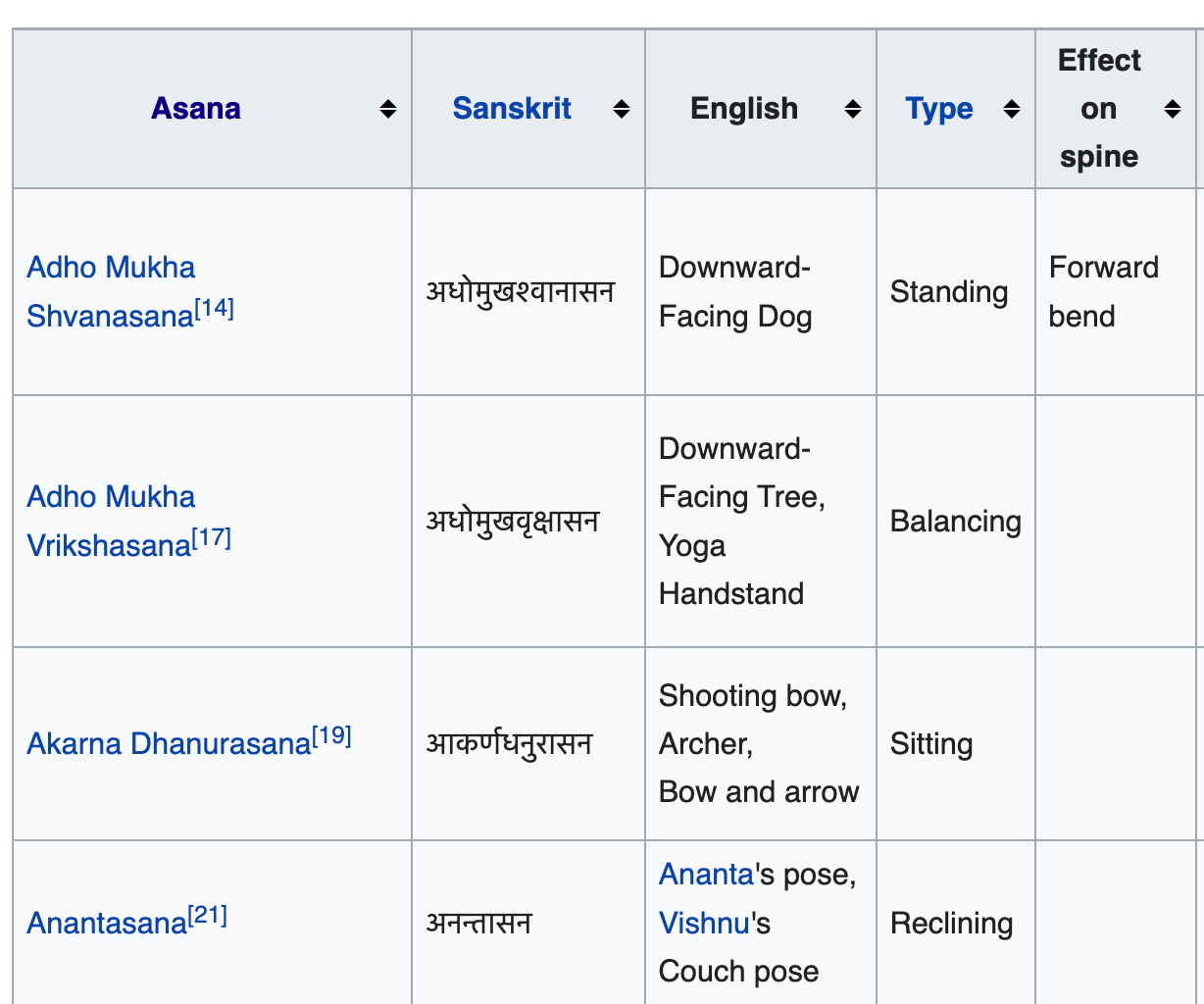
If your topic exists on Wikipedia, it’s a great way to find subtopics since everything is already organized properly.
For example, Wikipedia has a page called “List of asanas,” where different yoga poses are arranged in a table:
C. Get ideas from “Query groups” in Google Search Console
In 2025, Google introduced “Query groups”, a Search Console Insights feature that groups similar search queries.
It shows you distinct queries that reflect a similar user intent. Use these keyword groupings to build your pillar strategy.
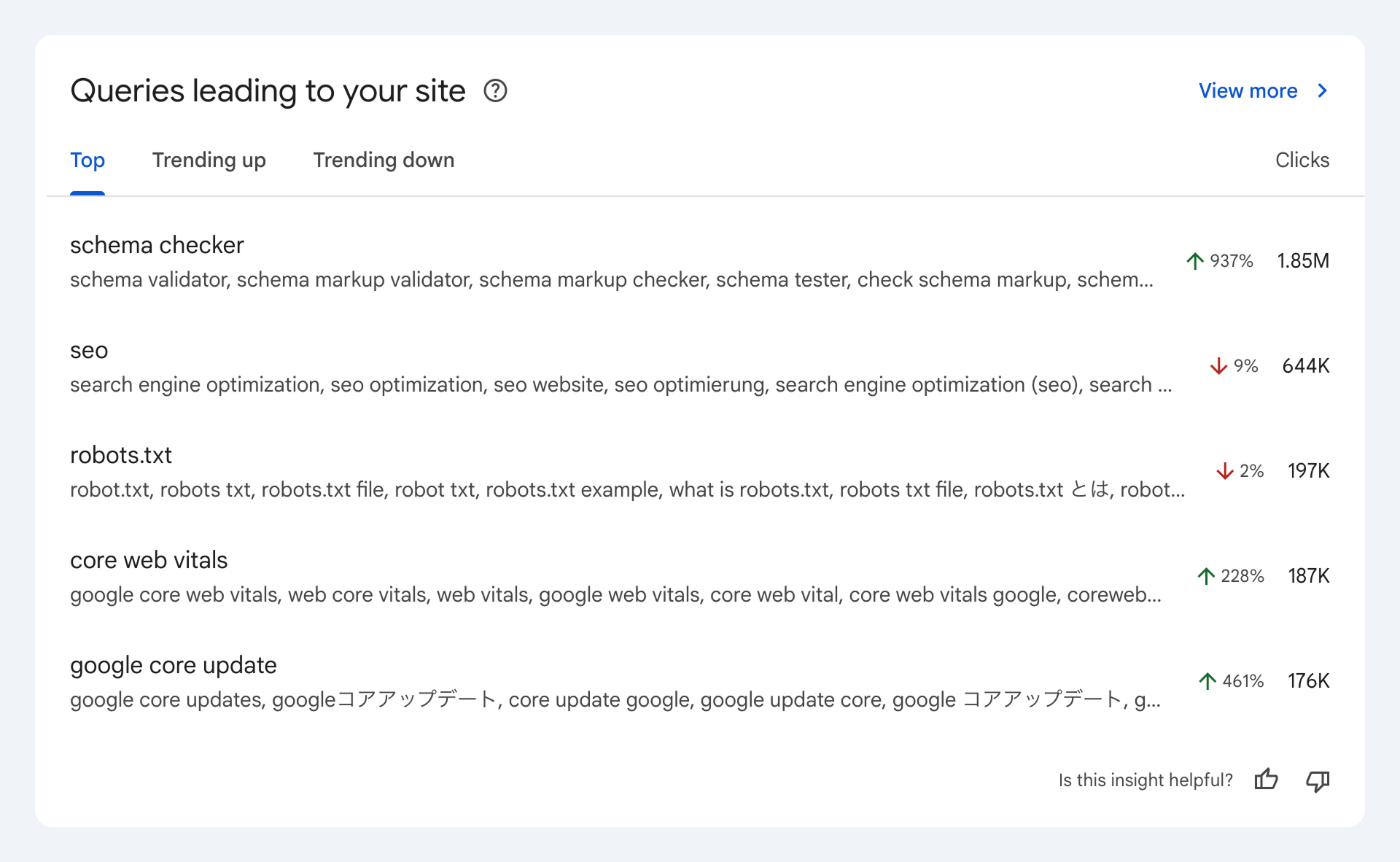
Discover new intent clusters and decide whether they deserve their own pillar page, or find out which keywords are already driving traffic to existing pages so you can upcycle them into a pillar.
You can also check where you might be cannibalizing yourself with separate pages that could be consolidated.
D. Analyze the competition
Since the main goal of a content pillar is to rank for the main topic, you can look at the current top-ranking pages to see what they’re covering.
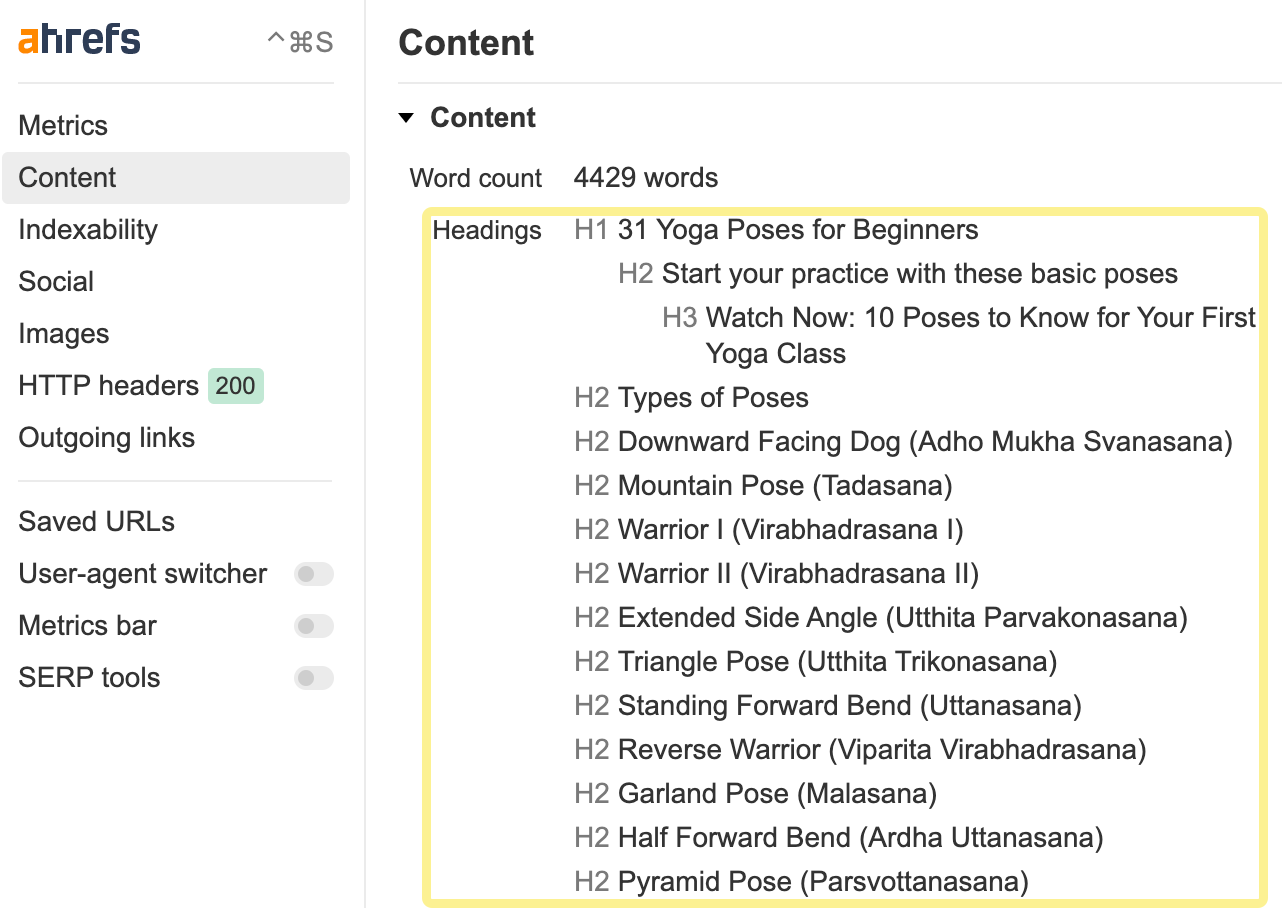
Do this either by scrolling through page one of the SERPs and clicking through each page manually, or by checking out the Content report in Ahrefs’ SEO Toolbar to get a quick check on your competitors’ focus subtopics—including H2s, H3s, H4s, etc.
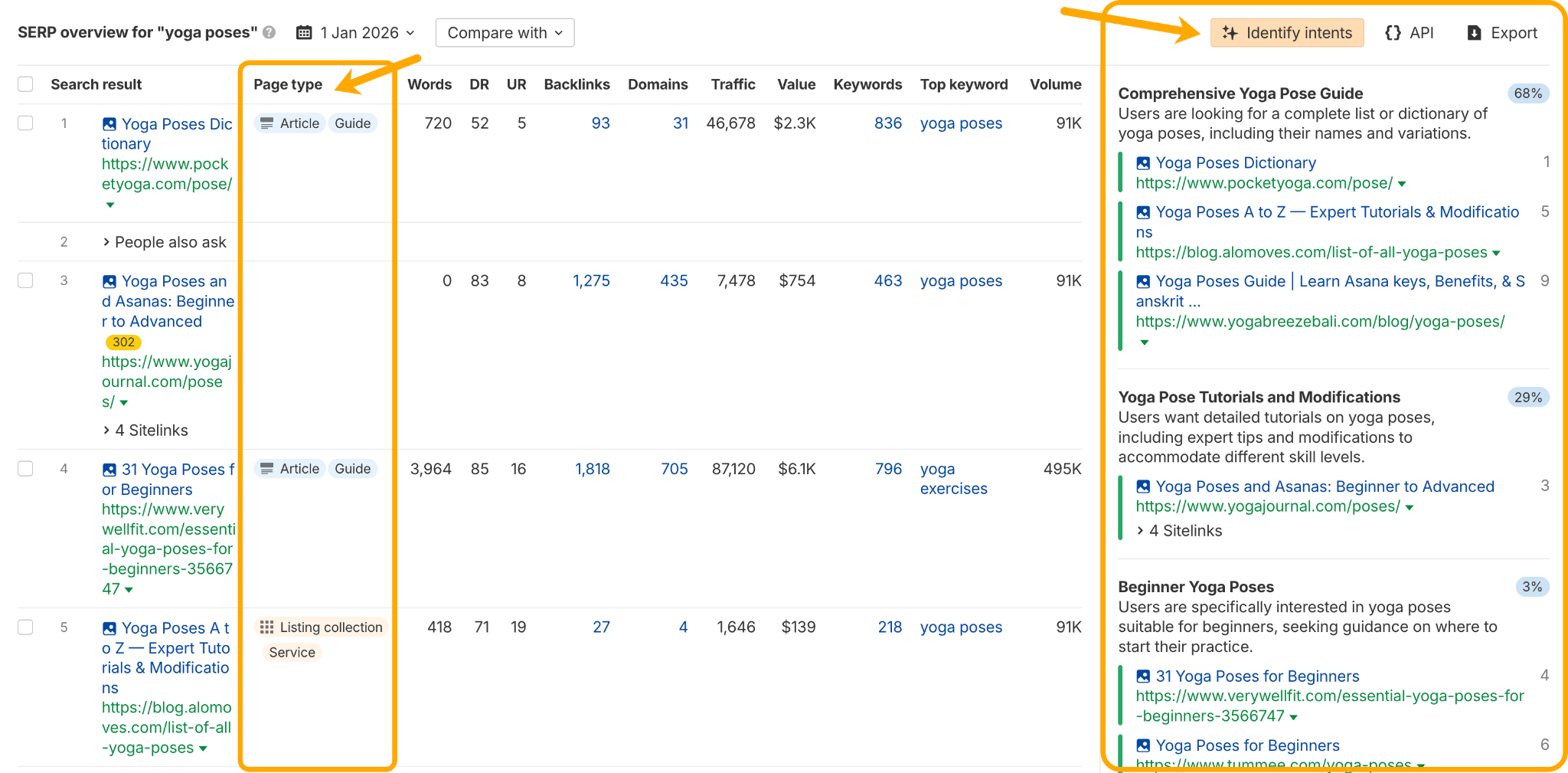
You can also head to Ahrefs’ SERP Overview report in Keywords Explorer.
It will show you which page type to emulate, and give you a breakdown of the dominant search intent.
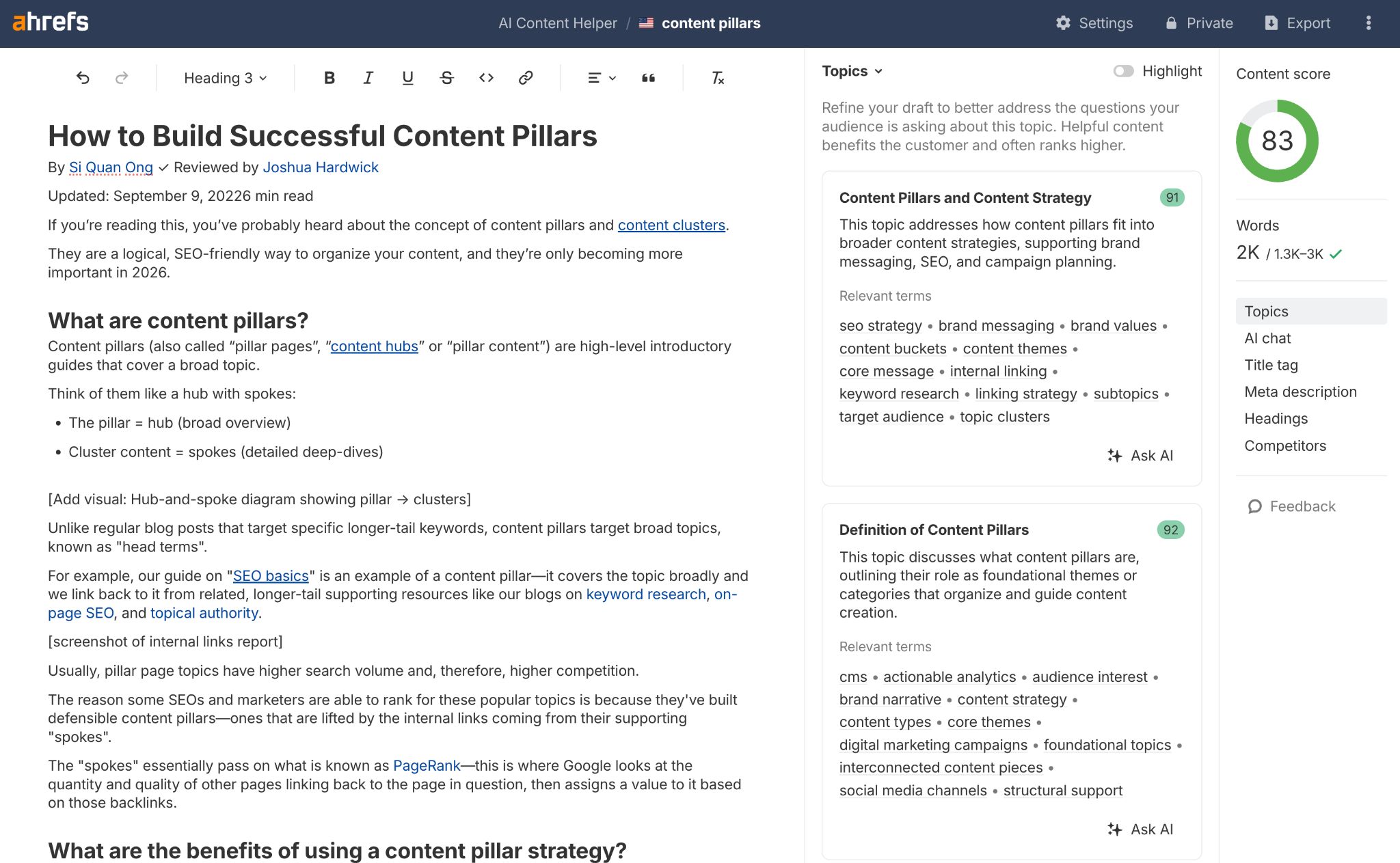
But if you’re looking for a bit more guidance, head to Ahrefs AI Content Helper and drop in your focus keyword.
It will scour all of your pillar page SERP competitors, map their topics and entities, then advise you on what to write, and score you against it—in fact I’m doing it as we speak…
3. Create your content pillar
With your research done, it’s time to create your content pillar.
Think of it as a “portal.” Your goal is to give readers a jump-off point for further discovery of the topic. So keep it relatively light.
You’re not trying to say everything about every subtopic. Leave it to your cluster pages to provide more detail. Stick to what people need to know.
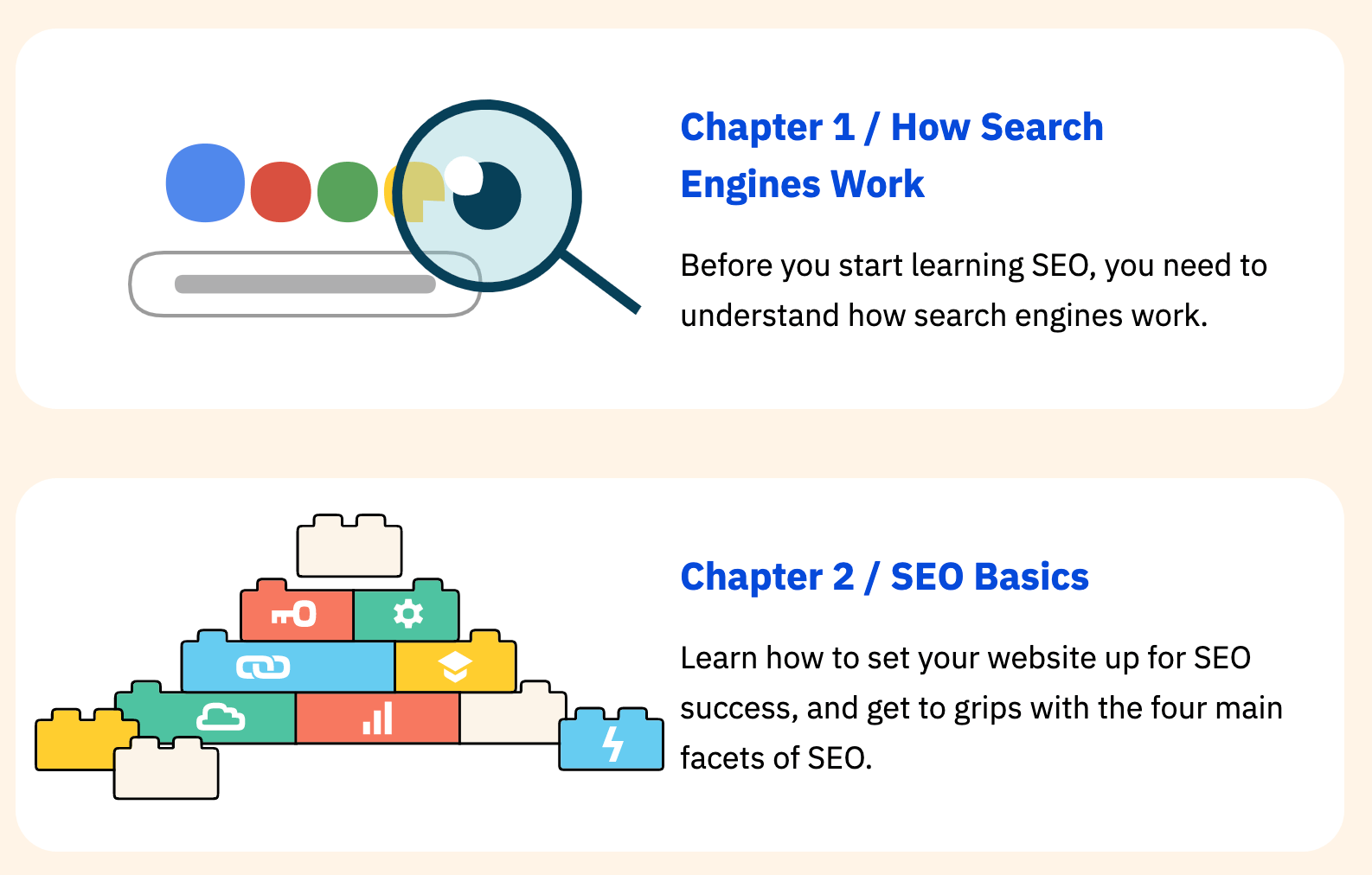
For example, our beginner’s guide to SEO only has a one-sentence introduction to each chapter:
If you have the budget, consider creating a custom design for your content pillar. This is what we did for our own. Not only does a good design make it easier and more engaging for readers to consume content, but it also stands out among other guides—hopefully leading to more shares, links, and traffic.
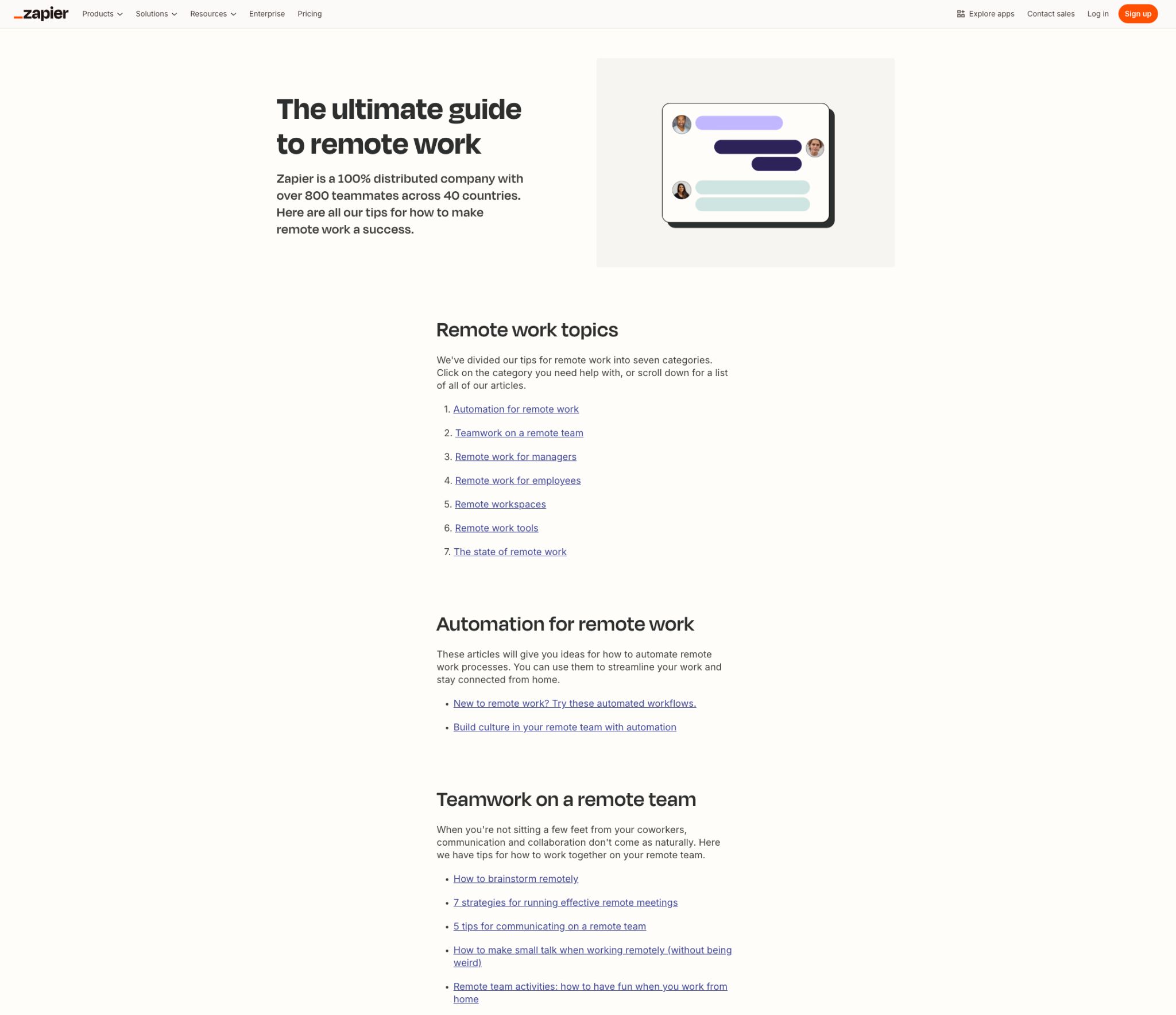
But if you can’t afford a custom design now, don’t worry. You don’t need an incredible design to create useful content pillars. Take a look at Zapier’s pillar page about remote work—it’s basically hyperlinked text:
4. Create your cluster pages
Even though a content pillar is a stand-alone page, it’s almost useless without its supporting cluster pages. So when you’re done with the main pillar page, it’s time to create the rest of the hub.
With the subtopics laid out, you already know what you need to create. It’s simply a matter of executing. But it will take time.
Watch this video to learn how to create content for your cluster pages:
If you have existing content pieces that fit the “hub,” then simply interlink them together.
5. Promote your content pillar
Don’t wait for the content pillar to be discovered—promote it proactively and let people know.
Here are a couple of tactics you can use:
- Get it included in newsletters: There should be many newsletters dedicated to curating the best content in your niche. Find the emails of these newsletter writers and pitch your content pillar for inclusion.
- Build links: Links are an important Google ranking factor. So if you want your content pillar to rank high, you’ll need to build links. Read this start-to-finish guide on how to build links to your pillar page.
Recommended reading: 13 Content Promotion Tactics to Get More Eyeballs on Your Content
Check out these successful content pillars to inspire your own:
- SEO: The Complete Guide for Beginners
- Best High-Yield Savings Accounts
- The Definitive Guide to Healthy Eating in Real Life
You can find more pillar page examples here.
If you’re looking for more guides on how to create content pillars, I’d recommend checking out these articles:
- How to Build an SEO Topical Map (With Template)
- Content Hubs for SEO: How to Get More Traffic and Links With Topic Clusters
- How to Build a Topic Cluster in 10 Minutes
Any questions or comments? Let me know on Twitter.
SEO is essential to marketing any event to help people find it when they search online. Use these SEO tactics to help your events rank high.