


15 Dicas de SEO Fáceis para Obter Melhores Classificações

Por Joshua Hardwick
Former Head of Content na Ahrefs

- 1. Classifique mais rapidamente escolhendo palavras-chave mais fáceis
- 2. Aumente a autoridade da página com links internos
- 3. Classifique para mais palavras-chave de cauda longa com seções de perguntas frequentes
- 4. Corte caminho para o primeiro lugar ao conseguir mais snippets em destaque
- 5. Recupere a sua
- 6. Melhore as suas chances de classificação correspondendo com a intenção de pesquisa
- 7. Obtenha mais cliques criando tags de título atraentes
- 8. Atualize conteúdo antigo para melhorar as suas classificações no Google
- 9. Obtenha backlinks poderosos com a plataforma HARO
- 10. Melhore o seu Core Web Vitals para aumentar a experiência na página
- 11. Agrupe páginas semelhantes para classificar com mais facilidade
- 12. Crie conteúdo perfeito e minucioso para classificar em ainda mais palavras-chave
- 13. Conquiste backlinks usando estatísticas do seu setor de negócio
- 14. Melhore o E-E-A-T incluindo citações de especialistas
- 15. Ajude o Google a entender o conteúdo usando URLs curtos
Se você pretende direcionar mais tráfego para o seu website nos mecanismos de busca, precisa portanto de obter uma classificação mais alta para as palavras-chave que as pessoas estão procurando.
Abaixo ficam algumas dicas de SEO para ajudá-lo a fazer isso mesmo.
- 1. Classifique mais rapidamente escolhendo palavras-chave mais fáceis
- 2. Aumente a autoridade da página com links internos
- 3. Classifique para mais palavras-chave de cauda longa com seções de perguntas frequentes
- 4. Corte caminho para o primeiro lugar ao conseguir mais snippets em destaque
- 5. Recupere a sua
- 6. Melhore as suas chances de classificação correspondendo com a intenção de pesquisa
- 7. Obtenha mais cliques criando tags de título atraentes
- 8. Atualize conteúdo antigo para melhorar as suas classificações no Google
- 9. Obtenha backlinks poderosos com a plataforma HARO
- 10. Melhore o seu Core Web Vitals para aumentar a experiência na página
- 11. Agrupe páginas semelhantes para classificar com mais facilidade
- 12. Crie conteúdo perfeito e minucioso para classificar em ainda mais palavras-chave
- 13. Conquiste backlinks usando estatísticas do seu setor de negócio
- 14. Melhore o E-E-A-T incluindo citações de especialistas
- 15. Ajude o Google a entender o conteúdo usando URLs curtos
1. Classifique mais rapidamente escolhendo palavras-chave mais fáceis
Muitos fatores afetam a dificuldade de classificação. Porém, se você verificar páginas de websites de calibre semelhante entre os cinco primeiros resultados, mas com poucos backlinks, isso geralmente é um sinal de uma palavra-chave fácil de classificar.
Aqui fica como encontrar essas palavras-chave:
- Vá até ao Keywords Explorer
- Coloque um tópico vasto
- Vá até ao relatório de Termos correspondentes
- Defina o filtro Dificuldade da palavra-chave (KD) para ≤10
- Defina o filtro "Menor DR" (top 5) em consonância com o DR do seu website (você pode verificar isso através do Site Explorer)
Por exemplo, a página de classificação mais alta para "fones de ouvido para capacete" tem um link para um website e encontra-se dentro de um website com DR 87:
2. Aumente a autoridade da página com links internos
Os links internos podem passar no PageRank, o que pode ajudar a aumentar as classificações de uma página, de acordo com as nossas dicas de SEO.
Veja como encontrar oportunidades de links internos gratuitamente usando a ferramenta Ahrefs Webmaster (AWT):
- Rastreie seu website com o Site Audit
- Vá até ao relatório de Oportunidades de Link
- Pesquise o URL da página que você deseja impulsionar
- Escolha "Página de destino" no menu suspenso
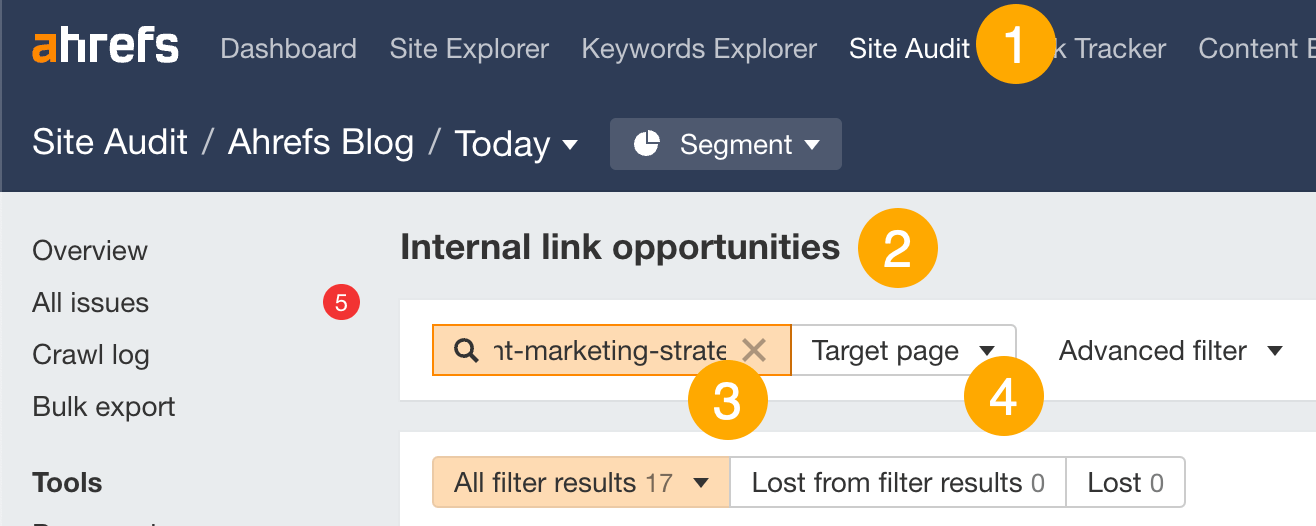
Desta forma, você verá uma lista de oportunidades de links internos com maior contexto.
Por exemplo, aqui deixo uma sugestão para vincular a nossa lista de ferramentas de marketing de conteúdo ao nosso post sobre como criar uma estratégia de marketing de conteúdo com "estratégia de marketing de conteúdo" como o texto âncora.

3. Classifique para mais palavras-chave de cauda longa com seções de perguntas frequentes (FAQs)
As secções de perguntas frequentes respondem a perguntas populares sobre um determinado tópico. Adicioná-los à sua página pode ajudá-lo a ter uma classificação mais alta para palavras-chave de cauda longa. Esta é uma das dicas de SEO que deve ter em conta, sempre que quiser criar uma secção de perguntas frequentes no seu website.
Por exemplo, o nosso guia para tags do tipo H1 responde qual o tamanho que elas devem ter quando enquadradas em uma secção de perguntas frequentes.
Como resultado, este guia da nossa autoria obteve uma classificação alta para uma pesquisa (de cauda longa) relacionada com o mesmo:
Veja como encontrar perguntas frequentes para responder:
- Vá até ao Explorador de palavras-chave
- Insira o tópico, por exemplo, "tag h1"
- Depois, vá até ao relatório de Termos correspondentes
- Altere o separador de "Todos" para "Perguntas"
4. Corte caminho para o primeiro lugar ao conseguir mais snippets em destaque
Os snippets em destaque são respostas rápidas nos resultados de pesquisa que o Google extrai de uma classificação de página entre os 10 primeiros. Muitas vezes, você pode “cortar” o seu caminho para o topo do Google ao ganhar e conseguir mais snippets.
Para esta dica de SEO, aqui fica como encontrar as oportunidades mais fáceis de você conseguir:
- Vá até ao Site Explorer da Ahrefs
- Coloque o seu domínio (ou, se preferir testar primeiro, use como exemplo ahrefs.com/blog)
- Vá até ao relatório de Palavras-chave orgânicas
- Filtre por palavras-chave nas posições de 1 a 5
- Filtre por palavras-chave que mostram snippets em destaque, ativando a opção "where target doesn't rank"
- Procure palavras-chave para a qual a sua página não tenha a resposta e adicione-as
Por exemplo, o snippet para "operadores de busca no google" é uma definição do que isso é:
Para ter uma chance de obter um snippet no Google, precisamos de definir o que esse termo significa através da nossa página.
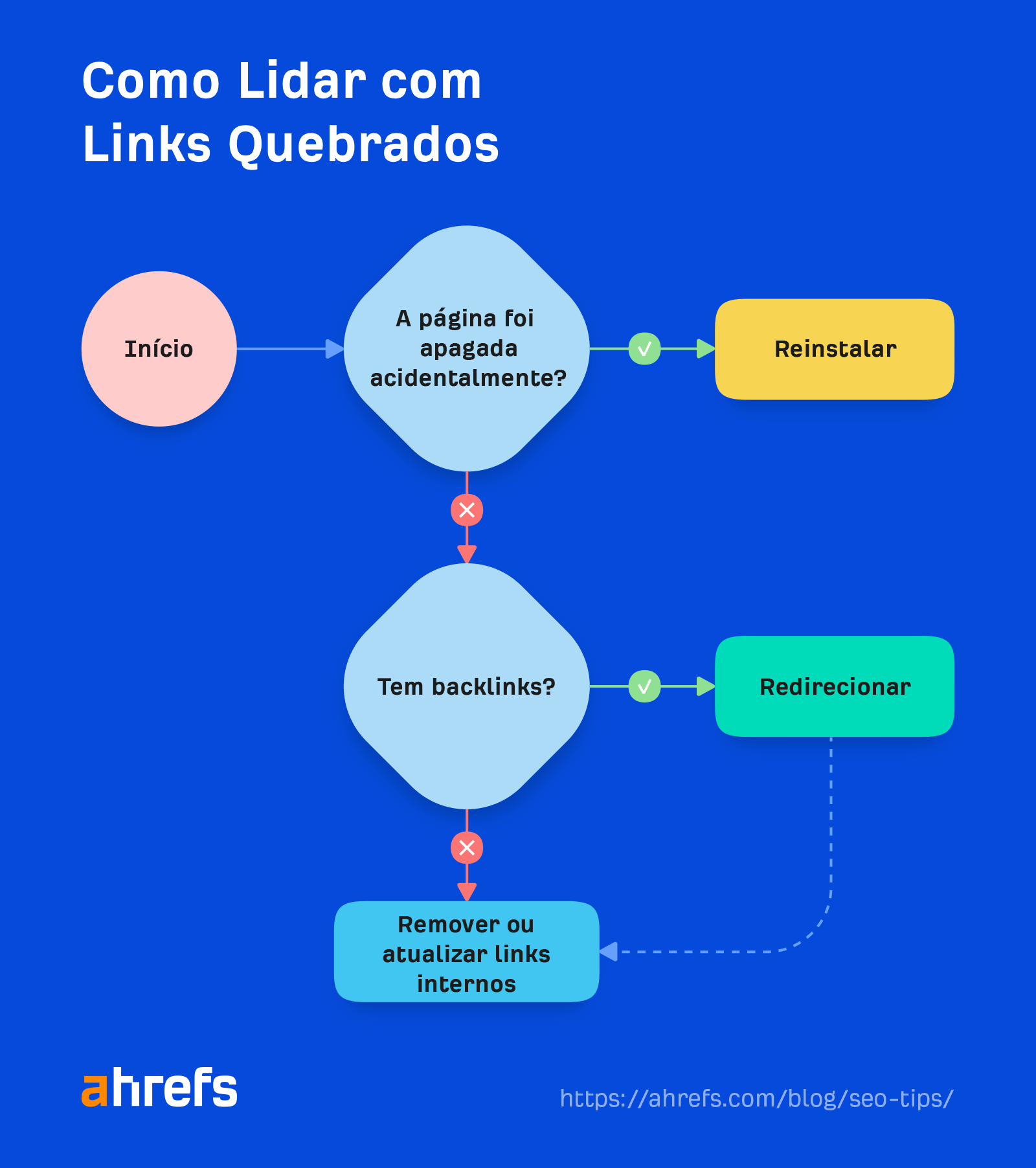
5. Recupere a sua "autoridade" corrigindo páginas mortas com backlinks
Você deve ter em mente, com estas dicas de SEO que aqui apresentamos, que backlinks só podem ajudá-lo a classificar mais alto se apontarem para páginas de destino.
Veja como encontrar páginas mortas com backlinks:
- Coloque o seu website no Site Explorer do Ahrefs
- Vá até ao relatório O melhor por links
- Filtre as páginas com o código HTTP "404 não encontrado"
Aqui fica como corrigir esse erro:
6. Melhore as suas chances de classificação correspondendo com a intenção de pesquisa
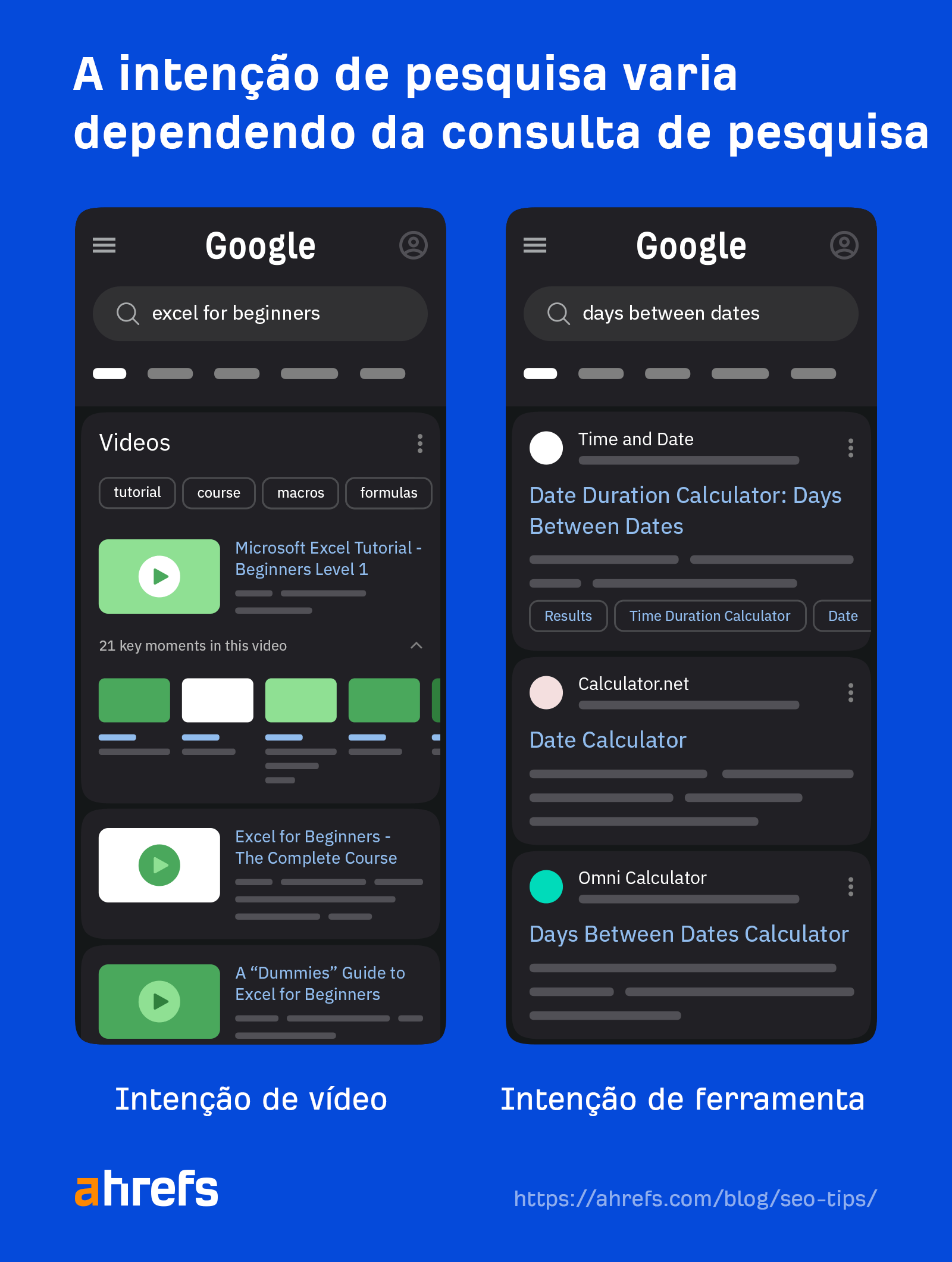
As pessoas geralmente procuram um desses tipos de conteúdo quando pesquisam no Google:
- Postagem no blog
- Ferramenta interativa
- Vídeo
- Página de categoria de produto
- Página de produto (com um produto em específico)
Para ter a melhor chance de obter uma melhor classificação, você deve alinhar o seu conteúdo com a intenção de pesquisa. Esta é uma das dicas de SEO fundamentais que deve ter em mente.
Você pode descobrir isso olhando para as páginas mais bem classificadas.
Por exemplo, ferramentas interativas dominam a primeira página dos resultado de pesquisa para o termo "dias entre datas". Contudo, os vídeos dominam a primeira página da pesquisa com o termo "excel para iniciantes":
7. Obtenha mais cliques criando tags de título atraentes
As tags de título são um fator de classificação pequeno, mas comprovado, e o Google geralmente as usa para mostrar snippets de pesquisa nos resultados.
Aqui está o nosso conselho para escrever uma tag de título convincente:
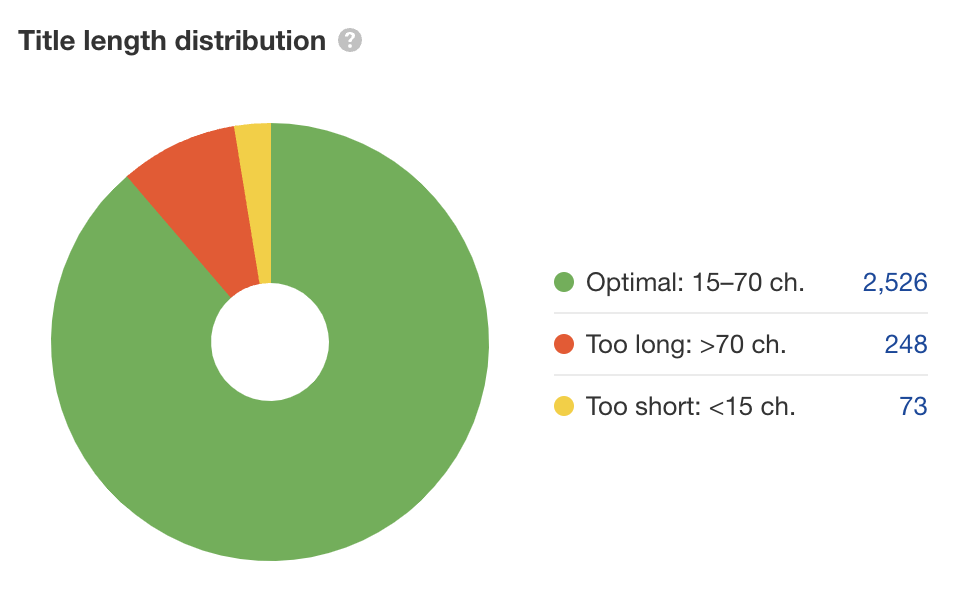
- Mantenha-a curta – Idealmente com menos de 70 caracteres.
- Corresponda com a intenção de pesquisa – mostre que você tem o que as pessoas desejam encontrar.
- Seja descritivo – Dê às pessoas o que eles querem saber, sem rodeios.
- Não se foque no clickbait – Concentre-se em entregar valor "em excesso".
- Inclua a sua palavra-chave – ou uma variação aproximada.
Procurando páginas com problemas de tags de título?
Obtenha uma conta gratuita na ferramenta Ahrefs Webmaster Tools (AWT), rastreie o seu website com o Site Audit e consullte o relatório de Conteúdo.
8. Atualize conteúdo antigo para melhorar as suas classificações no Google
Boas classificações raramente duram para sempre, por isso você precisa atualizar o conteúdo periodicamente para mantê-las.
Como uma das dicas de SEO que aqui apresentamos, veja como encontrar conteúdo em declínio com o Google Search Console:
- Vá até ao relatório de resultados da pesquisa
- Clique no filtro “Data” e selecione o modo “Comparar”
- Escolha “Comparar os últimos 6 meses com o período anterior”
- Clique em Aplicar para confirmar as alterações
- Clique na guia "Páginas" na tabela
- Classifique os resultados por “diferença de cliques” de baixo para cima
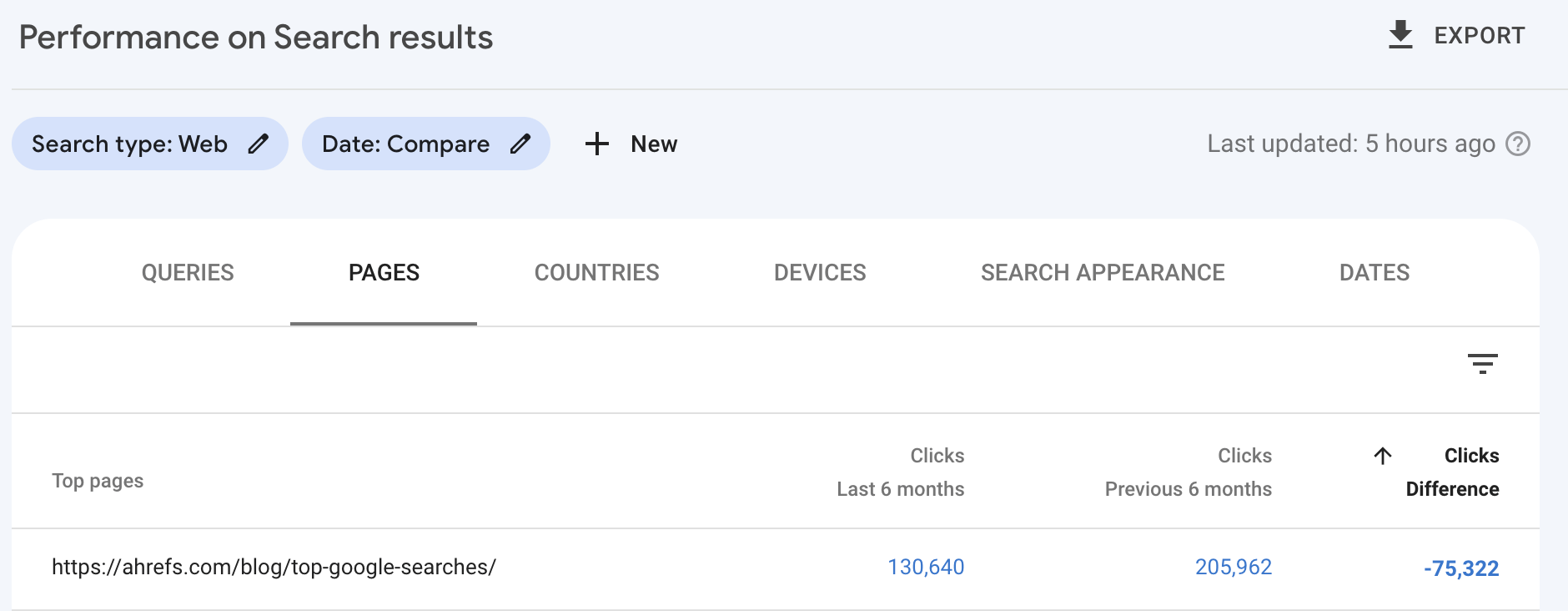
A partir daí, procure páginas onde as pessoas estavam à espera de informações atuais e relevantes (e atualize-as).
Por exemplo, veja a nossa lista das principais pesquisas do Google. As classificações desta página quase certamente caíram porque os pesquisadores querem uma lista atualizada.
9. Obtenha backlinks poderosos com a plataforma HARO
A plataforma HARO é um serviço que conecta jornalistas e fontes (e, sim, esta plataforma pode ser incluída como um apoio às nossas dicas de SEO neste post).
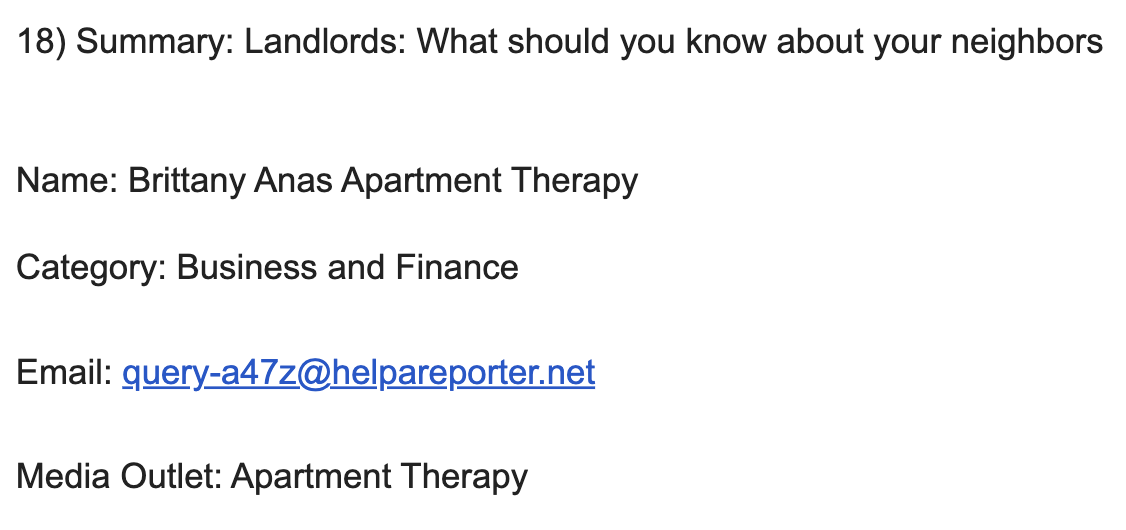
Inscreva-se como fonte e receberá e-mails diários com perguntas de jornalistas de vários canais. Responda a essas perguntas com regularidade e você poderá ganhar menções e backlinks que podem ajudá-lo a ter uma classificação mais alta no Google.
Por exemplo, aqui está um jornalista da Apartment Therapy (com um DR 87) solicitando informações dos proprietários:
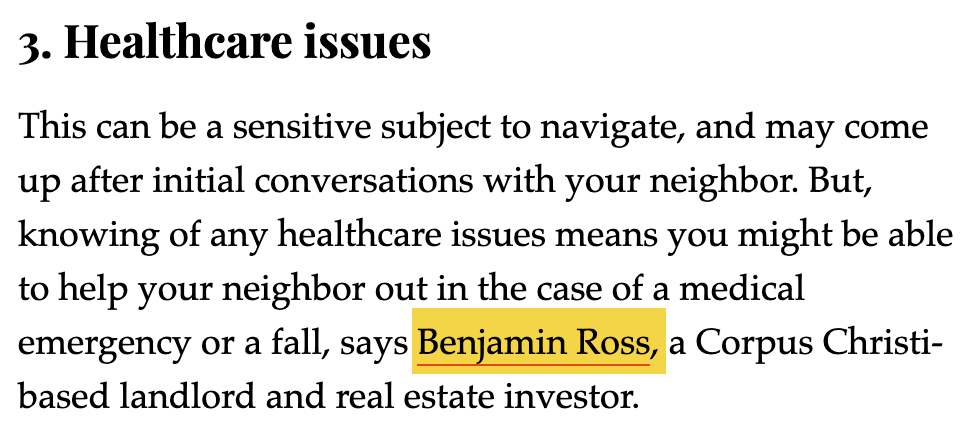
Aqui está o link que um proprietário ganhou ao responder a esta solicitação com eficácia:
10. Melhore os Core Web Vitals para aumentar a experiência na página
Esta é uma das dicas de SEO provavelmente mais técnicas que aqui apresentamos. Os Core Web Vitals são métricas de velocidade que o Google usa para medir a experiência do usuário como parte dos seus sinais de experiência na página.
Eles não são um fator de classificação super forte, mas a verdade é que podem ter influências em suas classificações.
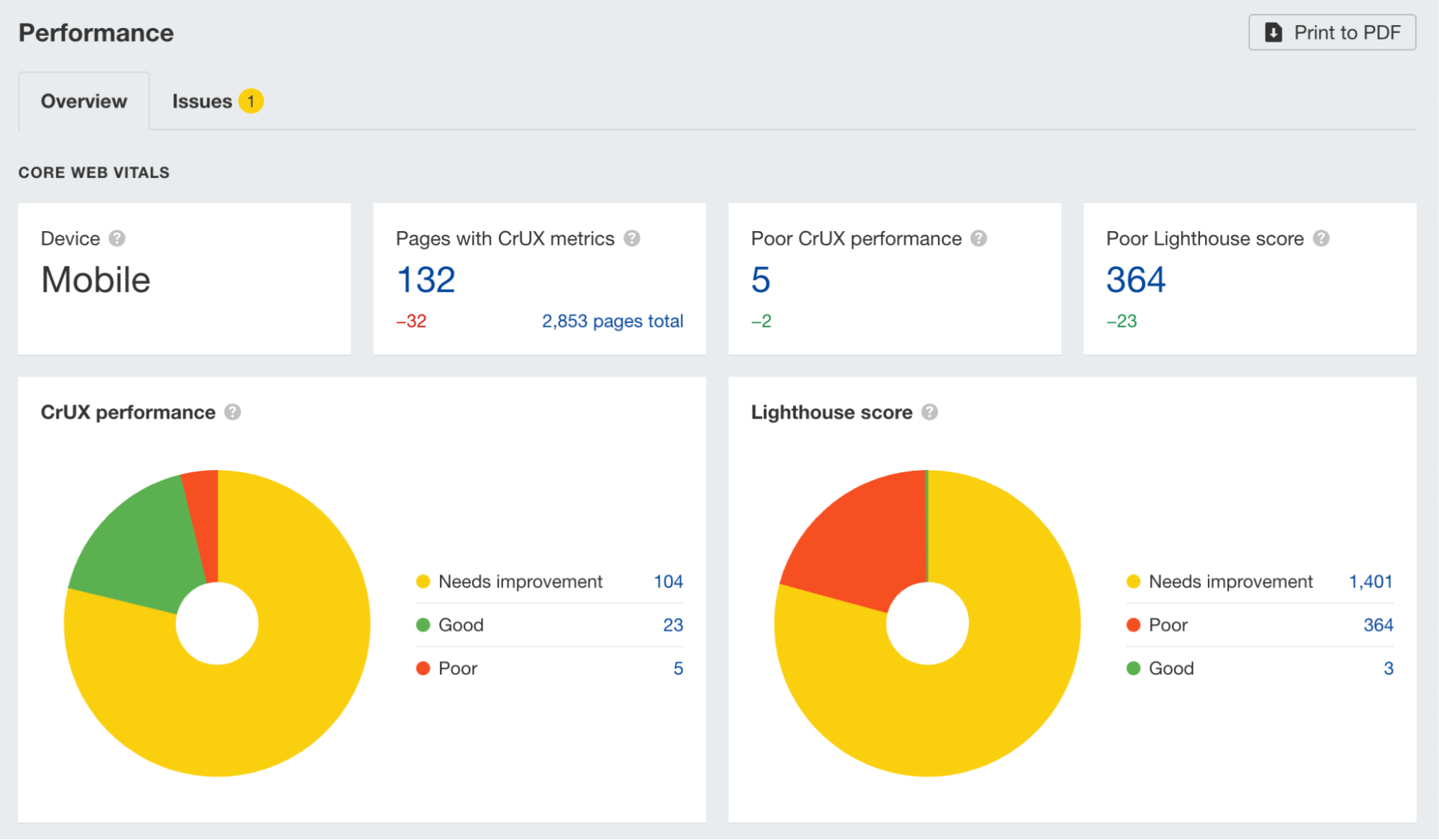
Para verificar se os Core Web Vitals precisam de trabalho adicional da sua parte, use o relatório Core Web Vitals no Google Search Console ou o relatório de Desempenho no Site Audit.
11. Agrupe páginas semelhantes para classificar com mais facilidade
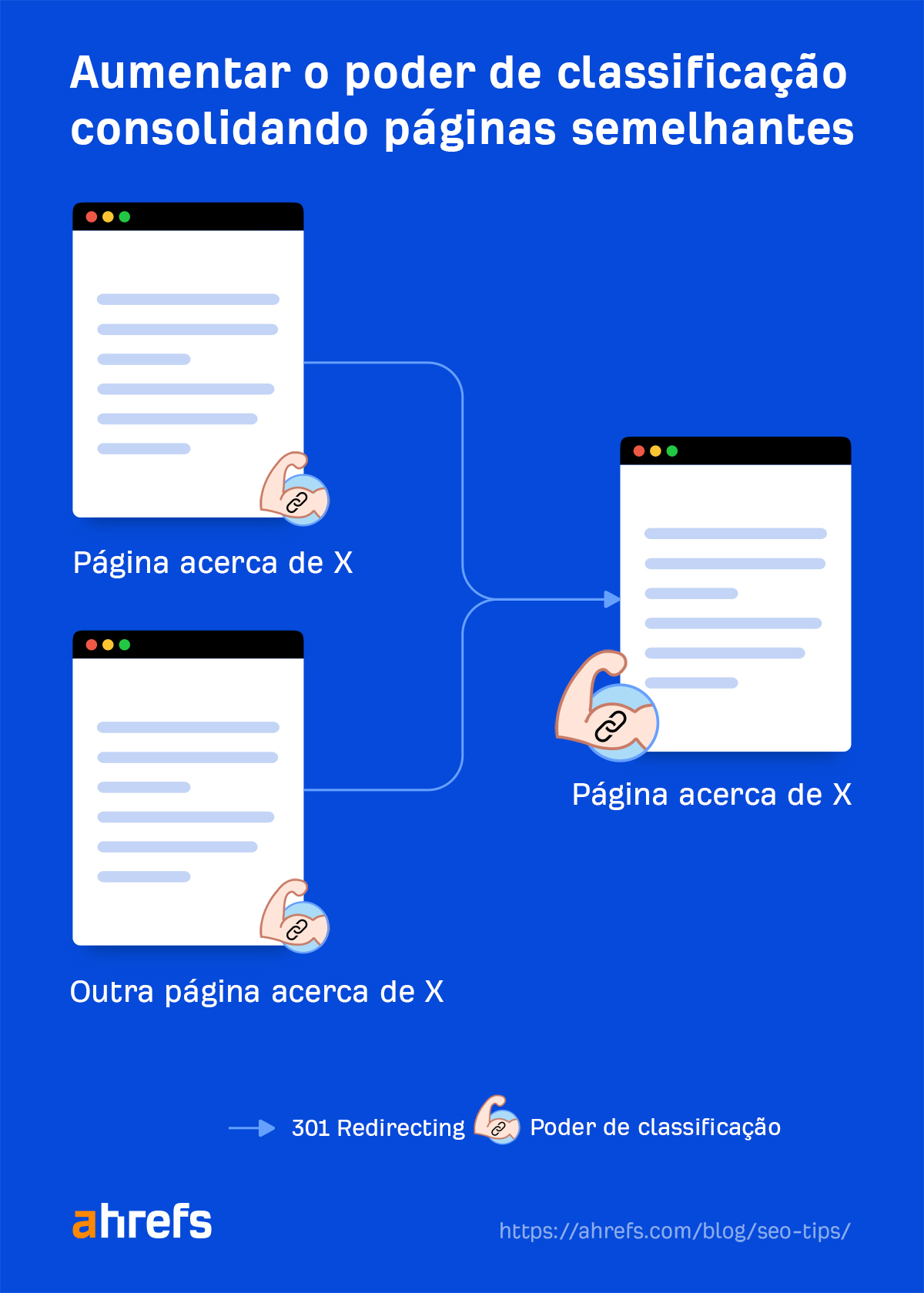
Os backlinks são um fator importante de classificação, por isso faz sentido combinar páginas muito semelhantes para consolidar a sua autoridade e criar uma página com mais "poder de classificação".
Por exemplo, em 2017, tínhamos dois guias semelhantes para a construção de links quebrados classificados nas posições 5 e 6:
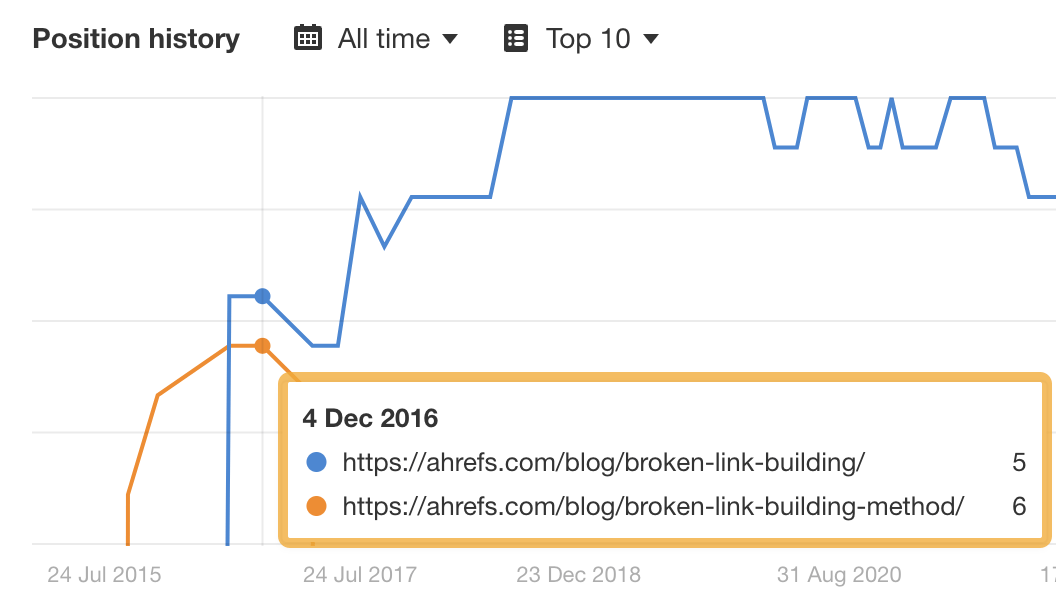
E o que fizemos de seguida:
- Atualizamos o primeiro guia, juntando conhecimento e valor acrescentado de ambos
- Redirecionamos o segundo guia usando um redirecionamento 301
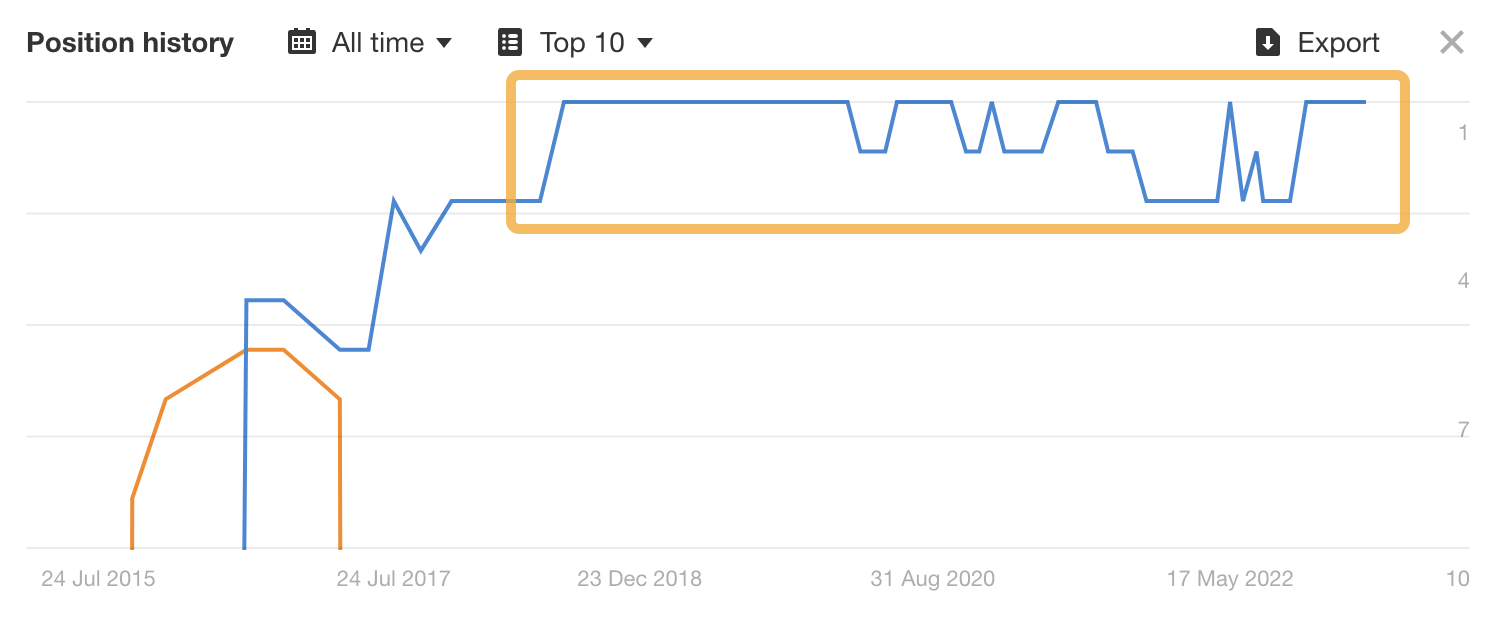
A página disparou para a primeira posição quase imediatamente e, ainda hoje, está entre as três primeiras desde então.
12. Crie conteúdo perfeito e minucioso para classificar em ainda mais palavras-chave
Crie conteúdo completo para classificar para mais palavras-chave.
Veja como encontrar os melhores subtópicos para cobrir:
- Coloque a sua principal palavra-chave no Keywords Explorer
- Vá até à visão geral da página dos resultados de pesquisa (SERP) e selecione algumas páginas de classificação superior à sua
- Clique em "Abrir em" e selecione "Diferencial de conteúdo"
Se fizermos isso também para a palavra-chave "marketing de afiliados", podemos ver que as páginas com melhor classificação também estão classificadas entre as 10 principais para estas:
- o que é marketing de afiliados
- mercado de afiliados
- mercado de afiliados como funciona
Ao abordar esses subtópicos em um artigo sobre "marketing de afiliados", podemos classificar para eles e, com isso, obter mais tráfego.
13. Conquiste backlinks usando estatísticas do seu setor de negócio
Blogueiros e jornalistas costumam citar estatísticas em seu conteúdo. Esta é uma das dicas de SEO que podem fazer a diferença. Se você puder ser a fonte dessas mesmas estatísticas, poderá conquistar mais backlinks de qualidade para o seu website.
Veja como encontrar palavras-chave de estatísticas para poder segmentar:
- Insira alguns tópicos com grande poder de alcance, usando o Keywords Explorer
- Vá até ao relatório Termos correspondentes
- Adicione "estatísticas" ao filtro "Incluir"
Por exemplo, há cerca de 150 pesquisas mensais no Brasil para "estatística de trabalho":
Se você selecionar e publicar algumas estatísticas sobre o mercado de trabalho em uma página só e classificar para esse termo, é provável que blogueiros e jornalistas consigam encontrar a sua página ao pesquisar estatísticas de suporte para seus artigos. Eles também provavelmente estariam recetivos a criar um link para sua página como fonte.
No nosso caso e ao nosso contexto, foi o que fizemos em 2020. A nossa página agora tem backlinks de 1.900 sites. Por isso, esta deve ser uma das dicas de SEO a ter em mente para ganhar maior autoridade nos motores de busca.
14. Melhore a sua E-E-A-T incluindo citações de especialistas
E-E-A-T significa, em português: Experiência, Competência, Autoridade e Confiabilidade
Não é um fator de classificação direto e que tem grande impacto nas classificações, mas o próprio Google diz que usa “uma variedade de sinais como o proxy para saber se o conteúdo parece corresponder a um nível adequado de E-E-A-T”.
Backlinks são um desses sinais. Incluir citações de especialistas pode ajudá-lo a obter mais backlinks ao longo do tempo.
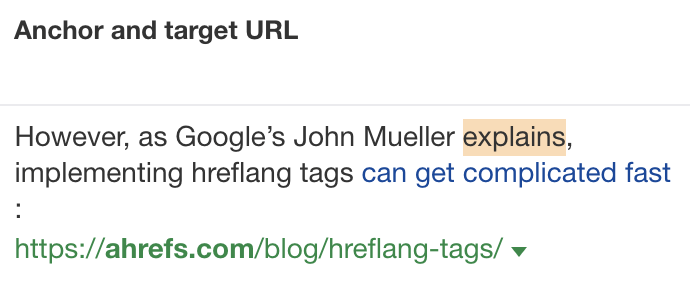
Por exemplo, aqui está um backlink que ganhamos para o nosso guia de tags "hreflang", graças à citação de John Mueller:
15. Ajude o Google a entender o conteúdo usando URLs curtos
O Google diz para você usar palavras relevantes na sua URL que digam respeito ao conteúdo do seu website. A maneira mais fácil de fazer isso é definir o URL tal como sua palavra-chave em foco.
Por exemplo, a nossa palavra-chave principal para esta postagem é "dicas de SEO". Por isso, esse é o nosso URL:

Se os seus URLs tiverem assuntos secundários dentro dele, use o bom senso para mantê-los sempre curtos e relevantes.
Por exemplo, a palavra-chave alvo para a nossa definição de backlinks é "o que são backlinks". Porém, como já temos /seo/glossary/ na URL, vamos usar apenas /backlinks/, uma vez que fica claro no restante da URL que é uma definição.

Receba mais dicas de SEO
Assista ao vídeo abaixo ou faça o nosso curso gratuito de SEO para iniciantes para aprender mais dicas e ideias para melhorar bastante sua classificação nos motores de busca, como o Google.
Diretor de conteúdo da Ahrefs (ou, de forma simplificada, sou o responsável por garantir que cada artigo no blog que aqui publicamos é ÉPICO).