11 Motores de Busca Alternativos ao Google, Focados em Maior Privacidade

Por Rebecca Liew
Autor convidado
Alternativas ao Google estão em todo o lugar, mas será que são boas o suficiente?
Para responder a essa pergunta, pesquisei alguns mecanismos de pesquisa populares e alternativos ao Google por um dia ou dois, usando-os no meu trabalho diário.
O meu principal critério de avaliação foi como cada mecanismo de busca se saiu relativamente ao seu compromisso de proteger os dados e a privacidade dos usuários. Aqui estão os 11 que obtiveram a minha aprovação:
1. Startpage
O Startpage é efetivamente o Google sem o rastreamento. E, por esta razão, ocupa o nosso primeiro lugar.
De acordo com o mecanismo de pesquisa com sede na Holanda, as suas consultas são anónimas antes que os resultados da pesquisa sejam extraídos do Google. Isso significa que todas as informações de identificação são ocultadas, incluindo o seu endereço IP. Nenhum cookie de rastreamento é usado também, neste sentido.
O Startpage está ainda em conformidade com a lei de GDPR, um regulamento da União Europeia que protege os dados dos usuários. Ainda assim, você deveria saber que o país faz parte da aliança de inteligência “Nine Eyes”, que partilha dados de vigilância em massa com oito países.
Funcionalidade em destaque

A funcionalidade de Visualização Anónima permite que você visite websites a partir dos seus resultados de pesquisa anonimamente para computadores e dispositivos móveis. Esta funcionalidade comporta-se essencialmente como uma VPN (gratuita).
2. DuckDuckGo
O DuckDuckGo é, seguramente, o mecanismo de busca privado mais conhecido no mercado – e a antítese do Google quando se trata de favorecer a privacidade do usuário. (Embora monetize com as pesquisas do usuário.)
O seu histórico de pesquisa é salvo de maneira não identificável, o que significa que cookies de rastreamento e identificadores pessoais, como endereços de IP, não sejam armazenados.
Esta é uma grande vantagem para nós, apesar do facto de que os resultados foram extraídos de mais de 400 fontes, incluindo o seu próprio rastreador (DuckDuckBot), websites de crowdsourcing como o Wikipedia e parceiros como o Bing e o Yahoo.
Para testar a sua eficácia, conectei as mesmas palavras-chave ao Google e ao DuckDuckGo – de “atualizações COVID-19” a “Kaws Marina Bay”. Os resultados foram muitas vezes semelhantes e, portanto, descobri que este aspeto também é verdade para as notícias de última hora.
Uma possível desvantagem é que a DuckDuckGo está sediada nos EUA e, por extensão, na aliança de inteligência “Five Eyes” – que frequentemente coleta dados de vigilância em massa de empresas de servidores na internet.
Funcionalidade em destaque
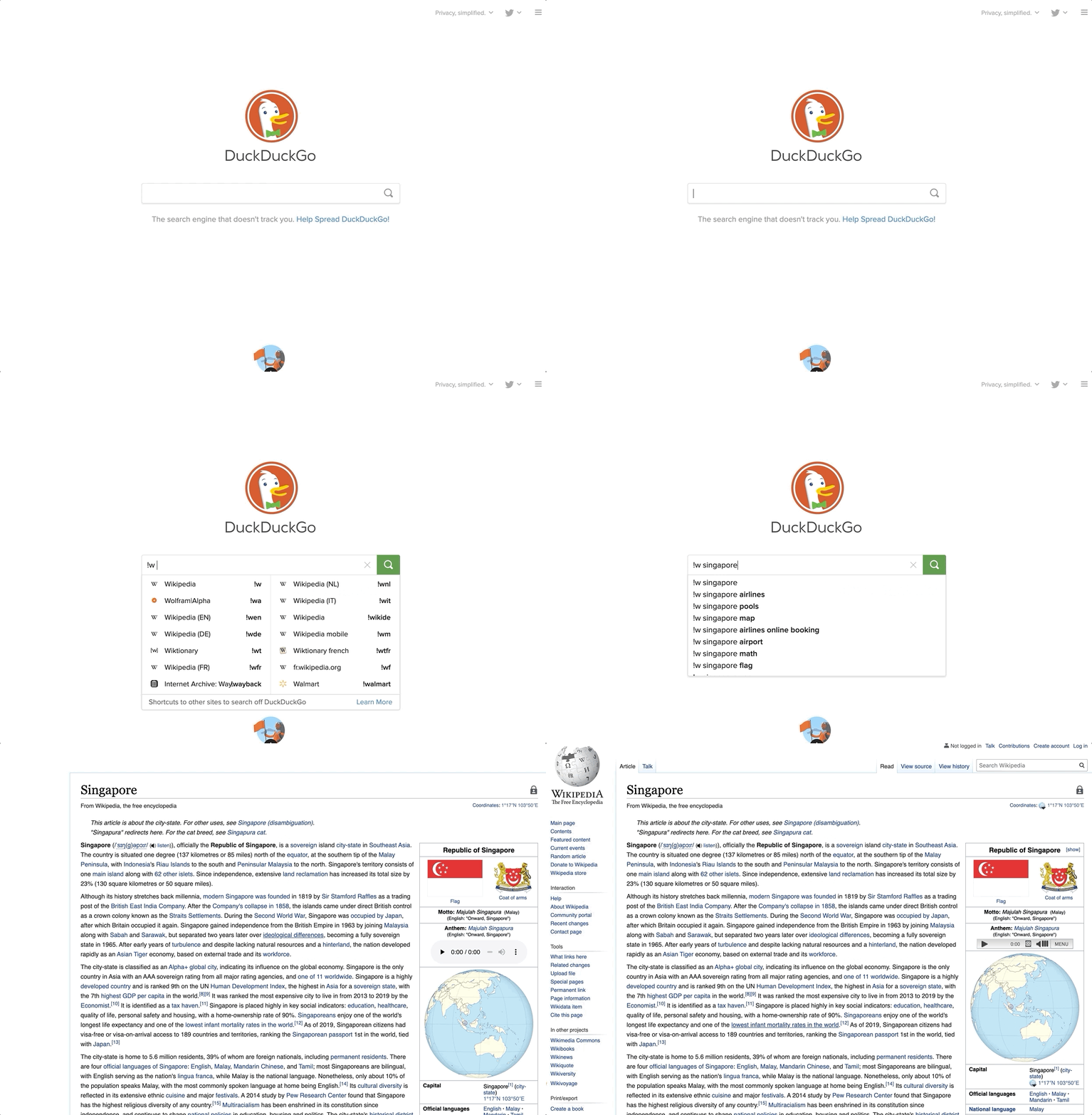
O recurso “Bangs” do DuckDuckGo leva a pessoa diretamente aos resultados de pesquisa em outros websites. Por exemplo, digitar “!w” e uma palavra-chave (por exemplo, “!w Singapura”) conduz diretamente à página da Wikipédia para Singapura.
3. Brave Search

Eu gosto do Brave Search devido ao seu foco em resultados imparciais, que a plataforma extrai através do seu próprio índice. A empresa fez a jogada ousada de abandonar a sua dependência dos resultados de busca do Google, em outubro de 2021.
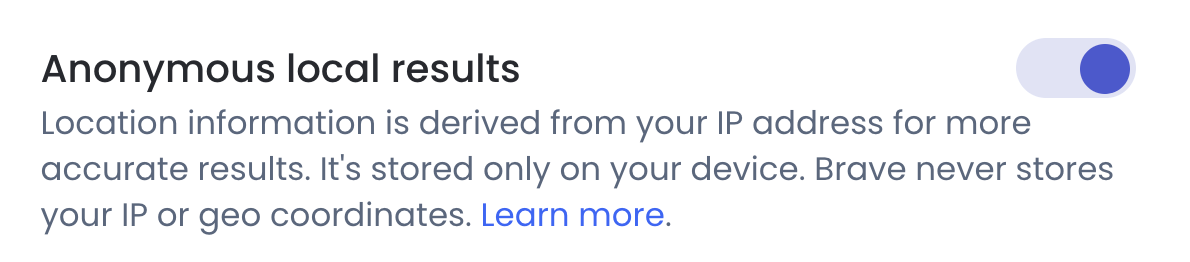
Ao pesquisar conteúdo perene e notícias urgentes, descobri que os resultados são semelhantes aos do Google, desde que você permita encontrar resultados locais de forma anónima.
Para maior privacidade, você pode optar por desativar essa opção e realizar pesquisas manuais, por exemplo, "coisas para fazer em [local X]".
Assim como os outros mecanismos de busca, aqui não há nenhum perfil de usuário e anúncios personalizados ou direcionados.
O mecanismo de busca faz parte da Brave Software, cujos cofundadores incluem Brendan Eich (criador do JavaScript e cofundador do navegador Mozilla Firefox) e Brian Bondy (ex-engenheiro sénior da Mozilla).
Funcionalidade em destaque
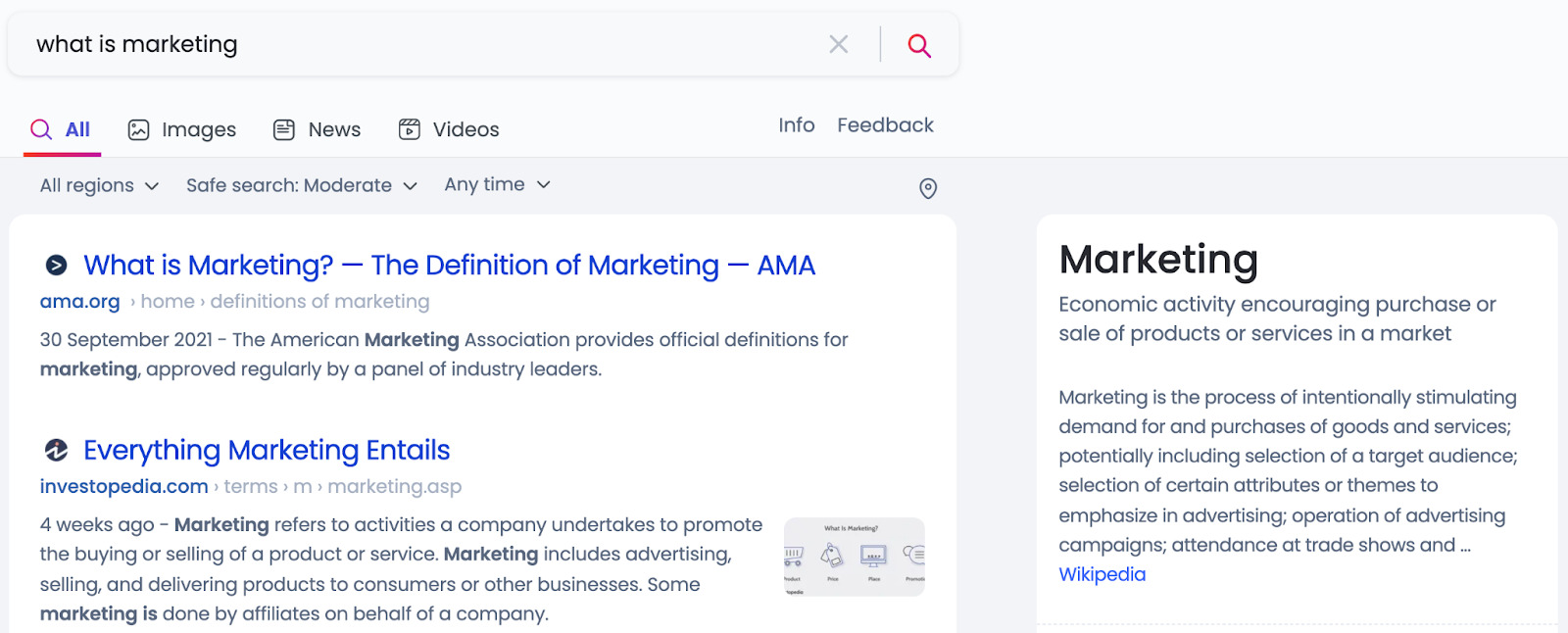
O Brave tem painéis de conhecimento para respostas rápidas às suas dúvidas, assim como o Google.
4. Swisscows
O Swisscows é um mecanismo de pesquisa com sede na Suíça que detém o seu próprio índice para consultas em alemão. Para todos os outros idiomas, os resultados são extraídos do Bing. Contudo, isso não é um problema, uma vez que todas as consultas de pesquisa são livres de identificadores pessoais.
O mecanismo de pesquisa também omite o uso de cookies de rastreamento e segmentação geográfica.
Embora os resultados de pesquisa do Swisscows certamente não estejam a par dos do Google, gosto de como o mecanismo de pesquisa é familiar: ele filtra automaticamente resultados de pesquisa violentos e pornográficos por meio de um recurso obrigatório.
No que diz respeito à privacidade, a Suíça não faz parte de uma aliança de inteligência, mas tem um Tratado de Assistência Jurídica Mútua com os EUA.
Funcionalidade em destaque
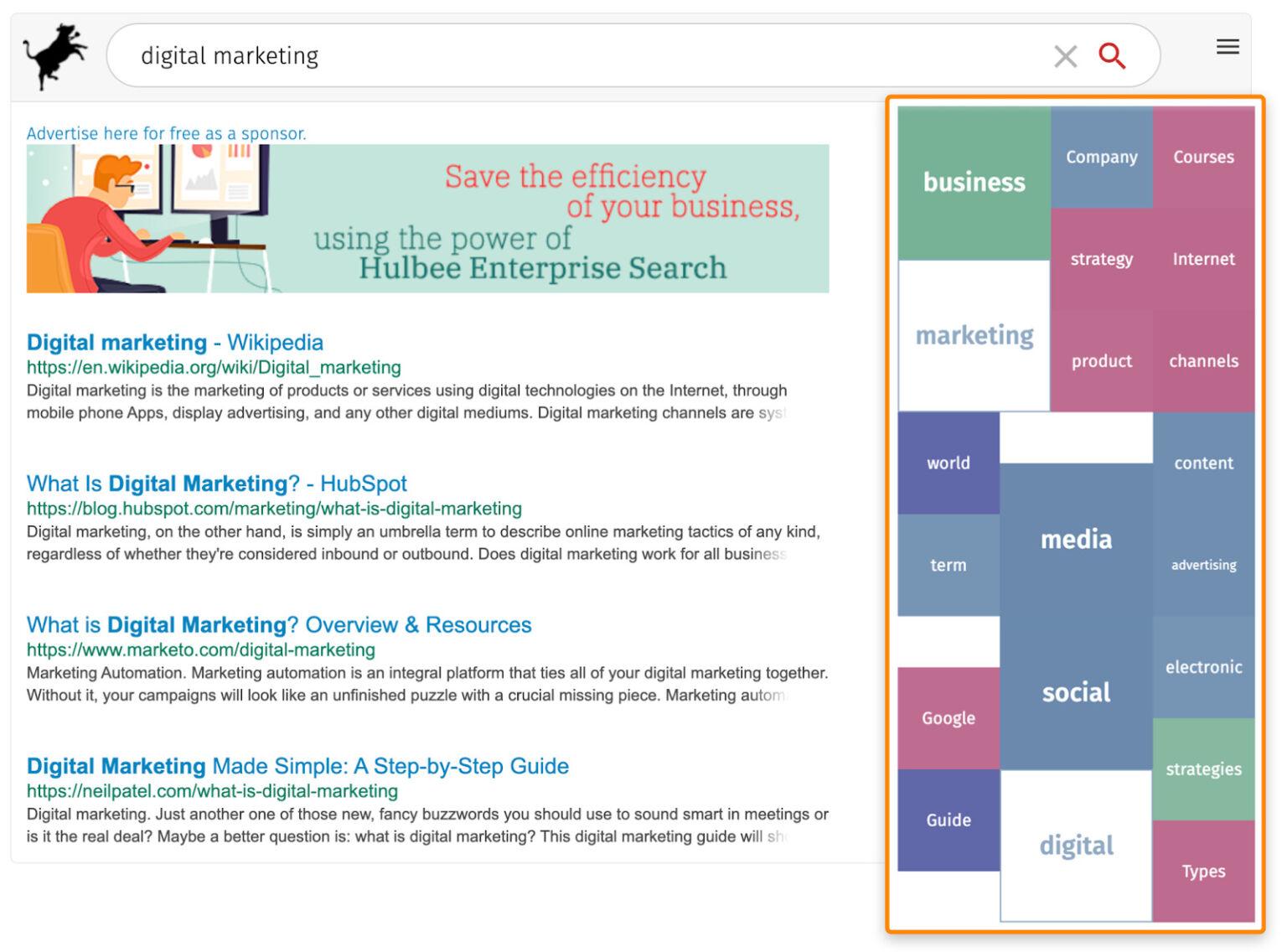
Swisscows tem “mapas semânticos” para ajudá-lo a refinar e a redefinir as suas buscas.
5. Search Encrypt

O Search Encrypt cria fontes para os resultados dos seus parceiros de conteúdo e mecanismos de pesquisa (incluindo o Google, Bing e Yahoo), embora de maneira bem mais segura no que diz respeito à privacidade.
Como os outros mecanismos de pesquisa presentes nesta lista, o Search Encrypt torna anónimas as consultas de pesquisa, não retém registos de servidor ou endereços IP e não armazena cookies de rastreamento, de forma alguma.
Quando se trata de pesquisas, os seus termos são criptografados localmente antes de serem enviados aos servidores. Após 30 minutos de inatividade, o seu histórico de navegação será apagado.
No entanto, o Search Encrypt armazena os dados de pesquisa dos usuários (embora sem deter nenhum dos seus identificadores pessoais), somente para melhorar o desempenho do produto.
Descobri os seus resultados de pesquisa comparáveis aos da Ecosia. Ou seja, embora não seja exatamente igual ao DuckDuckGo e ao Startpage, o Search Encrypt é confiável o suficiente para ser usado para todos os tipos de consultas - sejam navegáveis, transacionais ou informativas.
Funcionalidade em destaque

Se estiver insatisfeito com os resultados ou quiser uma comparação rápida, pode fazê-lo facilmente usando a função “repetir esta pesquisa” localizada na parte superior da página.
6. OneSearch
Parte da empresa que controla o Yahoo, a Verizon Media, o OneSearch afirma ser um mecanismo de pesquisa orientado para a privacidade total dos usuários e com resultados de pesquisa extraídos do Bing.
Nenhum cookie é armazenado e não há partilha de dados pessoais identificáveis com anunciantes. Tendo também examinado a sua política de privacidade, concluo que o mecanismo de pesquisa é na verdade bastante seguro.
Do ponto de vista negativo, o OneSearch traça o seu perfil com base nos termos de pesquisa da consulta e em sua localização imprecisa no momento da pesquisa. Assim, você pode obter anúncios contextuais ou palpites sobre os seus interesses com base nas suas palavras-chave de pesquisa. No entanto, não envolve a criação de um perfil pessoal.
O que eu gosto são os pequenos extras: a função “SafeSearch”, a capacidade de definir um local mais específico e a opção “Modo de privacidade avançado” (ver mais abaixo).
Feature spotlight
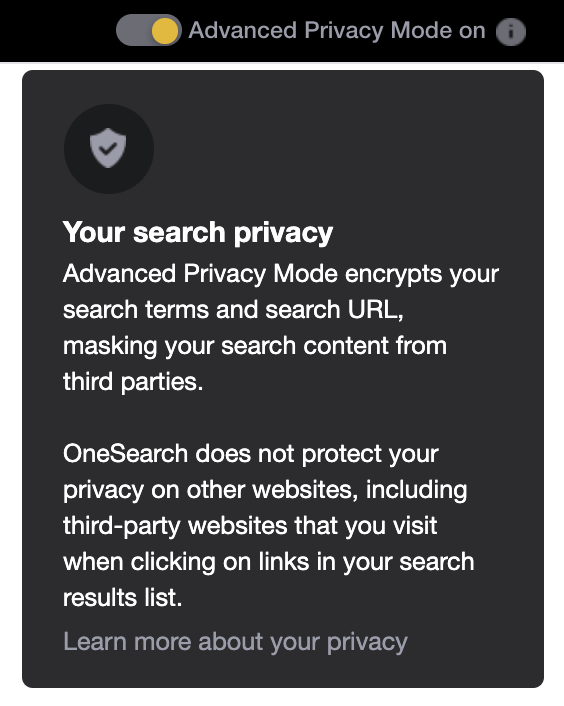
Ative o “modo de privacidade avançada” para criptografar os termos de pesquisa e URLs de pesquisa, que mascararão o seu conteúdo de pesquisa por terceiros.
7. MetaGer
O MetaGer é um mecanismo de “meta busca” de código aberto com sede na Alemanha. Assim como a Ecosia, os seus servidores funcionam através de energia renovável.
Os resultados são extraídos do Scopia, Bing, OneNewspage e OneNewspage (vertente vídeo), por isso eles são bastante oportunos atualmente. Você também pode desmarcar os mecanismos de busca usados previamente ou criar uma lista negra de websites nas configurações.
Eu aprecio a transparência do MetaGer no tratamento das informações do usuário, de consultas a mapas. Ainda assim, importante referir que o mecanismo de pesquisa armazena o seu endereço IP completo por 96 horas, sendo que o seu nome e endereço de e-mail são guardados caso preencha o formulário de contato.
No entanto, o MetaGer usa um proxy de anonimato garantindo que você mantém controle total sobre os seus dados.
Funcionalidade em destaque

A caixa “Você sabia” (à direita dos resultados da pesquisa) oferece informações sobre o MetaGer e sobre como refinar as suas pesquisas. Por outro lado, você também pode sempre clicar no texto para ver a lista completa de dicas.
8. Mojeek
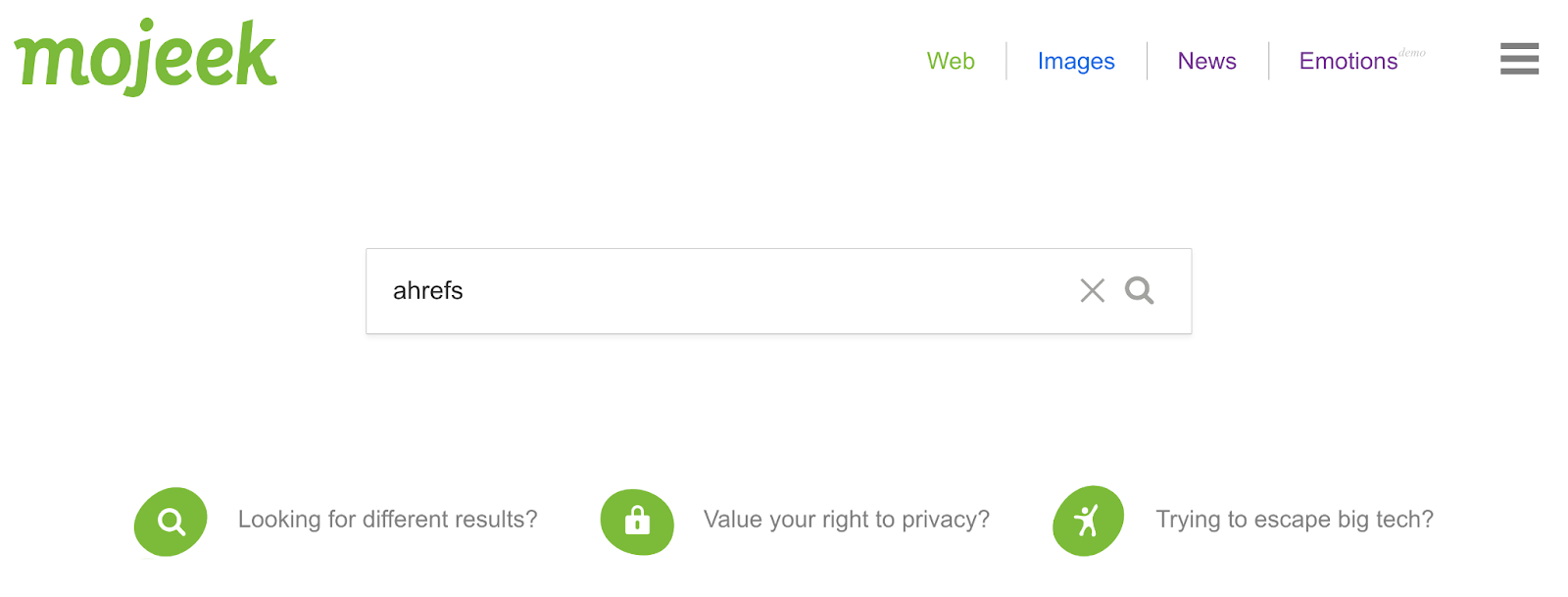
O Mojeek é um mecanismo de busca que funciona em torno de um rastreador com o seu próprio índice de pesquisa de mais de 4 bilhões de páginas. Isso o torna excelente para informações imparciais, mas também significa que podem haver resultados limitados, pois não obtém resultados de outros mecanismos de pesquisa.
Ainda assim, gosto do mecanismo de pesquisa devido à sua política direta de não rastreamento. Os seus dados pessoais também nunca serão vendidos ou distribuídos, o que é uma grande vantagem a nosso ver. Se você preencheu o formulário de contato, também pode solicitar a exclusão das suas informações a qualquer hora, de acordo com o GDPR.
Com tudo isto, o Mojeek está sediado no Reino Unido, que faz parte da aliança de inteligência “Five Eyes” - assim como o DuckDuckGo.
Funcionalidade em destaque
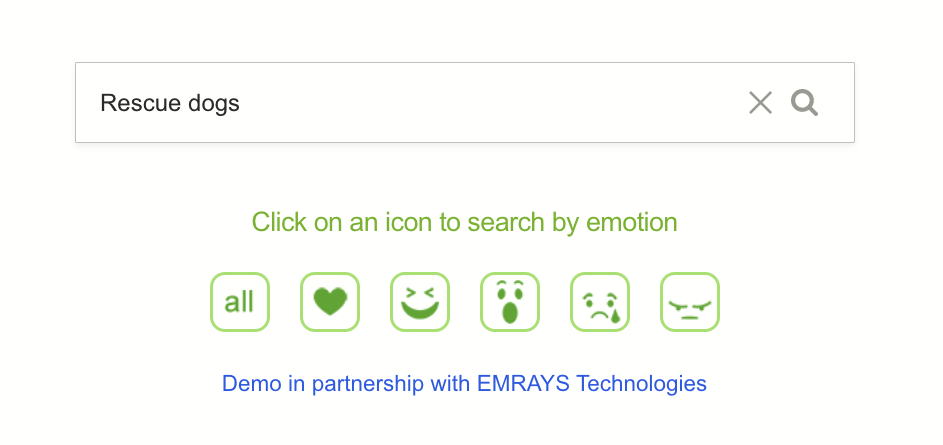
O recurso de classificação de pesquisa com base na emoção do usuário permite inserir uma palavra-chave e pesquisar por “sentimento ou emoção” gerados.
9. Qwant

O Qwant é um mecanismo de pesquisa com sede em Paris, cujos resultados de pesquisa são alimentados pelo Bing e pelo seu próprio rastreador da web. É totalmente acessível em mais de 30 países, mas, infelizmente, não em Singapura.
Na última verificação, o meu colega, SQ, descobriu que a precisão dos resultados da pesquisa era decente o suficiente, contudo não espere respostas específicas de localização, pois o Qwant não rastreia a sua localização geográfica.
Para além disso, o Qwant não coleta dados nem usa cookies de rastreamento, mas mantém o seu endereço IP para fins de deteção de fraudes. Se você preferir anonimato completo, o Qwant sugerirá usar uma VPN ou o serviço de retransmissão TOR.
Assim como o Startpage, o Qwant oferece proteção GDPR. A França é, no entanto, parte da aliança de inteligência “Nine Eyes”.
Funcionalidade em destaque
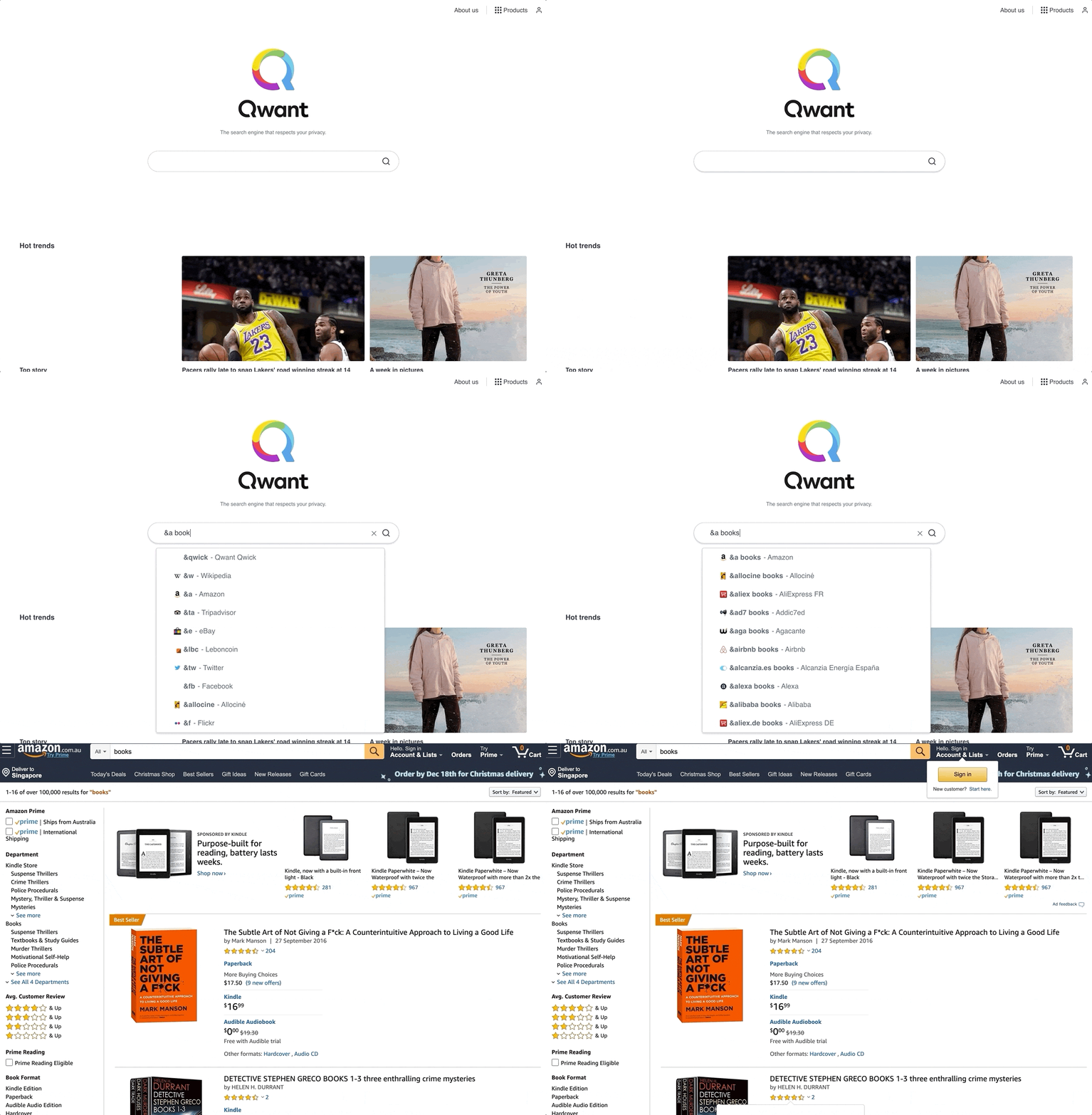
Existem “atalhos de pesquisa” que oferecem acesso rápido a sites específicos. Por exemplo, usar o termo “&a books” produz resultados da categoria de livros proveniente da Amazon.
Veja a lista de atalhos aqui.
10. Ecosia

Sabia que cada ação que você realiza através do seu dispositivo digital emite dióxido de carbono? E o Google desempenha um papel importante nisso: é responsável por ~ 40% da pegada de carbono na internet.
Para neutralizar isso, o mecanismo de busca privado Ecosia doa 80% dos seus lucros para projetos de plantação de árvores, ou cerca de uma árvore para cada 45 pesquisas feitas. A Ecosia também construiu uma planta solar para que os seus servidores possam funcionar com energia limpa.
No geral, acho que os seus resultados de pesquisa estão próximos o suficiente aos do Google.
Todavia, o Ecosia não é totalmente privado - ele coleta dados de pesquisa e informações de identificação pessoal, ambos anónimos apenas após sete dias. Porém, consideramos que usar o mecanismo de busca é uma troca digna, pois ajuda a combater as mudanças climáticas.
Funcionalidade em destaque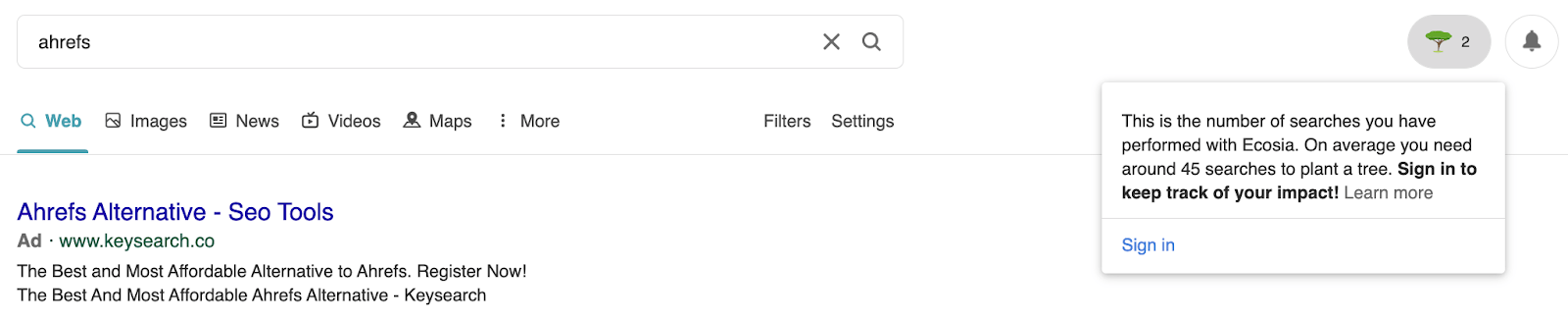
O seu número de pesquisas é mostrado em um placar (a menos que opte por apagar os cookies do navegador), permitindo que você acompanhe o seu impacto pessoal no meio ambiente.
11. You.com

Completando essa lista que aqui elaboramos está o You.com. O mecanismo de pesquisa, ainda em fase precoce de desenvolvimento (beta), oferece uma experiência altamente personalizável: os resultados de pesquisa aparecem em uma página da Web, mas são divididos em várias seções que você pode reorganizar de acordo com as suas preferências.

Para personalizar ainda mais os seus resultados, inscreva-se em uma das contas para adicionar e salvar aplicativos no seu painel (saiba mais na “funcionalidade em destaque” abaixo). Consideramos, ainda, que esses aplicativos do You.com representam essencialmente as suas fontes de informação preferidas, que irão aparecer junto dos seus resultados de busca.

Embora este seja um recurso interessante, também significa que os seus cookies primários serão armazenados para fins de personalização. Como alternativa, você pode sempre eliminar totalmente o rastreamento de cookies primários navegando de forma privada ou via VPN.
Achei os resultados da pesquisa para várias palavras-chave (como “ahrefs” e/ou “casos diários covid-19 singapura”) comparáveis aos do Google. E, desta forma, embora alguns resultados sejam extraídos da Microsoft, o You.com afirma que os dados do usuário são mantidos em segurança e não são vendidos a anunciantes. A empresa também é neutra em carbono, isto é, do ponto de vista da pegada ecológica.
Funcionalidade em destaque

Personalize os seus resultados de pesquisa adicionando aplicativos ao seu feed — há várias categorias para escolher, pois pode adicionar inclusive aplicativos para criador/desenvolvedor, como o Github, ao seu painel.
Considerações finais
Embora o Google domine o mercado global de mecanismos de busca, a verdade é que também obtém a sua percentagem considerável de críticas: questões de falta de confiança na sua segurança, criação de uma bolha de filtro, violação da privacidade do usuário e muito mais.
Para os usuários, mecanismos de pesquisa alternativos podem ser uma solução alternativa. Ainda assim, não acredite só na nossa palavra; experimente as sugestões desta lista para decidir o que funciona melhor para você.
Tem perguntas ou comentários adicionais? Entre em contato comigo no Twitter.

Especialista em Marketing de Conteúdo e escritora. Viciada em palavras, artigos de papelaria e em explorar novos locais a pé.