What AI Means for SEO

By Ryan Law
Director of Content Marketing at Ahrefs
You can’t talk about SEO today without mentioning generative AI.
Google any keyword, and there’s a high chance you’ll see an AI-generated answer in the search results. Many people use AI to publish SEO content, quicker and cheaper than ever before. And it’s even possible to research any company and buy their products directly through AI assistants like ChatGPT and Perplexity.
As a result, there’s a new buzzword in town: GEO, or Generative Engine Optimization, the process of improving visibility in AI assistants like ChatGPT. Major news publications have even published dramatic headlines like these:
- ”How Generative Engine Optimization (GEO) Rewrites the Rules of Search”
- ”As AI Use Soars, Companies Shift From SEO To GEO”
- ”Forget SEO. Welcome to the World of Generative Engine Optimization”

So, has generative AI killed SEO? Should we spend less time worrying about search engine optimization, and more time focusing on generative engine optimization?
Not even close. In fact, SEO is more important than ever, because the three pillars of SEO—content creation, link building, and technical health—are all crucial to appearing in AI search results.
If you want to prepare for the future and make your brand visible in search engines and generative AI, SEO is the best possible place to start.
How AI has actually changed SEO
If we cut through the hype, SEO today does look different, in a few important ways.
Google isn’t the only place to get answers
If I want to brew the perfect espresso or learn to prune my roses to perfection, I’m more likely to open ChatGPT than Google. AI assistants offer a different type of search experience that feels more personal and interactive than traditional search.
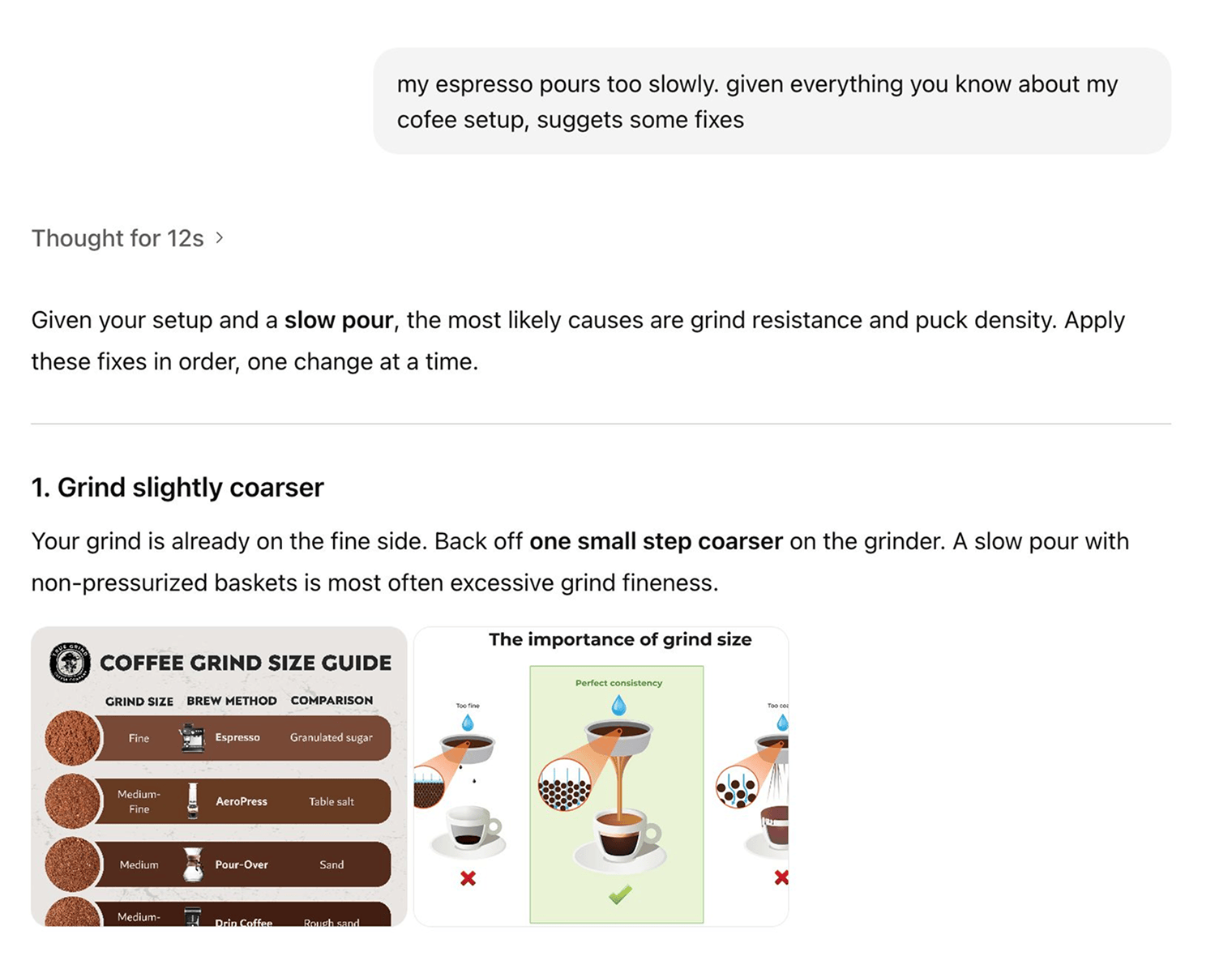
I’m not alone in this: in the past two years, ChatGPT has grown to 800 million weekly active users. There are dozens of alternatives, too, like Perplexity, Claude, Gemini, and Grok, each with millions of users. And with features like ChatGPT’s instant checkout, it’s possible to research, compare, and buy products directly within AI assistants.
But for all the rapid growth of AI assistants, there has been no corresponding decrease in Google usage. At the height of AI fever in 2024, Google’s yearly searches grew by 22%, equivalent to 373x more searches per day than ChatGPT.
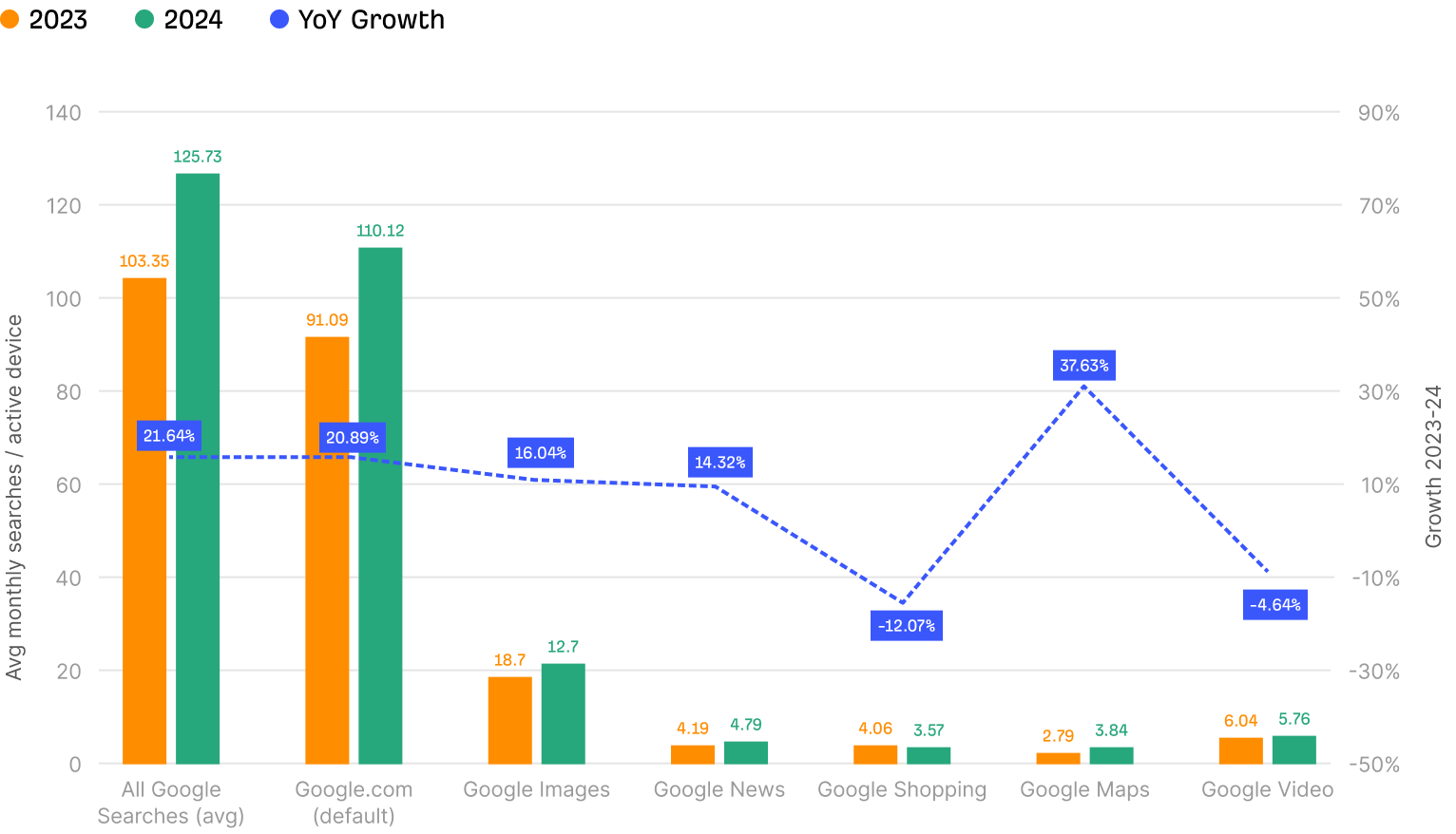
Most people seem to use ChatGPT and other AI assistants in addition to Google Search. Based on this data, we shouldn’t focus on ChatGPT instead of Google; we need to focus on ChatGPT and Google.
There’s less traffic (and more zero-click searches)
Thanks to AI, it’s a little harder than it used to be to earn organic traffic from Google Search.
The biggest culprit: AI Overviews. Over 20% of all keywords in the United States now show an AI Overview, an AI-generated answer that summarises many of the top-ranking search results (and reduces the need for a searcher to click into a blog post to meet their search intent).
If you rank number one in a SERP with an AI Overview present, that AI Overview will reduce the clicks you receive by an average of 34.5%.
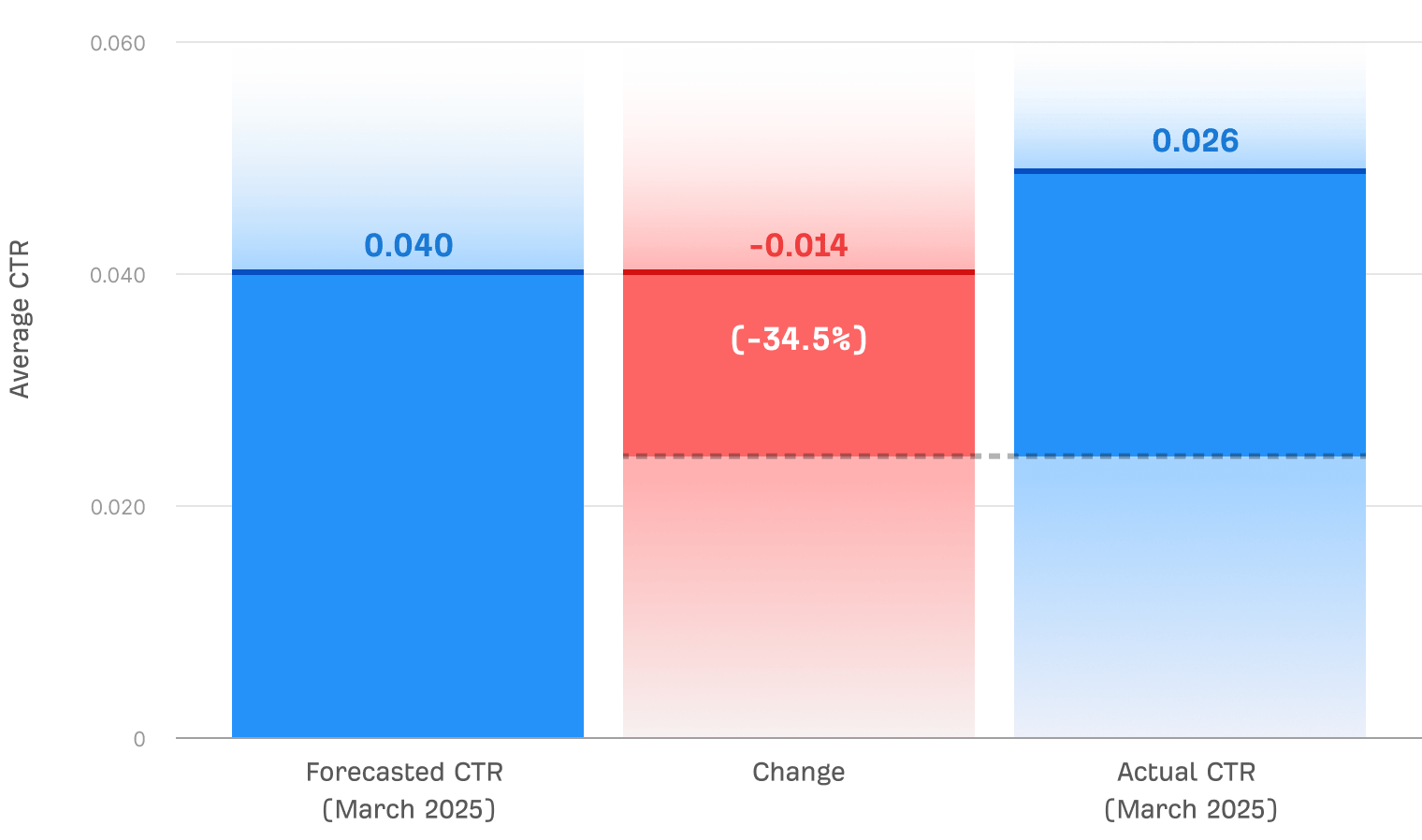
But importantly, this trend started long before AI.
Back in 2024, 60% of all Google searches ended without a click. Zero-click searches (Google searches that are resolved happily without the user clicking one of the search results) have been growing for years, thanks to things like:
- More sponsored results and adverts
- More interactive tools, like Google’s calculators, emojis, metronomes, and color pickers
- Other “zero-click” search features, like Featured snippets
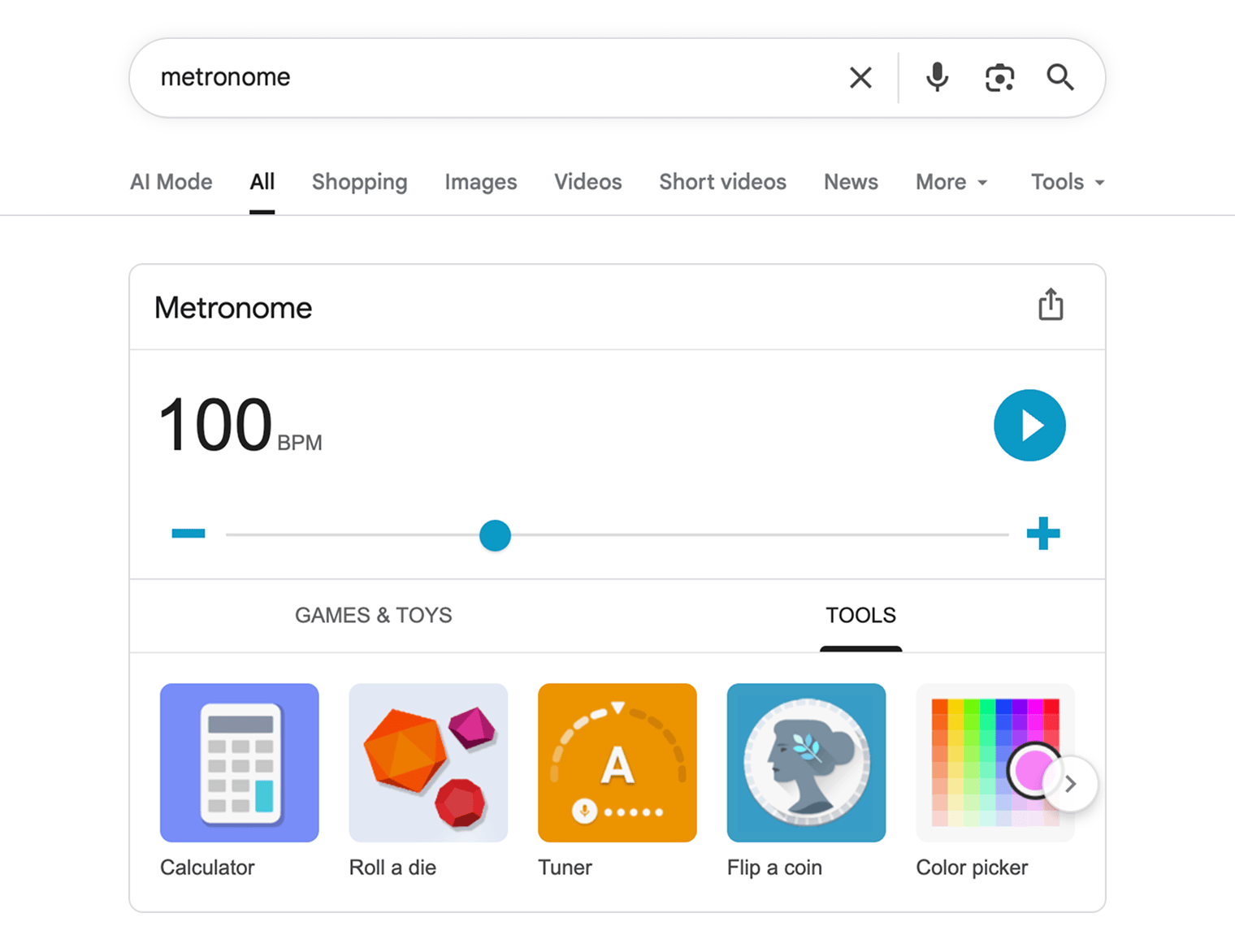
But getting less traffic from Google is not the same as getting no traffic. As long as websites can still earn enough traffic to justify the effort of creating content, it’s still worth doing. SEO is still an extremely lucrative marketing channel.
Content creation is cheaper than ever
Many people now use generative AI to create and publish SEO content.
In a survey of almost 900 marketers, we found that 87% used generative AI to help create content. On average, AI-generated content was 4.7x cheaper than human-written content, allowing companies to publish 47% more content each month.
So perhaps it isn’t surprising that we estimated that 74% of new web pages published in April 2025 contained some amount of AI-generated content. We also found that there was no correlation between an article’s search ranking and its AI content: AI-generated content can (and does) rank well in search engines.
How many pages are created/assisted with AI
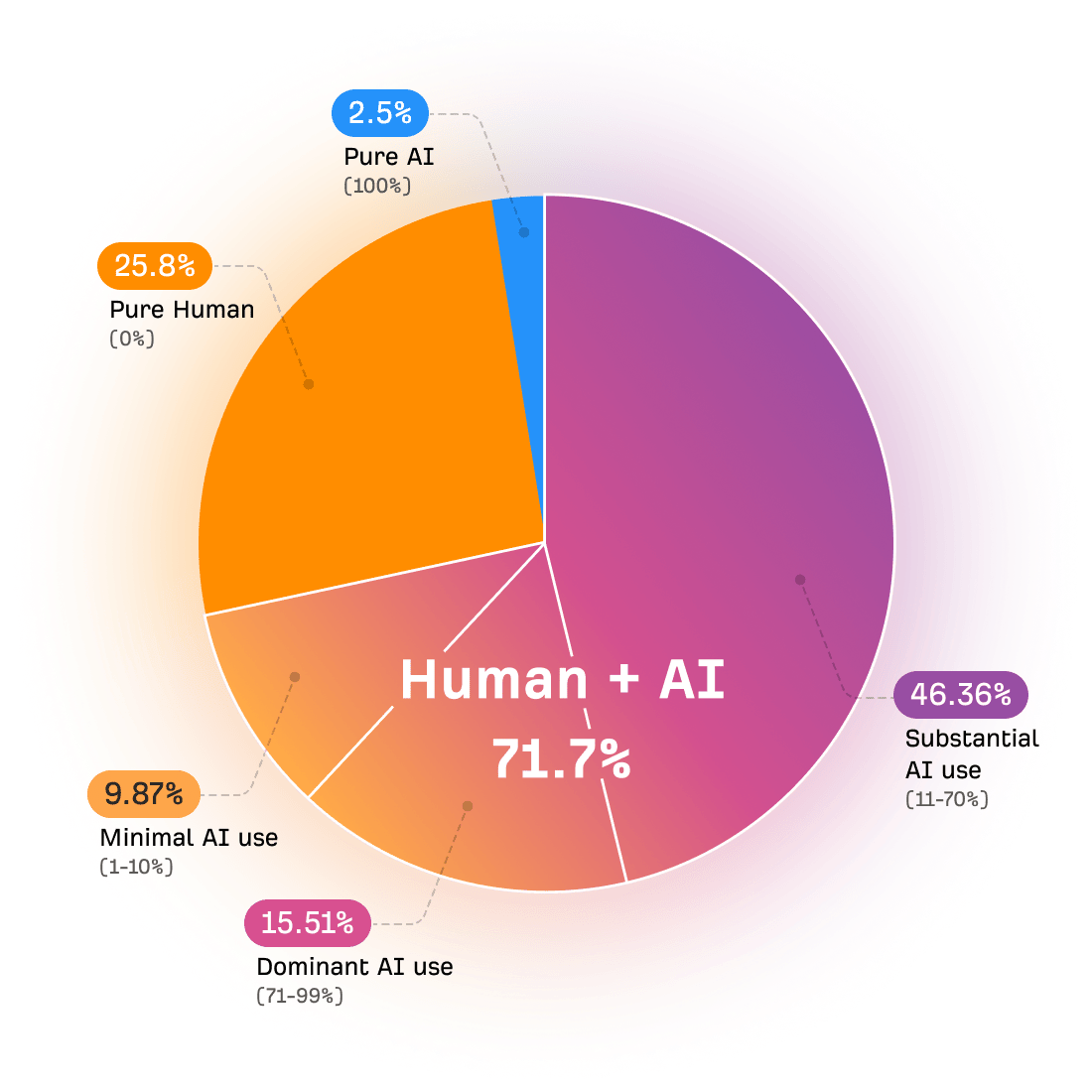
AI has made it easier for everyone to create SEO content. At the same time, it might feel like there’s more competition than ever before. But crucially, Google (and even AI assistants like ChatGPT) want to surface and reward high-quality content written by experts.
If you’re willing to invest skill and energy into topics that you know lots about, you’ll have plenty of opportunities to outrank middle-of-the-road AI-generated content.
AI makes SEO faster and more efficient
Generative AI’s impact isn’t all bad: many SEO tactics can be made faster and more efficient with generative AI.
Thanks to something called an MCP server, you can use ChatGPT or Claude to “talk” to Ahrefs and ask it to run common SEO tasks on your behalf, like:
- Uncover trending keywords (and why they’re growing in popularity).
- Return a list of broken backlinks to your website (and write email copy for you to get the backlink fixed).
- Analyze your competitors and summarize their SEO strategies.
| Site | September ’25 Organic Traffic | Ahrefs Domain Rating |
|---|---|---|
| madewell.com | 666,020 | 78 |
| ssense.com | 468,321 | 82 |
| reebok.com | 428,610 | 78 |
| belk.com | 417,738 | 74 |
| grailed.com | 324,965 | 76 |
| vineyardvines.com | 312,001 | 71 |
| cottonon.com | 295,383 | 74 |
| bonobos.com | 272,380 | 75 |
| dxl.com | 256,394 | 63 |
| forever21.com | 231,605 | 79 |
| yesstyle.com | 222,134 | 75 |
| stitchfix.com | 201,177 | 79 |
| boohooman.com | 191,050 | 69 |
Within Ahrefs itself, we’ve added tons of useful AI features.
You can automatically brainstorm seed keywords in Keywords Explorer; summarise top-ranking content and use it to improve your articles in AI Content Helper; even analyse any website and discover which of their best-performing pages are likely AI-generated, all in Site Explorer.
And for adventurous SEOs, you can even build your own apps with vibe-coding software like Loveable and Replit, turning your complicated SEO processes into tools anyone can use.
Why SEO is more important than ever
With so many people still turning to search engines like Google, SEO still matters. But in the era of generative AI, SEO is even more important than many people realise, for one simple reason: SEO is also the backbone of AI search.
AI search relies on SEO to work
Generative AI has a hallucination problem: tools like ChatGPT and Gemini are prone to mistakes and made-up claims, especially for topics they don’t know much about.
AI assistants tackle this problem through a process called grounding. Many queries—particularly those that require recent, up-to-date information—will cause the AI assistant to run a web search to find useful, relevant content and include it in their response.
Google Gemini uses Google Search for this process; Microsoft Copilot uses Bing; ChatGPT and Meta use a combination of the two; Claude uses Brave. Here’s an example of how AI assistants run “grounding” searches:
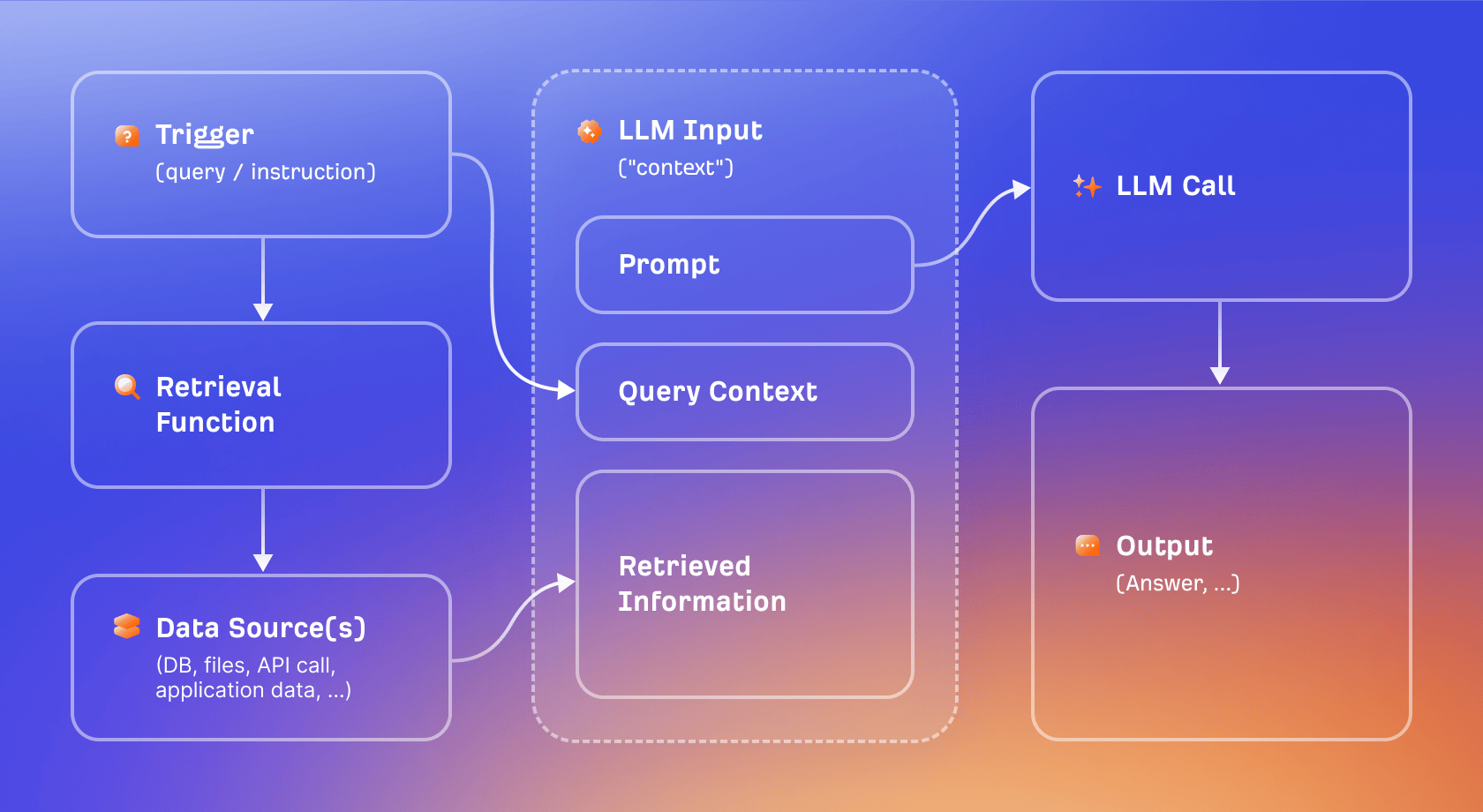
As a result, websites that rank highly for relevant topics in search engines are more likely to have their pages retrieved and used by AI assistants.
If you sell coffee machines and manage to rank highly in Google for keywords like “best beginner coffee machines” or “how to maintain your nespresso”, there’s a very good chance your content and brand will be included in AI conversations on similar topics.
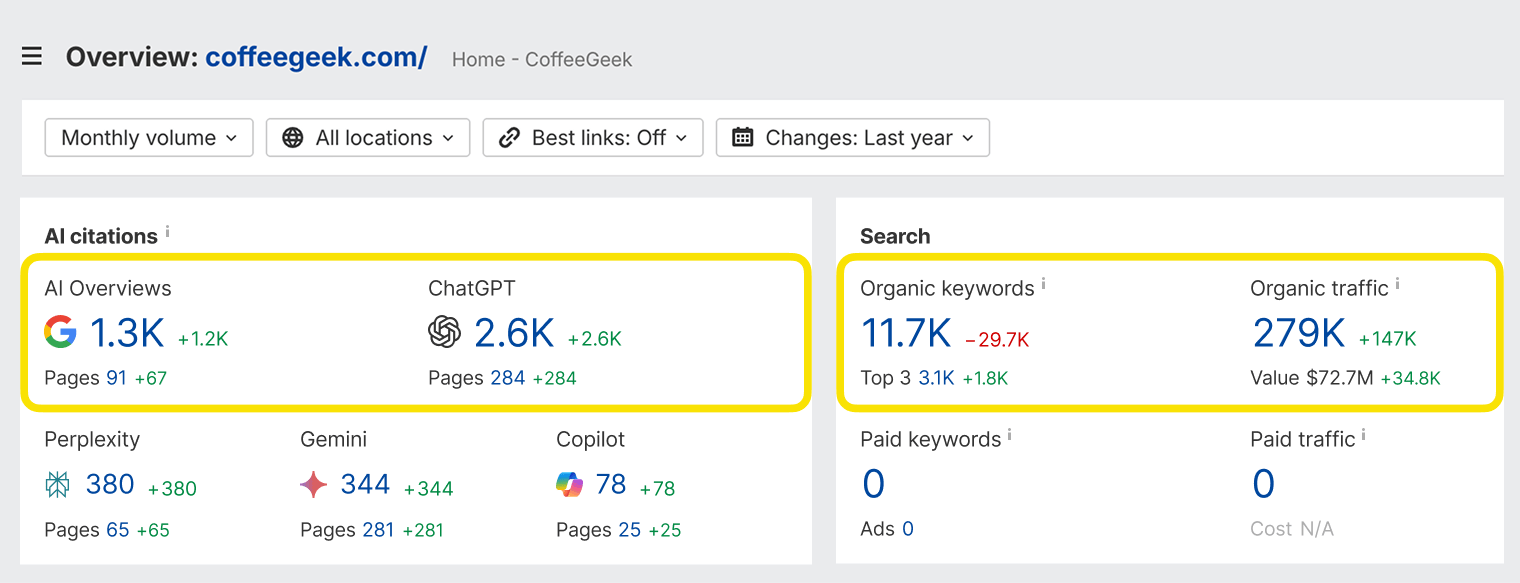
That’s great news, because we already know how to rank in search engines—it’s called SEO (and you’ve just read a whole book about it).
Core SEO tactics also benefit AI search
This means that many of the things you already do to improve SEO performance also benefit your AI visibility:
- Content creation: both search engines and AI assistants exist to answer user questions and provide helpful information when needed. Creating high-quality, relevant content is the best way to improve your visibility in both AI and traditional search.
- Link-building: AI assistants don’t care about backlinks in the same way as traditional search engines (though they still matter indirectly: more backlinks usually mean better search rankings, which improves AI visibility). But they do value “mentions”—the number of times your brand and products are mentioned on third-party websites, and the context they appear in. Many link-building tactics—like digital PR, brand partnerships, and guest blogging—also work for building mentions.
- Technical optimization: It’s vital that your website is set up so that AI assistants can access your content. Don’t block AI crawlers in your robots.txt, format your pages in a way that’s simple and easy to understand, and don’t bury crucial information behind tons of JavaScript.
If you’re in any doubt about where to focus your effort, the three pillars of SEO are always great choices: content creation, building links and mentions, and optimising the technical health of your site.
Google is still your best marketing channel
It’s important to avoid all-or-nothing thinking. Google Search may be a little more competitive (and send a little less traffic to many websites), but even with these changes, Google remains one of the very best marketing channels at your disposal.
Google Search can still drive huge amounts of relevant, qualified traffic to your website. In fact, when we analyzed the traffic distribution of 71,000 websites, Google Search was the #1 traffic source, accounting for almost 42% of all website traffic (compared to just 0.29% for all AI assistants combined).
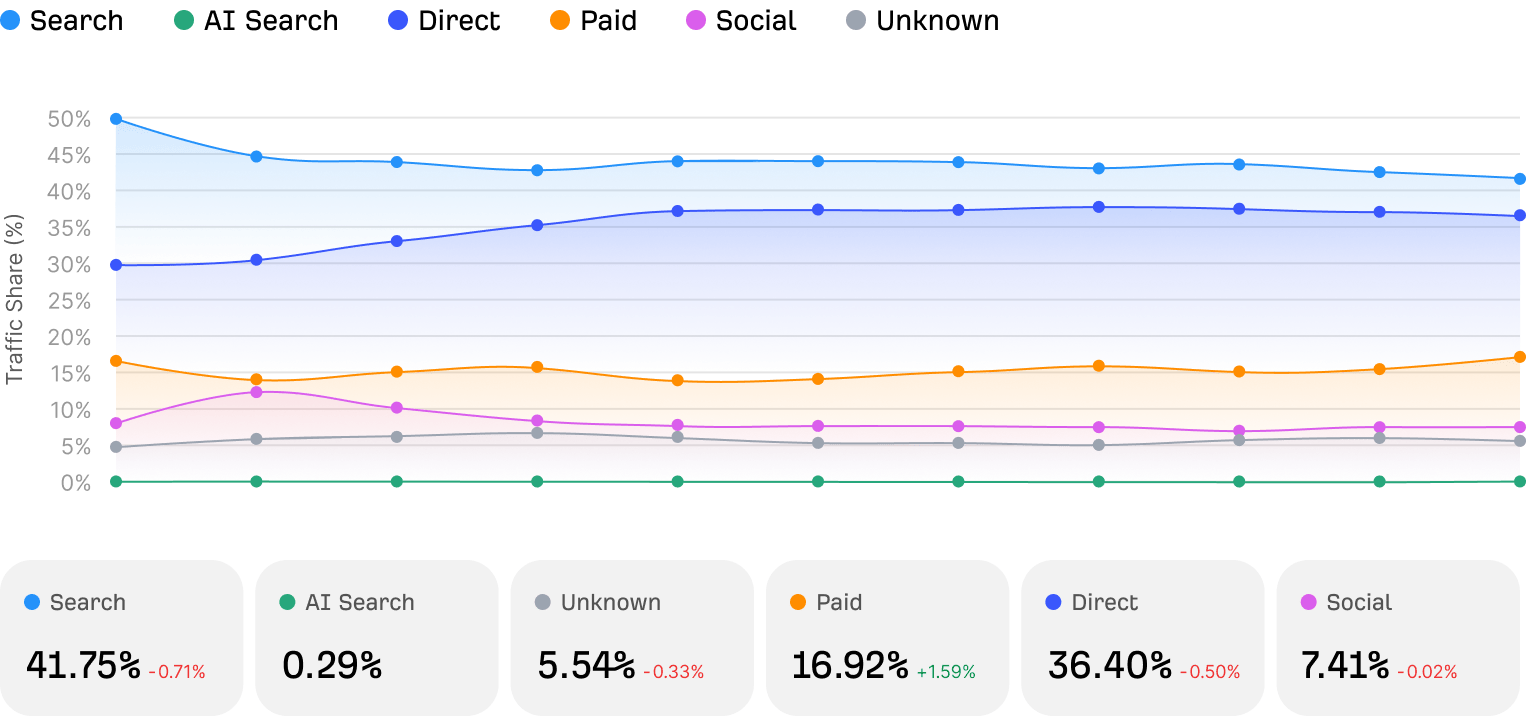
It’s still a good idea to stop your competitors from dominating relevant keywords without any competition. Even if the search landscape is a little smaller than it used to be, it’s still best to be the biggest brand. And if SEO is a little harder or more expensive than it used to be, it can still generate a huge return on investment. That is all that matters.
Your SEO brain will prepare you for the future
Generative AI is evolving at a staggering pace, and it’s hard to keep up with every change.
But I have good news. People who do SEO are usually curious, experimental, and—if we’re honest—a little competitive. You can think of this combination of traits as “SEO brain”, and these are the exact skills that will allow you to thrive in whatever uncertain world AI creates over the next few years.
There is a huge overlap between SEO and AI search, and all the SEO tactics we’ve covered in this guide are vital for improving your visibility in AI search. But even if the world does change and SEO and AI search become separate things, learning SEO today is the best way to prepare for tomorrow.
Strengthen your SEO brain, and anything is possible.
Ryan Law is the Director of Content Marketing at Ahrefs. Ryan has 13 years experience as a writer, content strategist, team lead, marketing director, VP, CMO, and agency founder. He’s helped dozens of companies improve their content marketing and SEO, including Google, Zapier, GoDaddy, Clearbit, and Algolia. He’s also a novelist and the creator of two content marketing courses.
Master SEO Step by Step
How Search Engines Work
Before you start learning SEO, you need to understand how search engines work.
SEO Basics
Learn how to set your website up for SEO success, and get to grips with the four main facets of SEO.
Keyword Research
The starting point in SEO is to understand what your target customers are searching for.
SEO Content
Learn how to create content that ranks in search engines.
On-Page SEO
This is where you optimize your pages to help search engines understand them.
Link Building
Links are how search engines discover new pages and judge their "authority." It’s hard to rank for competitive terms without links.
Technical SEO
It’s important to make sure there are no technical faux pas that prevent Google from accessing and understanding your website.
Local SEO
Learn how to improve your visibility in local search results and get more customers from your area.
What AI Means for SEO
You can’t talk about SEO today without mentioning generative AI.