
Ahrefs ブログチームを統括する立場として、毎週 Agent A を使い、煩雑な作業をどんどん自動化しています。
定型的な SEO コンテンツの作成、古い記事の更新、ブログのパフォーマンスレポート、複雑なパフォーマンス分析まで、これらはすべて Agent A が処理してくれるタスクです。
ここでは、コンテンツマーケターにおすすめの Letaido(旧 Agent A)活用事例を紹介します。
Letaido(旧 Agent A)AI エージェントとは
Agent A は、Ahrefs が提供するマーケティング特化の AI エージェントです。Ahrefs の全データセットに直接かつ無制限にアクセスでき、単に質問に答えるだけでなく、マーケティングや SEO のタスクを自律的に実行します。 Letaido(旧 Agent A)は、長時間稼働する AI エージェントが自らの管理するインフラ上でツールを構築・実行・メンテナンスしてくれるワークスペースです。質問を投げるだけのチャットボットではありません。SEO の深い知識を持ち、Postgres データベースや Flask サーバー、あらゆる最先端 LLM (大規模言語モデル)を使いこなすジュニアエンジニアに近い存在です。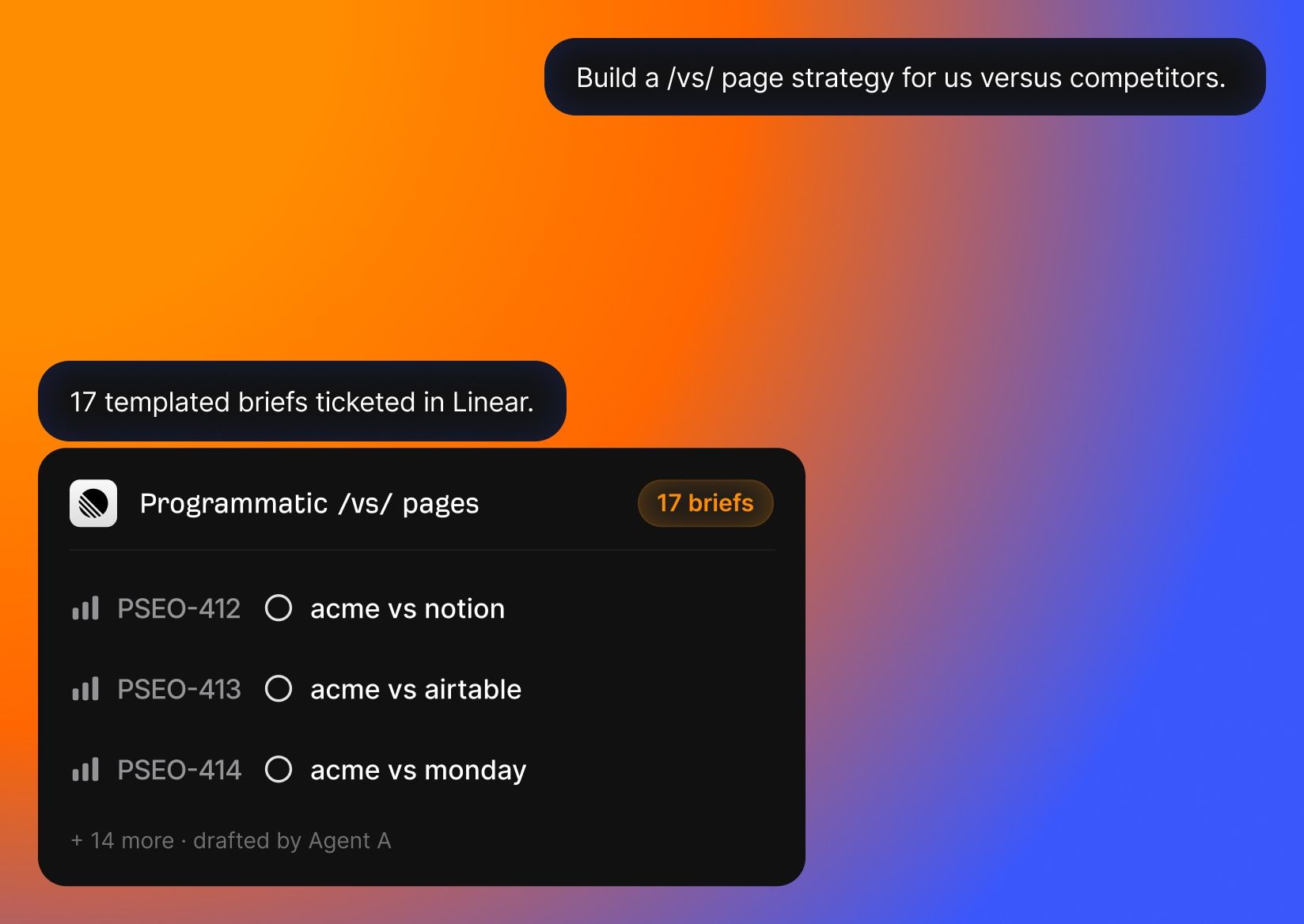
Agent A のインターフェース画面
- Ahrefs エンドポイントへの無制限アクセス。 Ahrefs の構築に使われるすべてのエンドポイントを Agent A から利用できます。(Ahrefs アカウントのプランによって、ご利用制限が異なります。)API や MCP ではアクセスできない多くのエンドポイントも対象です。キーワードエクスプローラー、サイトエクスプローラー(単体で 101 のエンドポイント)、ブランドレーダー、ウェブアナリティクス、GSC 連携、AI コンテンツヘルパー、サイト監査、ランクトラッカー、コンテンツエクスプローラー、バッチ分析など。Agent A と会話するだけで Ahrefs 内のプロジェクトを作成・更新することも可能です。
- 本格的な技術スタック。 Agent A は、マーケティングのスイスアーミーナイフのような存在です。アプリケーションやレポートを正しい方法で構築するために必要な技術とツールをすべて備えています。技術的な詳細に踏み込むと、Agent A はアイデアを Postgres データベース、Flask アプリ、スケジュール実行の cron ジョブに変換する方法を正確に把握しています。webhook、300 以上のモデルを備えた OpenRouter LLM プロキシ、フルページ解析対応の Web フェッチ、PDF 抽出、OCR なども活用できます。
- マーケティングツールとのネイティブ接続。 Slack、HubSpot、GitHub、Notion、Linear、Mailchimp、Resend、SendGrid、Stripe、Gong、WordPress、Airtable、Reddit、Apify、さらには Semrush 用のネイティブコネクタも利用できます(Ahrefs への移行を検討中の方にも便利です😉)。
- エキスパートスキル&アプリライブラリ。 Ahrefs チーム(筆者自身を含む)が、重要なマーケティングプロセスを経験豊富な Ahrefs パワーユーザーとまったく同じ方法で自動化できる、構築済みのマーケティングスキルとアプリケーションを提供しています。
1. SEO コンテンツを自動で作成する
コンテンツマーケティングの自動化で最もインパクトが大きいのが、記事作成プロセスそのものの効率化です。Agent A を使って構築したのが、ブログパイプラインです。11 段階のアシスト付きライティングワークフローで、SEO コンテンツの作成を自動化します。ターゲットキーワードを入力するだけで(組み込みの「コンテンツギャップ分析」スキルで Agent A にキーワードを探させることも可能)、Agent A が 11 の段階を順番に処理し、公開可能な記事ドラフトを仕上げます。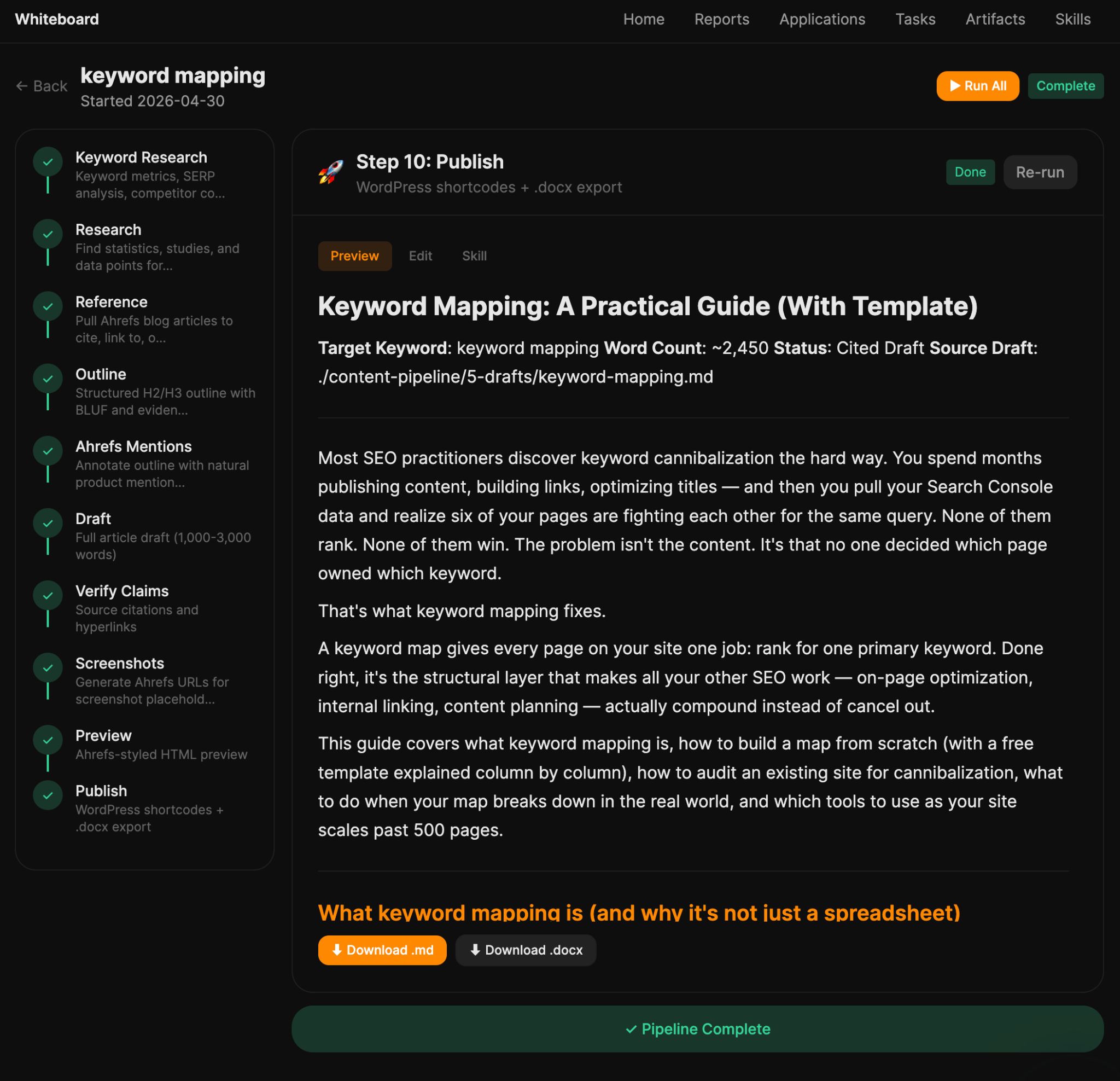
ブログパイプラインのワークフロー画面
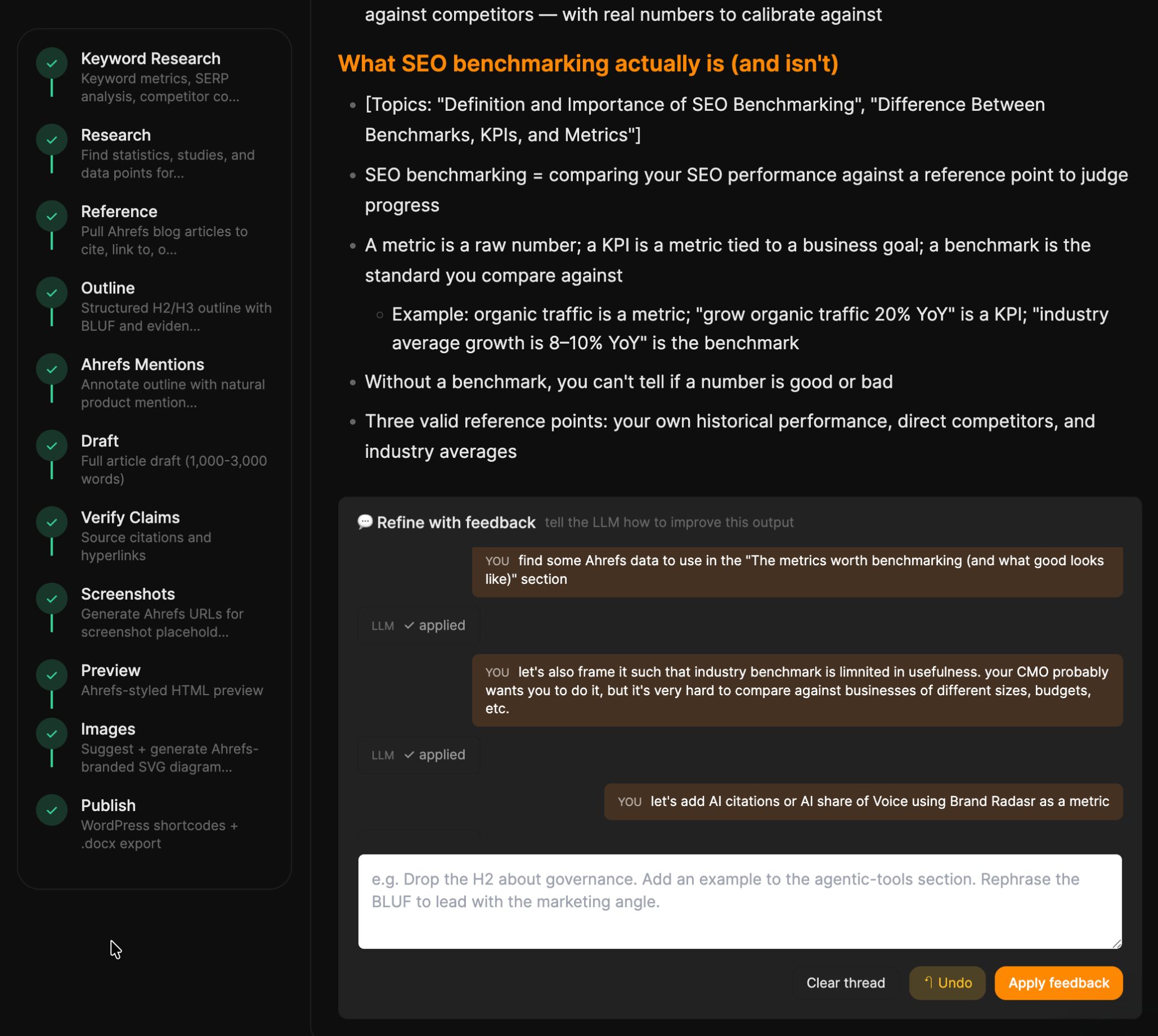
パイプラインの各段階の出力画面
- 対話型編集モード: チャットボックスを使って LLM に記事のアウトラインやドラフトの方向性をフィードバックすると、変更を自動で反映してくれます。手動の編集やコピー&ペーストは不要です。感覚的な指示だけで完結します!
- カスタムスタイルガイド: 独自のスタイルガイドをアップロードし、記事ごとに著者プロフィールを選択できます。自身の文章サンプルをもとにトレーニングされます。
- ブランドフロー図: ブランドのスタイルに合わせたフロー図の提案と自動生成が可能です。
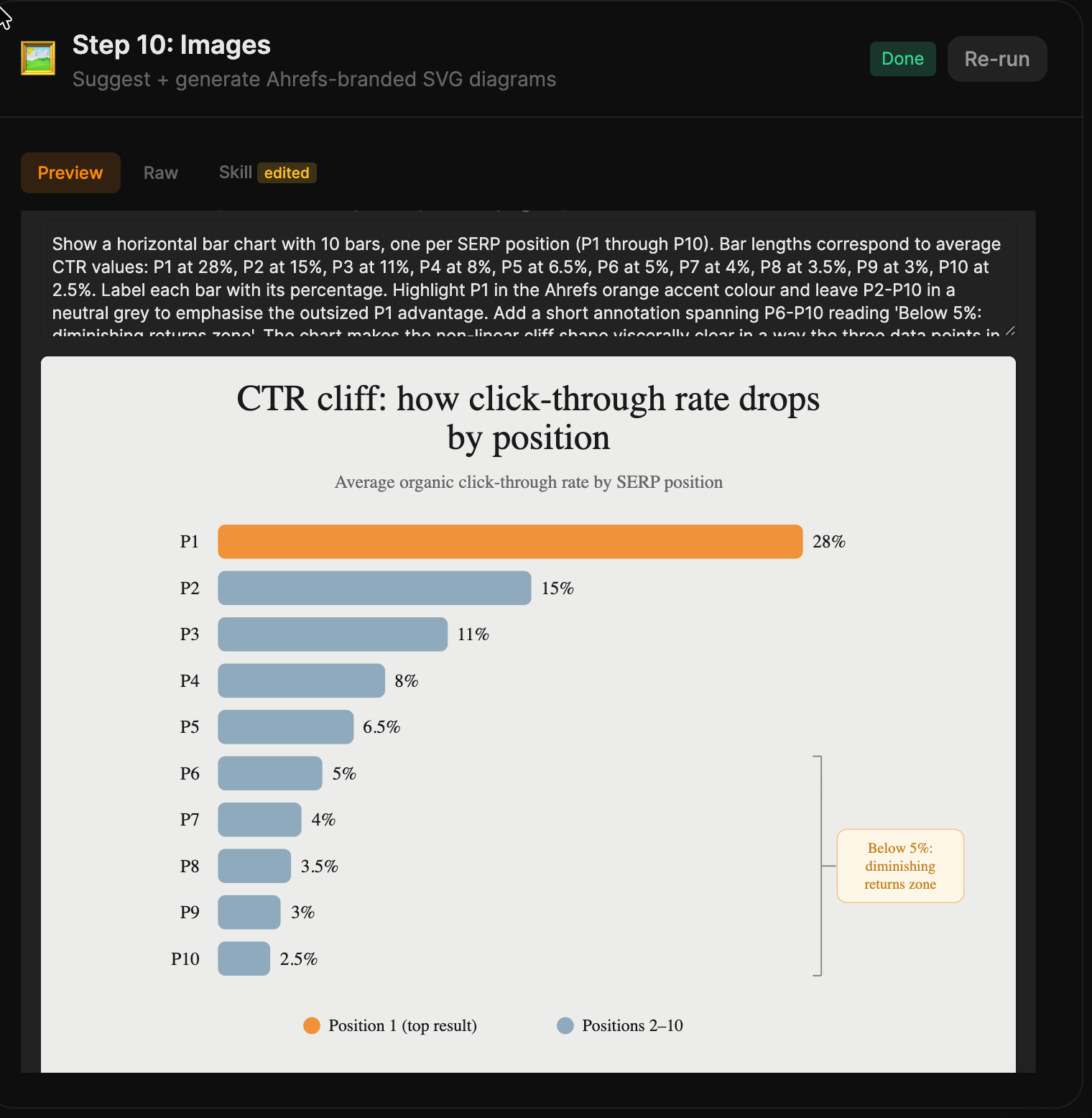
ブランドフロー図の例
Build me an assisted long-form article pipeline. Atomic input is a target keyword. Stages run sequentially as background jobs the UI polls: (1) keyword research via Ahrefs, (2) competitor SERP fetch, (3) AI Content Helper topic snapshot, (4) bulleted outline with mandated topic coverage, (5) data-mention placement, (6) full draft, (7) polish, (8) WordPress shortcode formatting + .docx export. Each stage shows its output, has an "edit" textarea, and a "refine with feedback" chat that re-runs the stage with my notes. Style guide comes from a per-author voice profile.2. 古い記事を更新してトラフィック低下に対処する
次に紹介するのは、既存コンテンツのメンテナンスです。Ahrefs ブログにはローカライズ版を含めて 1,000 以上の記事があり、すべてを最新の状態に保つのはフルタイムの仕事以上の労力がかかります。 Letaido(旧 Agent A)を使って、記事更新プロセスを自動化しました。
記事更新パイプラインの画面
- ガイダンス: 更新の範囲を設定します。軽い修正にするか、全面的な書き直しにするかを指定できます。
- ファクトチェック(Claims Audit): LLM が記事内のすべての統計データ、調査の参照、日付の入った主張をフラグ付けし、古さを評価します。必要に応じて、代替の参照 URL も提示します。
- Ahrefs メンション: 記事の公開後にリリースされた Ahrefs の機能と照合し、新しい機能を追加すべき箇所を提案します。
- トピックギャップ: 現在の上位表示ページに対して SERP を再分析し、それらのページがカバーしていて自分の記事がカバーしていないトピックを洗い出します。
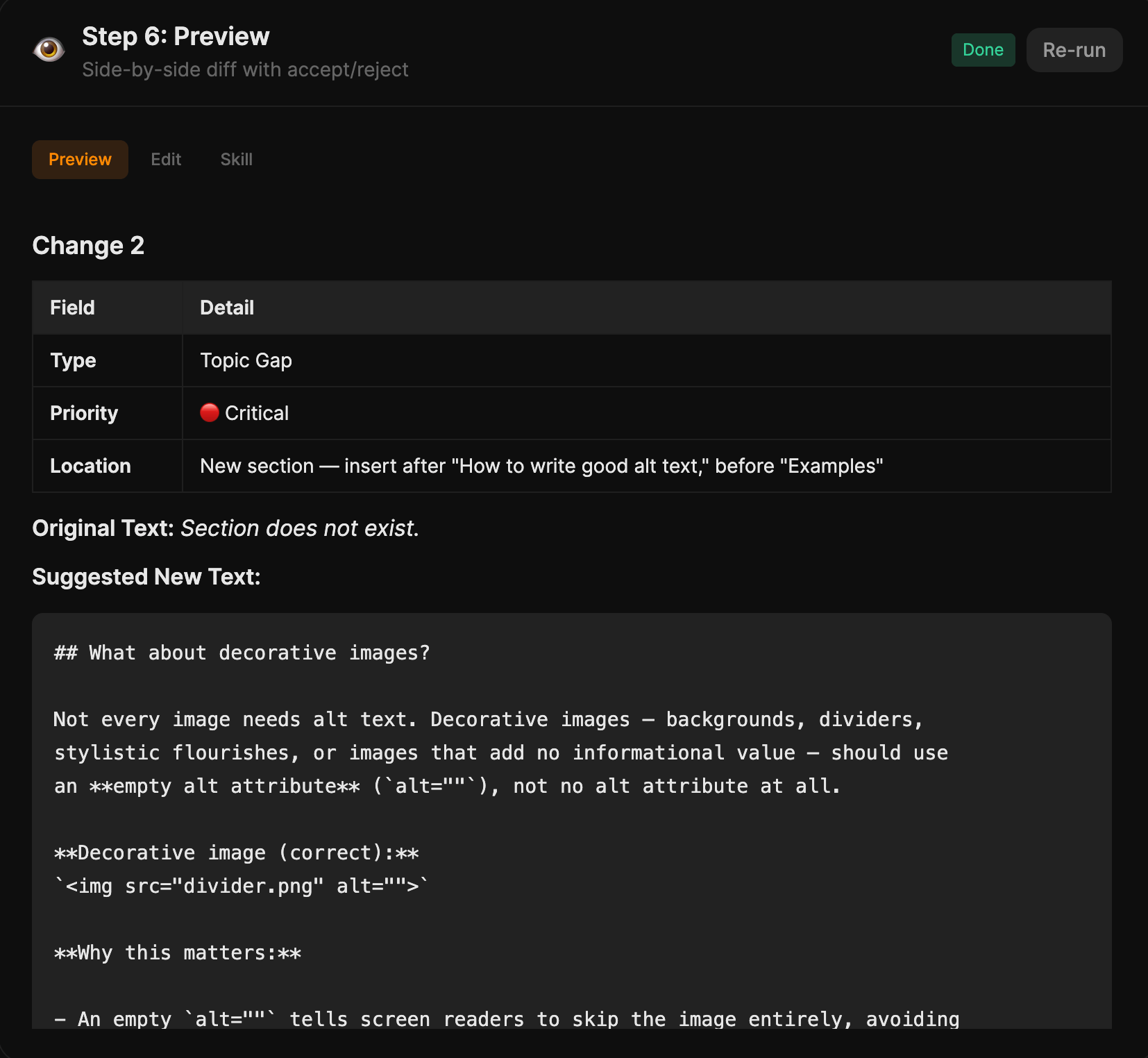
サイドバイサイドの差分プレビュー画面
Build me a blog-post update pipeline. Input: a published URL. Fetch the article. Run five diagnostic stages: (1) Guidance — I set scope (light refresh vs. full rewrite); (2) Claims Audit — LLM extracts every stat, study reference, and dated assertion and grades each for staleness with a suggested replacement; (3) Ahrefs Mentions — cross-check against Ahrefs features released since publication and suggest where to drop new ones; (4) Topic Gaps — re-run the SERP, surface topics current top-ranking pages cover that mine doesn't; (5) Authoritative Pages — find linkable sources published since my article. Final stage: side-by-side diff between current article and proposed updates, with accept/reject per change. Export the accepted version as markdown and WordPress shortcodes.3. 月次レポートを自動化する
ここまでコンテンツの作成と更新を自動化する方法を紹介しましたが、マーケティングオートメーションの観点では、レポート作成の自動化も欠かせません。 毎月、Ahrefs ブログの詳細なパフォーマンスレポートを共有しています。多数のデータソースを組み合わせ、多くのビジュアライゼーションを含み、(一応)専門的な分析のレイヤーも加えたレポートです。 このレポートは以前、作成に丸一日かかっていました。現在は Agent A が毎月 2 日に自動生成してくれます(GSC のデータ収集が完了するのを待つためです)。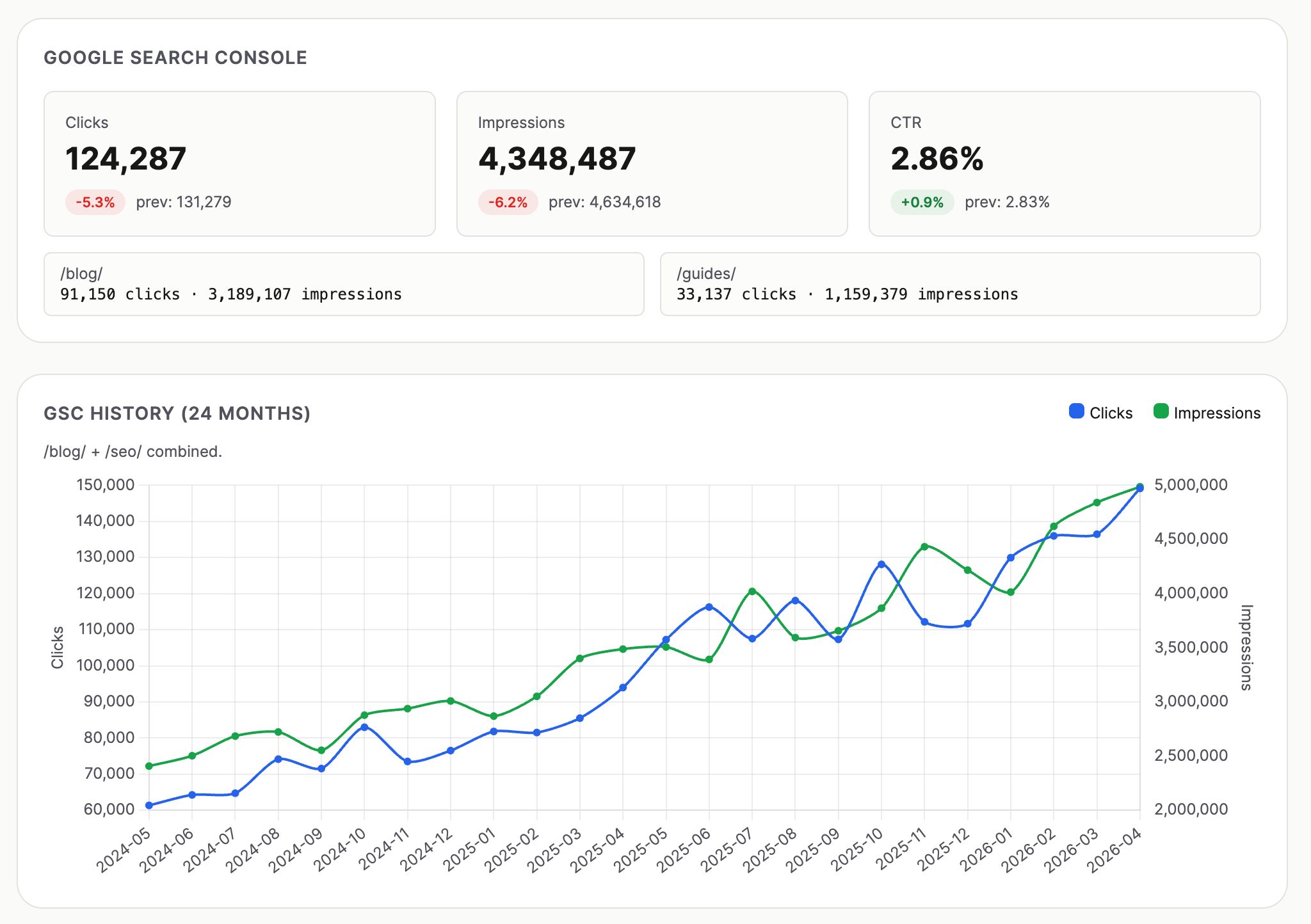
月次パフォーマンスレポートの画面
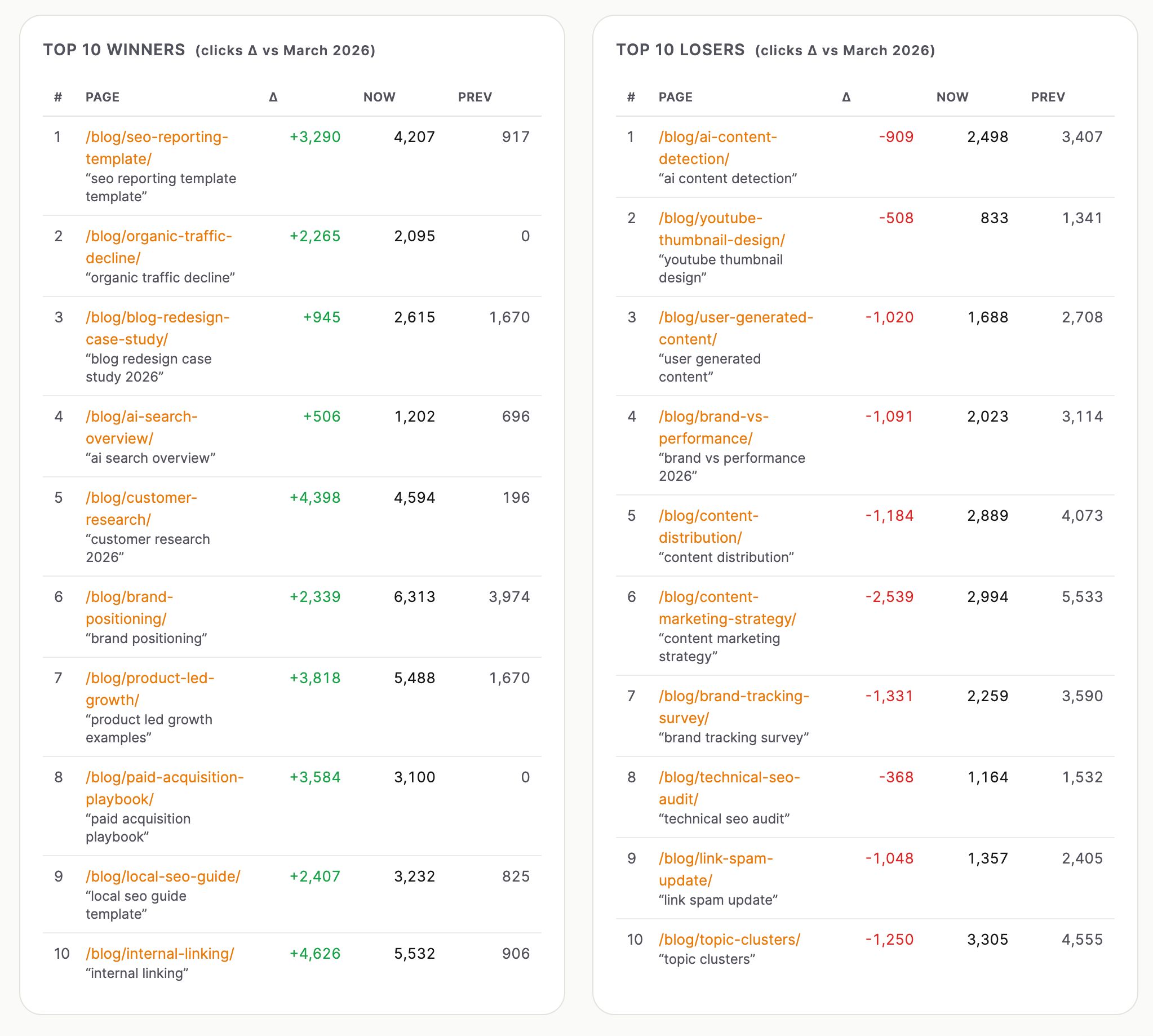
レポートの詳細ビュー
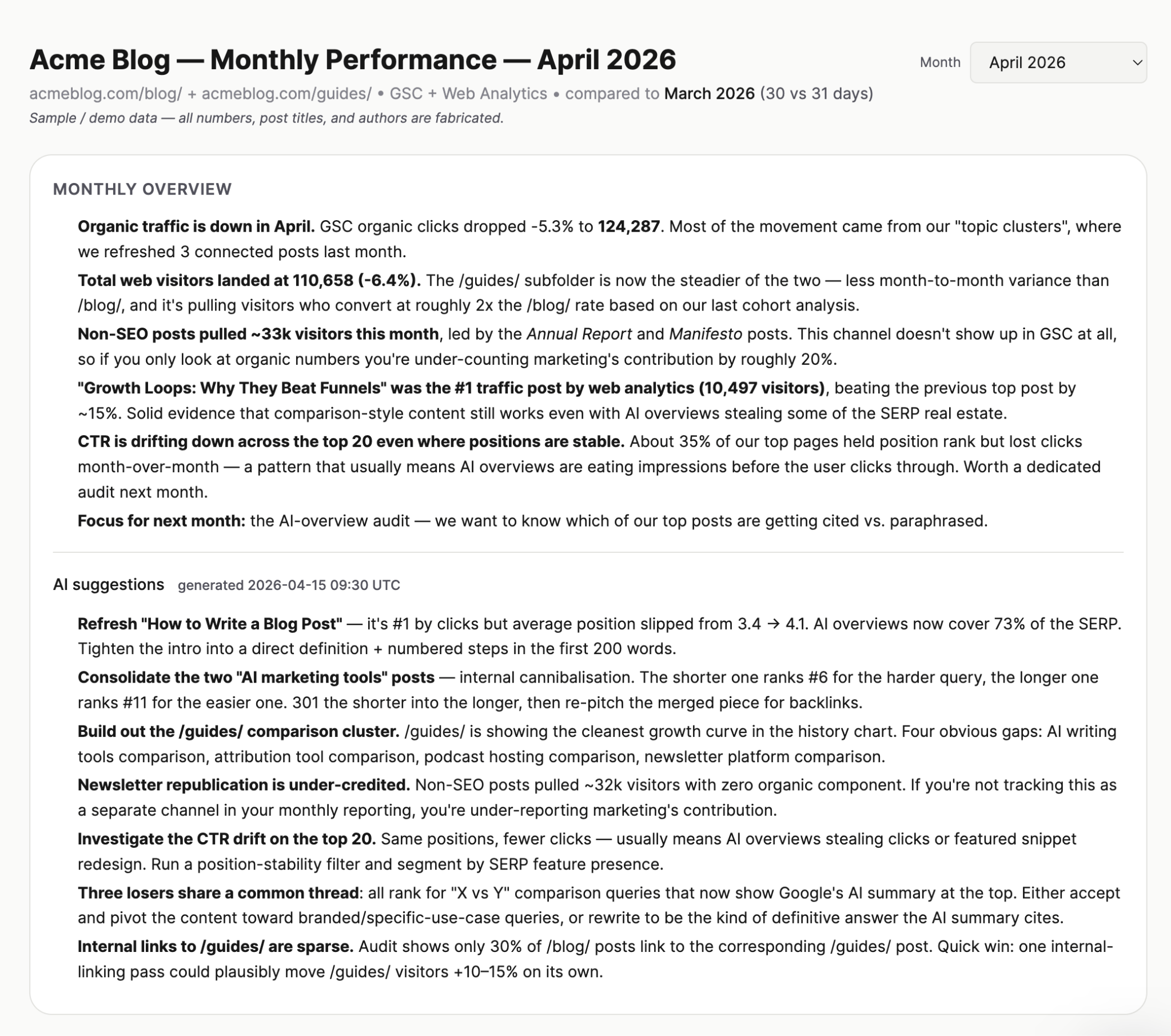
月次概要の編集画面
Build me a monthly blog performance report. Pull GSC + Ahrefs Web Analytics for the current month. Show KPI tiles, a 12-month trend chart with a migration marker, subfolder split, winners/losers tables (paginated, 25/page), daily anomaly callouts, and full paginated tables of every post. At the top, an editable markdown "monthly overview" with auto-save. Beside it, an AI panel that takes my cached KPIs + an "industry context" textarea I fill with algo-update news and produces 6-10 candidate bullets I can copy. Add a "publish to public site" button that snapshots a read-only view.4. ブログのトピカルオーソリティを分析する
ここからは、AI エージェントの分析能力を活かした、より高度な活用法を見ていきましょう。 トピカルオーソリティ(特定分野の専門性を網羅的にカバーすることで Google から評価されるという考え方)には以前から関心がありました。Ahrefs ブログは非常に大規模で多岐にわたるため、「トピックから外れた」記事がコア記事と比較してどのようなパフォーマンスを示すかを確認したいと考えていました。 そこで Letaido(旧 Agent A)にこの分析を実行させました。少し技術的な話になりますが、ブログセマンティック監査はブログ上のすべての URL をベクトル空間にマッピングし、サイト全体の重心を計算したうえで、コサイン距離に基づいてページを core (中核)/ near (近接)/ mid (中間)/ far (遠方)にバケット分類しました。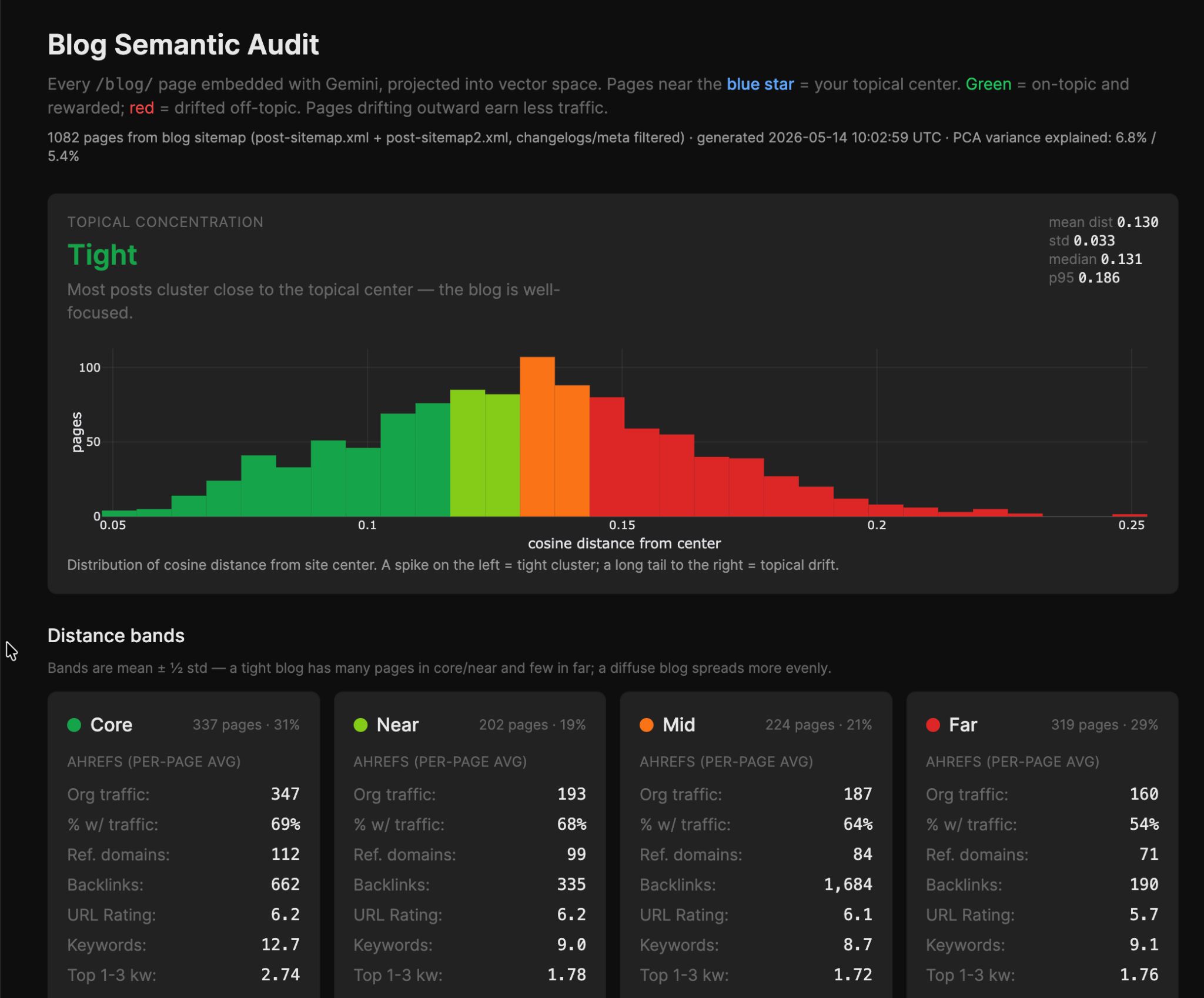
セマンティック監査のバケット分類画面
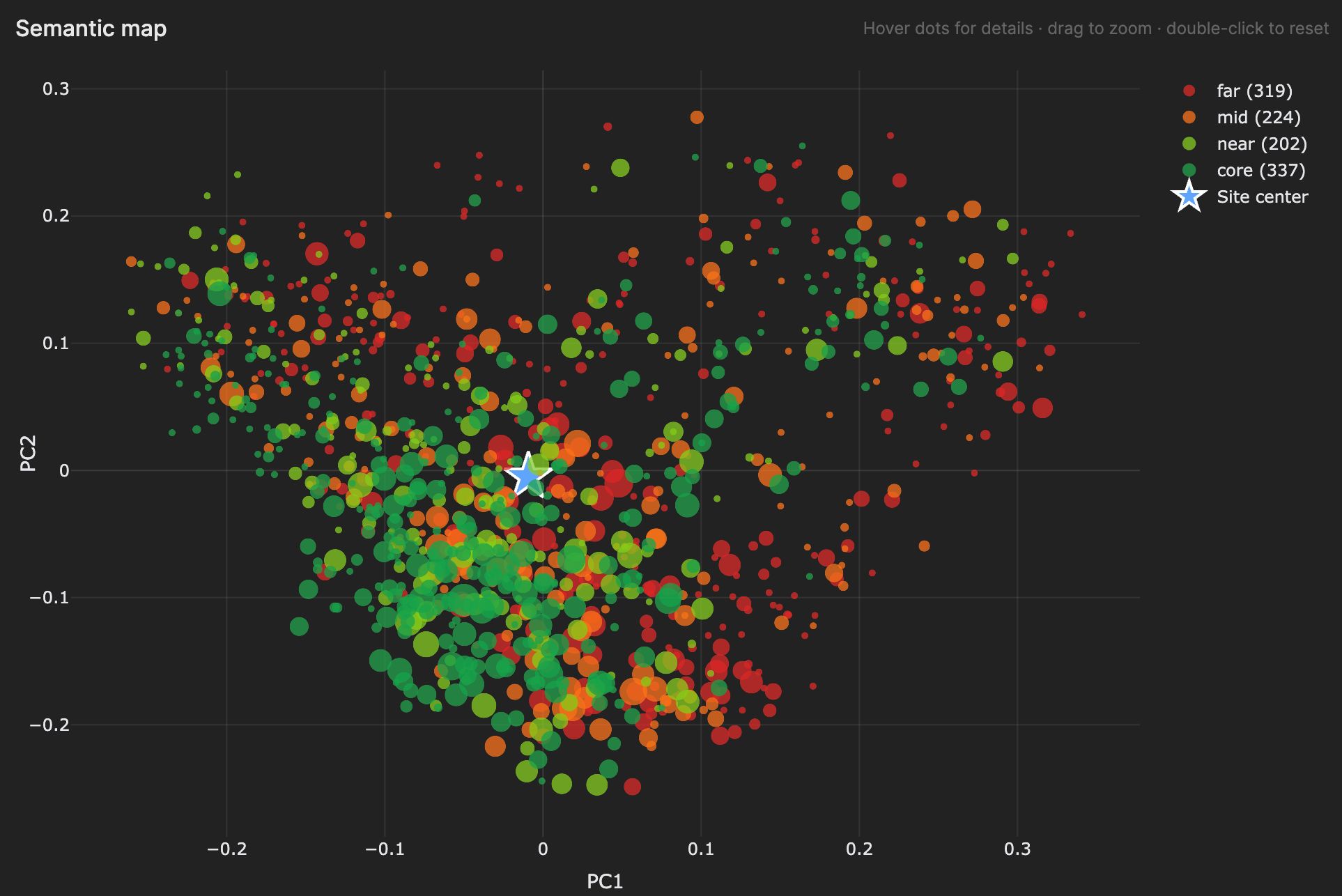
トピッククラスターの詳細画面
Run a semantic audit of my blog. Pull every URL from the sitemap, fetch the content, embed each page (mean of passage embeddings) using a 3072-d embedding model. Compute the site centroid and bucket pages by cosine distance to it (core/near/mid/far using mean ± 1/2σ — not quartiles). Enrich each URL with Ahrefs batch analysis (org_traffic, refdomains, UR, keywords). Run k-means with silhouette scan (k=2..12) to find natural topic clusters. Output: bucket histogram, per-bucket Ahrefs averages, cluster summaries with sample URLs, and a verdict on whether the blog is tight or diffuse.5. 競合のコンテンツアイデアを発掘・保存する
筆者は普段から、競合ブログのチェックや記事のアイデア探しに多くの時間を費やしています。Agent A に相談したところ、Competitor Feed というツールを構築してくれました。 Competitor Feed は、あらかじめ登録した競合ブログのサイトマップを監視し、新しい記事が公開されるたびにその情報を表示します。各記事はタイトル、公開日、冒頭段落の抜粋、LLM による一行サマリーとともに保存されます。その後、各アイテムを「保存」「却下」「無視」にトリアージし、良いアイデアはコンテンツアイデアのバックログに蓄積していきます。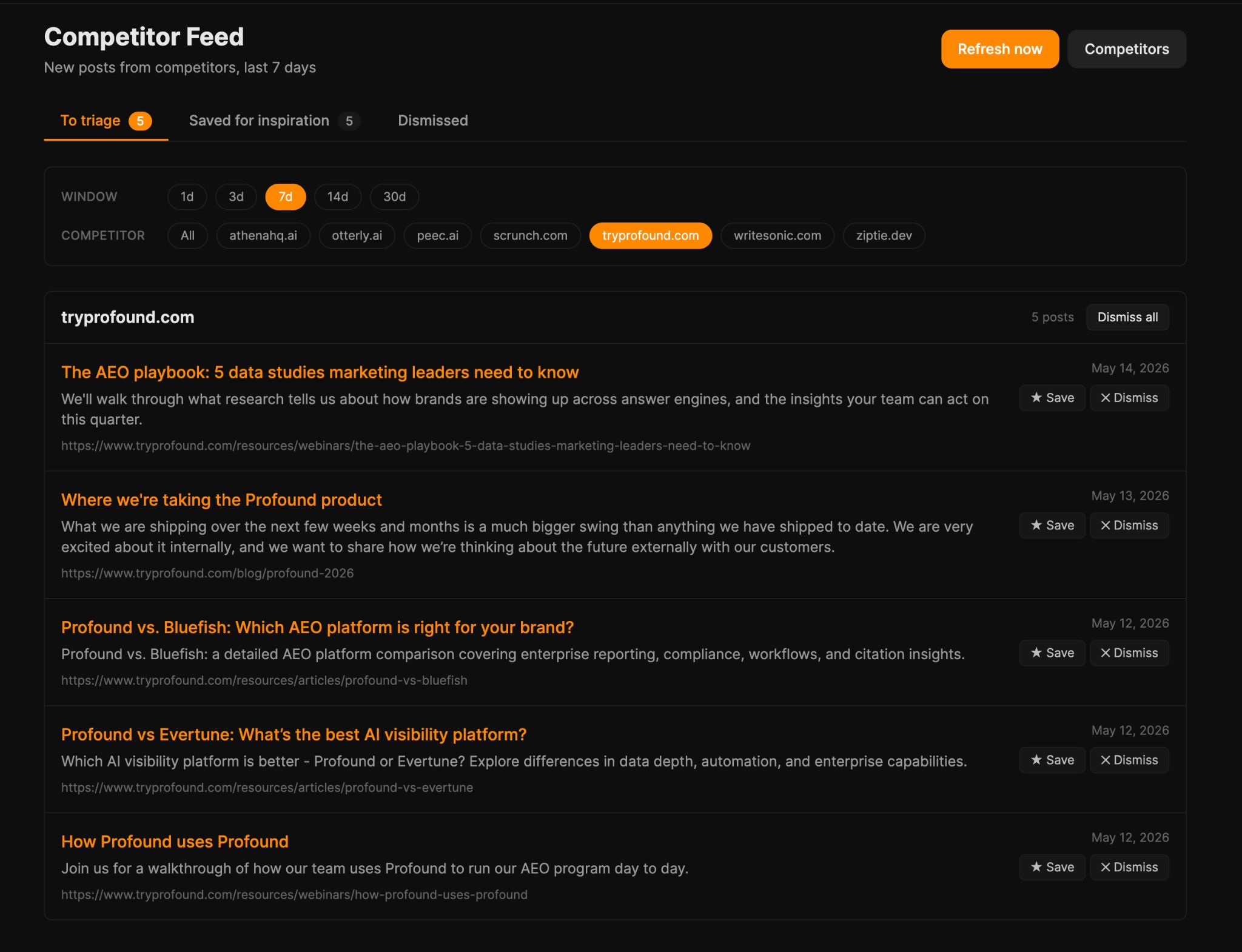
Competitor Feed のトリアージ画面
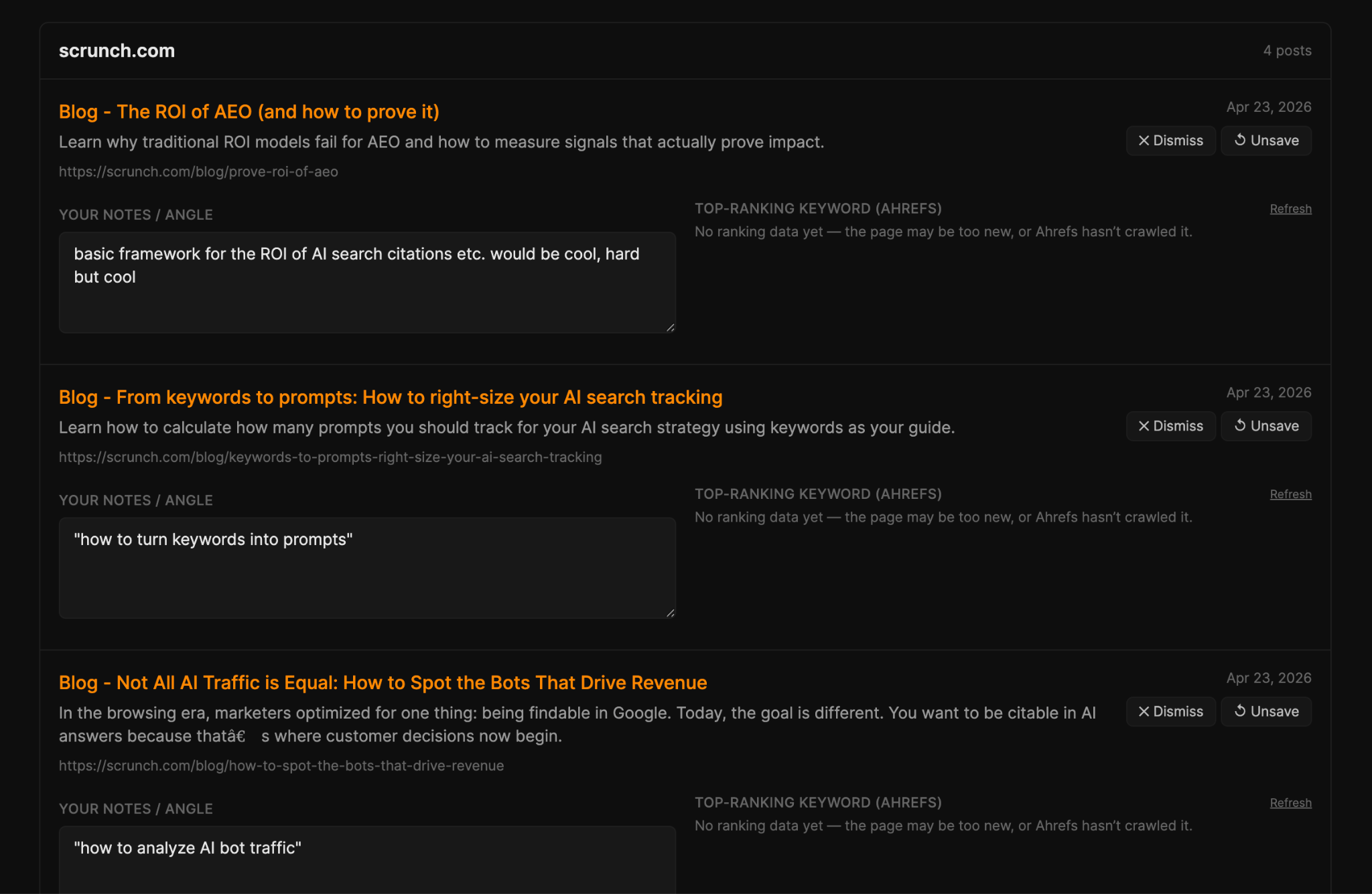
キーワードエクスプローラーのパイプライン結果
Build me a competitor blog watcher. I configure a list of competitor blog sitemap URLs. A daily job diffs each sitemap, fetches new URLs, and for each new post shows title, publish date, first-paragraph excerpt, and a one-line LLM summary of the angle. Triage states: new / saved / dismissed. When I save a post, run an Ahrefs Keywords Explorer pipeline against the title: extract a 2-3 word seed topic, fetch keyword suggestions, rank by volume and intent, attach results to the saved row. The output is competitor-inspired keyword lists, not a passive reading queue.6. コンテンツインスピレーションの「スワイプファイル」を構築する
ルイーズさんは LinkedIn Scrapbook を構築しました。コンテンツのインスピレーションを集めるための個人用スワイプファイルです。Obsidian Web Clipper を使って LinkedIn の投稿を Markdown 形式で Scrapbook アプリに保存しており、本文、著者名、エンゲージメント指標、メディアなどが丸ごと記録されます。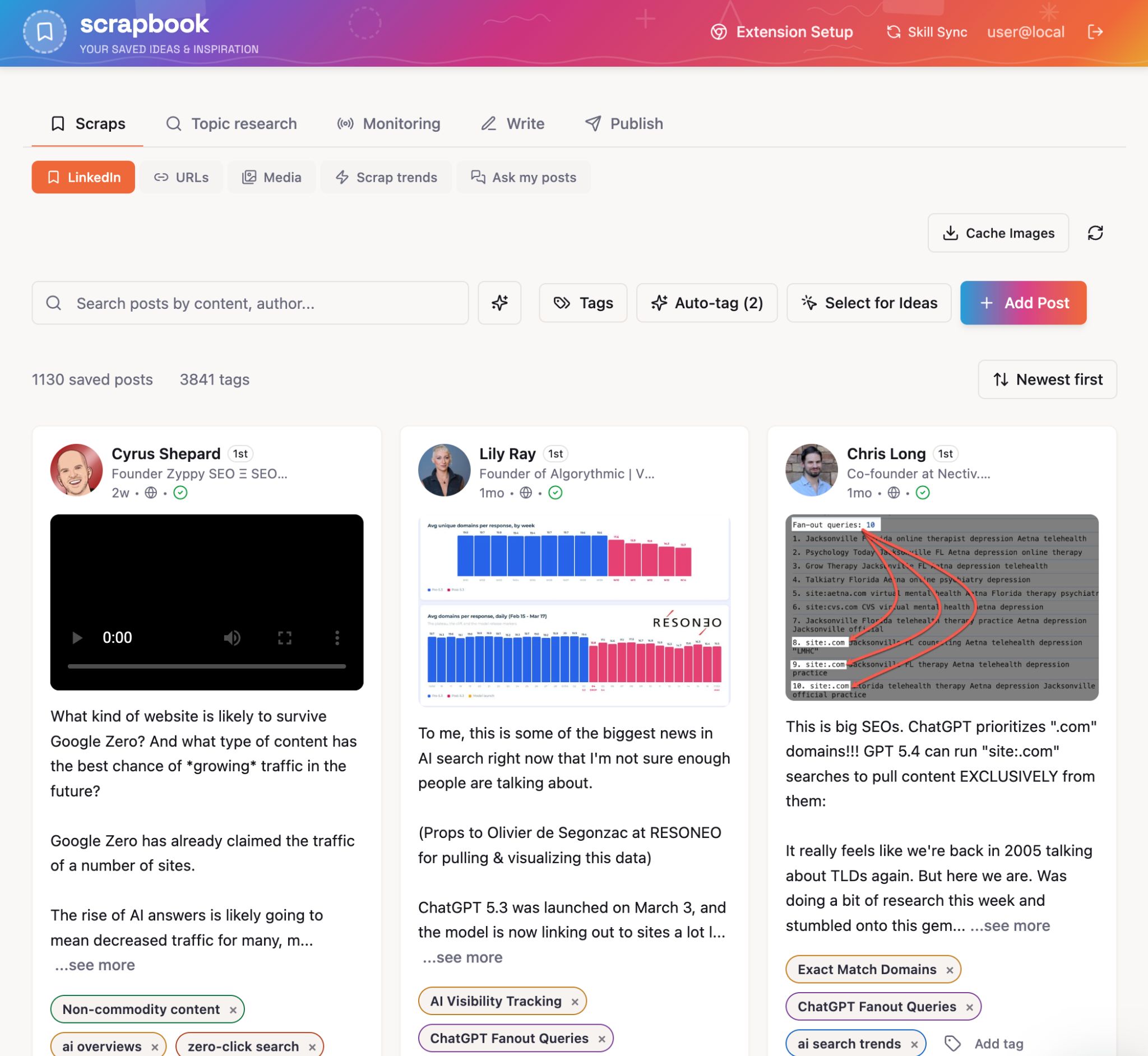
LinkedIn Scrapbook のインターフェース
- トレンドキーワード:保存した投稿全体で人気が上昇しているキーワードを可視化します。SEO メディアで話題になる前に、ネットワーク内で注目されつつあるテーマをいち早くキャッチできます。
- コンテンツギャップ:保存した投稿のトピックと、自分が公開済みの記事のトピックを比較します。「インプットしているのにまだアウトプットしていないテーマ」を浮き彫りにすることが目的です。
- 事例ファインダー:記事を執筆中に関連する事例が必要になったとき、Scrapbook 内をセマンティック検索して関連コンテンツを見つけ出せます。
- スクラップに質問:保存したスニペットのデータベースに対してクエリを投げられます(例:「AI Overview に言及しているスクラップはどれ?」)。
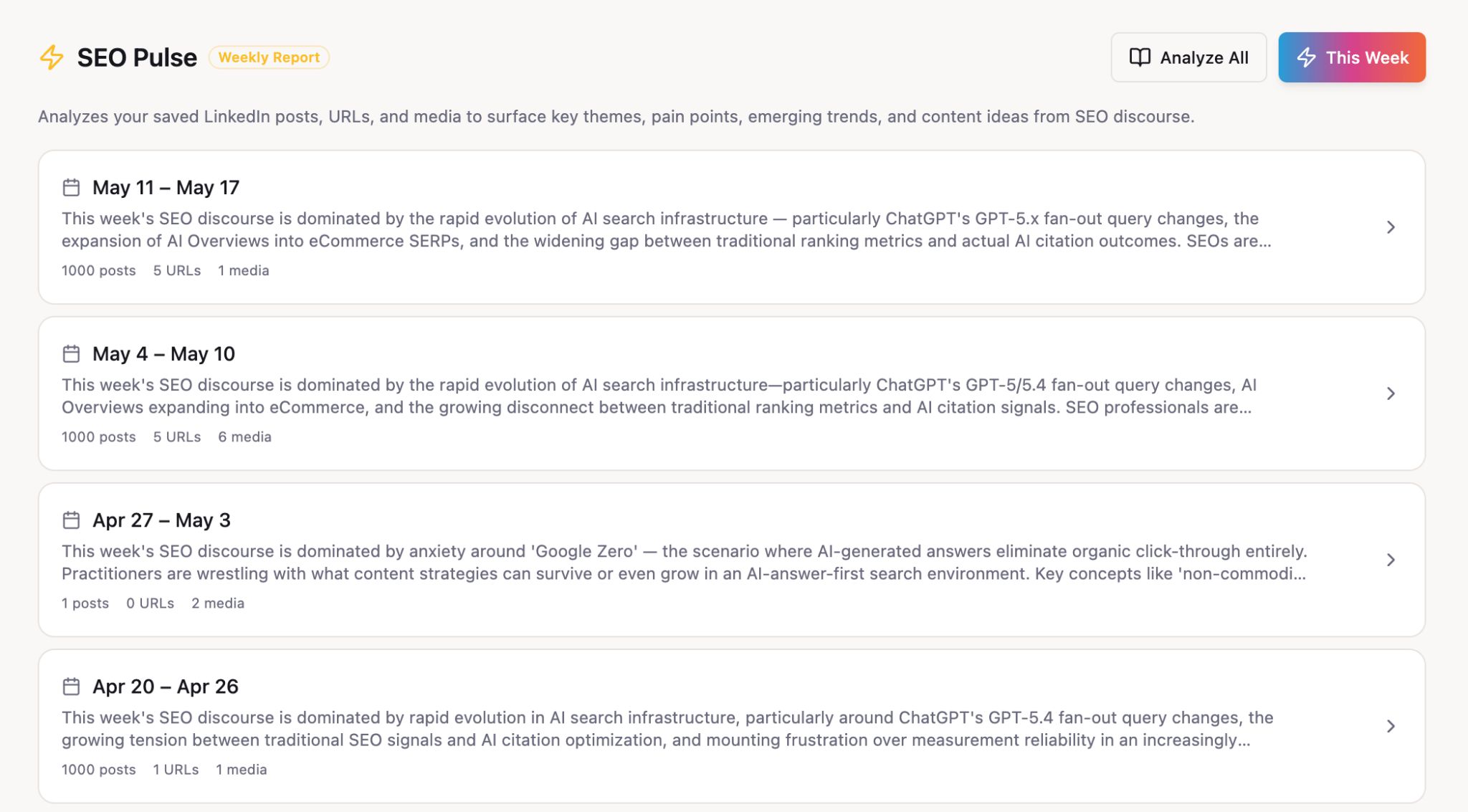
Scrapbook の各種分析ツール画面
Build me a LinkedIn swipe-file app with a Chrome extension. The extension adds a "Save to Scrapbook" button to every LinkedIn post; one click captures post text, author, engagement metrics, and media URLs and POSTs to my Console app. The Console app stores posts in Postgres with full-text search. Build three tools on top of the corpus: (1) Trending Keywords — extract topic seeds from saved posts, surface rising topics over a rolling window; (2) Content Gap — diff topics in saved posts against topics in my published blog posts, output what I'm consuming but haven't written about; (3) Example Finder — semantic search over the scrapbook with deep links back to LinkedIn. Add a generic web-clipper extension too for non-LinkedIn URLs.7. 科学的な内部リンクのレコメンデーションを取得する
内部リンクは、記事を公開するたびに「やるべき」SEO タスクでありながら、実際にはほぼ毎回後回しにされがちな作業です。 そこで Letaido(旧 Agent A)に Internal Linker を構築してもらいました。新しい記事(公開済みの URL でも、未公開のドラフト Markdown を貼り付ける形でも可)を入力すると、その記事にリンクすべき最も関連性の高い既存記事を見つけ出してくれます。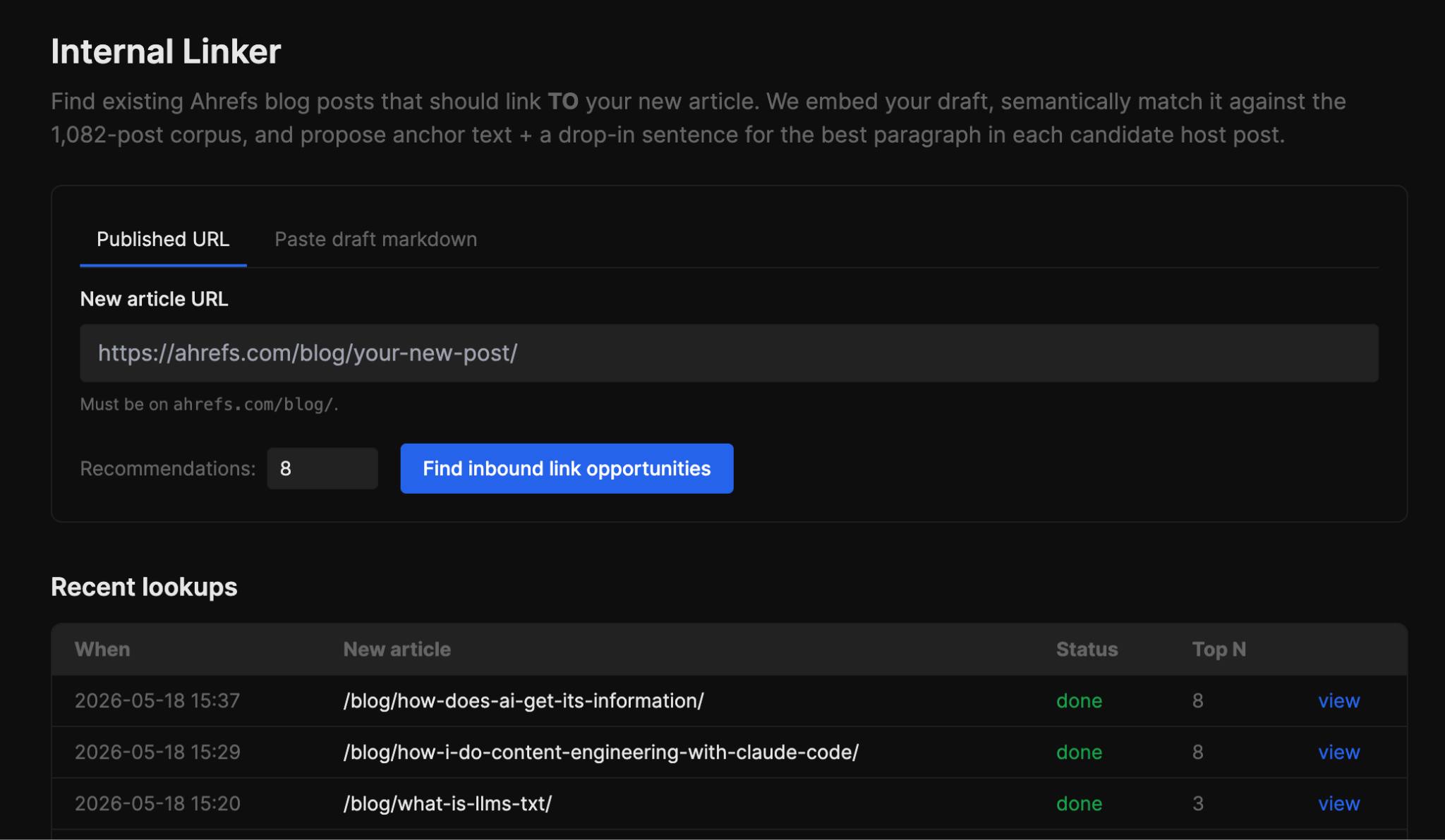
Internal Linker の推薦結果画面
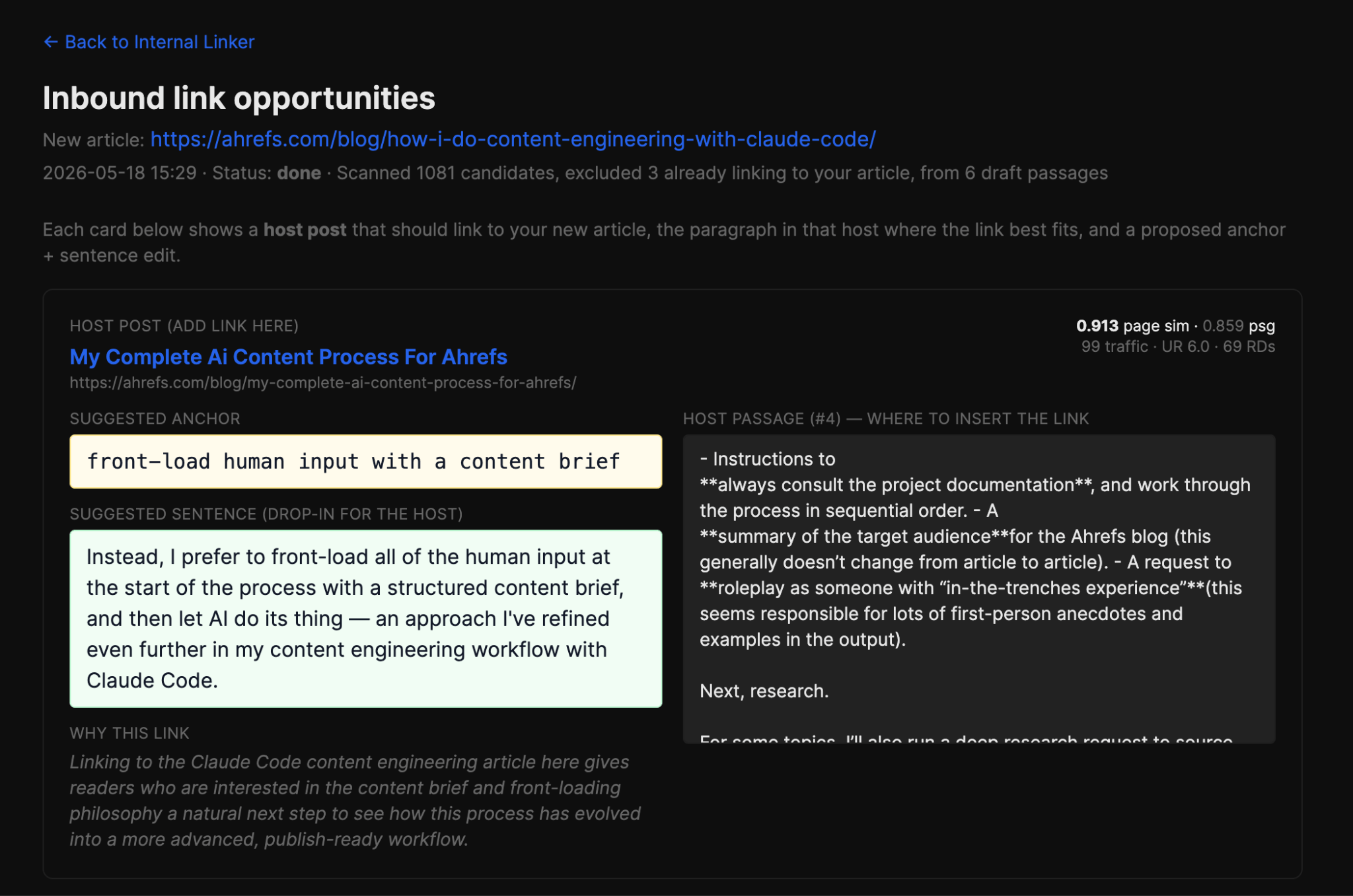
リンク推薦の詳細とアンカーテキスト提案
Build me an internal-linking tool. Input: either a published blog URL or pasted draft markdown for unpublished pieces. Embed the input article with Gemini and cosine-compare against my pre-cached blog post vectors. Rescore top candidates with authority weighting: 0.7 × similarity + 0.3 × log(org_traffic) — favours high-traffic hosts where a link actually moves rankings. Auto-exclude any host already linking to me (parse each candidate's markdown body). For each top host, identify the single paragraph most semantically aligned with the input article — that's where the link goes. Have Claude draft a natural 2-6 word anchor and rewrite a sentence in the host paragraph to include it. Per-recommendation context: page sim, passage sim, host's org_traffic / UR / refdomains, the host paragraph, and a one-line rationale. Cache passage vectors per host so repeat lookups are instant. Run lookups async with live step status; persist every lookup to history.まとめ
Ahrefs ユーザーであれば、Agent A を 1 か月間無料で試すことができます。 この記事で紹介したプロンプトをヒントに、実際にアプリケーションを構築したりレポートを生成したりして、日々のコンテンツマーケティング業務のうち、どれだけの面倒な作業を AI エージェントに任せられるか、ぜひ体験してみてください。https://ahrefs.canny.io/
Ahrefs をもっと活用 👉
▶︎ Ahrefs 公式ブログ --- 本社発信の記事
▶︎ Ahrefs Canny --- 開発チームへ意見を送る
▶︎ X 公式アカウント--- 最新情報をリアルタイムで
▶︎ YouTube 公式チャンネル--- 動画コンテンツをチェック
▶︎ Ahrefs note --- 日本チーム発信の記事

投稿者ライアン ・ロー
Ahrefs のコンテンツマーケティングディレクター。 過去 13 年間でライター、コンテンツストラテジスト、チームリーダー、マーケティングディレクター、部長、CMO(最高マーケティング責任者)、代理店設立といった様々な役職を経験。その間、Google、Zapier、GoDaddy、Clearbit、Algolia など数十社のコンテンツマーケティングと SEO サポートを担当。小説家の顔も持ち、これまでに 2 種類のコンテンツマーケティング専門講座を自ら開発・設計した。